
“What Do You Meme?” is a wildly popular party game that has taken game nights by storm. Designed for the social media generation, it challenges players to out-meme each other by pairing humorous captions with quirky photo cards. Perfect for anyone who enjoys a good laugh, this game brings together friends and family in a fun, engaging competition to create the funniest memes.
Targeted at adults and older teens, “What Do You Meme?” is known for its edgy humor and lighthearted approach, making it a hit at gatherings and parties. Whether you’re looking to break the ice at a social event or simply want to enjoy a night of laughter with close friends, this game promises endless entertainment and unforgettable moments.
I. Game Components
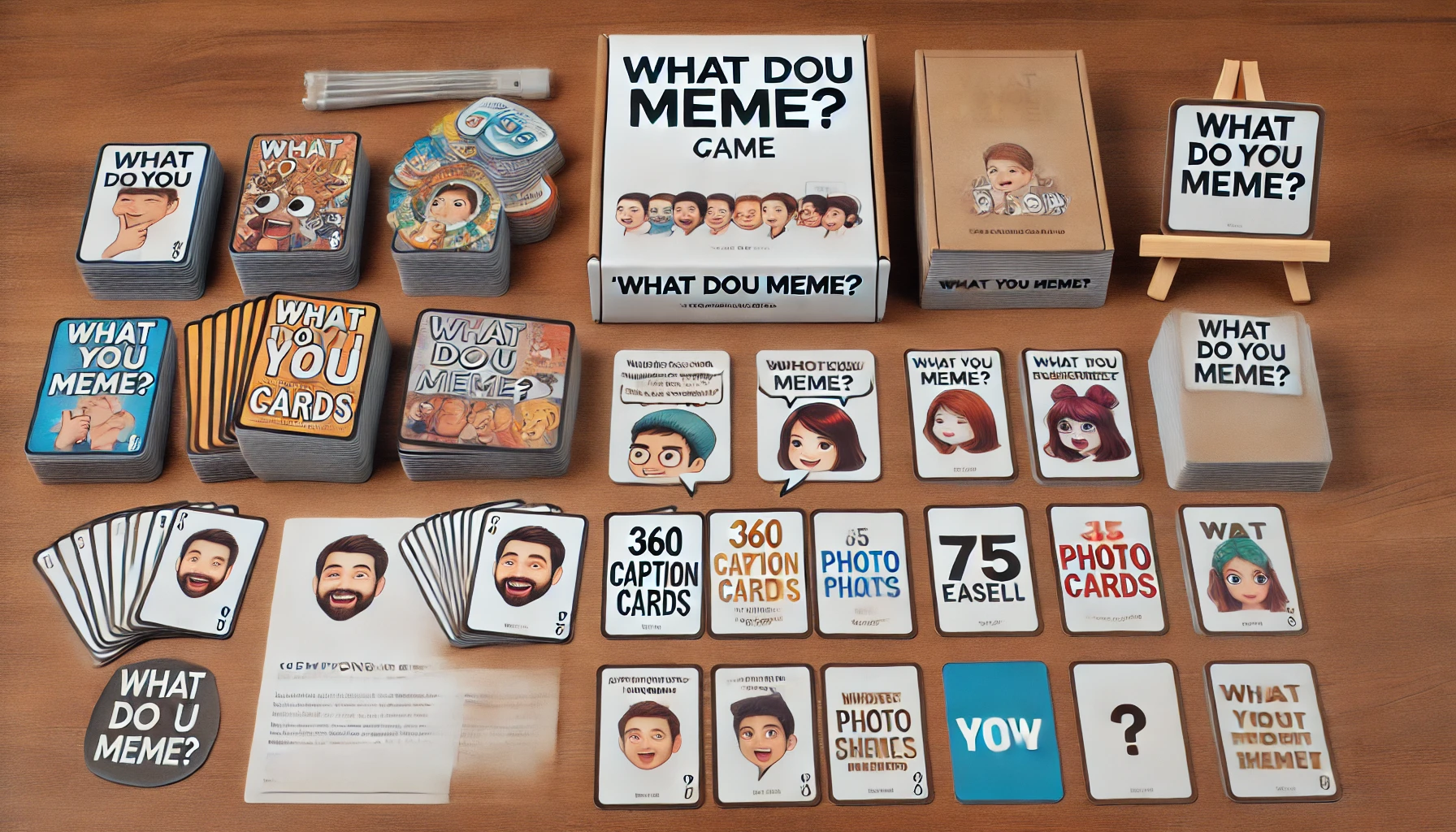
List of Components:
- 360 Caption Cards
- 75 Photo Cards
- 1 Easel
- Instructions Manual
Explanation of Each Component’s Role in the Game:
Caption Cards: The heart of the game, these cards feature hilarious and sometimes outrageous phrases. Players use these to create the funniest meme by pairing them with the Photo Card in play.
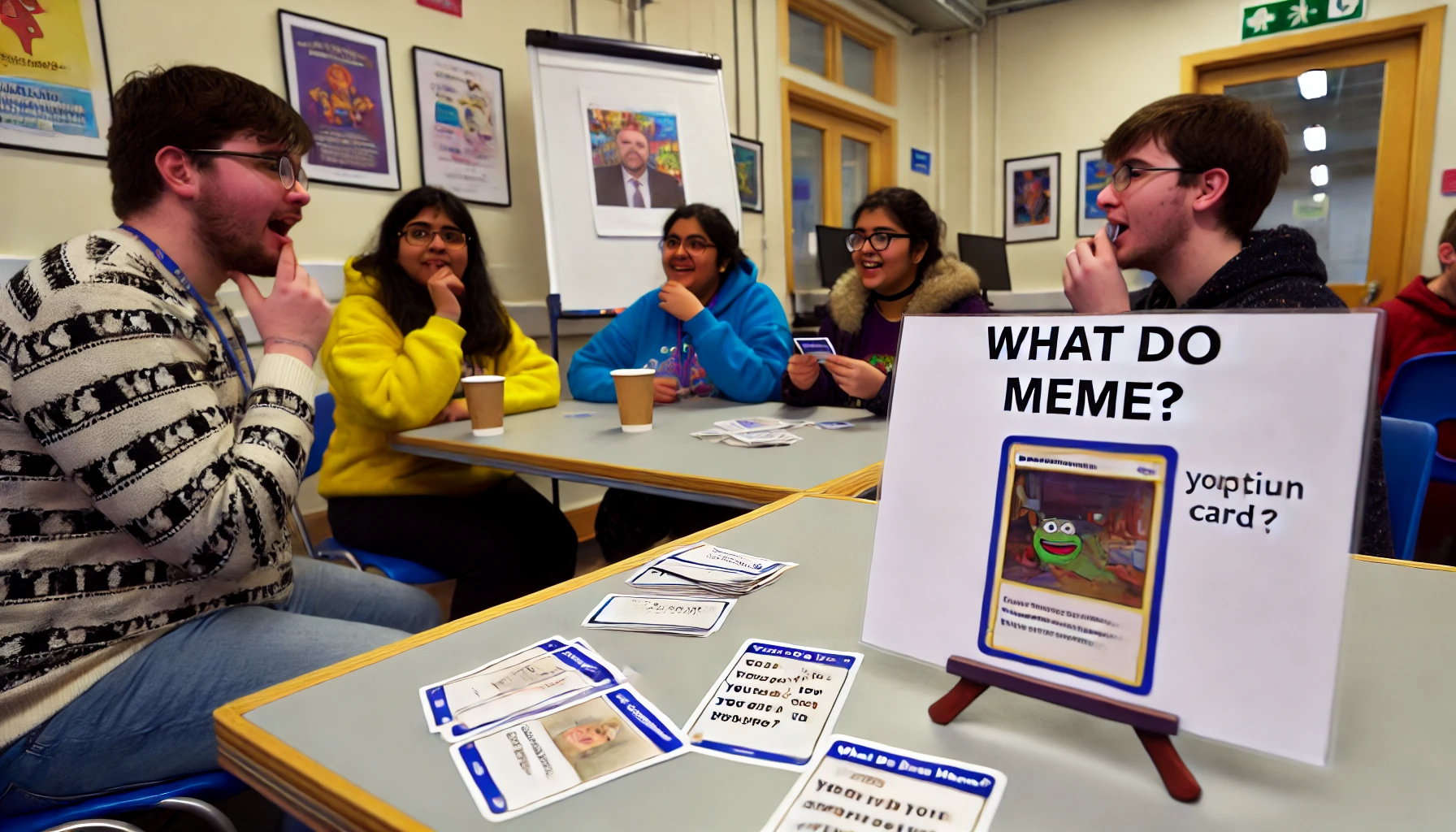
Photo Cards: These cards showcase a variety of popular internet memes and funny images. Each round, one Photo Card is selected and placed on the easel for all players to caption.
Easel: A small stand used to display the Photo Card during each round, ensuring everyone can see the image clearly and craft the best possible caption.
Instructions Manual: A straightforward guide that explains the rules, setup, and gameplay, ensuring everyone understands how to play and get the most enjoyment from the game.

II. Setting Up the Game
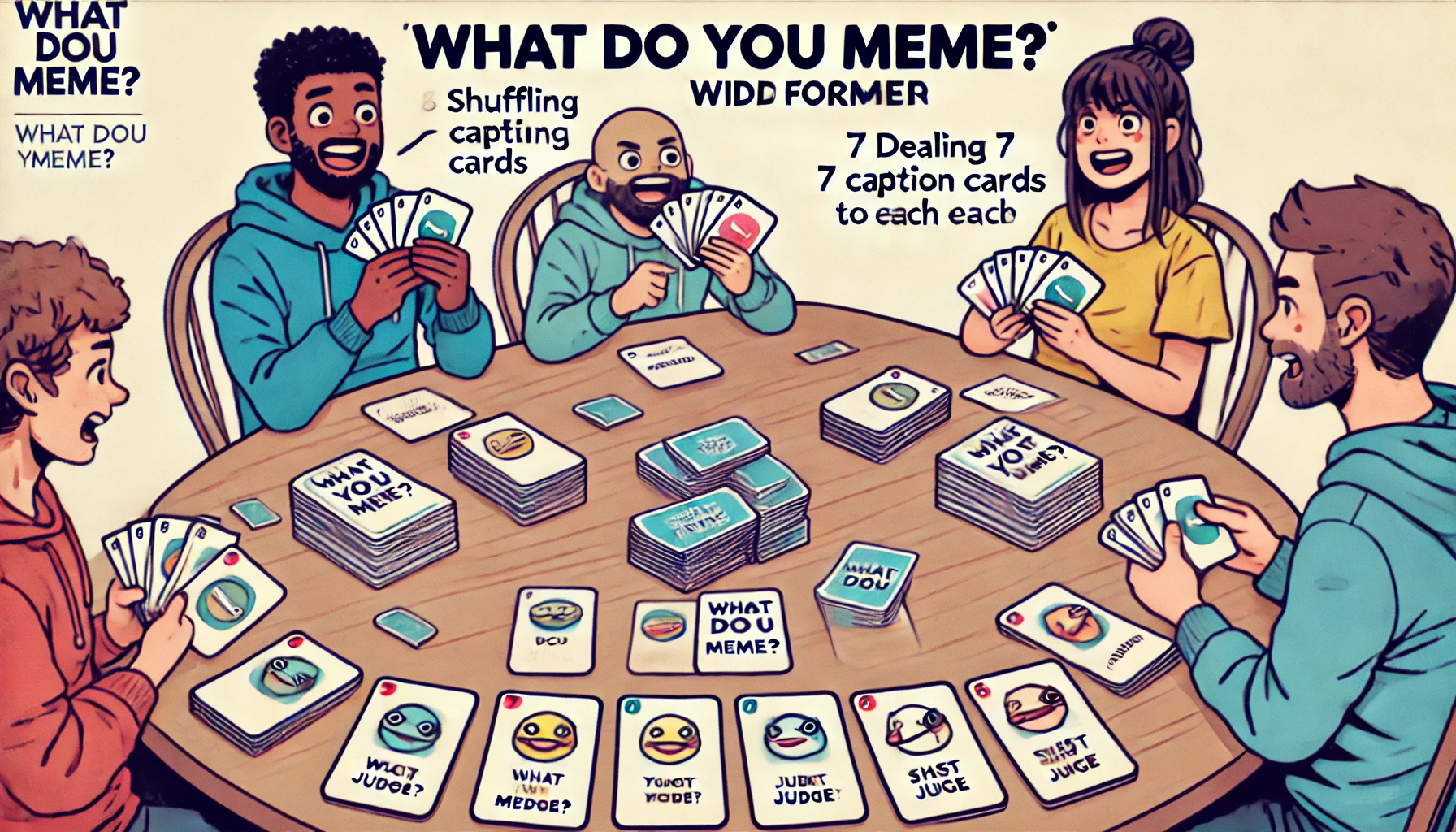
Minimum and Maximum Number of Players: “What Do You Meme?” is designed for 3 or more players, making it perfect for small gatherings or larger parties. There’s no upper limit, so the more, the merrier.
Age Recommendations and Editions: The game is intended for ages 17 and up due to its mature content. For family-friendly fun, try “What Do You Meme? Family Edition,” suitable for players aged 8 and older.
Step-by-Step Setup Instructions:
1. Shuffling and Dealing Caption Cards: Shuffle the 360 Caption Cards thoroughly. Deal 7 Caption Cards to each player, ensuring everyone has a hand of potential punchlines. Place the remaining deck in the center of the table within easy reach.
2. Selecting the First Judge: Choose the first judge by determining who has the most Instagram followers or select randomly. The judge’s role is to pick the Photo Card for the round and decide which Caption Card is the funniest. Rotate the judge role clockwise each round to keep the game dynamic and fair.
III. Basic Rules and How to Play What Do You Meme
Detailed Gameplay Process:
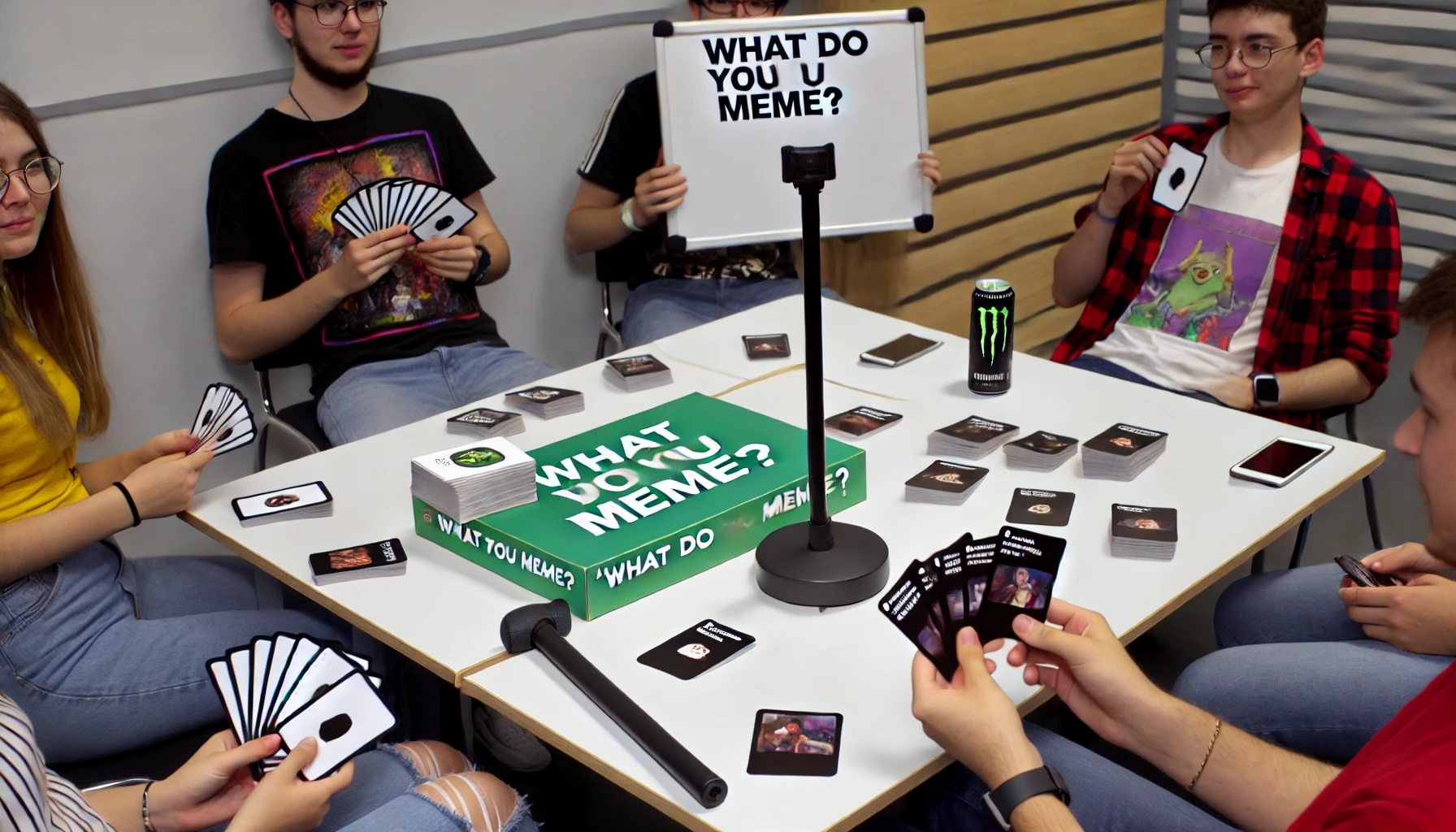
1. Role of the Judge and Selecting a Photo Card: Each round, one player takes on the role of the judge. The judge chooses a Photo Card from the deck and places it on the easel for everyone to see. The judge does not play a Caption Card this round.
2. Submitting and Shuffling Caption Cards: All other players select one Caption Card from their hand that they think pairs best with the Photo Card. They submit their chosen Caption Card face-down to the judge. The judge shuffles these Caption Cards to ensure anonymity.
3. Judge Reading and Selecting the Funniest Caption: The judge reads each Caption Card aloud in combination with the Photo Card, creating a series of potential memes. After reading all the options, the judge picks the Caption Card they find the funniest or most fitting.
4. Awarding the Photo Card to the Winner: The player whose Caption Card is chosen as the funniest wins the round and receives the Photo Card as a point. The next round begins with the player to the left of the current judge becoming the new judge.
Example Round to Illustrate the Process: Imagine a Photo Card featuring a confused cat. Players submit captions such as “When you realize it’s Monday” and “When you find out the Wi-Fi is down.” The judge shuffles and reads them out loud, laughing at the combinations. Ultimately, the judge picks “When you find out the Wi-Fi is down” as the funniest. The player who submitted this caption wins the Photo Card and a new round begins with a new judge.
IV. Special Rules and Variations
Freestyle Rule and Other Optional Rules:
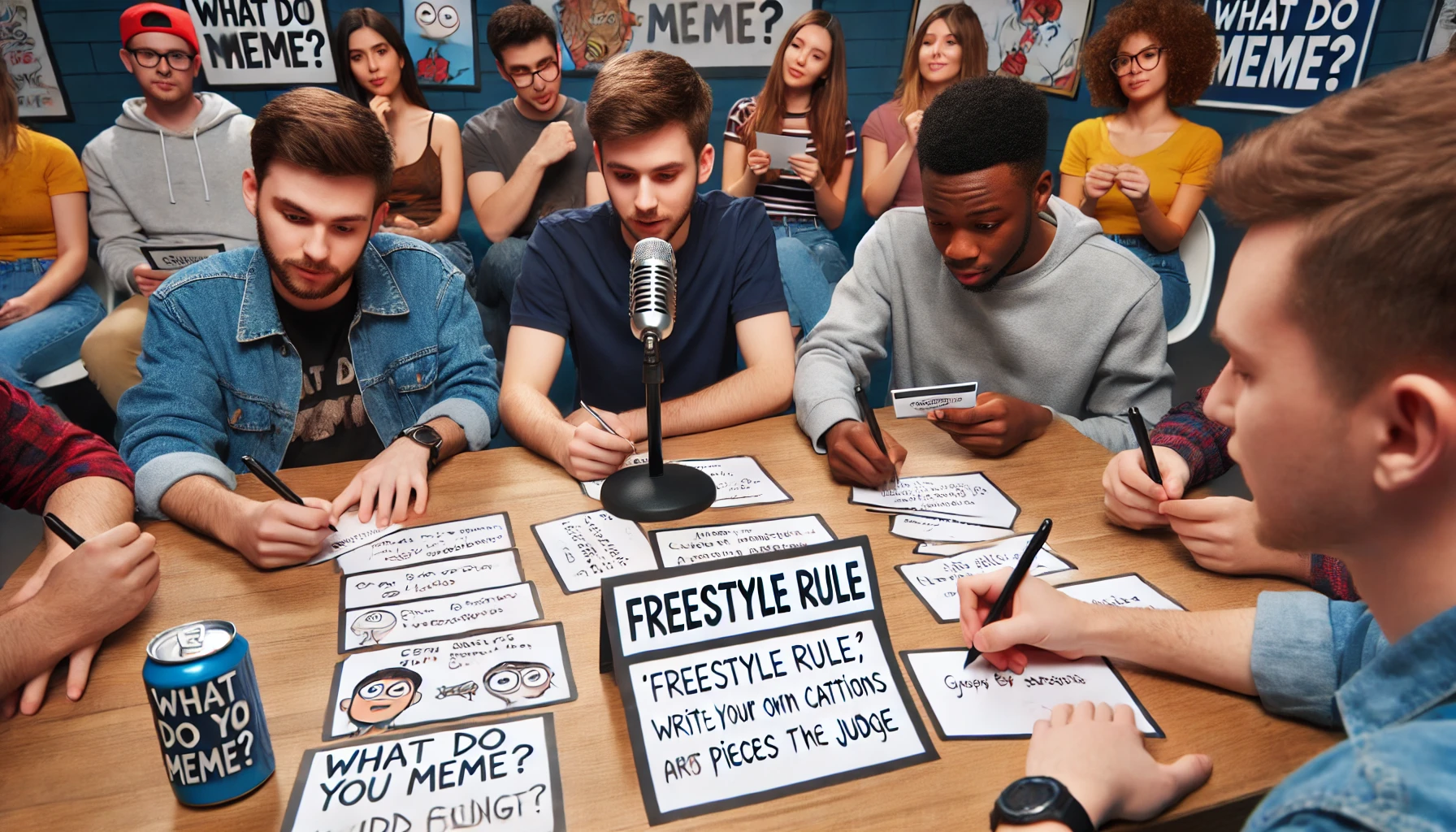
Freestyle Rule: Occasionally, a player may draw a Caption Card that says “Freestyle.” When this happens, all players must come up with their own captions instead of using a card from their hand. Players can write their captions on a piece of paper or say them aloud to the judge, adding a creative twist to the game.
Other Optional Rules: To keep the game fresh and exciting, consider implementing these optional rules:
- Double Down: Players can submit two Caption Cards for a single Photo Card, doubling their chances of winning the round.
- Swap Hands: At the start of a new round, players can swap their entire hand of Caption Cards with another player, adding an element of strategy and surprise.
Variations for Different Editions of the Game:
Family Edition: For a more family-friendly experience, “What Do You Meme? Family Edition” is perfect for players aged 8 and up. This version contains age-appropriate content while maintaining the same fun gameplay mechanics.
NSFW (Not Safe For Work) Edition: For adult players looking for edgier humor, the NSFW edition includes more risqué Caption and Photo Cards, making it ideal for a night in with close friends.
Customizing the Game with Personal Photos:
To make your game night even more memorable, consider using your own photos. Replace the Photo Cards with personal pictures that capture funny or significant moments. This customization adds a personal touch and makes the game even more engaging, as players create memes based on familiar faces and events.
V. Scoring and Winning
How to Determine the Winner:
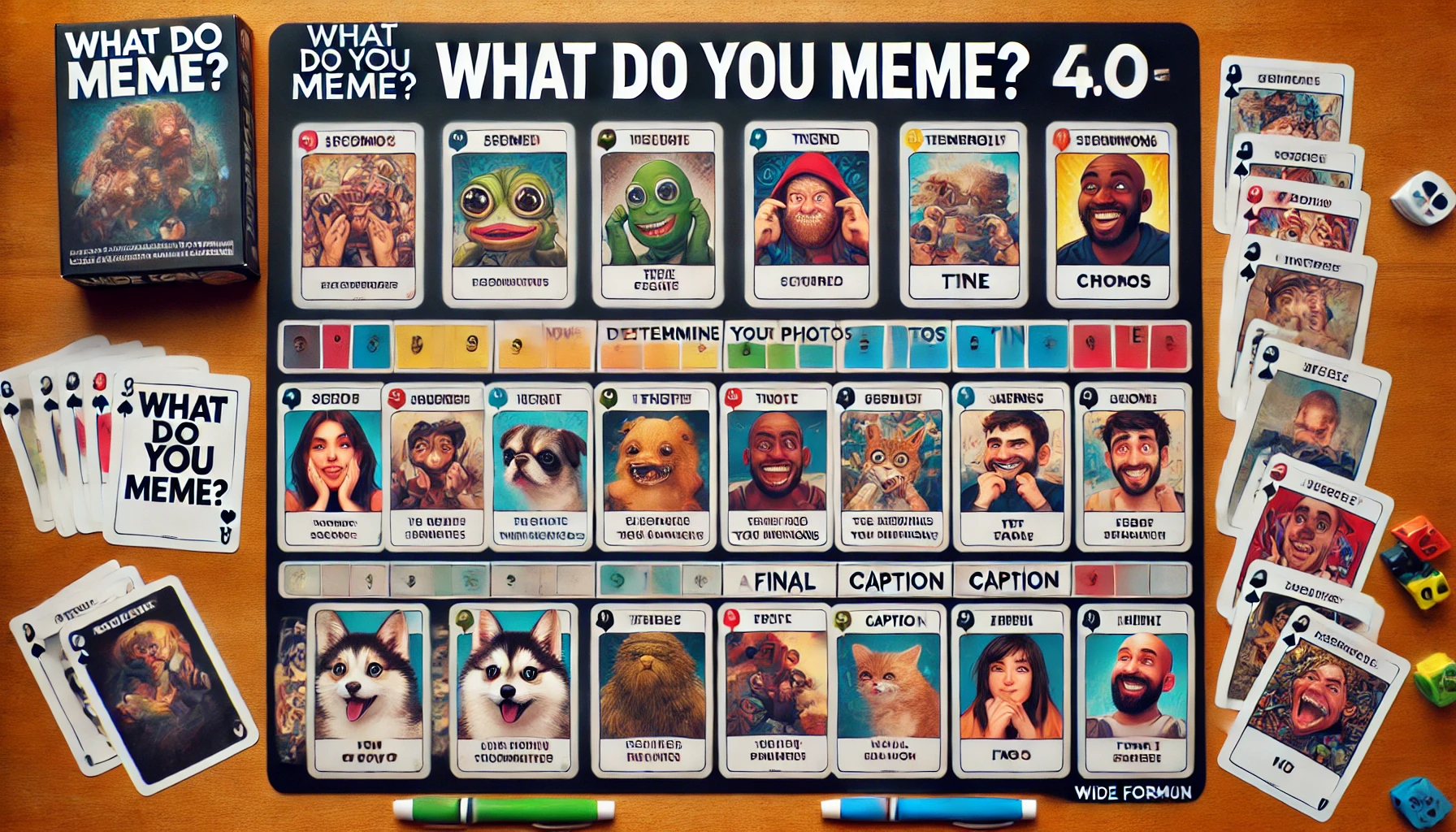
The winner of “What Do You Meme?” is the player who has collected the most Photo Cards by the end of the game. Each Photo Card represents a round won, so the player with the highest number of Photo Cards is declared the victor.
Tie-Breaking Methods:
In the event of a tie, where two or more players have the same number of Photo Cards, use the following tie-breaking methods:
- Final Caption Showdown: The tied players each submit one final Caption Card for a new Photo Card chosen by the group. The remaining players vote on which caption is the funniest, and the player with the most votes wins.
- Most Creative Card: The tied players present their funniest or most creative Caption Card from their hand. The judge of the last round decides which one wins based on creativity and humor.
Suggestions for Setting a Game-Ending Condition:
To ensure the game ends at a suitable time, consider the following game-ending conditions:
- Fixed Number of Rounds: Set a predetermined number of rounds (e.g., 10 rounds). Once all rounds are completed, the player with the most Photo Cards wins.
- Time Limit: Set a time limit for the game (e.g., 60 minutes). When the time is up, the player with the most Photo Cards is declared the winner.
- Player Choice: Allow players to agree on an ending condition before starting. This could be based on a specific number of rounds or a time limit that suits everyone’s schedule.
These methods ensure the game remains fun, engaging, and fair for all players.
VI. Tips and Strategies
How to Choose the Funniest Captions:
Selecting the funniest caption is key to winning “What Do You Meme?”. Here are some tips:
- Know Your Audience: Consider the judge’s sense of humor. If they enjoy dark humor, go for edgier captions. If they prefer puns, pick something light and witty.
- Match the Tone: Ensure your caption matches the tone of the photo. A mismatched caption might miss the mark.
- Surprise Factor: Sometimes the unexpected or absurd captions get the biggest laughs. Think outside the box and be creative.
Understanding Different Players’ Senses of Humor:
Every player has a unique sense of humor. Pay attention to what makes each player laugh:
- Observe Reactions: Notice which captions get the biggest laughs from different players.
- Adjust Accordingly: Tailor your captions to fit the humor style of the judge for each round. Some players might prefer sarcasm, while others enjoy straightforward jokes.
Tips for Judges to Make the Game More Enjoyable:
As the judge, you play a crucial role in keeping the game fun and fair:
- Read Aloud with Enthusiasm: Bring the captions to life with your delivery. A little theatrics can make even the simplest caption hilarious.
- Be Fair and Impartial: Shuffle the caption cards thoroughly to ensure anonymity. Choose the funniest caption based on its merit, not favoritism.
- Encourage Creativity: If the game starts feeling repetitive, suggest using the Freestyle rule or mixing in personal photos for a fresh twist.
These tips will help you get the most out of your game night, ensuring everyone has a blast and the memes are top-notch.
VII. Frequently Asked Questions
Q1: How many players can play “What Do You Meme?” A: The game is designed for 3 or more players. There’s no upper limit, so the more, the merrier!
Q2: What age group is “What Do You Meme?” suitable for? A: The game is recommended for ages 17 and up due to mature content. For younger players, there’s a Family Edition suitable for ages 8 and up.
Q3: Can I use my own photos in the game? A: Yes! You can personalize the game by using your own photos, making it even more fun and relevant to your group.
Q4: What happens if the judge can’t decide on the funniest caption? A: If the judge is torn between two captions, they can ask for a group vote to break the tie.
Q5: How long does a typical game last? A: The game length can vary, but it typically lasts about 30-90 minutes depending on the number of players and rounds.
Troubleshooting for Any Game-Related Issues:
Problem: Players are struggling to come up with funny captions. Solution: Encourage players to use the Freestyle rule or mix in personal photos for a fresh perspective. Sometimes a change in the game dynamic can spark creativity.
Problem: The game is taking too long to finish. Solution: Set a time limit or reduce the number of rounds. Agree on these adjustments before starting to ensure everyone is on the same page.
Problem: Some players feel left out or not engaged. Solution: Rotate the judge role more frequently to keep everyone involved. Also, remind players that the goal is to have fun and not take the game too seriously.
