
Created by game designer Phil Walker-Harding, Sushi Go! captures the fun of a conveyor belt sushi bar in card game form. Instead of worrying about raw fish, you’re strategically snatching the best plates for points. Since its release in 2013, Sushi Go! has become a modern classic, beloved for its simple rules and engaging gameplay. Easy to learn, quick to play, and fun for just about anyone – families, friends, even your grumpy uncle who claims to hate “all this new stuff.” Get ready to grab, pass, and score your way to sushi victory.
Sushi Go! Game Components
Let’s dive into the Sushi Go! game components, the heart of this fast-paced card drafting experience. Inside the box, you’ll discover a vibrant collection of Sushi Cards, each representing a delicious dish that earns you points over three quick rounds. But before we unveil the strategic symphony of passing cards and outwitting your opponents, let’s familiarize ourselves with the culinary delights that await:
| Sushi Card | What’s on the Plate | Quantity | Point Value | Special Ability |
|---|---|---|---|---|
| Maki Rolls | Your classic rolls – some with more pieces than others | 26 | Varies | N/A |
| Tempura | Crispy, golden fried shrimp, best in pairs | 14 | 5 (for pairs) | N/A |
| Sashimi | Fresh slices of salmon – need a full set for points | 14 | 10 (for sets of 3) | N/A |
| Dumplings | The more you have, the more points you score | 14 | 1-15 (depending on quantity) | N/A |
| Squid Nigiri | The prized catch! | 5 | 3 | Can be tripled with Wasabi |
| Salmon Nigiri | A classic choice | 10 | 2 | Can be tripled with Wasabi |
| Egg Nigiri | A humble start | 5 | 1 | Can be tripled with Wasabi |
| Wasabi | Not edible on its own! | 6 | N/A | Triples the value of the next Nigiri |
| Chopsticks | Lets you grab a second plate this turn | 4 | N/A | Take two cards on your turn, then pass the Chopsticks |
| Pudding | Save room for dessert! | 10 | Varies (end-game bonus) | N/A |

Setting Up the Sushi Feast
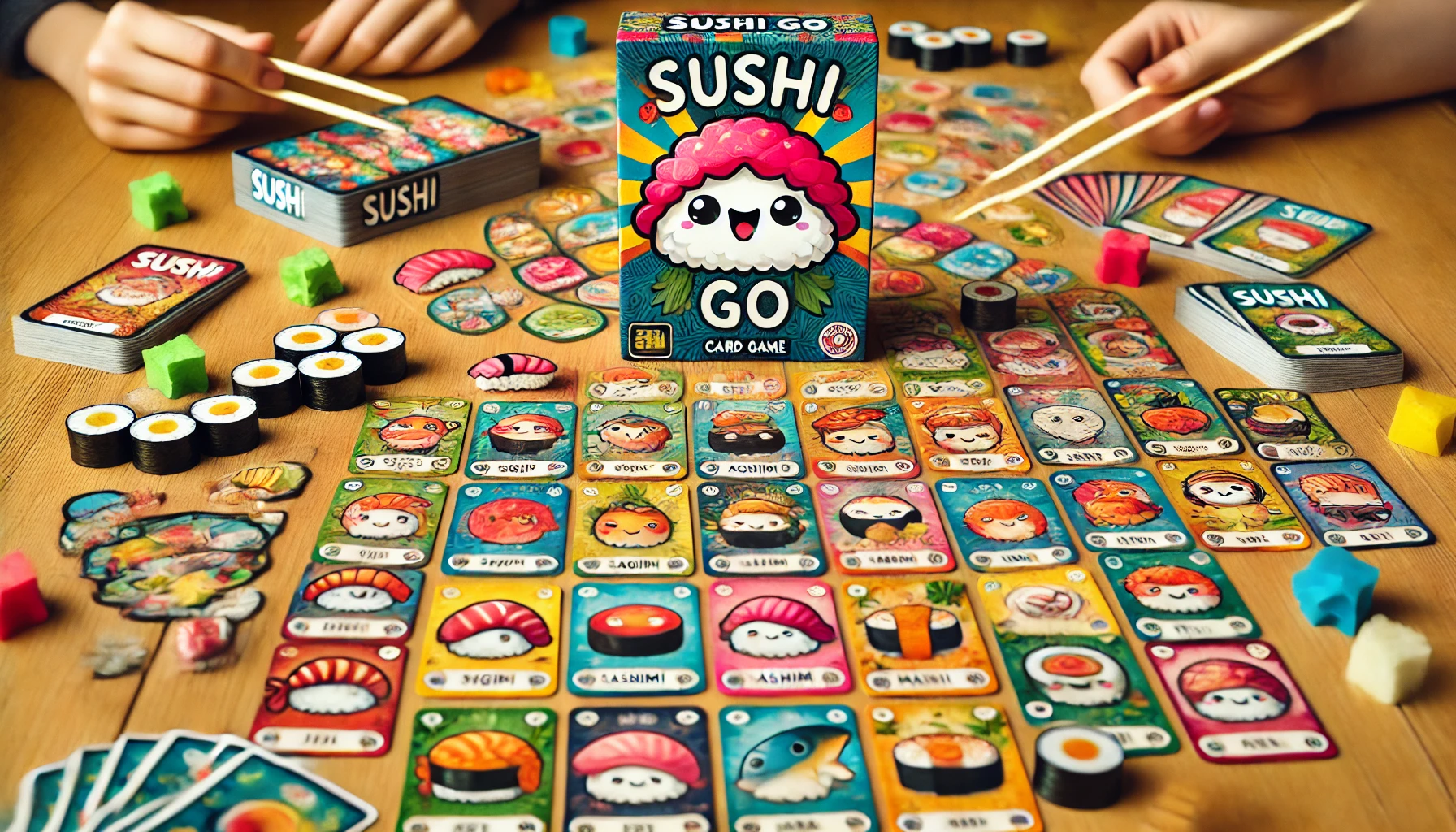
Setting up a game of Sushi Go!, a fast-paced card game, is quicker than ordering takeout. Whether you have 2 players or a full table of 5 players, this quick card game is perfect for a family game night or a gathering of friends. No fancy chopsticks required, just follow these simple steps to begin the first round:
1. Shuffle and Prepare for Dealing: Give those sushi cards a thorough shuffle, ensuring they’re randomized for fair play. Nobody wants a predictable conveyor belt of sushi!
2. The Deal: Each player receives a hand of cards at the start of the game, depending on the number of players involved:
| Number of Players | Cards Each Player Receives |
|---|---|
| 2 | 10 |
| 3 | 9 |
| 4 | 8 |
| 5 | 7 |
3. Creating the Draw Pile: The remaining cards are placed face down in the center of the table, forming the draw pile. This pile will be used to replenish each player’s hand after every round.
4. The Scorekeeper: (Optional, but highly recommended.) To avoid any point-related disagreements (we’ve all been there), designate a player as the official scorekeeper. They’ll keep track of everyone’s scores throughout the game, ensuring a fair and delicious competition. Just don’t blame them if your pudding strategy backfires!
How to Play Sushi Go!
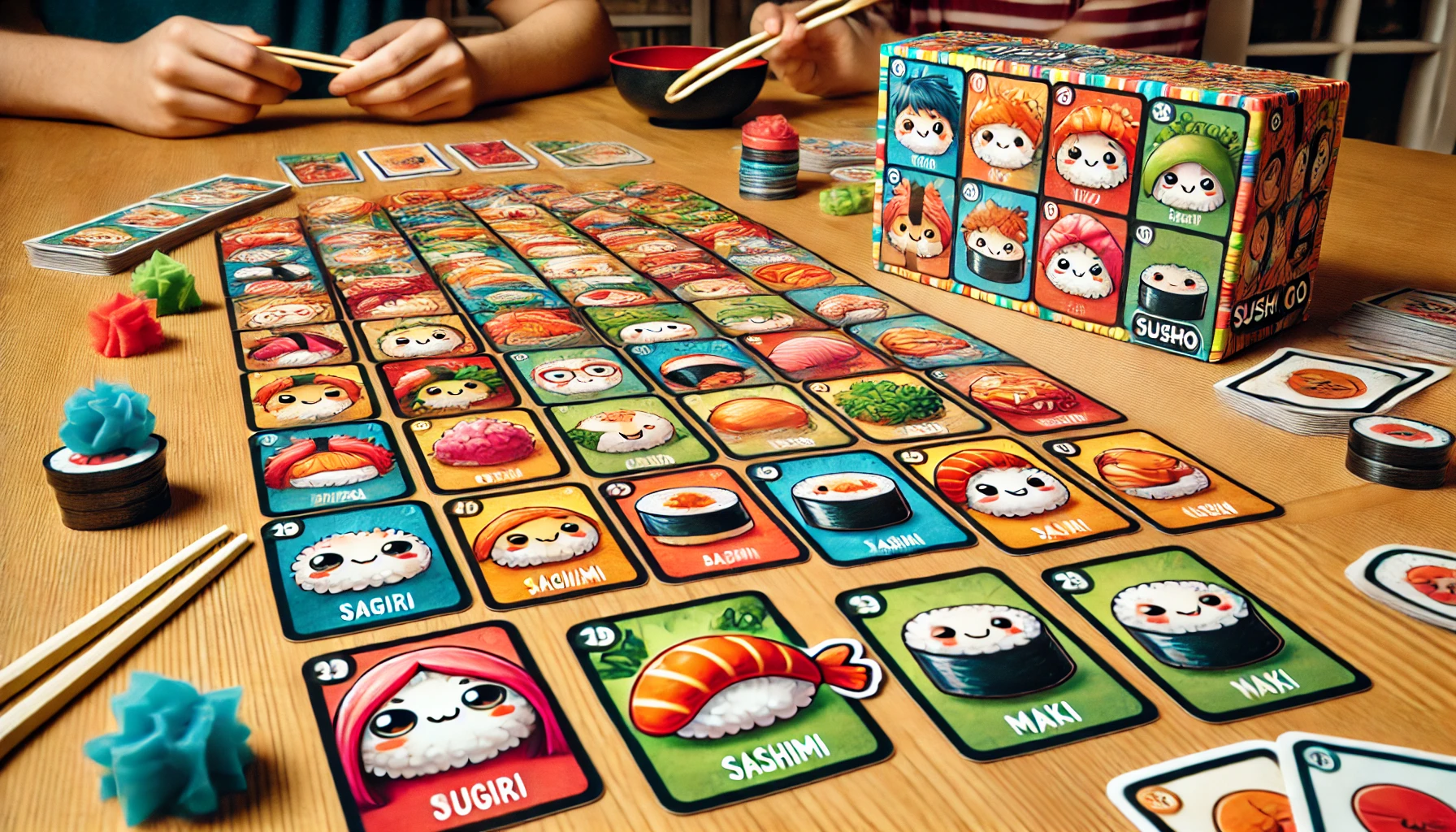
Playing a round of Sushi Go! is a whirlwind of quick decisions and strategic card drafting. This isn’t your grandma’s card game—things move fast! Here’s how a round of this exciting card game unfolds:
- Start Your Sushi Engine! Each player begins the round with a hand of cards. The number of cards in your starting hand depends on the total number of players in the game.
- Your Turn, Your Choice: On your turn, carefully examine the Sushi Cards in your hand. Choose one card that you want to keep and place it face down in front of you. This is your secret stash for the round. Remember, strategy is key in Sushi Go! – sometimes the most tempting card isn’t always the most strategic!
- The Big Reveal: Once everyone has chosen a card, flip them over simultaneously! This is where the “oohs” and “ahhs” (or maybe groans of despair) come in.
- Pass the Plates (and the Cards): Now, slide the rest of your hand to the player on your left. This simulates the conveyor belt at a sushi restaurant – you only get a few seconds to grab what you want before it’s gone!
- Fresh Fish (er, Cards) Keep Coming: Grab your new hand of cards – it will be one card smaller than before. Repeat steps 2-4 until you’re left holding just a single card. This adds a delicious layer of tension, as you never know what strategic gems (or duds) will end up on your plate.
- The Final Course (and Scoring): Pass that last card along. Sometimes it’s a welcome surprise, sometimes it’s a culinary disaster. That’s the thrill of Sushi Go! Now it’s time to calculate those hard-earned sushi points. But before we dive into the main course of scoring, let’s explore those special cards and their game-changing abilities. Each card has unique effects that can influence your strategy:
- Wasabi: This potent condiment isn’t meant to be eaten alone. Instead, Wasabi triples the point value of your next Squid Nigiri, Salmon Nigiri, or Egg Nigiri. Talk about a spicy point boost!
- Chopsticks: These handy utensils let you break the rules (in a good way!). Play a Chopsticks card, and you get to select two Sushi Cards from your hand on that turn. Remember, though, that after using your Chopsticks, you must put them back in your hand to be passed along.
Now that the sushi feast is over, discard all cards except those delectable Pudding cards. Those are for later, like a sweet surprise at the end of the game!
Scoring Your Delicious Sushi
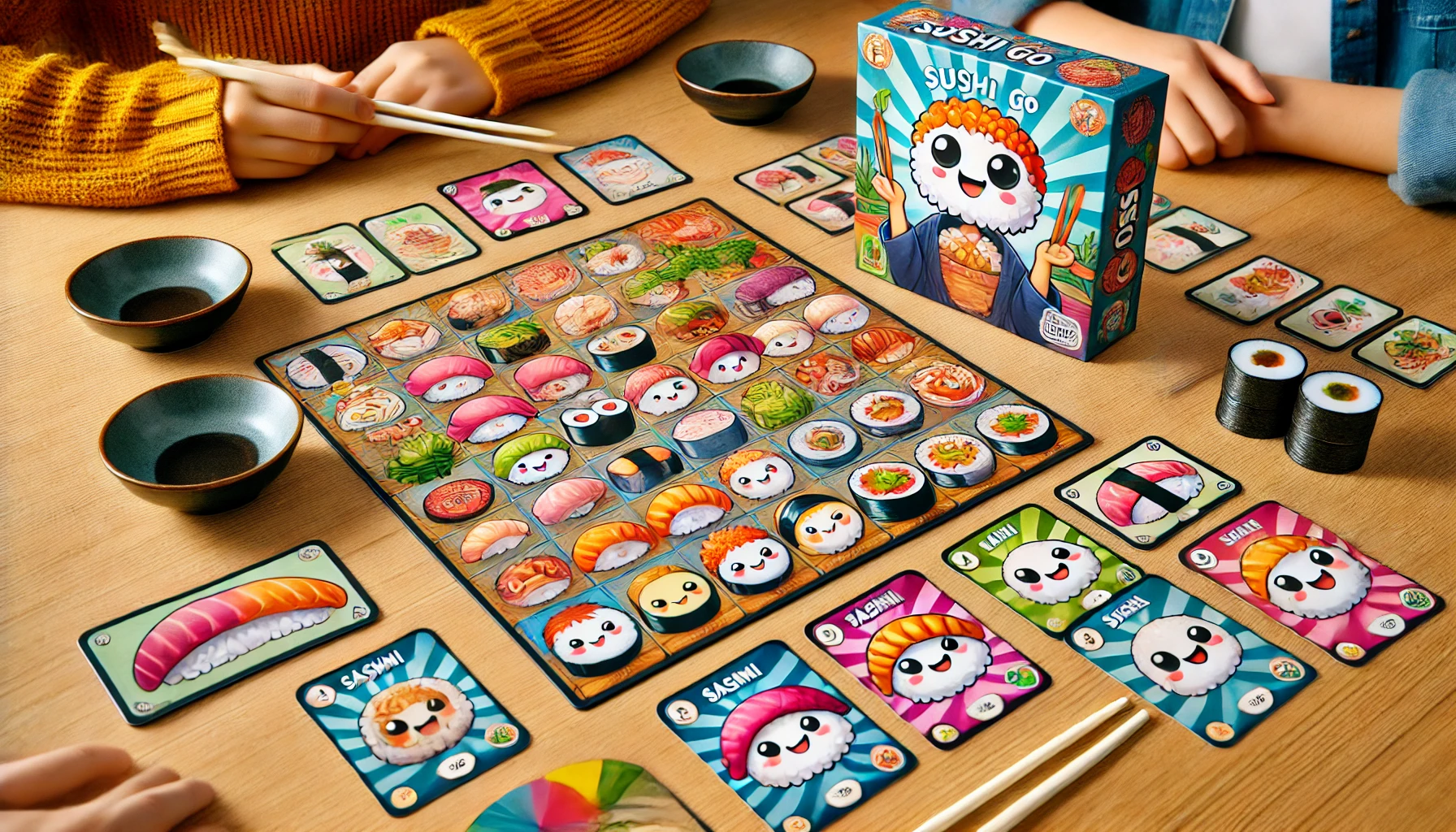
Alright, sushi connoisseurs, it’s time to tally up the points and see who reigns supreme in this delectable card game. Just like at a high-end sushi restaurant, not all dishes are created equal. Here’s how scoring works in Sushi Go!:
Maki Rolls: The Race for Rolls
At the end of each round, players compare their Maki Roll collections. The player with the most Maki Roll icons wins the coveted title of Maki Master and scores 6 points. Second place isn’t too shabby either, earning a respectable 3 points. In the rare event of a tie, players split the points evenly. After all, even in a competitive card game, sharing is caring!
Tempura: Dynamic Duos
Tempura cards are all about finding their perfect match. A single Tempura card? About as useful as chopsticks for soup. But score a pair of Tempura cards, and you’ll be swimming in 5 glorious points. Remember, teamwork makes the dream work, especially in the world of Sushi Go!.
Sashimi: Three’s Company, Two’s a Crowd
Sashimi is the high-stakes gamble of Sushi Go!. Collect a set of three Sashimi cards, and you’ll be rewarded with a whopping 10 points. But be warned – one or two Sashimi cards won’t get you anything. It’s a risky strategy, but sometimes the reward is worth the gamble.
Dumplings: The More, the Merrier
Dumplings in Sushi Go! work on a sliding scale of deliciousness – the more you gather, the higher your point value climbs:
| Number of Dumpling Cards | Point Value |
|---|---|
| 1 | 1 |
| 2 | 3 |
| 3 | 6 |
| 4 | 10 |
| 5 or more | 15 |
Nigiri: A Trio of Tastes
Squid Nigiri, Salmon Nigiri, and Egg Nigiri – each one a delectable point-scorer in its own right.
- Squid Nigiri: This prized catch is worth a solid 3 points.
- Salmon Nigiri: A classic choice, Salmon Nigiri will net you 2 points.
- Egg Nigiri: Don’t underestimate the humble Egg Nigiri – it’s still worth a valuable point!
Wasabi Power-Up! Remember that fiery Wasabi? Combining it with Nigiri is where the real magic (and strategic depth) happens. Place any Nigiri on top of a Wasabi card, and its point value triples! That’s right – a Wasabi-enhanced Squid Nigiri suddenly becomes a 9-point delicacy. Talk about spicing up your game!
Chopsticks: Useful, But Not a Point-Scorer
Think of Chopsticks as your tools for navigating this sushi feast— helpful during the round, but they won’t earn you any points on their own.
Example Scoring: Let’s say you finish a round with 2 Maki Roll cards totaling 4 icons, a pair of Tempura, 3 Dumplings, and a Salmon Nigiri enjoying a Wasabi bath. That’s 6 points for winning the Maki Roll race, 5 points for the Tempura pair, 6 points for the satisfying Dumplings, and a boosted 6 points for the Wasabi-fied Salmon Nigiri. In total, you’ve racked up 23 points—not bad for a few rounds of Sushi Go!
Ending the Game and Determining the Winner
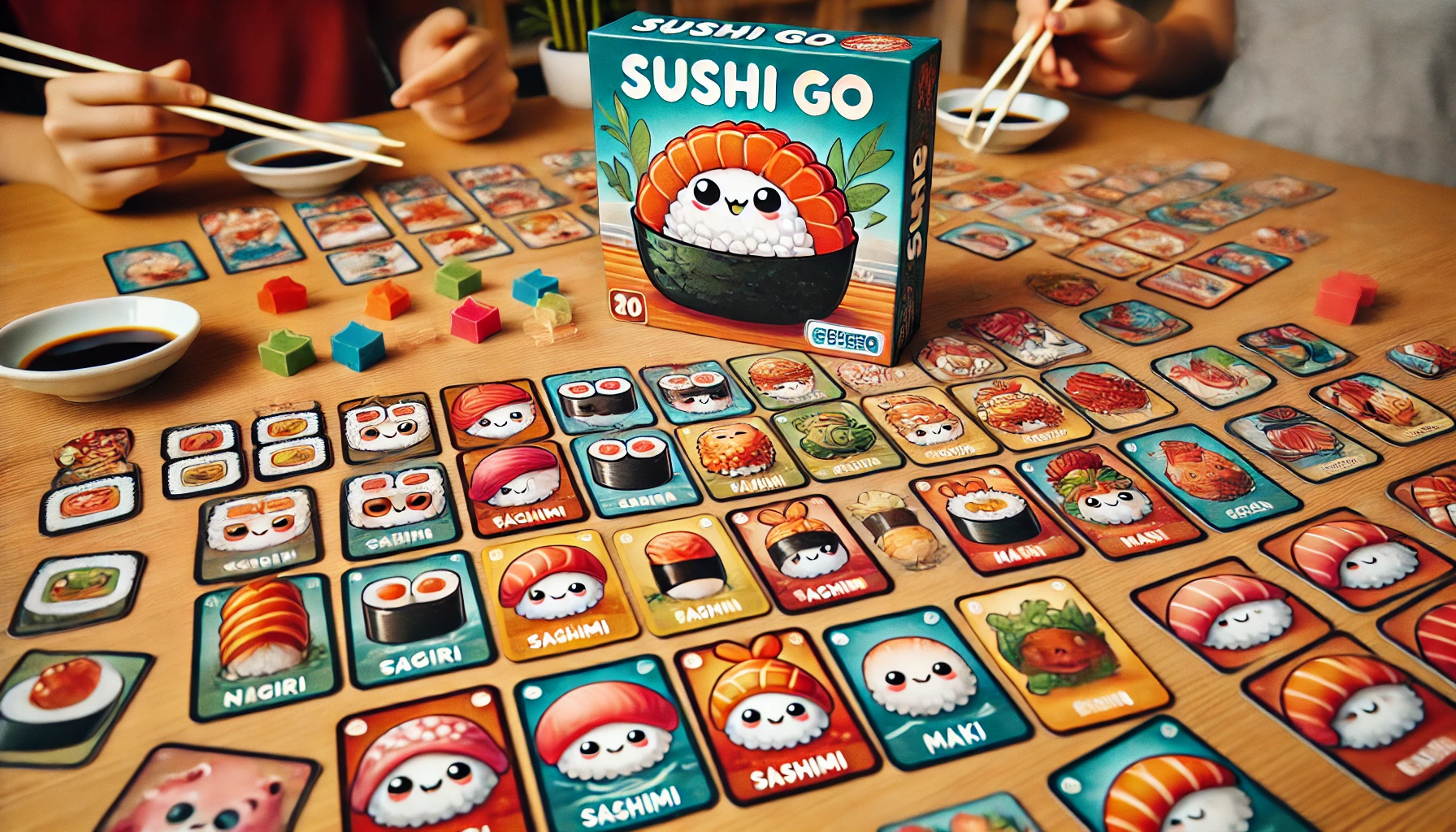
After three fast-paced rounds of Sushi Go!, the plates are cleared, and the sushi chefs (that’s you!) await the final verdict. But before crowning the winner of this delightful card game, there’s one last, crucial element to consider: Pudding.
Pudding: The Sweetest Reward (or Punishment?)
Those adorable Pudding cards you’ve been collecting? They’re not just for show! At the end of the game, the player with the most Pudding cards receives a sweet bonus of 6 points added to their final score. However, the player with the fewest Pudding cards (or tied for fewest) takes a 6-point penalty. It’s a strategic dilemma—do you chase those Pudding points for a chance at victory, or focus on other cards and risk falling behind?
And the Winner Is…
To determine the winner in Sushi Go!, players must calculate their final scores. Add up each player’s scores from all three rounds, including those delectable (or disastrous) Pudding bonuses and penalties. The player with the highest total score at the end of the game wins! They’ve earned bragging rights and, more importantly, the satisfaction of a Sushi Go! feast well-played.
Tiebreaker Time!
What happens if two or more players find themselves in a tie, even after factoring in those sugary Pudding points? In this case, the player with the most Pudding cards takes home the win. It’s the ultimate tiebreaker, proving that a little dessert strategy can go a long way in Sushi Go!!
Advanced Sushi Go! Strategies
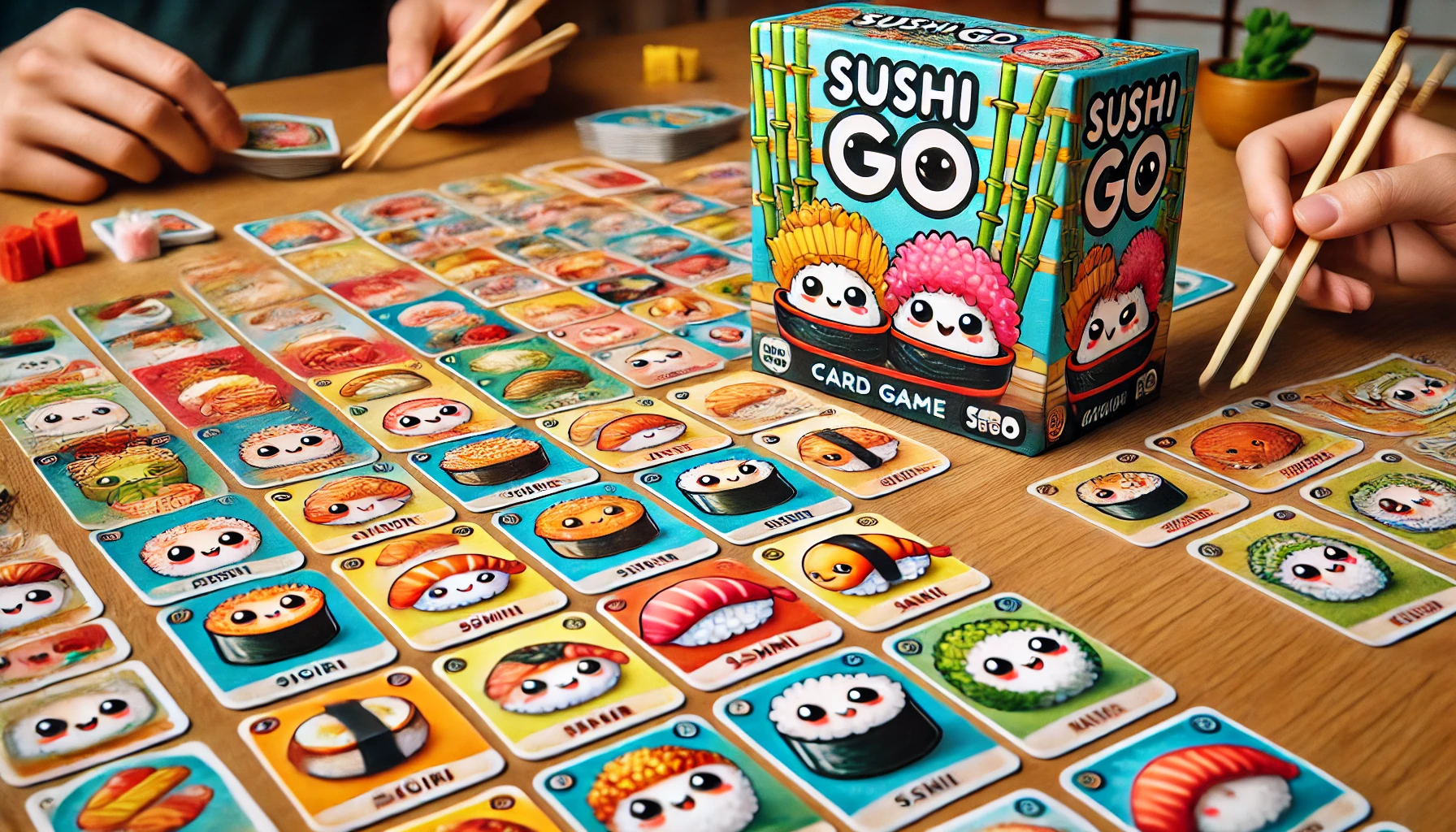
Ready to level-up your Sushi Go! game? Moving from casual diner to seasoned sensei is all about mastering the strategic nuances of this deceptively simple card drafting game. It’s time to think beyond just grabbing what looks tasty and embrace the art of card advantage, calculated risks, and, dare we say, a little friendly sabotage!
Outsmarting Your Opponents: Prediction and “Hate Drafting”
Becoming a Sushi Go! master requires you to pay close attention to your opponents’ moves. Are they hoarding Tempura cards, hoping to score those delicious pairs? Perhaps you should consider snagging a matching shrimp card before it’s gone. Remember, Sushi Go! isn’t just about building your best hand – it’s about anticipating and influencing what your opponents can achieve on their turn.
This brings us to the somewhat ruthless, but oh-so-effective tactic of “hate drafting.” Imagine your opponent is one Sashimi away from a glorious 10-point score, and it’s the last card of the round. Even if you have no chance of completing your own Sashimi set, grabbing that final card will deny them those points—a classic hate drafting maneuver to keep your opponent in check and maximize your chances of winning.
Risk vs. Reward: Calculating Your Sushi Strategy
Sushi Go! is all about balancing risk and reward, especially when it comes to card selection on each turn. Do you play it safe and focus on consistent point-scorers like Nigiri and Wasabi combos? These provide steady gains but might not earn you the big points. Or, do you embrace risk and chase those high-value Sashimi and Tempura sets? These offer the potential for huge rewards, but also the possibility of ending up empty-handed if you can’t collect the full set.
Adapting Your Strategy: Two-Player Tactics vs. Multiplayer Mayhem
The number of players in your Sushi Go! game significantly impacts your strategic approach. In a two-player game, card tracking becomes a powerful tool. You have a better chance of remembering which cards your opponent has passed, allowing for more calculated plays. For instance, if you know they’re lacking Tempura cards, you might safely pass one along, hoping it circles back to you on the next round.
However, with a full table of five players, Sushi Go! transforms into a whirlwind of uncertainty. Card tracking becomes more challenging, and you’ll need to adapt to the unpredictable nature of a crowded game. In these situations, it’s often better to grab a valuable card—even if it doesn’t perfectly align with your current hand—simply to deny it from an opponent.
Sushi Go! Variations
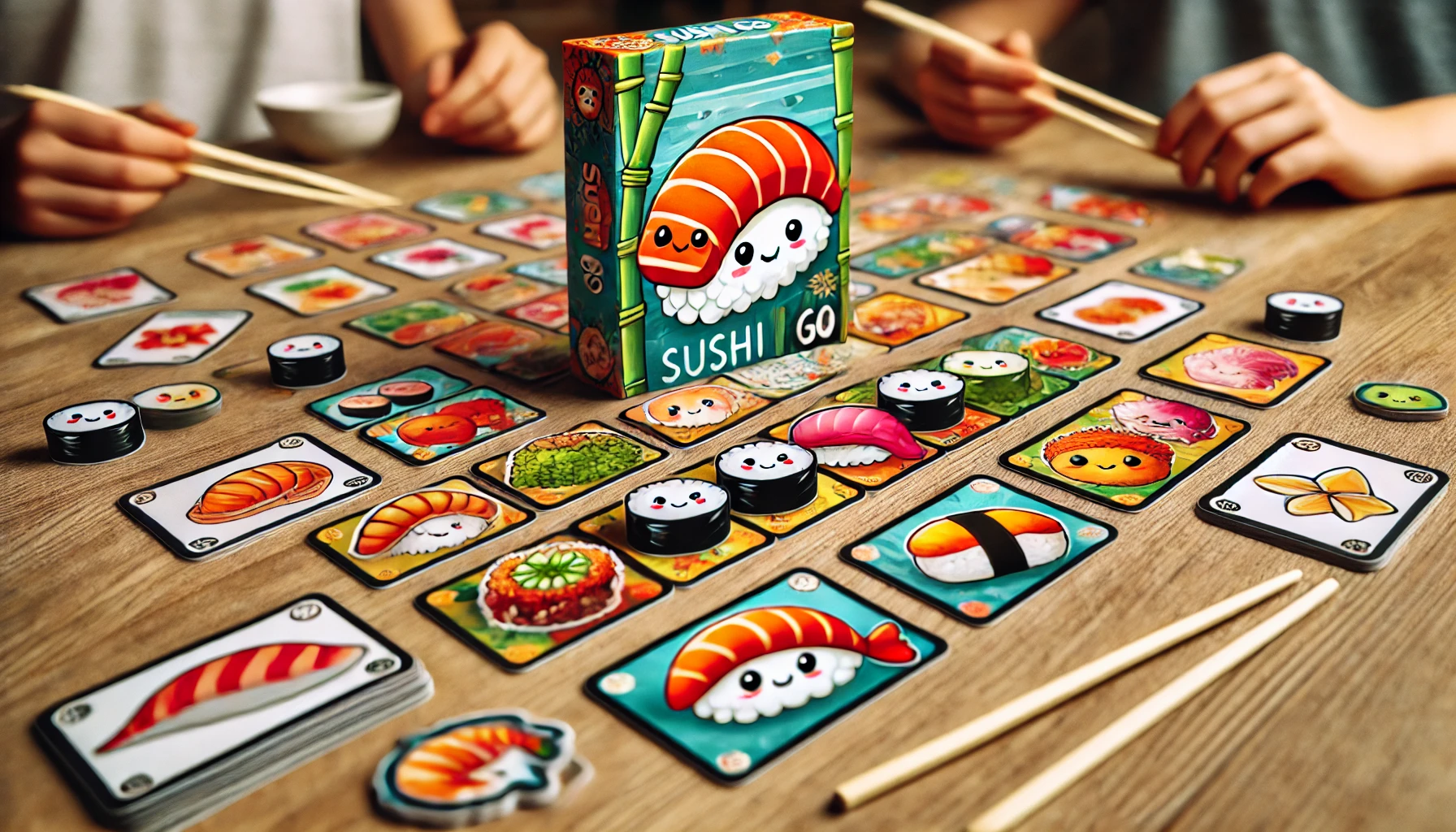
Craving a new flavor of Sushi Go!? Bored with your usual sushi-slinging routine? Fear not, intrepid chefs, Sushi Go! offers some tasty variations to customize your gameplay and add exciting new challenges. These optional rules are a great way to spice up your next game night.
Pass Both Ways: Sushi Go! Round Trip
This variation injects an element of unpredictability by changing the direction of the card passing. In rounds 1 and 3, players pass their cards to the left as usual. But in round 2, things get wild— cards are passed to the right! It’s like that moment when the conveyor belt at your favorite sushi joint suddenly reverses direction—momentarily disorienting, but ultimately more exciting!
Two-Player Variant: The Dummy Player Joins the Feast
Who says you need a crowd for a sushi showdown? This two-player variation introduces a “dummy player” to keep things interesting, even when it’s a head-to-head battle for sushi supremacy.
Here’s how it works:
- Dealing with a Third Wheel: Deal out three hands of 9 cards, as if you were playing a three-player game. The middle hand belongs to the dummy player.
- Controlling the Silent Partner: Players take turns controlling the dummy player.
- Two Hands, One Mind: On your turn, draw the top card of the dummy player’s hand and add it to your own hand. You then choose one card to play for yourself and one card to play for the dummy player, placing both face down.
- Mirroring Your Moves: Your opponent follows the same process with their own hand.
- The Reveal and The Reset: Reveal all cards played that turn. Then, pass your remaining hands to your opponent, leaving the dummy player’s remaining cards in place. Repeat steps 3-5 until all cards have been played.
Essentially, this variation challenges you to play two hands simultaneously, strategizing for both yourself and a silent, sushi-loving partner. It’s a brain-bending twist that forces you to think two steps ahead, making for a surprisingly strategic two-player experience.
Want more card game fun? Check out our curated lists for couples, 2 players, 3 players, 4 players, 5 players, and 6+ player card games!
