
Ever wish you could hand your kids one activity that covers science, secrecy, AND screen-free fun all at once? Say hello to your new favorite go-to: lemon juice invisible ink.
This is the kind of activity that looks like magic to little ones but is 100% real chemistry underneath. One minute your child is “writing nothing” on a blank piece of paper. The next, a secret message is browning into view right before their eyes.
It’s simple. It’s cheap. And it works every single time.
Whether you’re a teacher planning a hands-on science lesson or a parent looking for a rainy-day activity that doesn’t involve a screen, this one belongs in your back pocket.
Let’s turn a lemon and a piece of paper into a full-blown spy mission.
Why This Activity Is a Guaranteed Hit
The first time I tried this with my own kids, I honestly wasn’t sure they’d believe it would work. A blank page? Really?
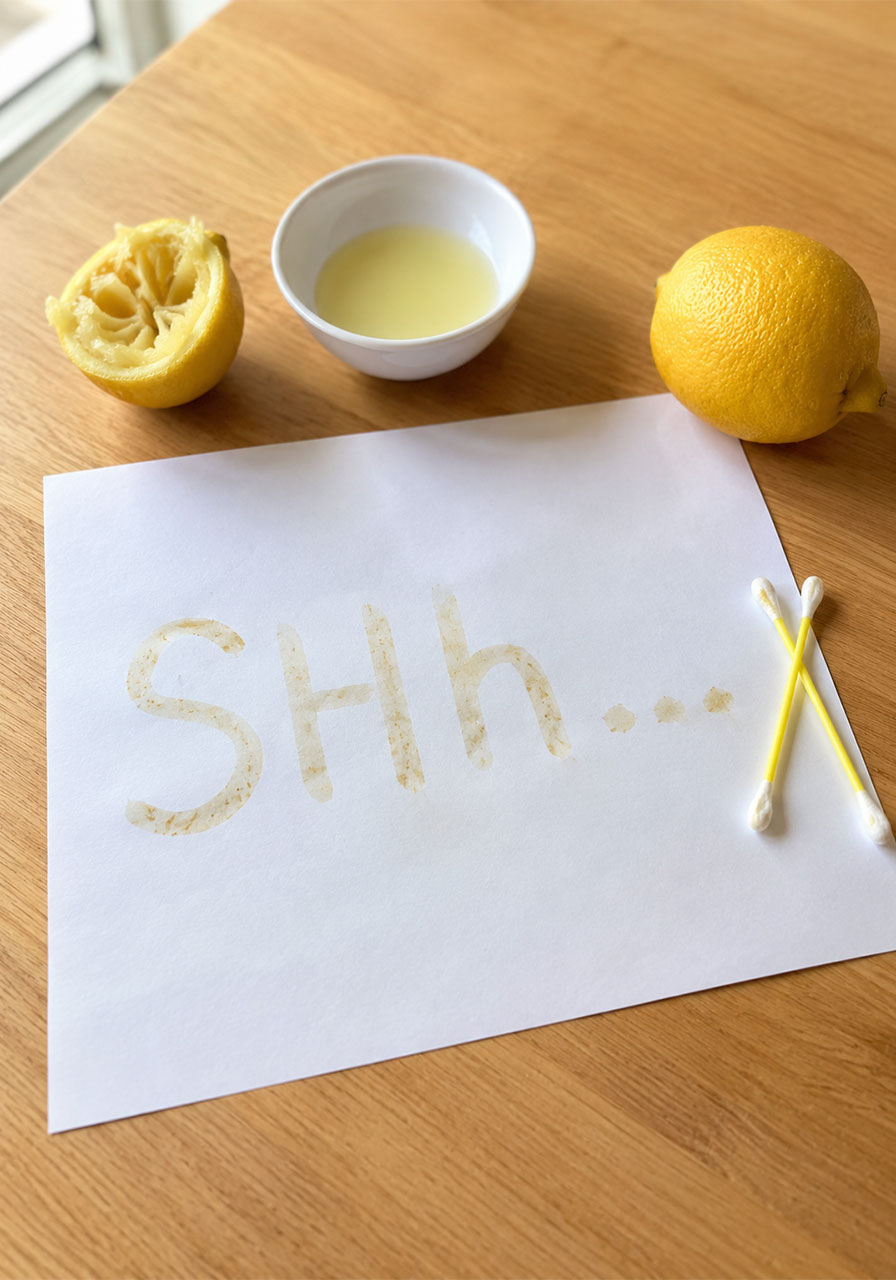
Then we popped it in the oven, and the “Shh…” message slowly turned golden brown right in front of them. Their faces said it all. Pure wonder.
That’s the beauty of this project. It’s hands-on, it’s a little mysterious, and it teaches real science without ever feeling like a lecture.
It’s also endlessly repeatable. Once kids catch on, they’ll want to write secret note after secret note, which means more practice writing, more curiosity about how it works, and more quiet time for you.

Quick Activity Overview
Best For: Classrooms, homeschool science units, rainy days, birthday party activity stations, spy-themed parties
Age Range: Toddlers through tweens (younger kids will need adult help with the heat step)
Prep Time: 2 minutes
Active Time: 15 minutes
Reveal Time: 20-30 minutes
Difficulty: Easy
What You’ll Need
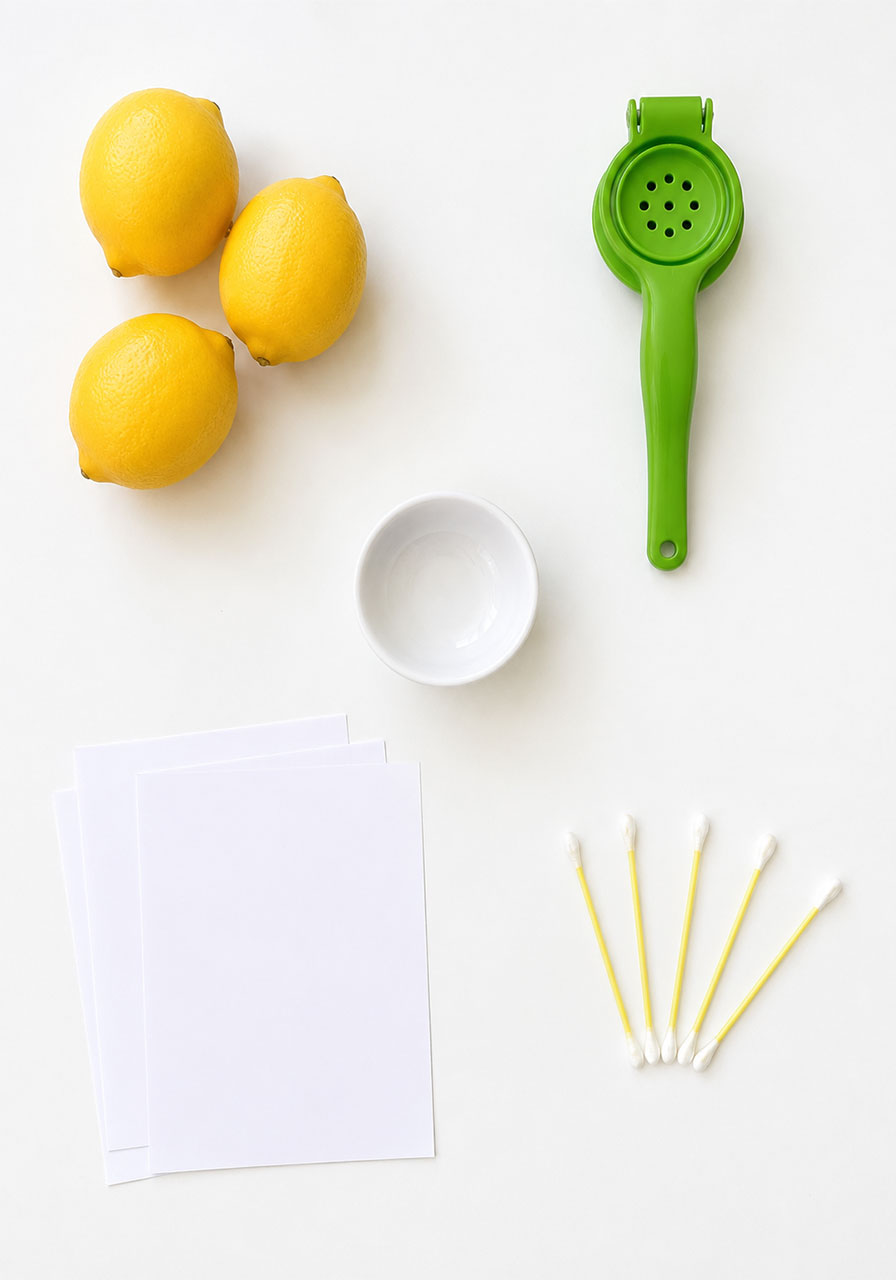
1 lemon (or lemon juice from the fridge in a pinch)
A small bowl
Cotton swabs or a small paintbrush
White paper
An oven (a hair dryer, iron, or lightbulb also work – more on that below)
A baking sheet
How to Write Your Secret Message
Here’s exactly how to set this up so it works perfectly on the first try.
Step 1: Juice your lemon.
Cut the lemon in half (adults should handle this part) and squeeze the juice into a small bowl. You don’t need to strain out every seed, but try to keep large pieces of pulp out.
Step 2: Dip your “pen.”
Have your child dip a cotton swab or paintbrush into the lemon juice.
Step 3: Write the secret message.
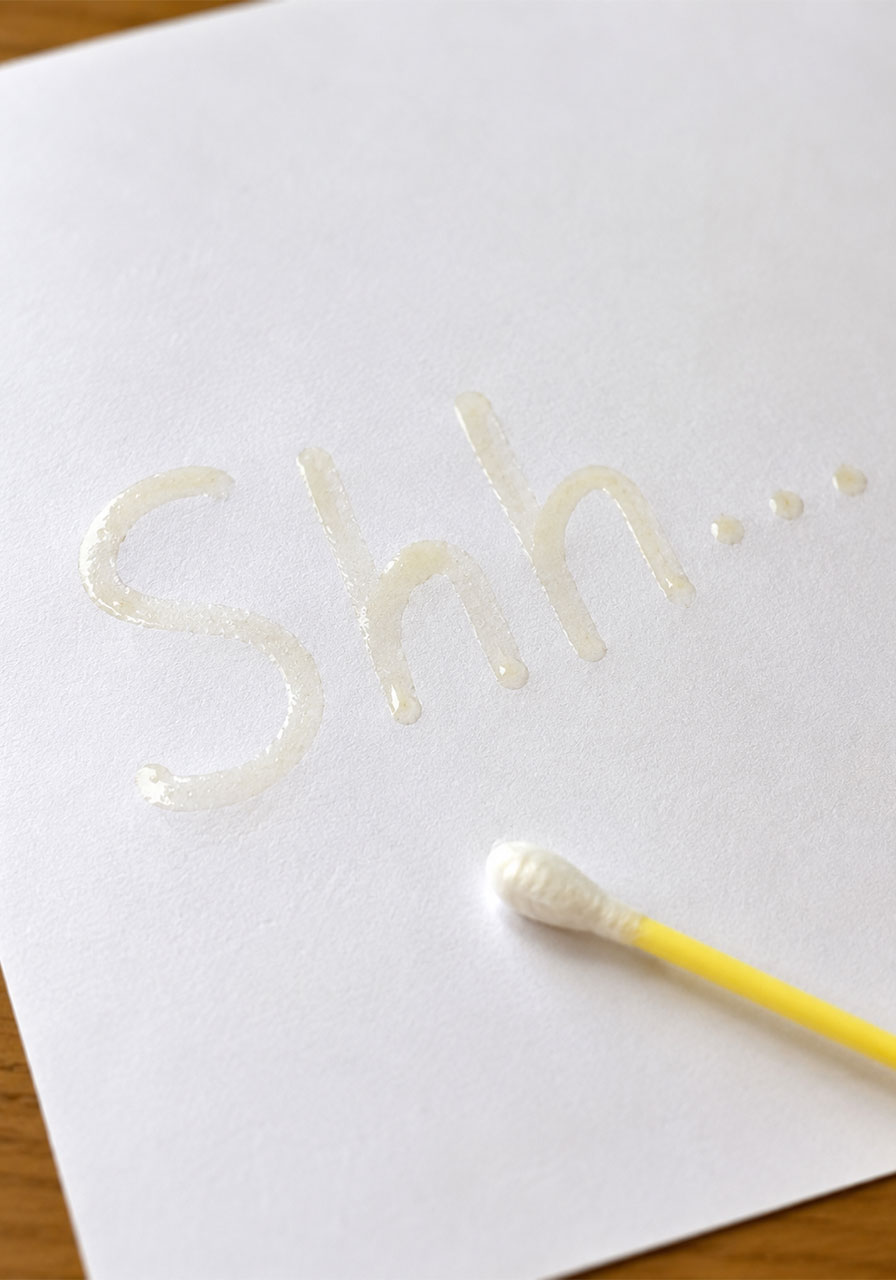
Lightly paint the message, drawing, or code onto the paper. Go easy on the juice. A thin, even coat works best.
Step 4: Let it dry completely.
Set the paper aside for about 10-15 minutes until you can’t see any wet spots. The message will look completely invisible once it’s dry. That’s exactly what you want.

A Quick Note on “Too Much Ink”
If your child goes a little heavy-handed with the lemon juice, the paper may dry slightly bumpy or textured in that spot. This can make the hidden message visible before you even reveal it.
It’s not a big deal, and plenty of kids won’t even notice. But if you want a truly invisible message, less is more.
How to Reveal the Secret Message
This is the best part. Here’s how to make that hidden writing magically reappear.
Method 1: The Oven (Recommended for Kids)
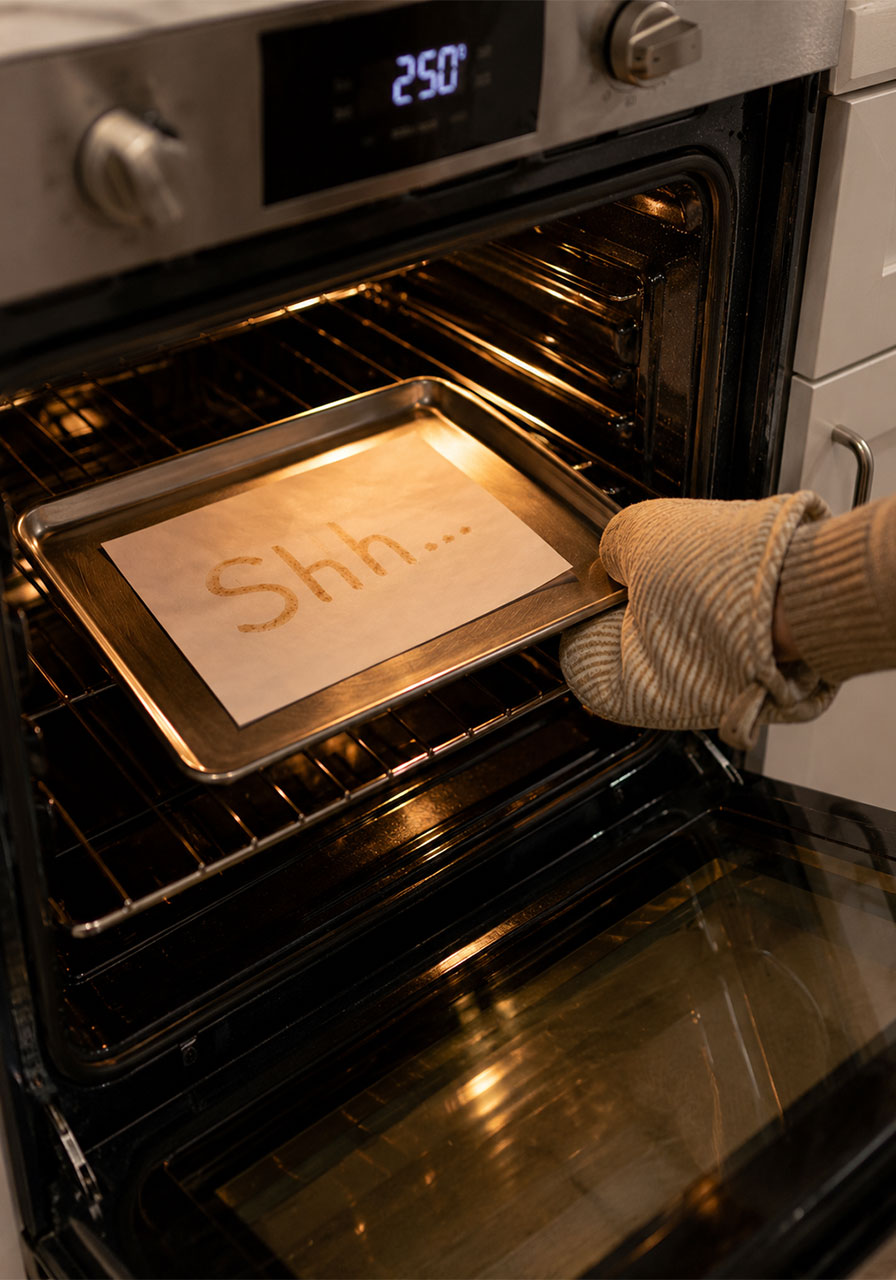
1. Preheat your oven to 250°F.
2. Place the dried paper on a baking sheet.
3. Bake for about 20 minutes, checking every few minutes.
4. Watch as the message slowly turns golden brown.
5. Let the paper cool for a minute before handing it to your child.
This is the method we recommend for young kids. It’s hands-off, low-risk, and your child can go play while the reveal happens in the background instead of standing around waiting.
Method 2: Lightbulb or Candle
Hold the paper close to a lit lightbulb or a candle flame (never touching it) and the heat will slowly darken the message.
This method feels extra dramatic and spy-like, which older kids love. The tradeoff is that younger children tend to lose patience holding the paper steady for several minutes, and there’s more fire risk to manage.
Method 3: A Warm Iron
Place the paper between two sheets of plain paper or a thin towel and press with a warm iron (no steam) until the message appears. This works fast, but it’s strictly an adult-only step.
The Science Behind Disappearing Ink
Now for the really cool part. This isn’t just a fun trick, it’s real chemistry.
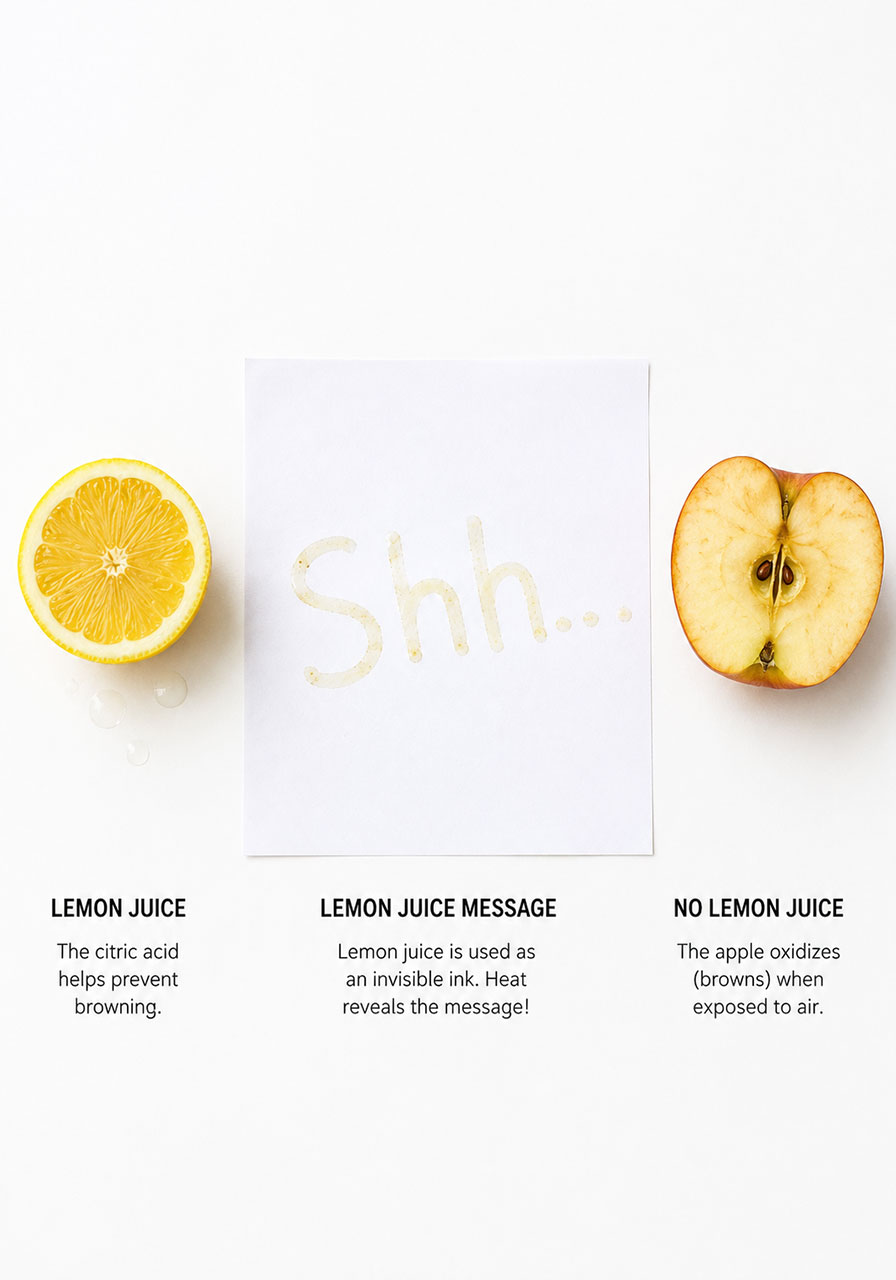
Lemon juice is acidic, thanks to something called citric acid. When you write with it, the juice dries clear because the citric acid compound is colorless.
When you apply heat, the citric acid breaks down. That process releases carbon.
Once that carbon is exposed to air, it oxidizes and turns brown, which is exactly what makes your message visible again.
Here’s a fun comparison you can share with your kids: this is the same oxidation process that makes a sliced apple turn brown when it sits out. Heat just speeds the whole reaction up dramatically.
It’s a simple way to introduce real vocabulary like “oxidation” and “acid” without a single worksheet involved.
Pro Tips for a Flawless Reveal
Pro Tip 1: Use less juice than you think you need.
A thin coat dries clear and reveals more dramatically than a heavy, bumpy coat.
Pro Tip 2: Add decoy lines.
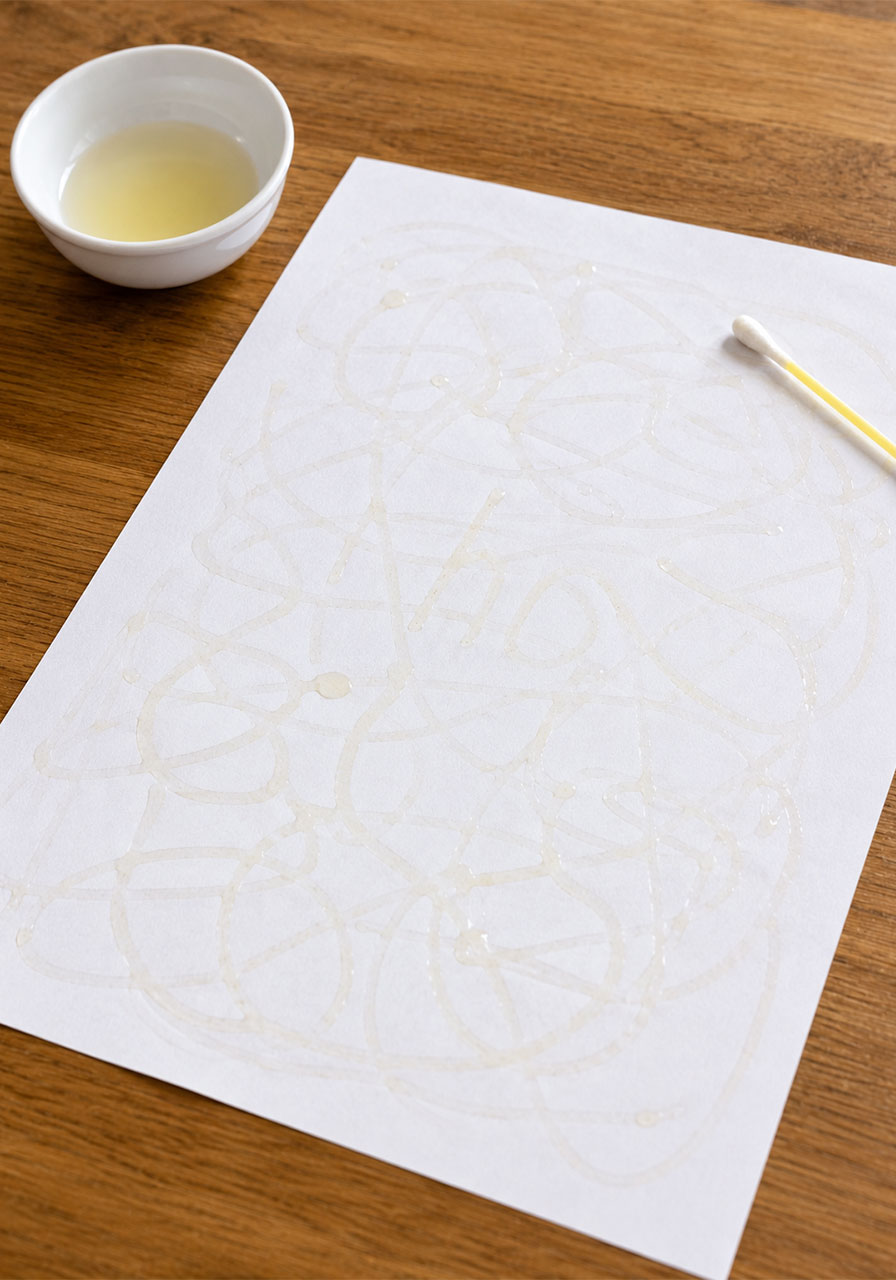
Have your child scribble extra lemon juice lines and swirls around the real message before it dries. Once everything is invisible, it just looks like a blank page. But under heat, the real message will still stand out from the camouflage. This works best with kids who are already comfortable writing, since younger kids may need help remembering which lines were the “real” message.
Pro Tip 3: Crumple it up.
If a message is a little too visible once dry, crumple the paper before delivering it. The texture from the wrinkles disguises the faint ink lines until it’s decoded.
Pro Tip 4: Keep a spray bottle of water nearby.
If a message doesn’t seem to be developing under the lightbulb or candle method, a very light mist of water can sometimes help speed up the reaction. Test on scrap paper first.
Fun Ways to Level This Up
Once your kids master the basics, here are some ways to turn one simple activity into an entire afternoon (or an entire party).
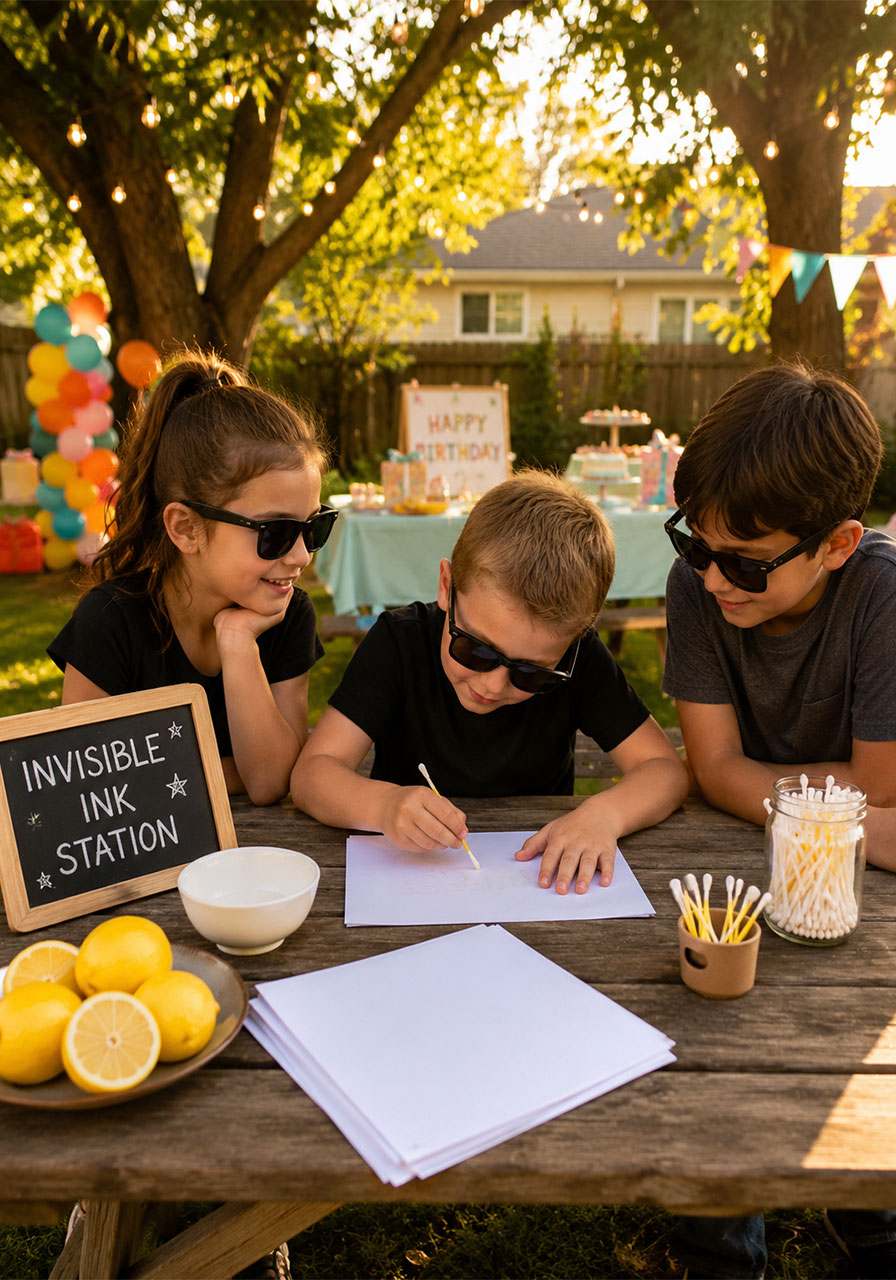
Throw a Backyard Spy Party. Set up an invisible ink writing station as one activity, then send kids on a scavenger hunt using clues they have to “decode” in the oven or under a lamp before moving to the next spot.
Try a Citrus Ink Comparison. Set up small bowls of lemon juice, lime juice, and orange juice side by side. Have kids write with each one, then reveal all three at once to see which develops the darkest, fastest message. It’s a simple experiment that teaches real observation and comparison skills.
Add a Milk or Baking Soda Ink Station. Both milk and a baking-soda-and-water mixture also work as invisible ink through a similar heat-reveal process. Setting up two or three “secret ink” stations side by side turns this into a full science center for a classroom or a party.
Make Invisible Ink Thank-You Notes. After a birthday party, have kids write thank-you notes in invisible ink for the giver to “discover” by holding the card near a lamp. It’s a memorable twist on a classic chore.
Safety Notes
A few quick reminders before you get started.
Always have an adult cut the lemon. A sharp knife and small hands don’t mix.
The oven, iron, and open flame methods all require direct adult supervision from start to finish. Kids should never handle the baking sheet, iron, or candle themselves.
Let the paper fully cool before handing it back to your child, especially if it came straight out of the oven.
Frequently Asked Questions
Can I use bottled lemon juice instead of a fresh lemon?
Yes. Fresh lemons tend to give slightly better results because the concentration of citric acid is higher, but bottled juice will still work.
Can I use a hair dryer instead of an oven?
Yes, a hair dryer on a hot setting held a few inches from the paper can reveal the message, though it usually takes longer and more patience than the oven method.
Why isn’t my message showing up?
The most common reason is not enough heat or not enough time. Give it a few extra minutes, and make sure the ink layer wasn’t too thin to begin with.
Is this safe for toddlers?
The writing step is perfectly safe for toddlers with supervision. Just make sure an adult fully handles the heat-reveal step.
How long does the written message stay invisible?
Once fully dry, the message can stay invisible for days or even weeks, as long as the paper isn’t exposed to heat.
Ready to Send Your First Secret Message?
This is one of those rare activities that checks every box: cheap, easy, mess-free, and genuinely exciting for kids. Grab a lemon, a piece of paper, and get ready to watch your child’s face light up when their secret message appears.
Once you try it, don’t be surprised if “can we do the invisible ink thing again” becomes a regular request around your house or classroom.
