
If you only try one STEM challenge this year, make it this one.
The Index Card Tower is proof that the best ideas are often the simplest ones. One material. Zero fancy prep. And a challenge level that will have even your most confident builders groaning in the best possible way.
Here’s the fun contradiction at the heart of this activity: it’s incredibly simple for you to set up, and incredibly complex for your students to solve.
That gap is exactly where the magic happens.
Kids will fold. They’ll roll. They’ll build boxes, zig-zags, and towers that look like tiny skyscrapers. And then, more often than not, those towers will come crashing right back down.
That’s not a bad thing. That’s the whole point.
This challenge builds real engineering skills: trial and error, structural thinking, and the patience to try again after a collapse. It also happens to be one of the most competitive activities you will ever run in your classroom.
Ready to get started? Let’s break down exactly how to run this challenge, then dive into all the wild and wonderful ways your students will try to solve it.
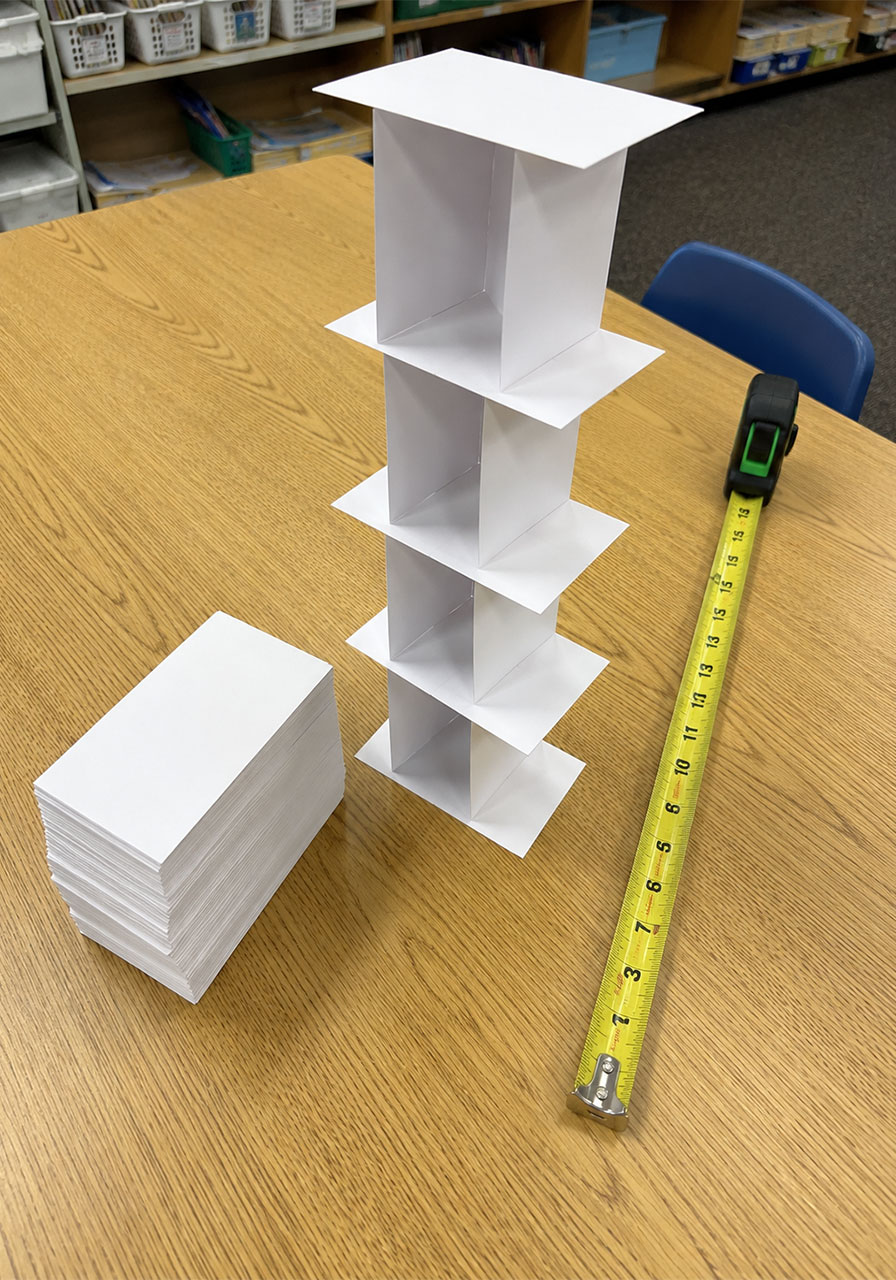
The Basics: How to Run the Index Card Tower Challenge
Best For: Upper elementary, though younger grades can absolutely join in with a little extra support.
Time to Build: 20-40 minutes, depending on group size and how many collapses you’re working around.
Group Size: Works great solo, in pairs, or in small teams of 3-4.
What You’ll Need:
- A stack of index cards (any size works fine)
- Optional: masking tape (more on this below)
How to Play:
1. Give each student or group a stack of index cards. Don’t count them out precisely. A generous handful is always more than enough, and it will still feel like too few by the end.
2. Explain the goal: build the tallest freestanding tower possible using only the index cards you were given.
3. Set a timer and let the building begin. Cards can be folded, rolled, or stacked, and any technique is fair game.
4. When time runs out, measure each tower from the table to its tallest point. The tallest tower wins.
Pro Tip: Skip the tape on your first attempt. It sounds like it should help, but tape actually adds weight without adding much stability. The towers tend to fall more easily once tape gets involved. If your group really wants tape, hand out just 2-3 feet per team.
Fun Variation: Run the challenge once with tape and once without, on two different days. Then have a class discussion about which version was easier and why. It’s a fantastic way to sneak in some real engineering reflection.
1. The Creative Sculptor
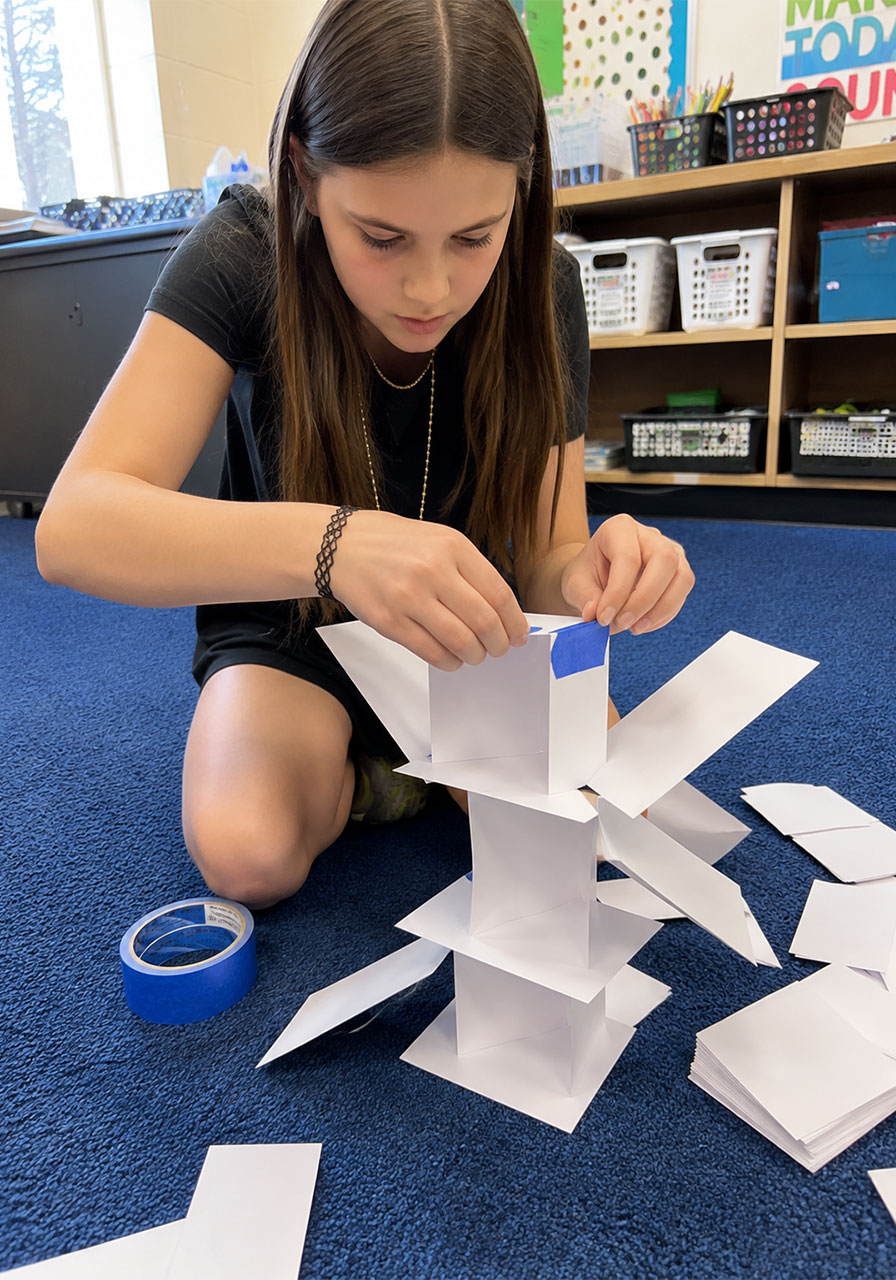
Some kids won’t even attempt a traditional tower shape.
Instead, you’ll see wild, sculptural creations popping up all over the room. Wings. Arches. Structures that look nothing like a “tower” at all.
These builders usually reach for tape, and that’s part of why. Tape lets them attempt more ambitious, artistic shapes that a purely stacked tower never could.
Best For: Your most artistic, out-of-the-box thinkers.
Pro Tip: These elaborate designs rarely end up being the tallest, and that’s completely okay. Praise the creativity just as loudly as you praise the height. It keeps every student engaged, not just the ones chasing a ruler.
2. The Rolled-Card Rookie
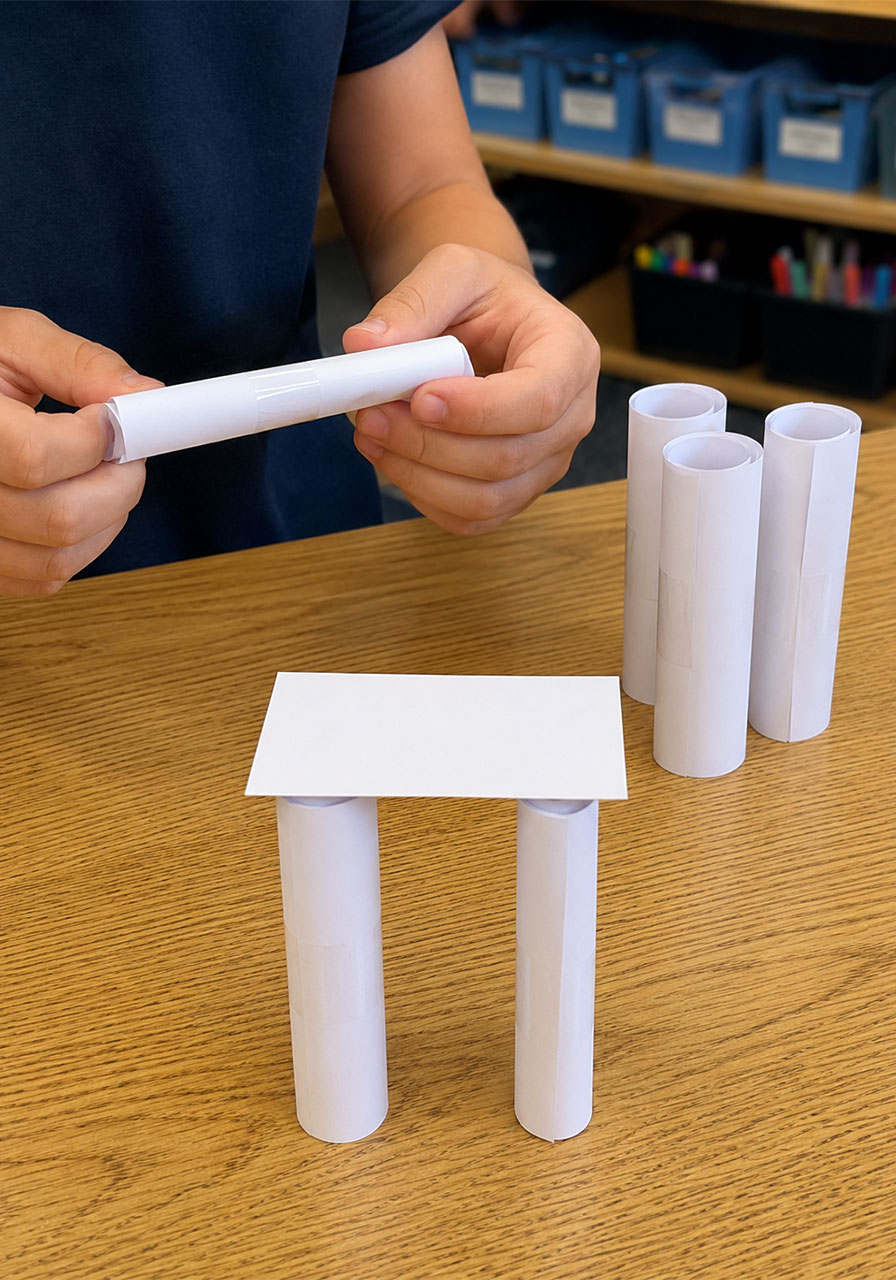
There’s one design every group secretly wants to master: the rolled card.
It looks simple. It is not simple.
The trick is all in the edges. They have to line up perfectly, or the roll will lean and the whole structure slants sideways.
Best For: Second grade through fifth grade, with a wide range of success depending on age.
Pro Tip: Younger builders (think second grade) often need a little tape to help the rolled edges hold together. Older students can usually roll the card tightly enough that it holds its shape all on its own, no tape required.
3. The Multi-Floor Mastermind
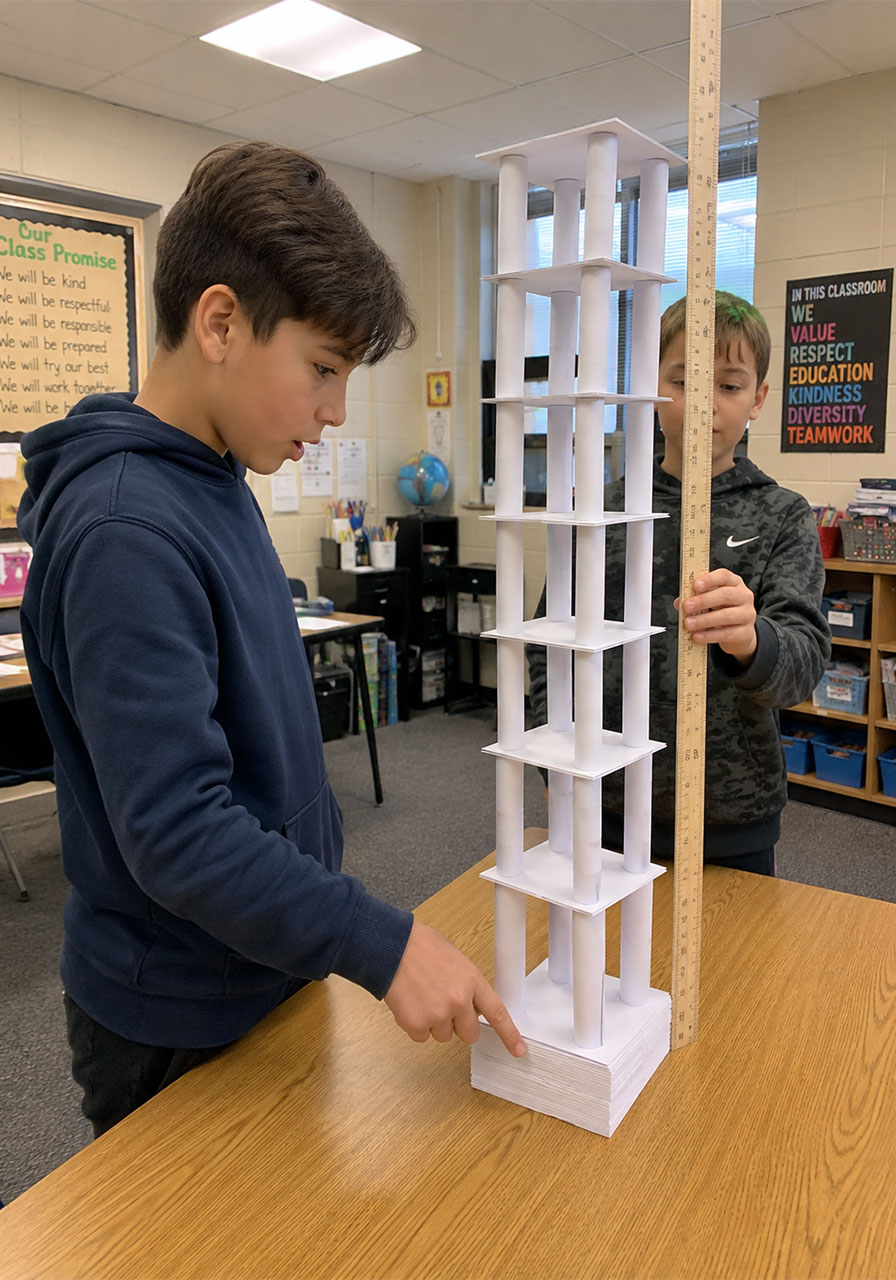
This is the design that separates the good builders from the great ones.
Students stack rolled cards into floor after floor, creating a tower that climbs impressively high. It looks amazing right up until it doesn’t.
What most kids don’t see coming: the very bottom floor has to support the weight of every single floor above it. If that base isn’t rock solid, the whole tower folds under its own height.
Best For: Students ready for a real structural engineering lesson.
Pro Tip: If a group’s tower keeps buckling at the bottom, ask them a simple guiding question: “What does your bottom floor need to be different from your top floor?” Let them discover the answer instead of handing it to them.
4. The Traditional Stacker
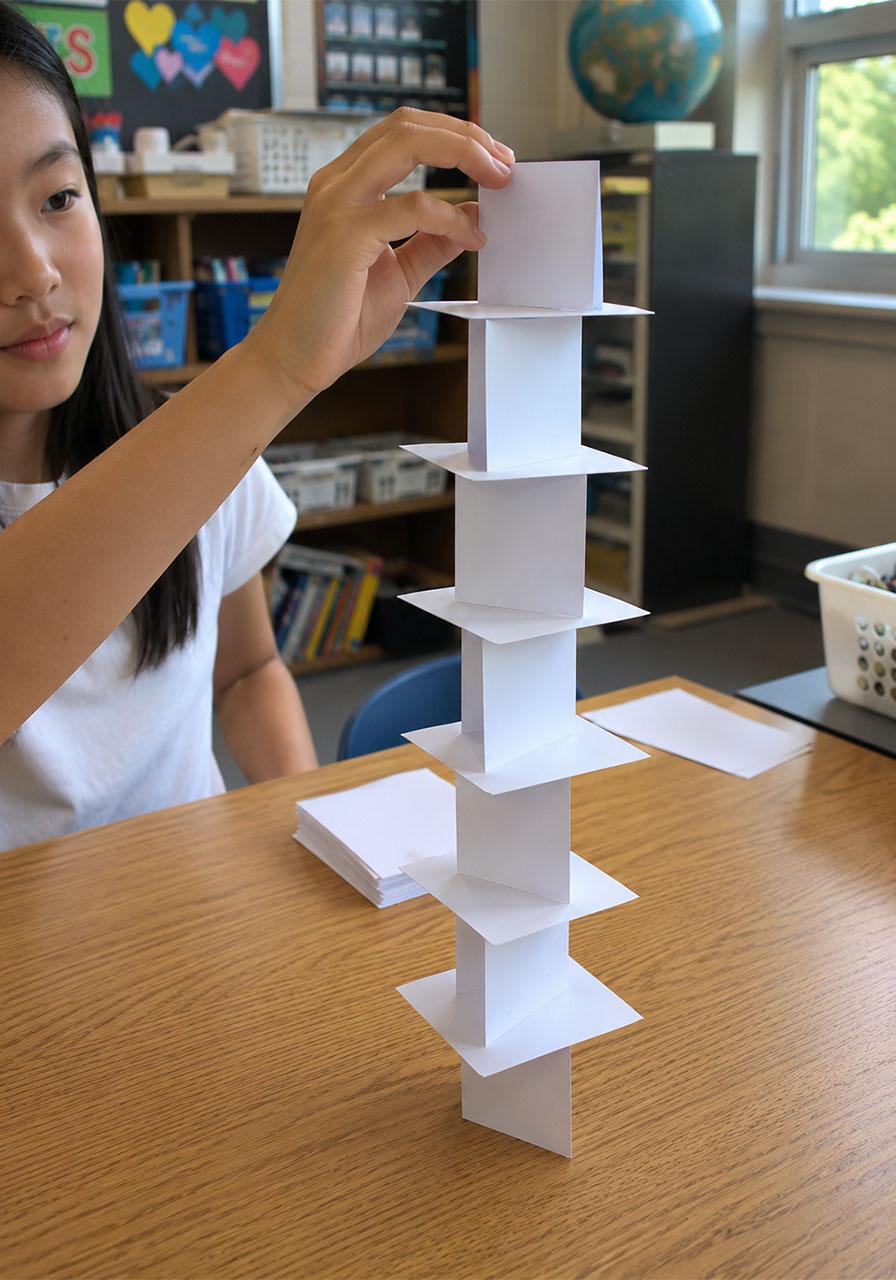
Every single class has one student who cracks the “real” trick to this challenge.
Fold a card in half so it stands up like a little column. Rest a flat card on top like a shelf. Repeat, repeat, repeat.
It’s simple, it’s sturdy, and it climbs fast.
Best For: Students who want a reliable method they can repeat quickly under time pressure.
Pro Tip: Once one group discovers this method, others will start copying it. That’s not cheating, that’s engineering. Let the idea spread and watch the whole room’s towers get taller.
5. The Fierce Competitor
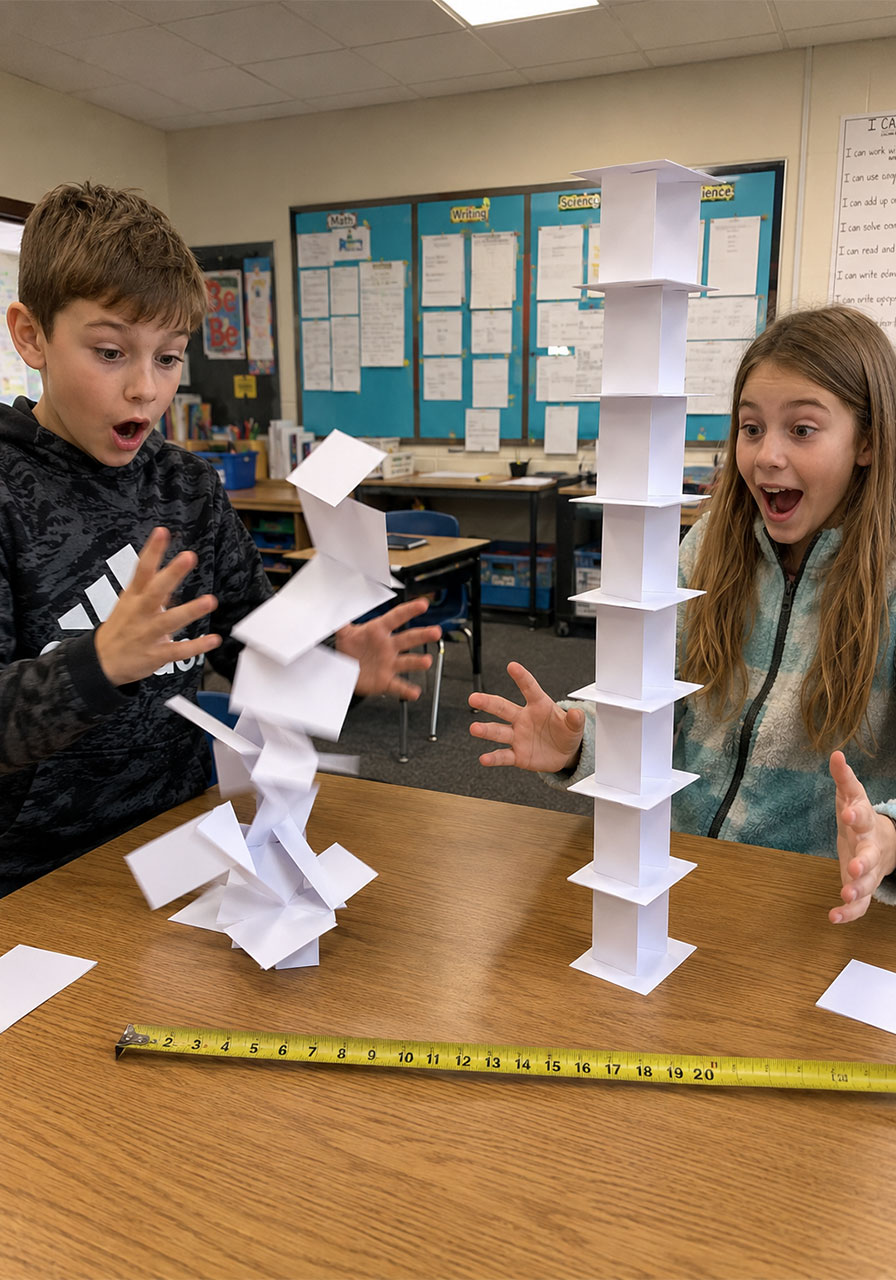
Some students treat this challenge like a science experiment. Others treat it like the Olympics.
You’ll see kids meticulously centering, aligning, and balancing every single card before daring to add the next one. And still, these towers fall. A lot.
Best For: Your most competitive builders, and every class has a few.
Pro Tip: When a tower collapses (and it will), resist the urge to jump straight to fixing it for them. Instead, ask what they think caused the fall. Sometimes it really is just someone breathing too close to the tower. Sympathize, laugh about it together, and encourage them to rebuild.
Here’s a trick that works every time: tell your class that another grade built towers so tall they had to stand on chairs to finish them. Watch the energy in the room shoot through the roof as everyone races to beat that record.
6. The Christmas Bonus Round
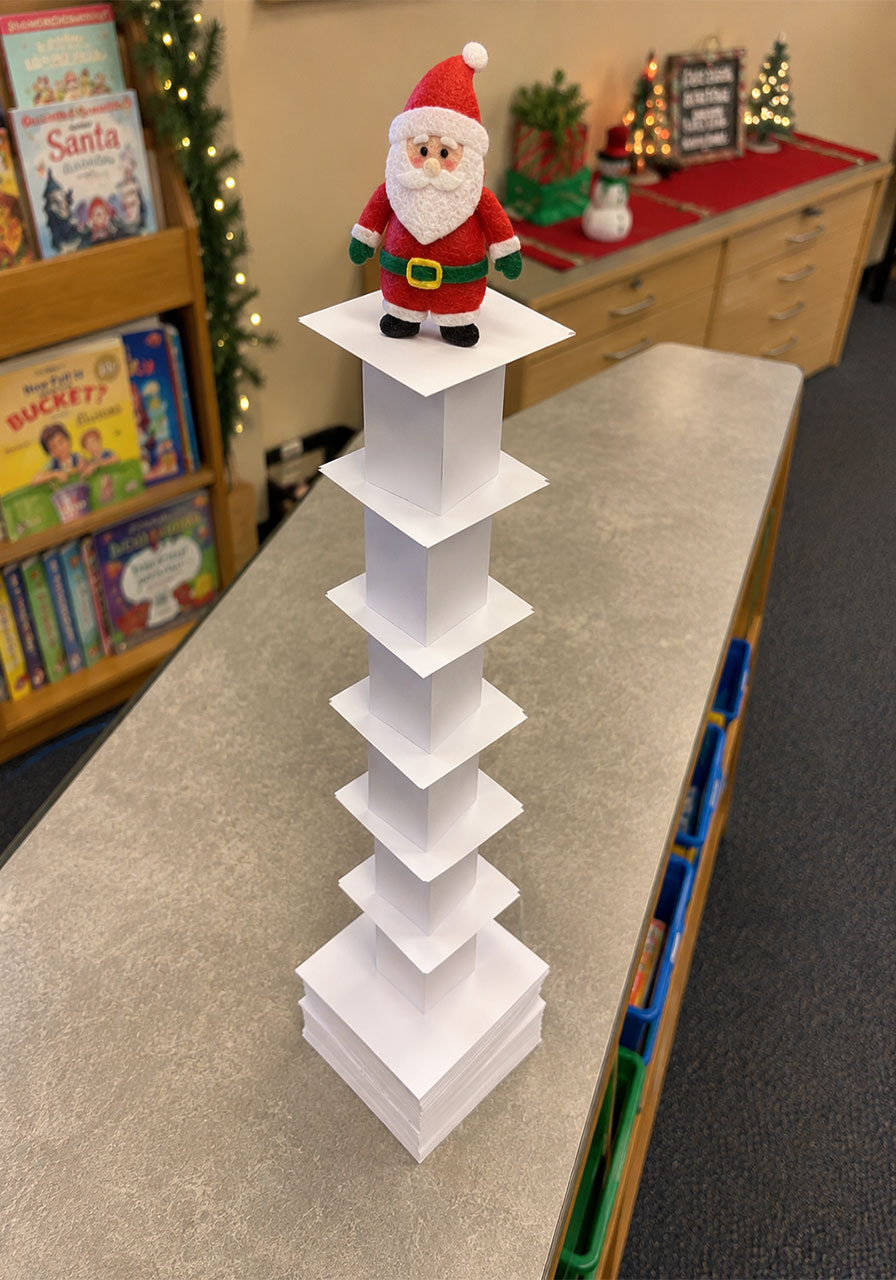
Already ran this challenge earlier in the year? Bring it back in December with a festive twist.
Add a small holiday figure, like a mini Santa or elf, that has to sit on top of the finished tower. Suddenly the challenge isn’t just about height anymore. It’s about height and a stable enough top floor to hold a passenger.
Best For: Adding fresh excitement to a challenge your students may have already tried.
Pro Tip: The added weight on top makes the base even more important than usual. This is a great moment to revisit the structural lessons from the Multi-Floor Mastermind design above.
7. The Blindfolded Builder
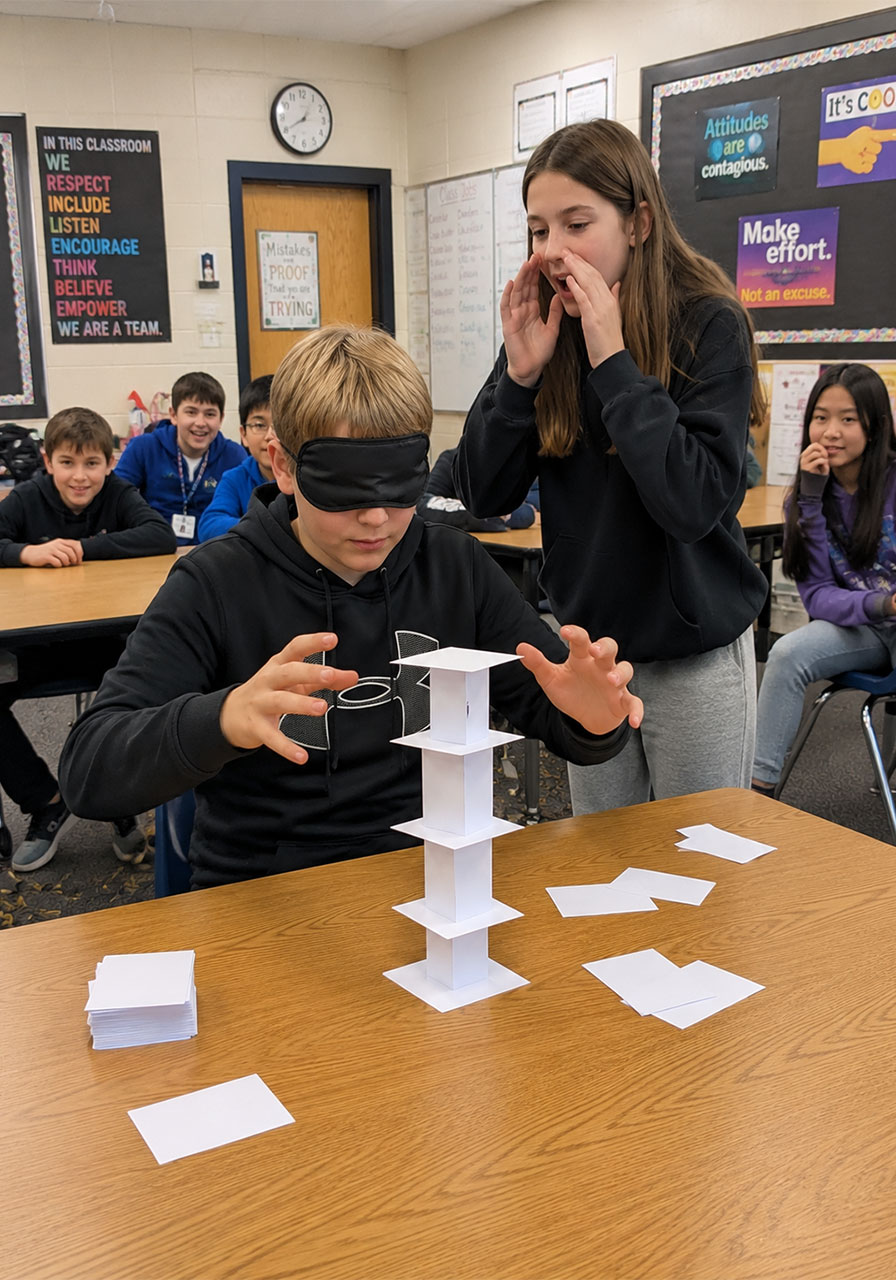
Best For: Teams who already know the basics and are ready for a bigger challenge.
How to Play: One team member is blindfolded and can only build based on verbal instructions from a teammate. No hands-on help allowed from the sighted teammate.
Pro Tip: This version is secretly a communication lesson wearing a STEM costume. It works beautifully for teaching precise, clear directions.
8. The Reverse Engineer
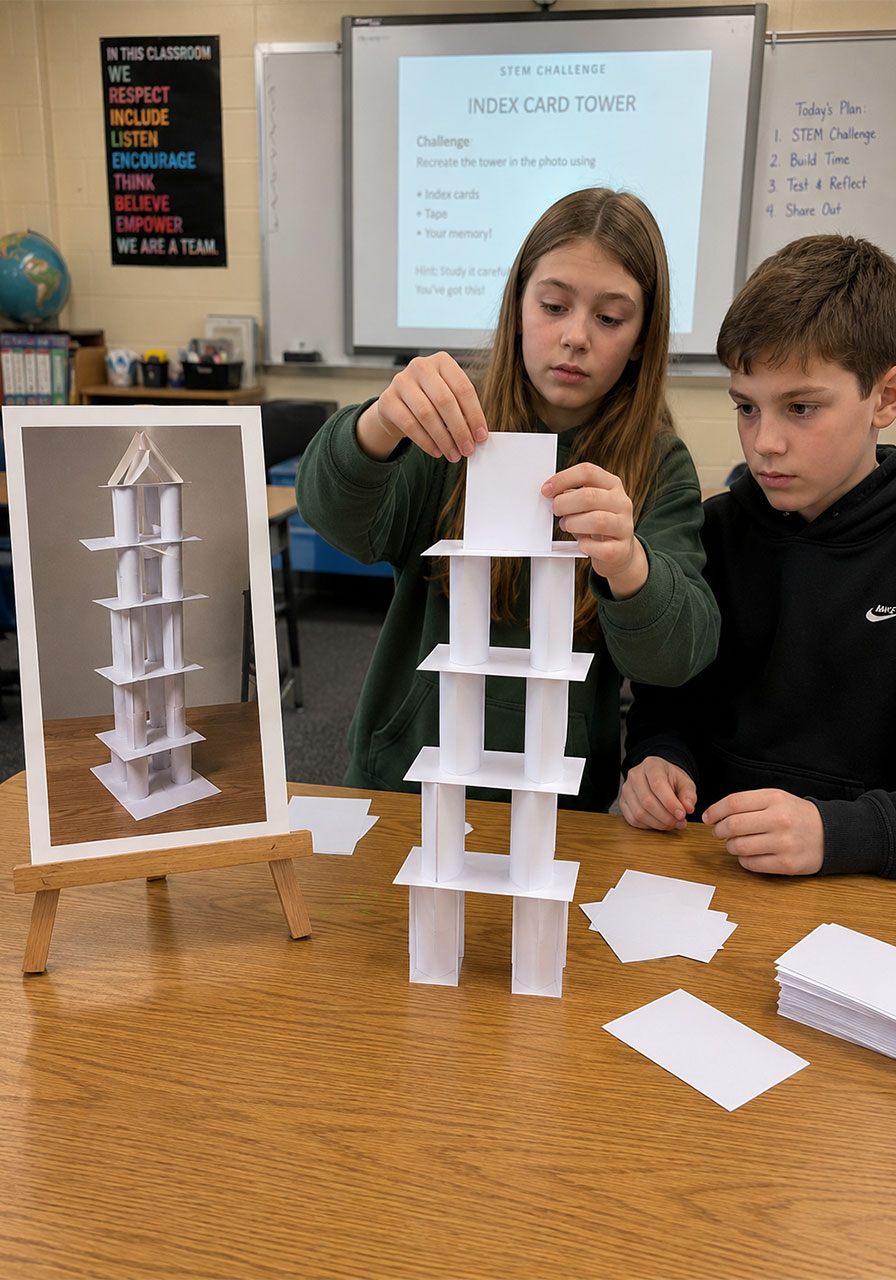
Best For: Students who love a good puzzle.
How to Play: Show the class a photo of a finished tower (use one of the designs above) for 30 seconds, then take it away. Teams have to rebuild what they remember, using only index cards.
Pro Tip: This version builds observation skills alongside engineering skills. Bonus points if the rebuilt tower actually stands.
9. The Wind Test Showdown
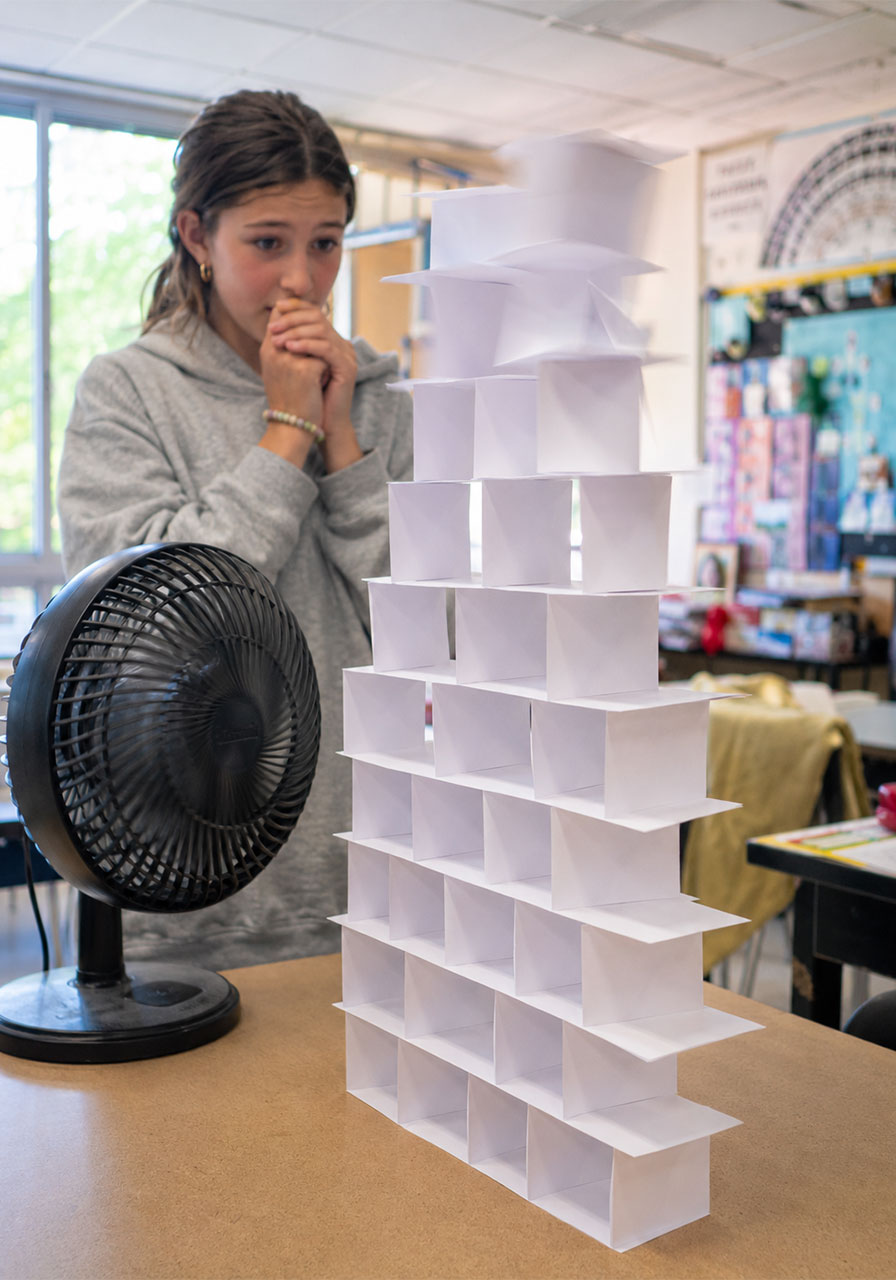
Best For: Adding a dramatic final round to any tower challenge.
What You’ll Need:
- A small handheld fan
- Finished towers from any design above
How to Play: Once towers are built, run a “wind test” with a fan on its lowest setting held a few feet away. Whichever tower survives the longest wins a bonus prize, separate from the height competition.
Pro Tip: This is a fantastic way to teach that height and stability are two completely different engineering goals. The tallest tower doesn’t always win this round, and that surprises kids every time.
10. The Relay Rebuild
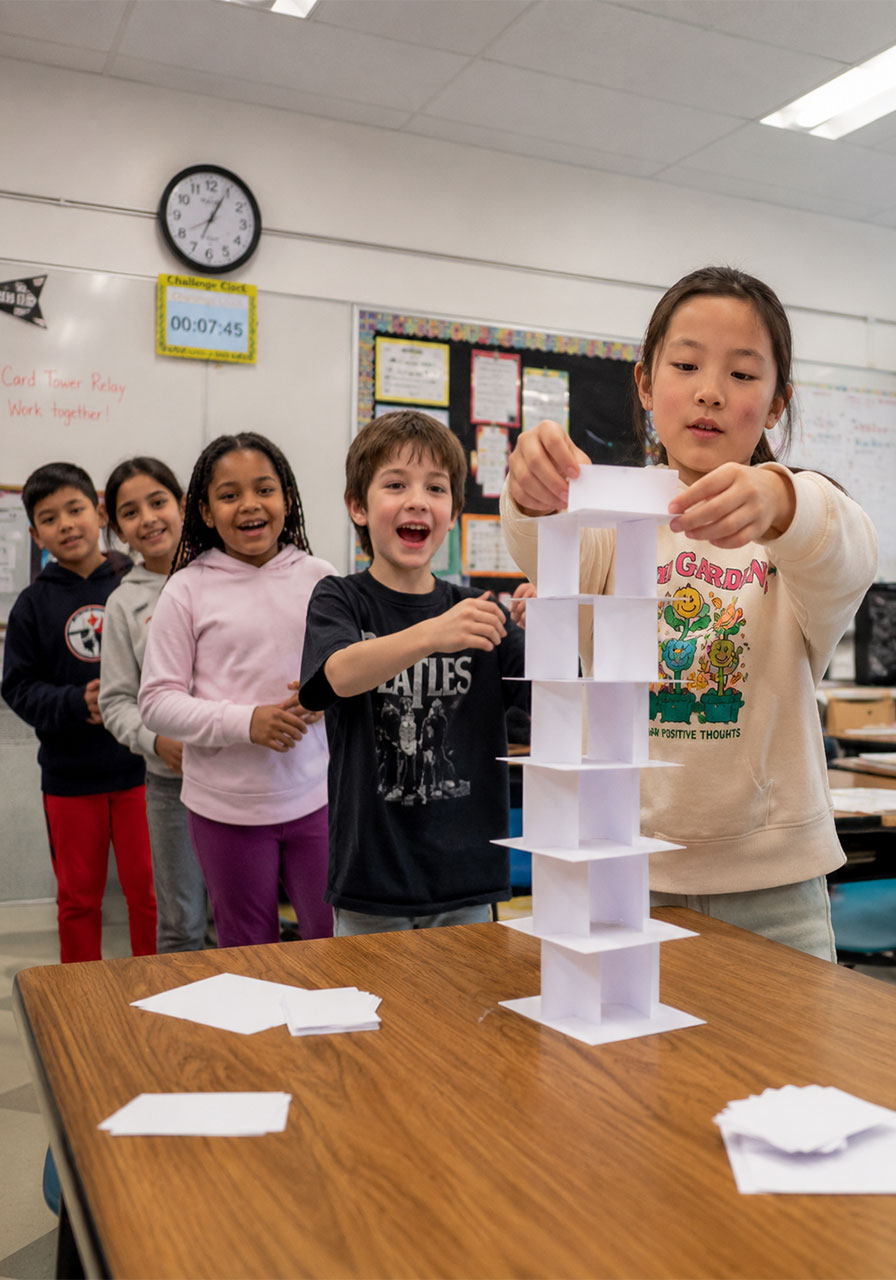
Best For: Larger classes and end-of-unit review days.
How to Play: Split into teams. Each team member gets 60 seconds to add to the tower before tagging the next teammate in. The tower has to survive the full relay to count.
Pro Tip: This version keeps every single student actively building instead of watching from the sidelines. It’s especially great for groups of four or more.
Why This Challenge Belongs in Every Classroom
The best STEM activities don’t need a big budget or a long prep list. They just need a simple material, a clear goal, and enough room for kids to fail, laugh, and try again.
The Index Card Tower checks every one of those boxes.
Pick a design, hand out the cards, and get ready for one of the most memorable challenges of your school year.
