
If you need one science activity that works every single time, this is it. The rainbow balloon experiment turns a simple kitchen-chemistry reaction into a colorful, jaw-dropping moment that keeps kids glued to the table.
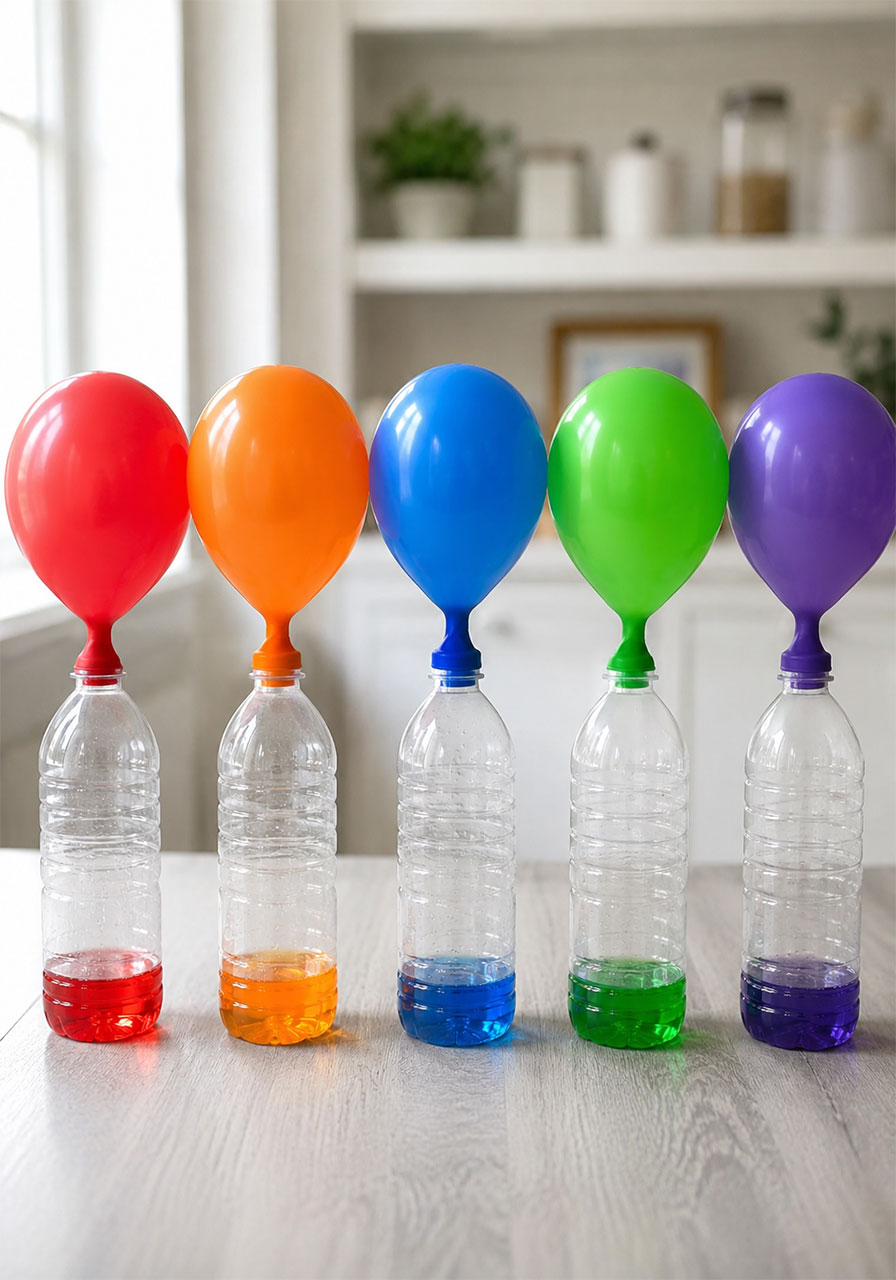
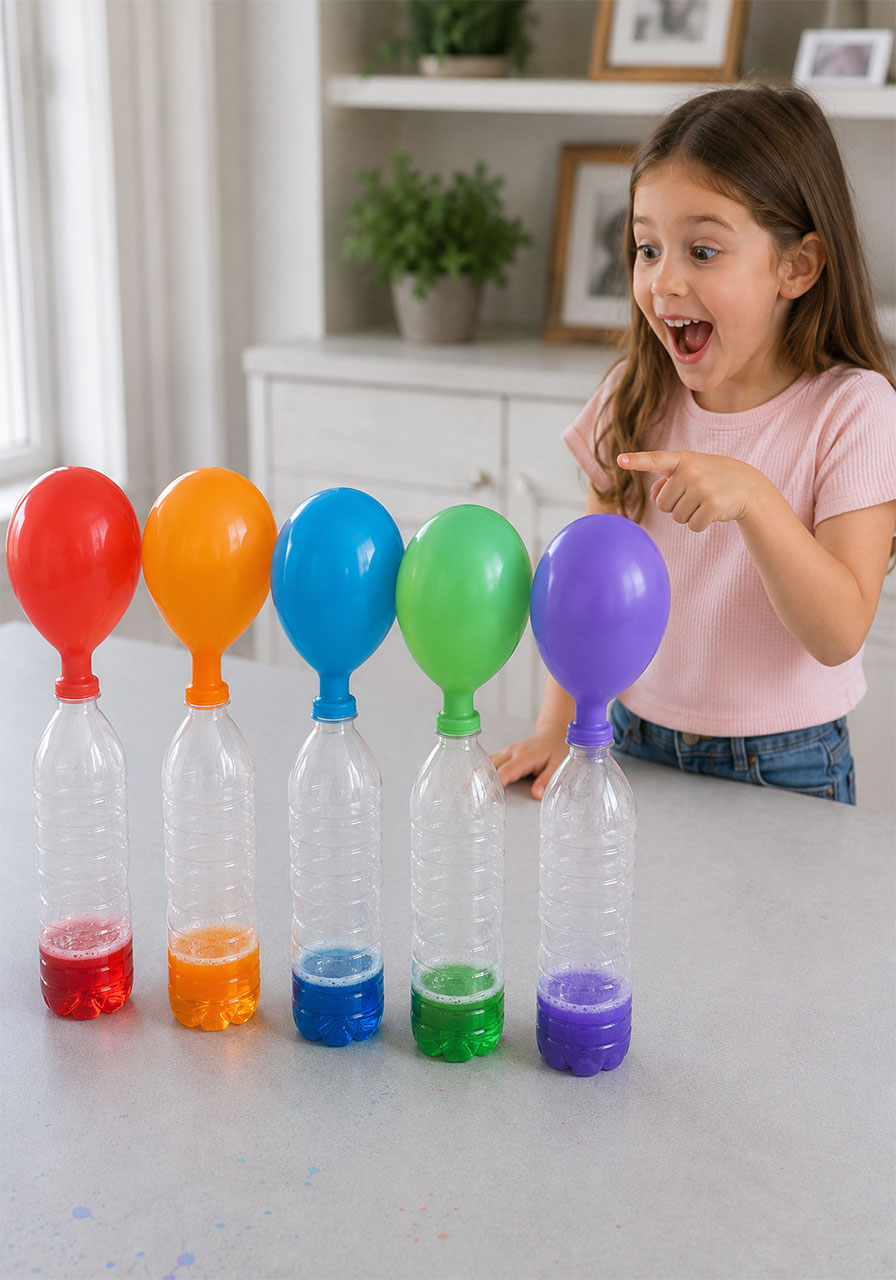
All it takes is vinegar, baking soda, a few balloons, and some food coloring. Within seconds of setting it up, your balloons puff up on their own, one by one, in a full rainbow lineup. No batteries, no screens, no complicated prep.
This is a fantastic pick for teachers building a hands-on chemistry lesson, and it is just as perfect for parents looking for an easy afternoon activity that actually teaches something. Kids walk away amazed, and they also walk away understanding a real science concept: chemical reactions that produce gas.
Why This Experiment Is a Guaranteed Hit
Kids are naturally drawn to anything that moves, changes color, or seems a little bit like magic. This experiment checks every one of those boxes at once.
The best part is the reveal. Nothing happens until the baking soda actually hits the vinegar, so there is a genuine moment of anticipation as each balloon slowly stretches and rises. That build-up is what makes kids ask to do it again immediately.
It is also incredibly forgiving. Even if a balloon does not inflate perfectly, the reaction still fizzes and bubbles, which is its own mini science show.
Who This Is Best For
Best for: classrooms, homeschool science lessons, rainy day activities, birthday party stations, and curious kids ages 4 and up.
Time to Set Up: about 10 minutes.
Time to Play: 15 to 20 minutes, plus extra time if kids want to repeat it with new colors.
Group Size: works for one child or a full classroom, since each bottle and balloon is its own independent station.
This activity is kid-friendly and classroom-friendly. Adult supervision is recommended for younger children, since it does involve small balloon pieces and a bit of a mess.
What You’ll Need
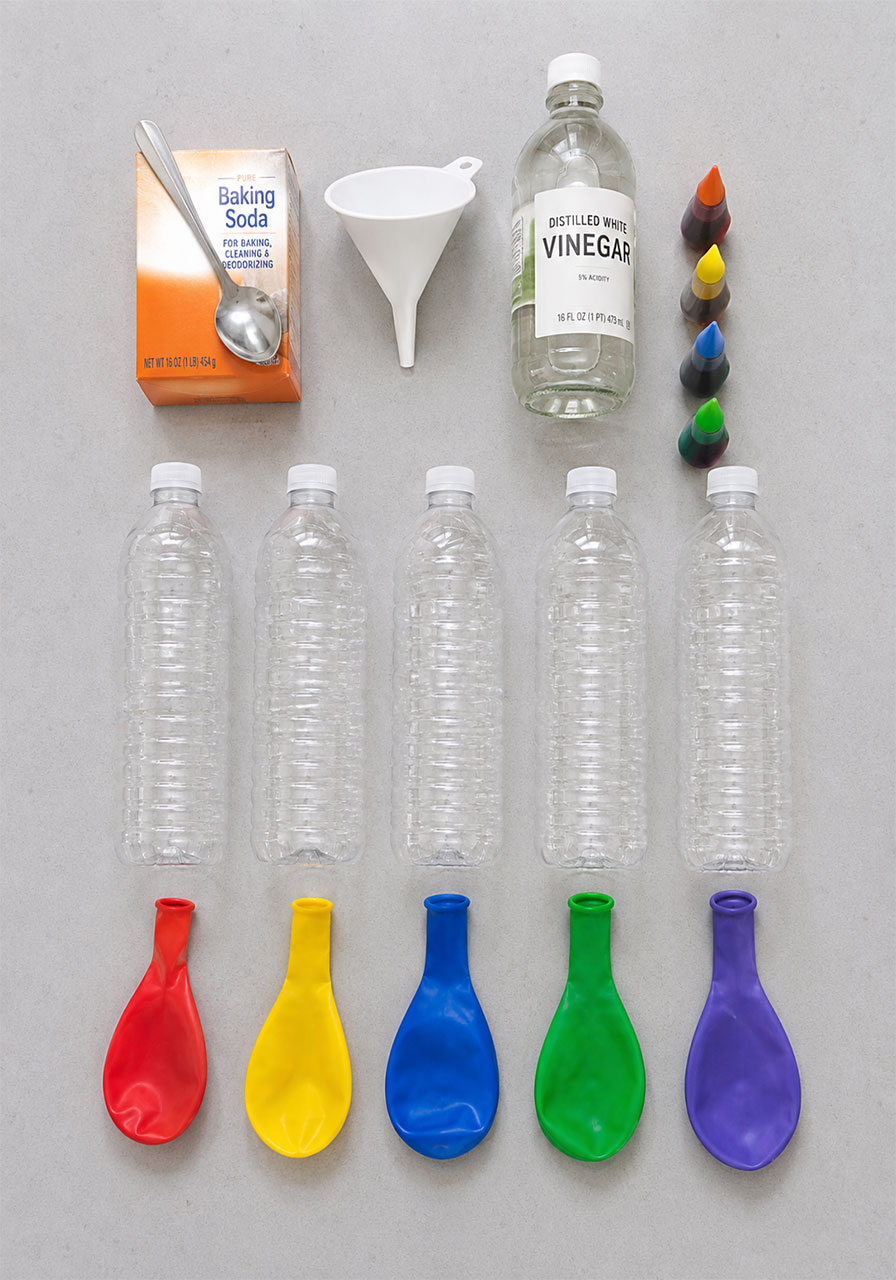
5 empty plastic water bottles
White vinegar (enough to fill each bottle about a quarter full)
Food coloring in red, orange, blue, green, and purple
5 balloons
Baking soda, about 2 tablespoons per balloon
A small funnel
A spoon for scooping baking soda
Every item on this list is something you likely already have at home or in a classroom supply closet, which makes this a true no-prep-shopping-trip activity.
How to Do the Rainbow Balloon Experiment
Follow these steps in order. The sequence matters, since the baking soda must stay inside the balloon until the very last moment.
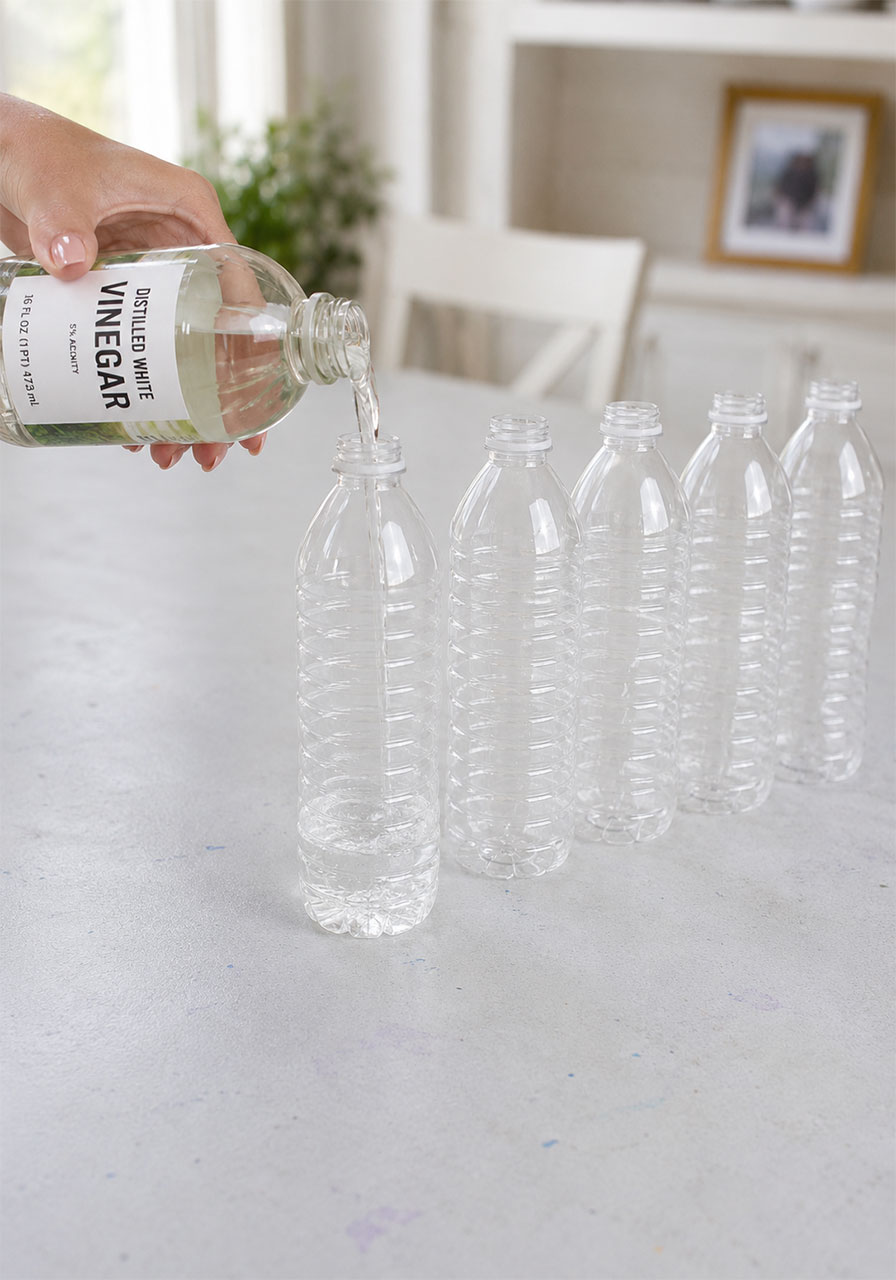
Step 1: Fill your bottles with vinegar.
Line up your five empty bottles and pour vinegar into each one, filling roughly a quarter of the bottle.
Step 2: Add your colors.
Add several drops of food coloring into each bottle, one color per bottle. Give the bottle a gentle swirl so the color blends evenly into the vinegar. This step is what turns the reaction into a true rainbow effect.
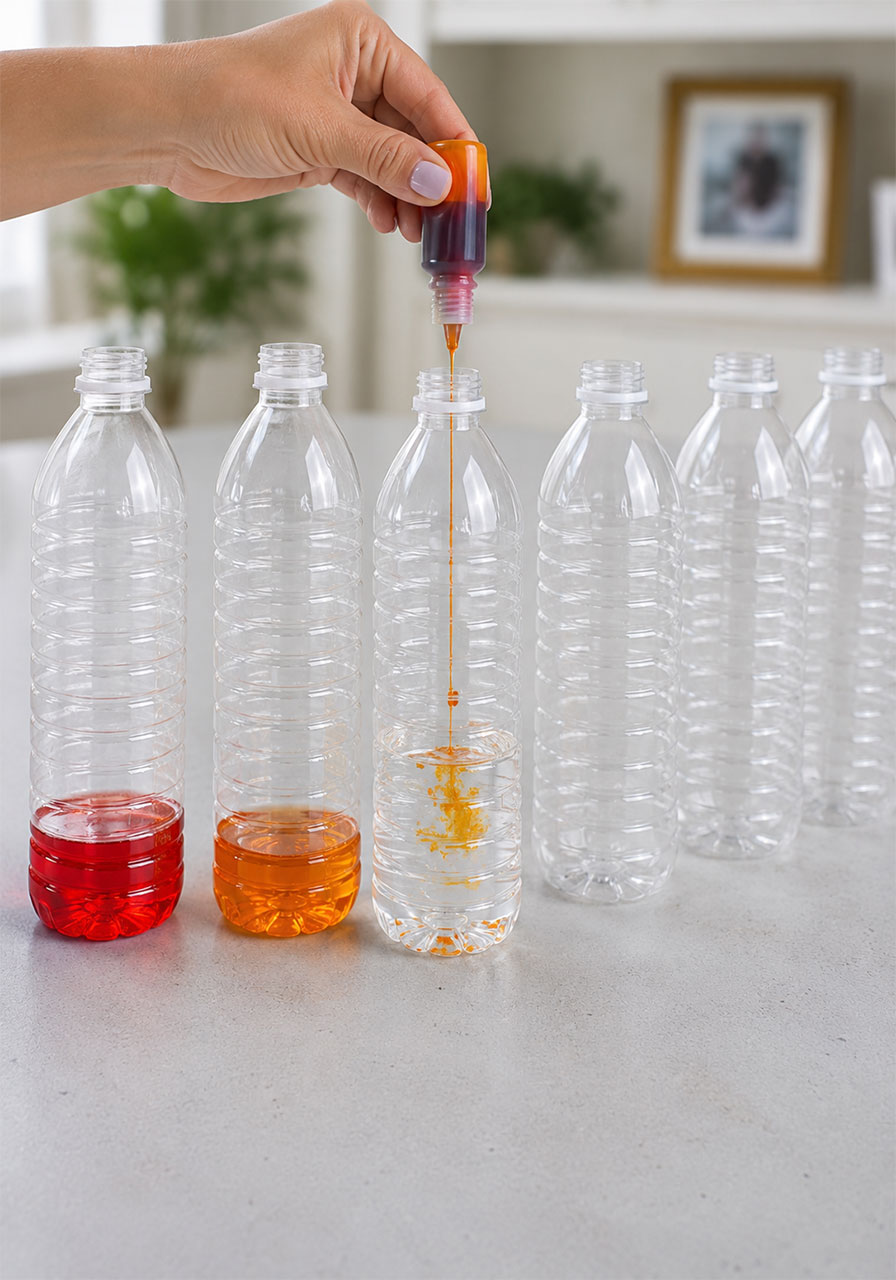
Step 3: Load your balloons.
Stretch the neck of a balloon over a small funnel. Spoon about 2 tablespoons of baking soda through the funnel and into the balloon. Give the balloon a little shake so the baking soda settles into the bottom. Repeat for all five balloons.
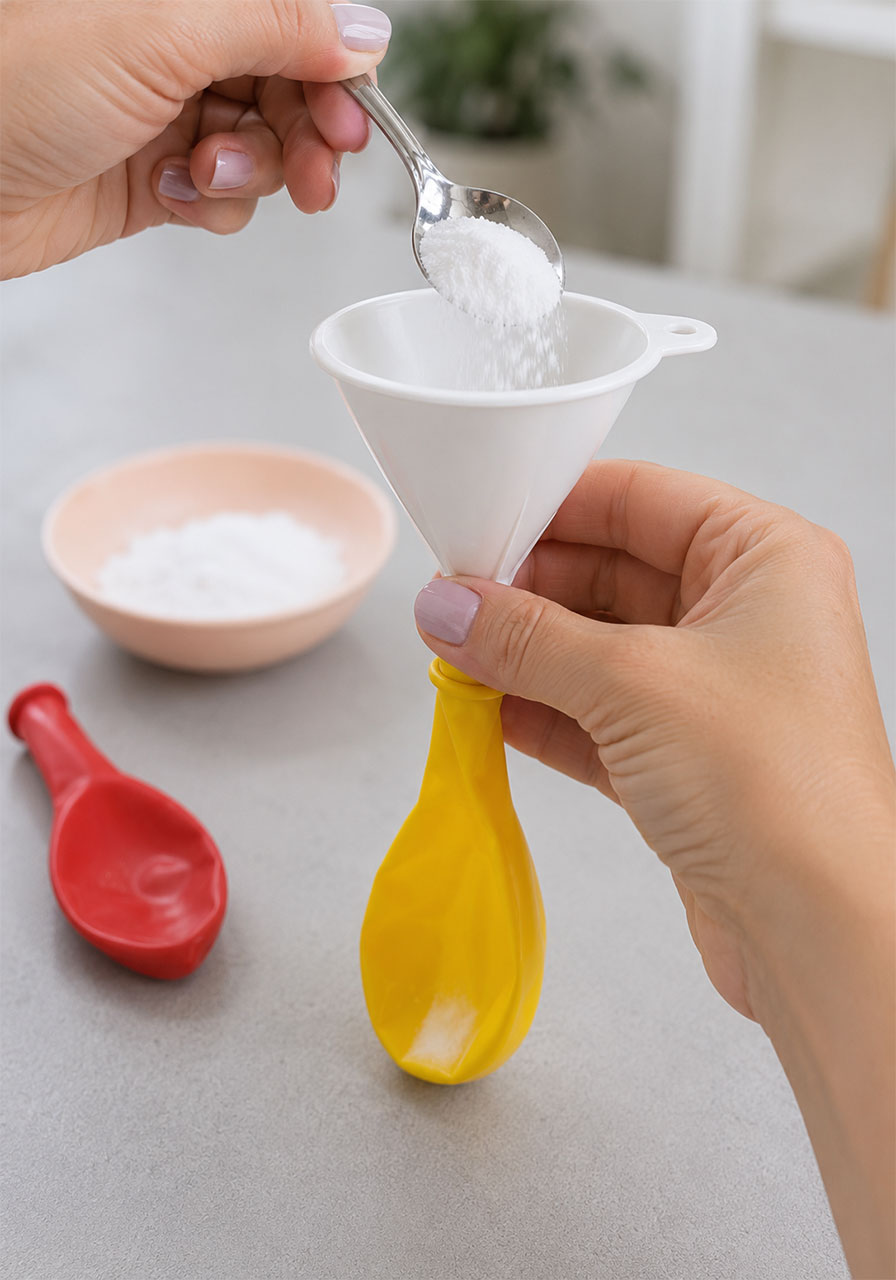
Step 4: Attach the balloons.
Carefully stretch the opening of each loaded balloon over the mouth of its matching bottle. Keep the balloon hanging to the side so the baking soda does not fall in yet.
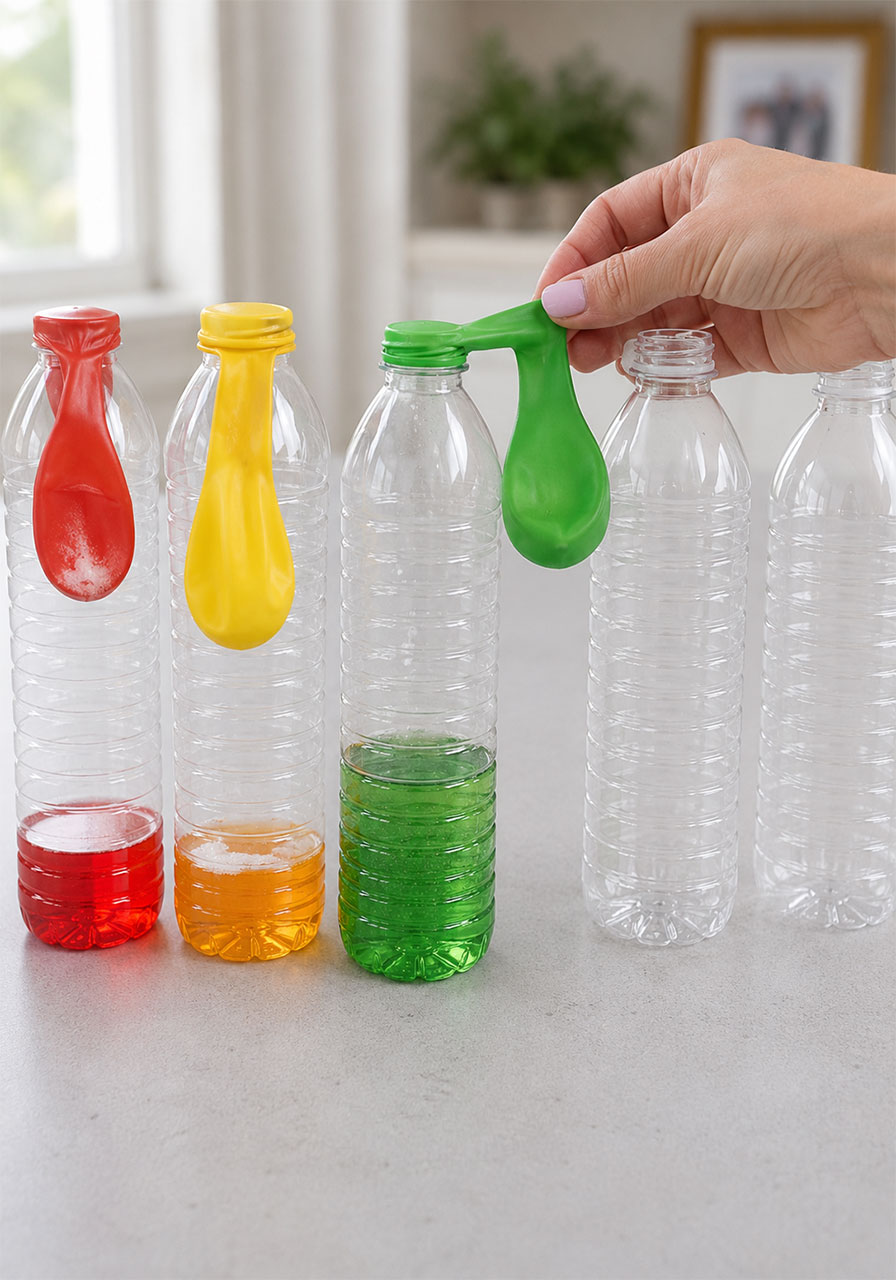
Step 5: Lift and release.
Once every balloon is securely attached, lift each balloon upright at the same time so the baking soda tips into the vinegar below. This is the moment the magic happens.
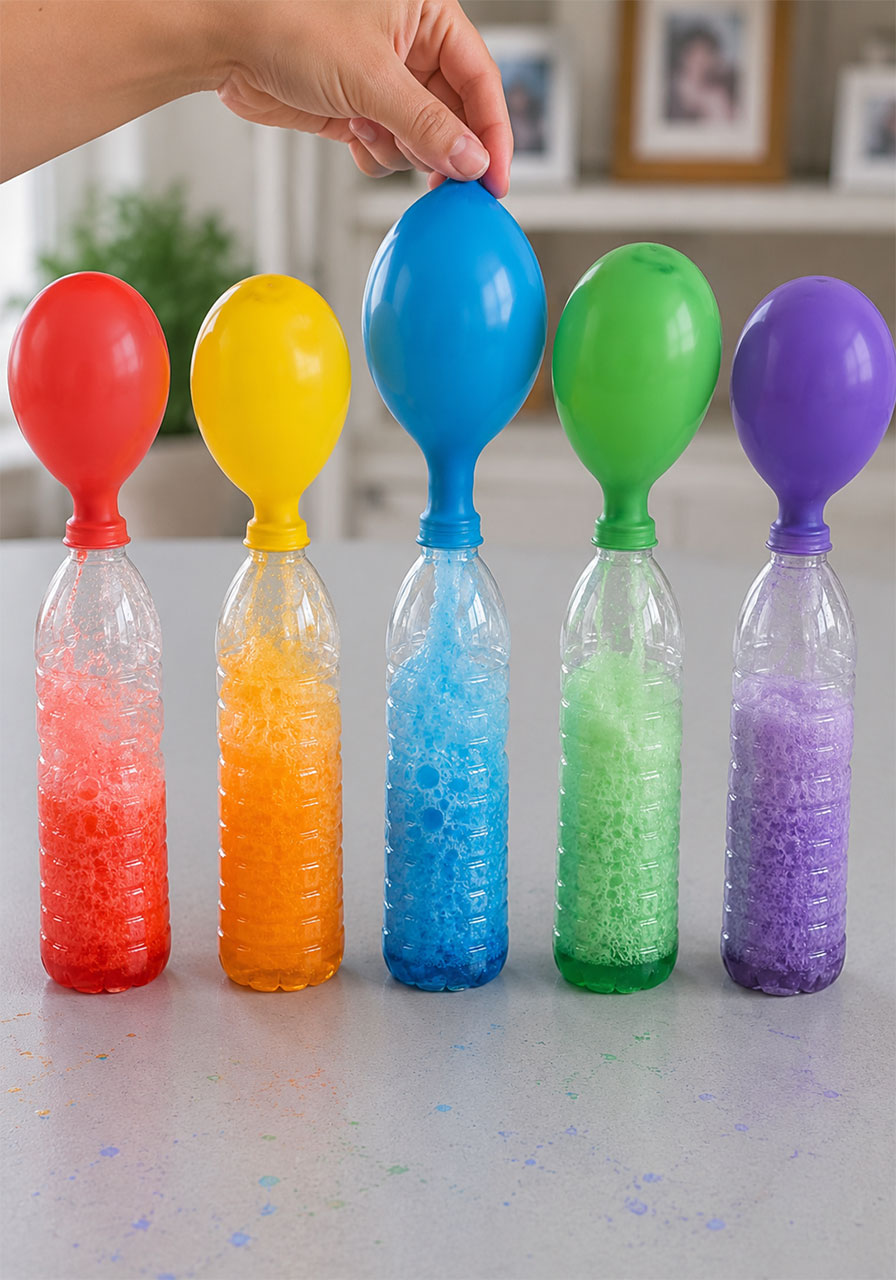
Step 6: Watch it inflate.
As the baking soda and vinegar react, they release carbon dioxide gas. That gas has nowhere to go except up into the balloon, causing it to inflate right in front of everyone’s eyes.
The Science Behind the Fun
This experiment is a simple, visual introduction to an acid-base reaction, and it is a favorite in elementary science curriculums for good reason.
Vinegar is an acid. Baking soda is a base. When the two meet, they react and produce carbon dioxide gas, along with water and a dissolved salt.
Since the balloon is sealed around the bottle opening, that carbon dioxide gas cannot escape into the air. Instead, it fills the balloon, which is exactly why kids see it inflate on its own without anyone blowing into it.
This makes the activity a great jumping-off point for talking about states of matter, gas production, and how chemical reactions can create something you cannot see but can absolutely observe.
Pro Tips for the Best Results
Use fresh baking soda. Older baking soda loses some of its reactive power over time, and that can mean a weaker inflation.
Do not overfill the bottles with vinegar. A quarter full is plenty, and it also reduces splashing when the reaction starts.
Have kids lift all five balloons at the same time if possible. Watching the entire rainbow inflate together makes for a much bigger reaction and a much bigger reaction from the audience too.
Work over a tray or an easy-to-wipe surface. Food coloring can stain, and this activity does get a little bubbly and messy.
Fun Variations to Try
Race the balloons by using slightly different amounts of baking soda in each one, then talk about why some inflate faster than others.
Try warm vinegar versus cold vinegar in two separate bottles to see whether temperature changes the speed of the reaction.
Let each child choose their own balloon color and predict which one they think will inflate the fastest before starting.
Frequently Asked Questions
Is this experiment safe for kids? Yes, this activity is considered kid-friendly and uses only household-safe ingredients. Adult supervision is still recommended, especially with younger children handling balloons.
Why did my balloon not inflate all the way? This usually means not enough baking soda made it into the vinegar, or the balloon opening was not sealed tightly enough around the bottle. Double check the seal and try adding a bit more baking soda.
Can I reuse the bottles? Yes, simply rinse them out and they are ready for the next round.
How long does the reaction take? The balloons typically begin inflating within seconds of the baking soda hitting the vinegar, and the reaction usually finishes within a couple of minutes.
Is this a good classroom activity? Absolutely. It is easy to set up multiple stations at once, it requires minimal supplies, and it gives every student a clear, memorable lesson in chemical reactions.
Why This Belongs in Your Activity Rotation
Great STEM activities do not need to be complicated to be effective. This rainbow balloon experiment proves that a few pantry staples can turn into a full science lesson, a party centerpiece, or a rainy afternoon win.
Keep this one in your back pocket for the next classroom science unit, birthday celebration, or slow weekend afternoon. Once your kids see that first balloon start to rise, they will be asking to do it again before you have even finished cleaning up.
