
If you’ve ever tried to explain “germs” to a toddler, you know it usually ends with a shrug and dirty hands anyway. Telling a three-year-old to wash their hands because of invisible germs is like telling them to eat vegetables because of vitamins. They can’t see it, so they don’t buy it.
This is where the soap and pepper experiment comes in. It is one of the simplest, most satisfying STEM activities you can pull together with things already sitting in your kitchen. In under five minutes, your toddler will watch “germs” (played by black pepper) literally swim away from a soapy finger, and suddenly, handwashing makes sense.
Best of all, this isn’t just a cute visual trick. It is a real, hands-on introduction to surface tension and buoyancy, two concepts that sound intimidating on paper but are incredibly easy for little learners to grasp when they can watch them happen in real time.
Whether you are a teacher building out a hygiene unit or a parent looking for a rainy-day activity that actually teaches something, this one belongs in your back pocket.
Why This Experiment Is a Classroom and Playroom Favorite
This activity checks every box a good toddler STEM experiment needs to check. It is quick, it uses cheap and safe materials, and it delivers an immediate, visible result. There is no waiting around for something to grow or dry. The reaction happens the second soap touches the water.
It also naturally ties into something toddlers already do every day: washing their hands. Instead of another lecture about germs, this experiment gives kids a reason to actually care.
Teachers love it because it fits neatly into a five to ten minute block and works for a single child at a table or a small group rotating through a station. Parents love it because cleanup is simple and the “wow” factor keeps kids asking to do it again and again.
Quick Facts
Best for: Toddlers and preschoolers, ages 2 to 6
Time to Complete: 5 to 10 minutes
Group Size: One child at a time works best, though this can be set up as a rotating station for small groups
Mess Level: Low to moderate, easily contained on a paper plate
What You Will Need
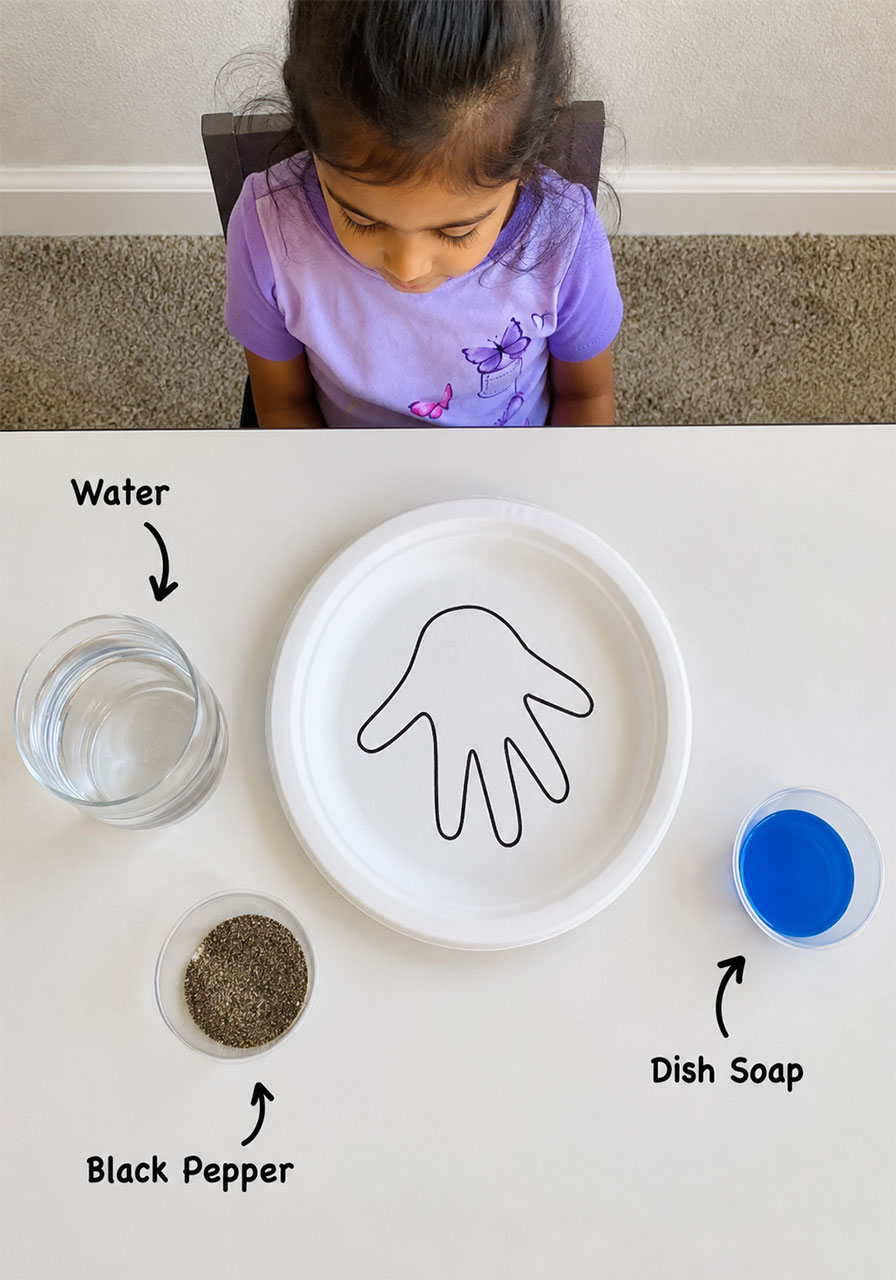
One large paper plate
A black marker
A small cup of water
A small cup of ground black pepper
A small cup of dish soap
A little one with clean, dry hands to start
That’s it. No special science kit required, and everything on this list is almost certainly already in your kitchen cabinet right now.
How to Do the Soap and Pepper Handwashing Experiment
Follow these steps in order for a foolproof, mess-controlled experiment every time.
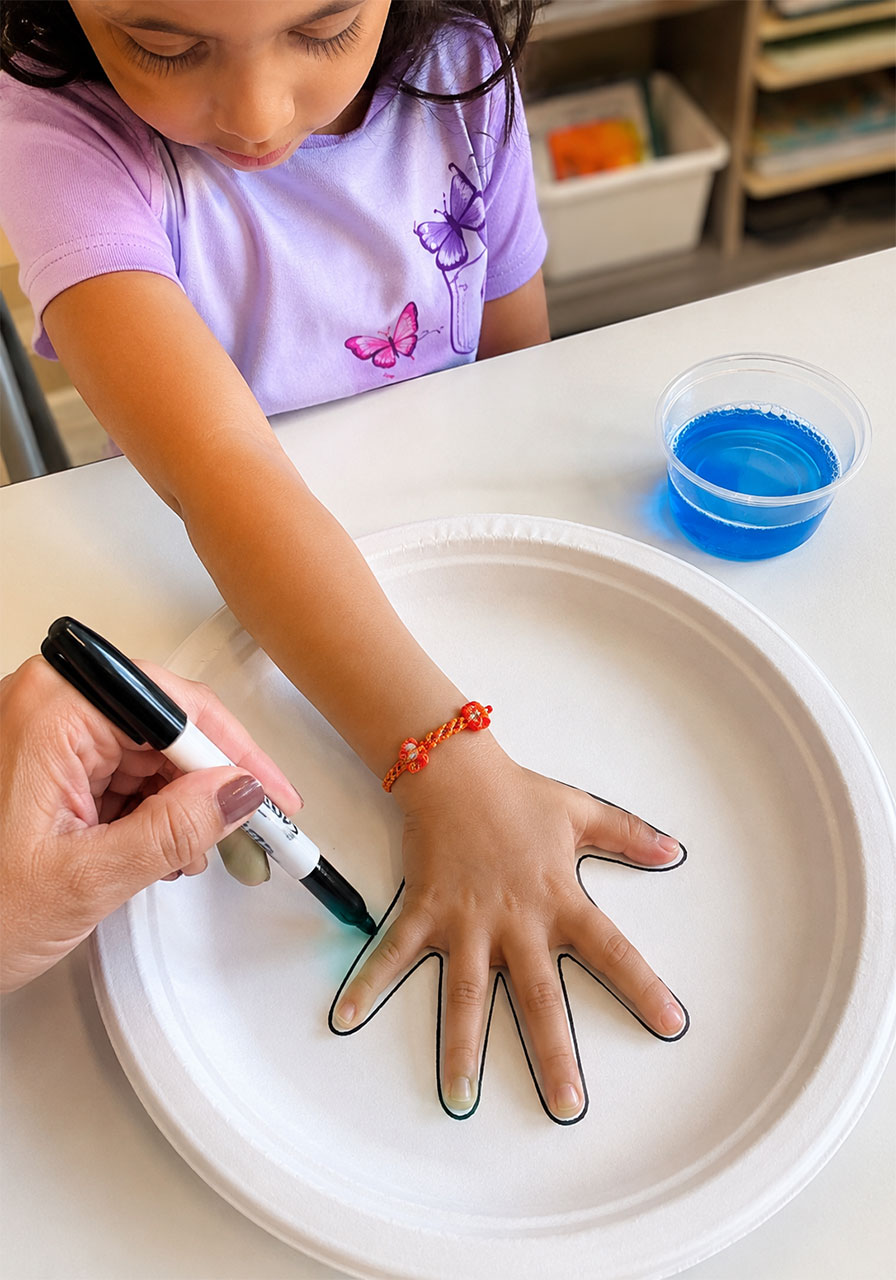
Step 1: Trace the hand.
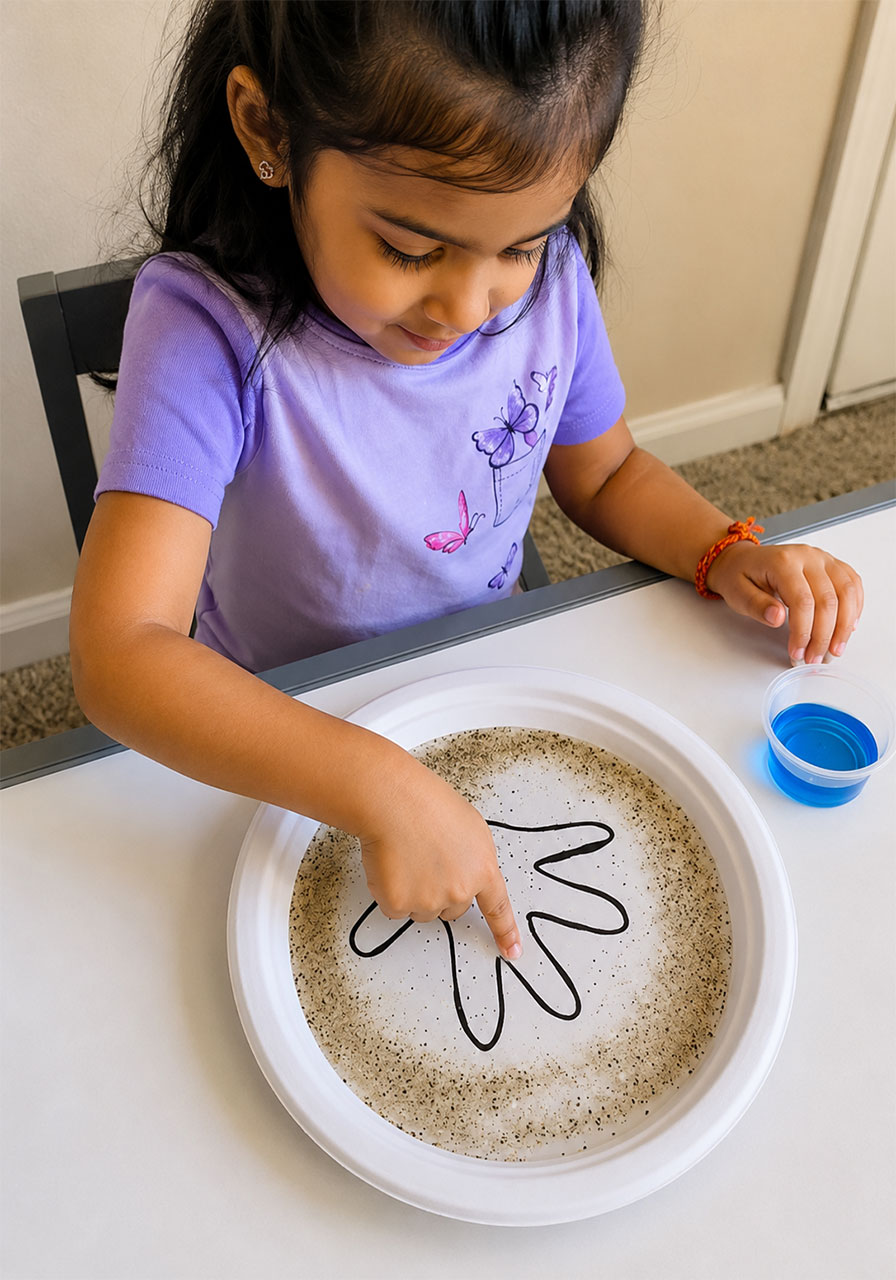
Have your child place their hand flat in the center of the paper plate. Using the black marker, trace carefully around their fingers and palm to create a clear hand outline on the plate.
Step 2: Set up your stations.
Place a small cup of water, a small cup of pepper, and a small cup of dish soap next to the plate. Having everything within arm’s reach keeps little hands from wandering off mid-experiment.
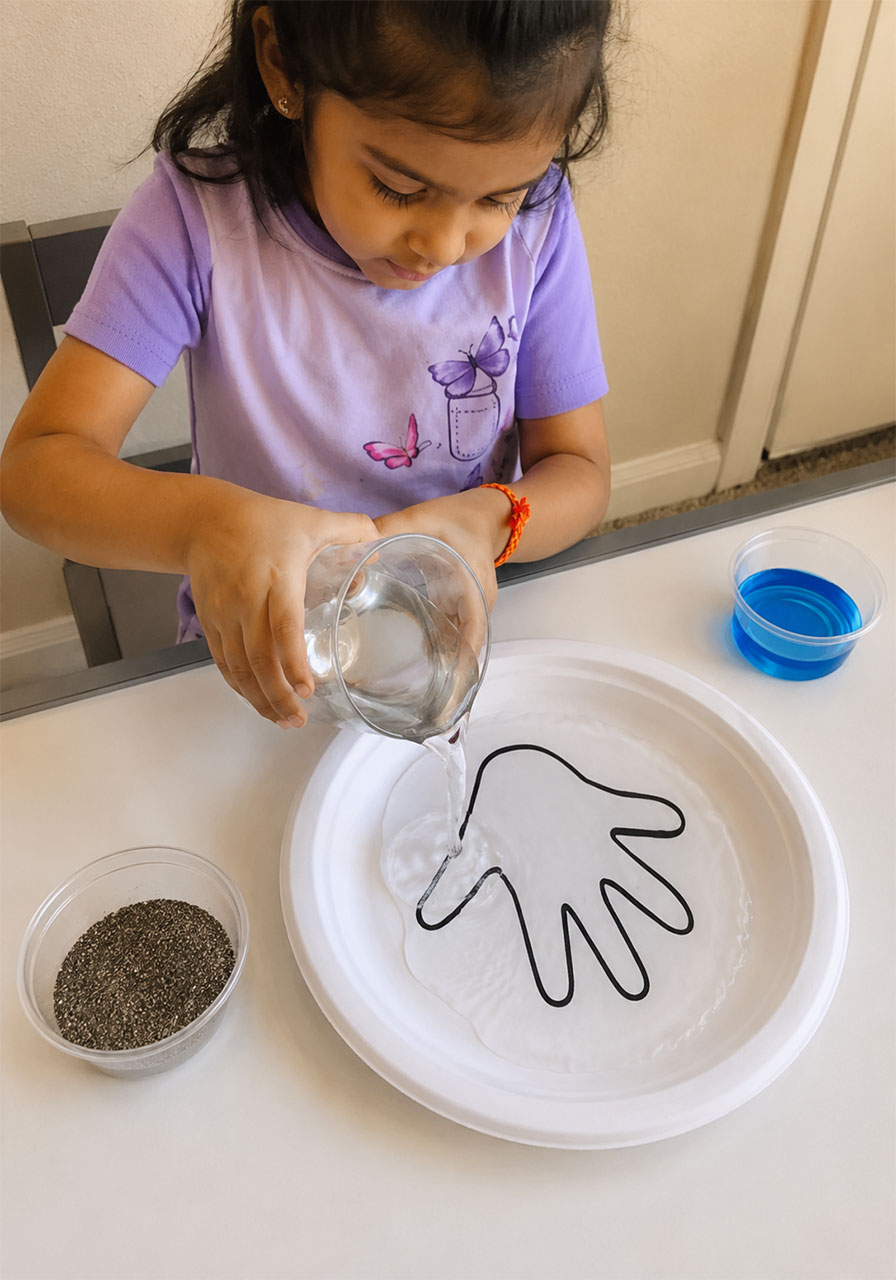
Step 3: Add the water.
Have your child slowly pour the water directly onto the plate, filling in the traced hand outline until the surface is covered in a thin layer of water.
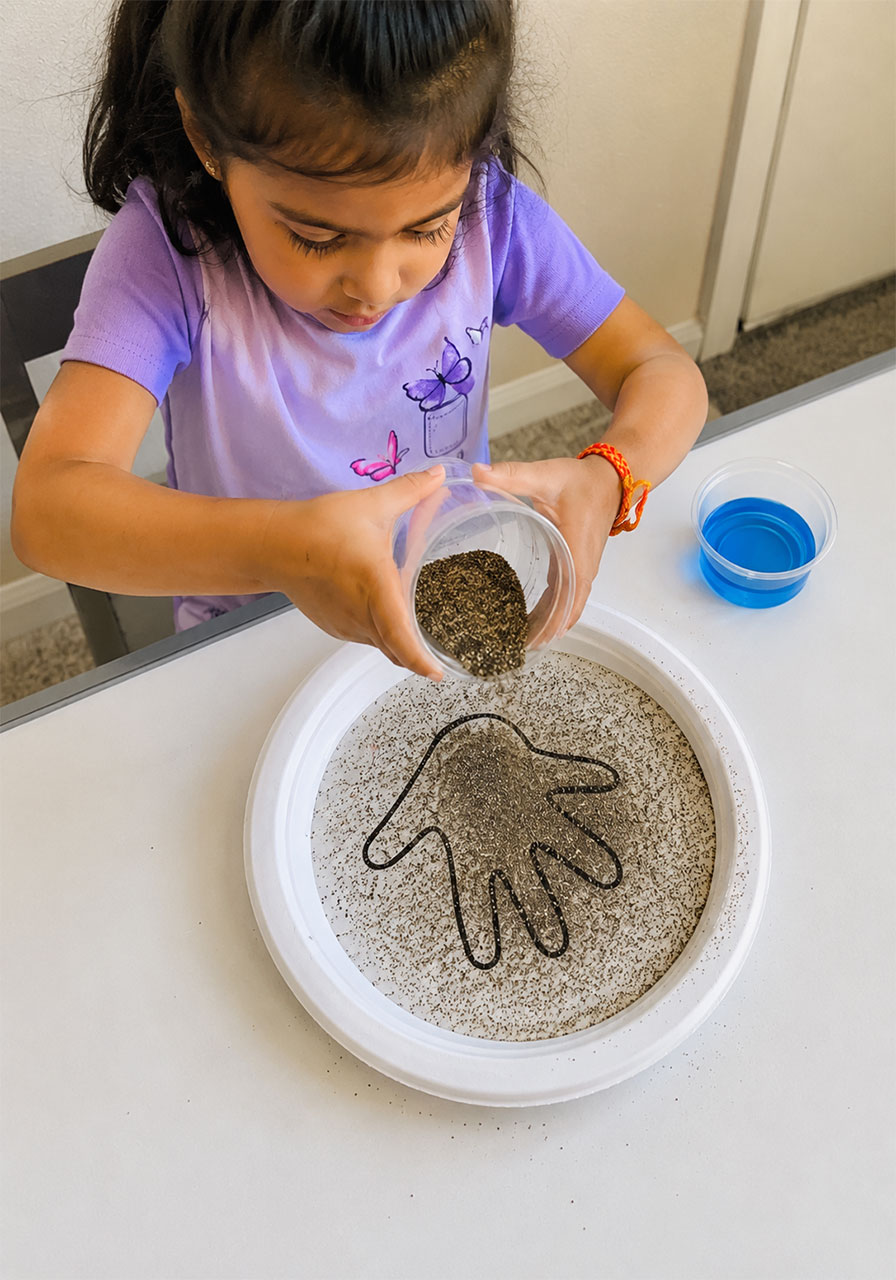
Step 4: Sprinkle in the “germs.”
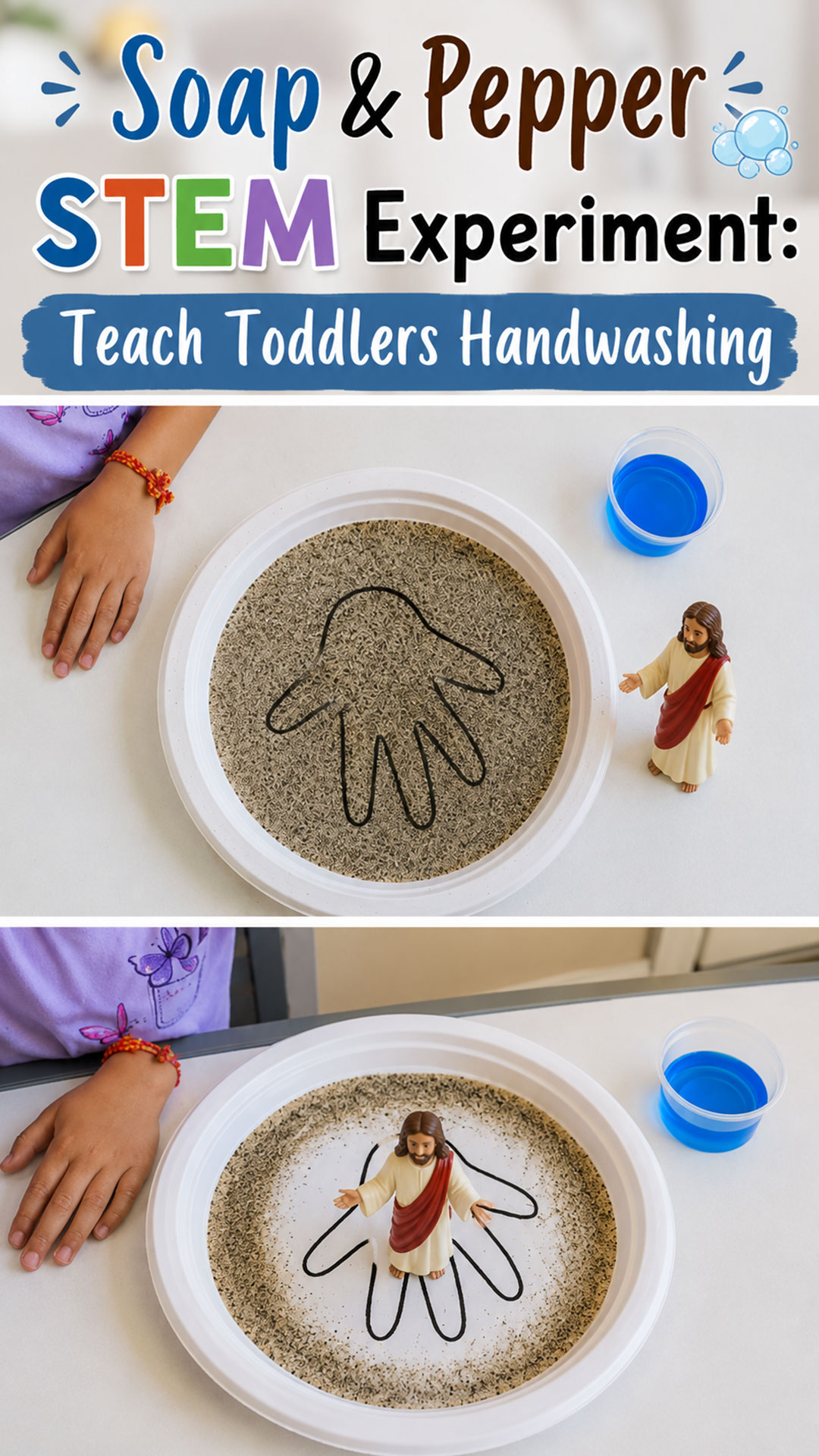
Let your child generously sprinkle the black pepper across the entire surface of the water. Explain that the pepper is standing in for germs. At this point, the pepper should be floating freely across the whole hand shape, covering it almost completely.
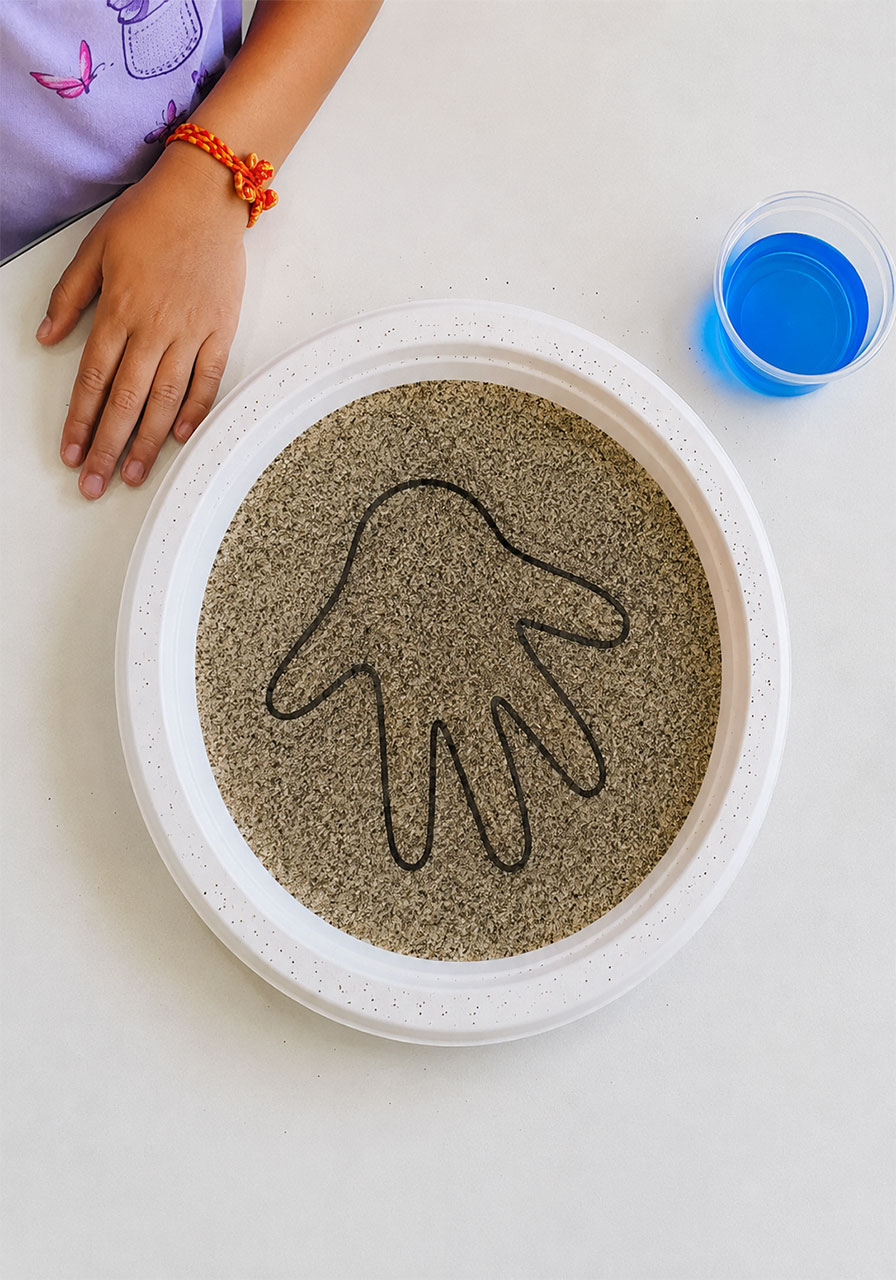
Step 5: Dip a finger in soap.
Have your child dip just their pointer finger into the cup of dish soap, coating the very tip.
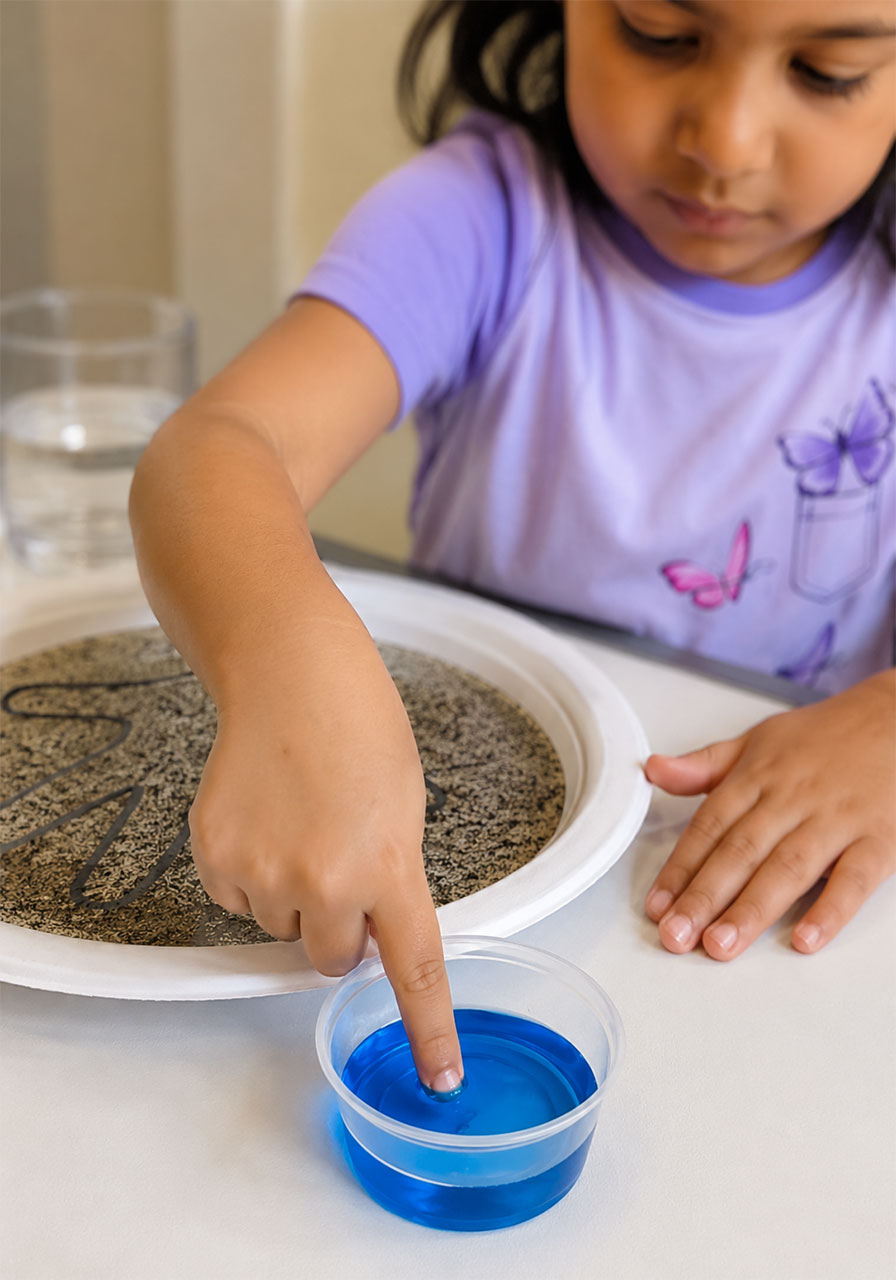
Step 6: Touch the water and watch the magic.
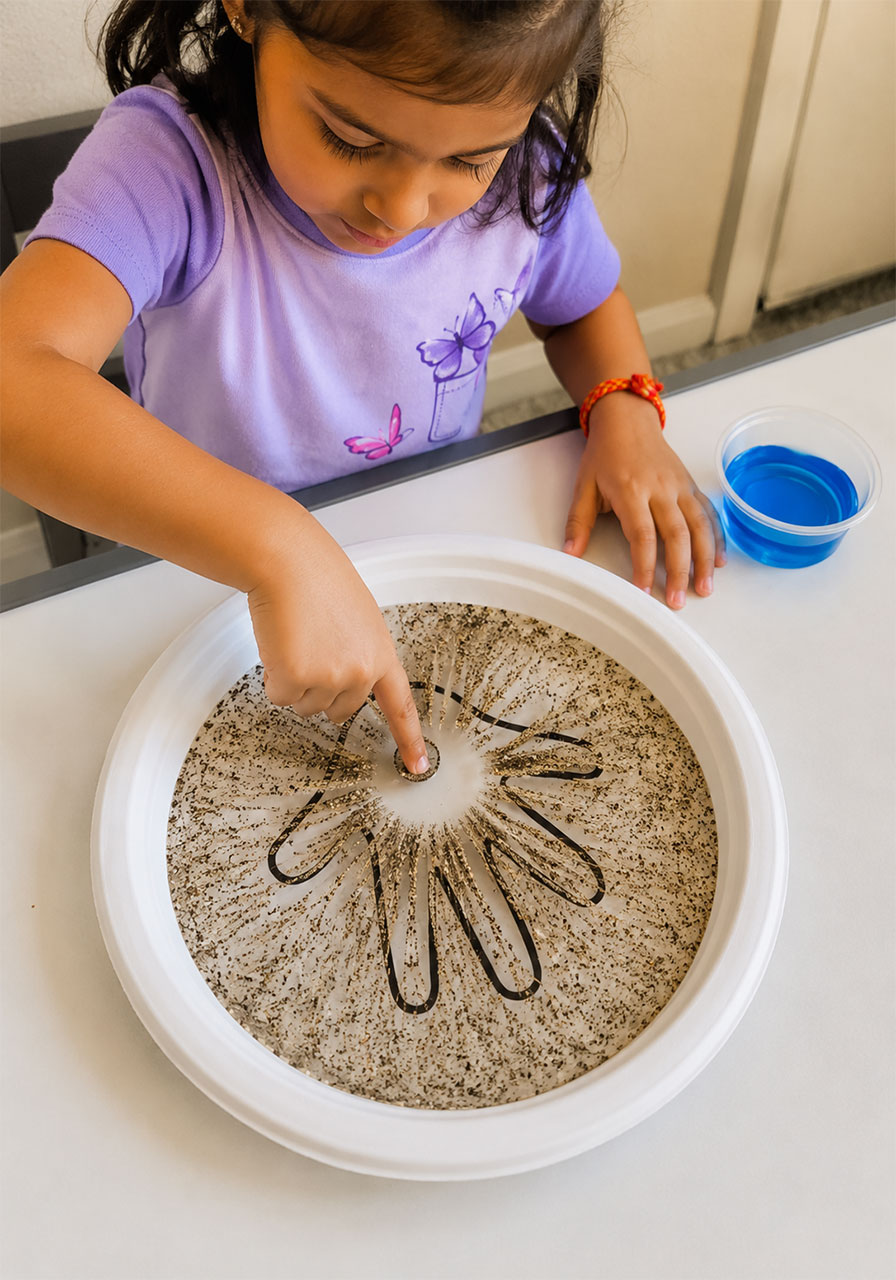
Now have them gently touch the soapy fingertip to the center of the pepper-covered water. Watch closely, because within seconds, the pepper will rush away from the finger in every direction, almost like it’s afraid of the soap.
Step 7: Repeat and explore.
Let your child dip their finger again and touch different spots on the plate. Encourage them to notice that every single time, the pepper flees from the soapy finger and never mixes back in.
The Science Behind the Magic
Here’s what’s actually happening, explained in a way you can pass along to curious kids or curious parents at pickup.
Water molecules are naturally attracted to each other, and at the surface of any body of water, they pack together tightly. This creates what scientists call surface tension, an invisible “skin” on top of the water that is strong enough to hold up light objects, like a sprinkle of pepper.
Because pepper is light and doesn’t dissolve, it simply floats on top of that tight surface, which is a demonstration of buoyancy, the same principle that keeps boats afloat.
Dish soap works differently. Soap molecules are designed to break apart surface tension by getting between the water molecules and pulling them apart. The moment soap touches the water, it destroys that tight surface skin right at the point of contact.
Since the pepper was only floating because of that tight surface tension, it has nowhere to hold on the moment the soap arrives. It rushes outward, away from the soap, toward the edges of the plate where the surface tension is still intact.
This is also, quite literally, how soap cleans your hands. When you wash with soap and water, the soap breaks down the oils and surface tension that let germs stick to your skin, allowing them to be rinsed away, exactly like the pepper rushing off the plate.
Pro Tips for Teachers and Parents
A few small adjustments make this experiment even smoother to run, especially with a group.
Use a deep tray if you have one. While a paper plate works great for one child, a shallow baking tray gives you more surface area if you’re running this as a station for several kids to take turns.
Pre-portion your soap. A tiny dab goes a long way. Too much dish soap on a finger can overwhelm the whole surface at once, so a light dip is all you need for the clearest reaction.
Narrate as you go. Toddlers absorb far more when you talk through what’s happening. Simple phrases like “watch the germs run away” or “the soap is winning” keep them engaged and reinforce the lesson.
Let them repeat it. Unlike a lot of one-and-done science demos, this one can be reset with a fresh sprinkle of pepper and repeated several times, which is perfect for reinforcing the concept.
Fun Variations to Try Next
Once your child has mastered the basic experiment, here are a few easy ways to extend the learning.
Add food coloring. A drop of food coloring in the water makes the “before and after” even more visually dramatic for younger kids.
Try different “germ” stand-ins. Swap the pepper for glitter or dried herbs to see if the reaction changes, and talk about why or why not.
Make it a group challenge. In a classroom setting, have each child predict what they think will happen before touching the soapy finger to the water, then compare results as a group afterward.
Why This Belongs in Your STEM Toolkit
The best STEM activities for toddlers don’t need to be complicated, expensive, or Pinterest-perfect to be effective. They just need to spark genuine curiosity, and this experiment does exactly that in under five minutes with things you already own.
It also does double duty as a health and hygiene lesson, giving toddlers a concrete, visual reason to actually want to wash their hands, rather than just being told to.
With a project like this in your rotation, you are always ready with a fast, screen-free activity that keeps little hands and minds busy, whether that’s a classroom science corner, a rainy afternoon at home, or a birthday party activity table.
Frequently Asked Questions
Is this experiment safe for toddlers to do on their own?
With supervision, yes. The materials are all non-toxic household items, though adult supervision is recommended anytime pepper, water, and small cups are involved with very young children.
What if my child accidentally touches their face or eyes with pepper on their hands?
Simply rinse with water. Ground black pepper is not harmful, though it can cause mild irritation if rubbed into the eyes, so encourage kids to keep hands away from their face during the activity.
Can this be done without a paper plate?
Yes. A shallow bowl, tray, or even a clean sink basin works just as well. The paper plate is simply an easy, low-cost option that also makes cleanup effortless.
How many times can we repeat it before starting over?
You can usually get three to four rounds out of one setup before the water gets too soapy overall. At that point, simply toss the plate and start fresh with new water and pepper.
Ready to Try It?
Grab a paper plate, a marker, and whatever’s already in your pantry, and give this one a try today. It takes minutes to set up, and it just might turn “go wash your hands” into your toddler’s favorite science experiment of the week.
