
Welcome to the world of Magic: The Gathering (MTG), a captivating collectible card game (CCG) that blends strategy, fantasy, and the thrill of collecting. Since its debut in 1993, MTG has amassed a global community of millions, offering an engaging experience for players of all levels. As a trading card game (TCG), you’ll build a personalized deck of Magic cards, summon powerful creatures, sling devastating spells, and strategically outmaneuver your opponents.
But MTG is more than just a game – it’s a vibrant social experience. You’ll forge friendships, rivalries, and maybe even a few grudges (we’ve all been on the receiving end of a well-timed counter-spell).
Ready to embark on your journey as a planeswalker? To start playing Magic: The Gathering, you’ll need a deck of Magic cards (we’ll cover deckbuilding shortly), and optionally a playmat to keep your battlefield organized. Of course, the most vital component? An opponent to challenge your strategic prowess.
Card Types and Core Mechanics
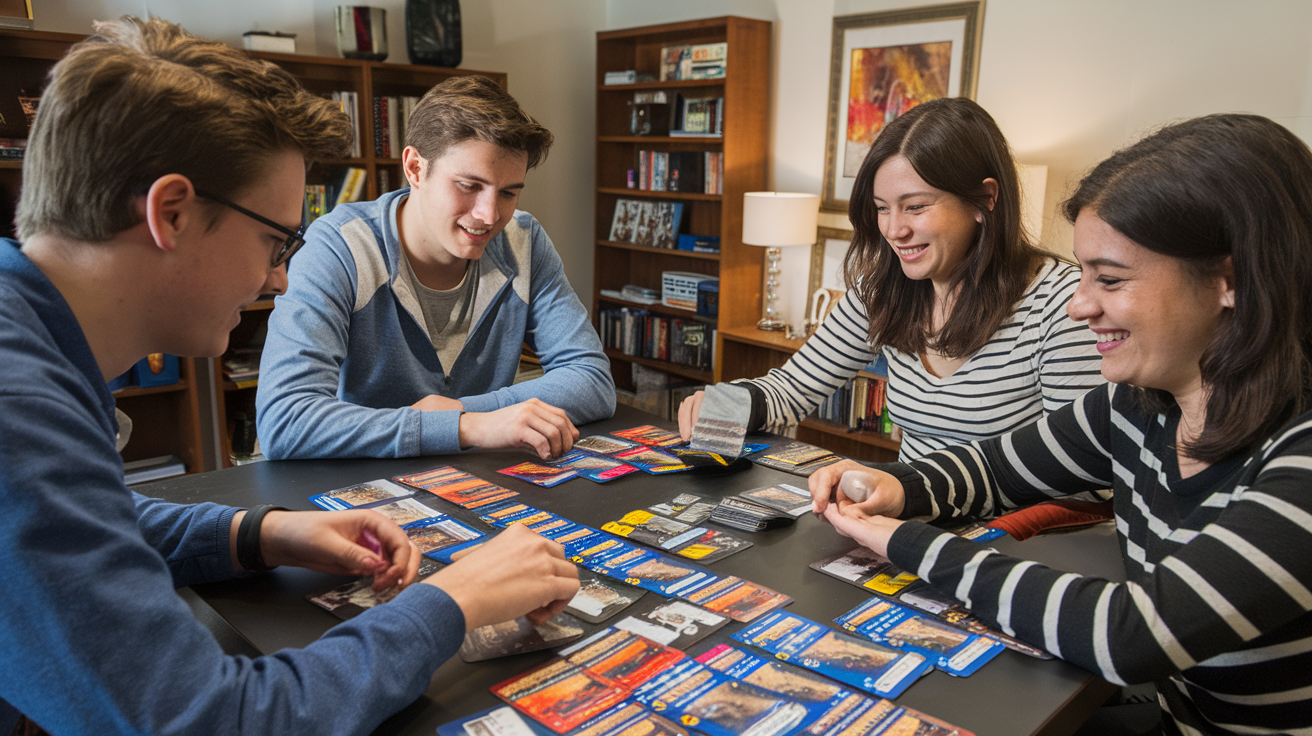
Understanding the different card types in Magic: The Gathering is fundamental to gameplay. Each card represents a different game mechanic and strategic element. Mastering these distinctions is crucial for building effective decks and executing winning strategies.
Card Types:
- Lands: The foundation of your mana base. Lands produce mana, the magical energy required to cast spells. The five basic land types are Plains (producing white mana), Island (producing blue mana), Swamp (producing black mana), Mountain (producing red mana), and Forest (producing green mana). Each color in Magic: The Gathering represents a different philosophy and play style.
- Creatures: Summon these onto the battlefield to attack your opponents and defend against their attacks. A creature card displays power and toughness, indicating the damage it deals in combat and how much damage it can withstand. Creature cards form the backbone of many aggressive strategies.
- Instants and Sorceries: These spells offer a wide range of effects, from dealing damage to drawing cards. Instants can be played almost any time, offering flexibility and surprise. Sorceries are generally more powerful but can only be played during your main phases. Understanding the distinction between instant speed and sorcery speed is crucial for strategic play.
- Enchantments: These persistent spells provide ongoing benefits or impose restrictions. Auras enchant specific permanents, while global enchantments affect the entire game. Enchantment removal is an important element in many Magic decks.
- Artifacts: These magical objects and devices can represent anything from powerful weapons to mystical trinkets. Some artifacts are also creatures, offering versatility.
- Planeswalkers: These powerful allies represent legendary mages with unique abilities. A planeswalker enters the battlefield with loyalty counters. You can activate their abilities by adding or removing these counters, but be careful! If a planeswalker’s loyalty reaches zero, it’s removed from the battlefield.
Mana Costs and Tapping:
Each spell has a mana cost displayed in the top right corner, indicating the amount and type of mana required to cast it. To produce mana, you tap your lands by turning them sideways. You can play only one land per turn.
The Battlefield:
The battlefield is divided into zones: your Library (your deck), your Hand (the cards you hold), the Graveyard (where discarded and destroyed cards go), and Exile (where cards are removed from the game). Understanding the role of each zone is crucial for strategic card advantage.
Life Totals and Winning/Losing:
Each player begins with 20 life. Reducing your opponent’s life total to 0 wins the game. Combat damage from creatures, direct damage from spells, poison counters, and alternative win conditions (specified by certain cards) can all determine the outcome of a match.

Building Your First Magic Deck

Deckbuilding in Magic: The Gathering is where you craft your winning strategy. You’ll select cards to create a synergistic deck of at least 60 cards, balancing lands and spells to achieve your desired playstyle.
Deck Construction Fundamentals:
A standard Magic: The Gathering deck contains a minimum of 60 cards. While there’s no maximum limit, 60 cards is generally recommended for consistency. A key principle is balancing your mana sources (lands) and the spells you’ll cast. A typical starting point is a ratio of 24 lands to 36 spells, although this can vary based on your mana curve and the mana costs of your spells.
Card Rarity:
Magic cards have different rarities: Common, Uncommon, Rare, and Mythic Rare. Rarer cards are generally more powerful but also more expensive. Budget decks often focus on common and uncommon cards, providing a cost-effective way to start playing.
Deck Archetypes:
Different deck archetypes employ unique strategic approaches:
- Aggro: Focuses on fast, aggressive creatures to overwhelm opponents quickly.
- Control: Aims to control the pace of the game with removal spells and counter-spells, eventually overpowering the opponent with powerful late-game threats.
- Midrange: Combines elements of aggro and control, aiming for a balance between early aggression and late-game power.
- Combo: Focuses on assembling specific card combinations to achieve a quick and decisive victory.
Starting Points for Beginners:
- Preconstructed Decks: These ready-made decks offer a great introduction to the game and different playstyles.
- Budget-Friendly Deck Lists: curated budget deck lists for beginners.
- Deckbuilder’s Toolkit: This product provides a selection of cards, lands, and a guide to help you grasp the fundamentals of deck construction.
Advanced Deckbuilding Resources:
As you gain experience, you can explore more advanced deckbuilding tools and resources:
- Online Deckbuilders: MTGGoldfish, TappedOut, and Deckstats provide powerful tools for deck creation, analysis, and sharing.
- Magic: The Gathering Arena: MTG Arena, a free-to-play digital platform, lets you test and refine decks without needing physical cards. It also offers preconstructed decks and opportunities for drafting.
- Community Forums and Discord Servers: Engage with the Magic community on dedicated platforms to discuss strategies and get feedback on your decks.
How to Play Magic: The Gathering Card Game
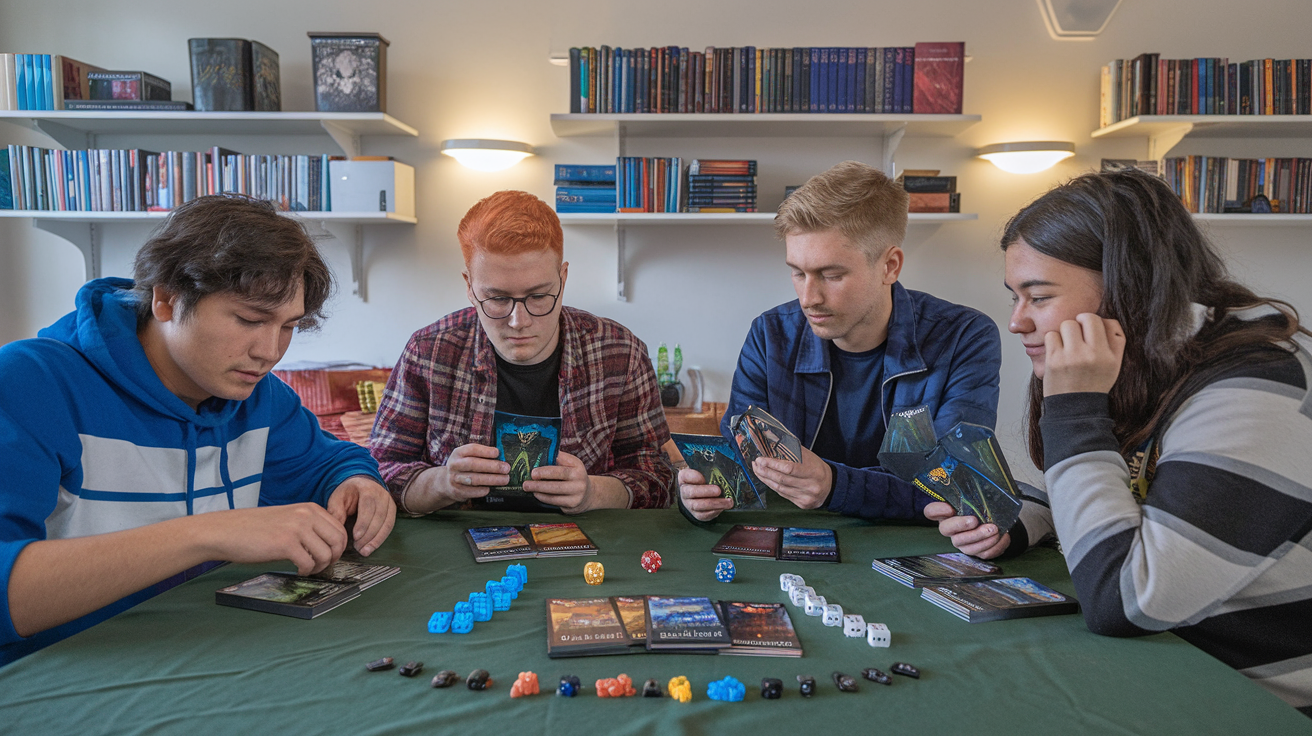
This section provides a detailed breakdown of gameplay in Magic: The Gathering, guiding you through each step of a turn and explaining the core mechanics involved.
Starting the Game:
- Shuffle Your Decks: Each player thoroughly shuffles their deck of 60 cards.
- Draw Your Opening Hand: Each player draws seven cards to form their starting hand. If unsatisfied with your hand, you can mulligan, redrawing a smaller hand (see the Mulligan rule explanation below).
- Determine a Starting Player: Randomly determine which player goes first.
Turn Structure and Phases:
A turn in Magic progresses through several phases, each divided into steps:
- Beginning Phase:
- Untap Step: Untap all your tapped permanents (lands, creatures, artifacts, enchantments, planeswalkers).
- Upkeep Step: Resolve any abilities that trigger “at the beginning of your upkeep.”
- Draw Step: Draw a card from your library. The starting player skips the draw step on their first turn.
- Main Phase 1:
- You may play one land card from your hand.
- You may cast any number of spells (instants, sorceries, creatures, artifacts, enchantments, planeswalkers) as long as you can pay their mana costs.
- Combat Phase:
- Beginning of Combat Step: Abilities that trigger at the beginning of combat resolve.
- Declare Attackers Step: Declare which of your untapped creatures are attacking. Tap the attacking creatures. A newly summoned creature suffers from summoning sickness and cannot attack this turn unless it has Haste. You can attack your opponent or their planeswalkers.
- Declare Blockers Step: The defending player declares which untapped creatures will block.
- Combat Damage Step: Creatures deal combat damage equal to their power. Unblocked creatures deal damage to the defending player or planeswalker.
- End of Combat Step: Abilities that trigger at the end of combat resolve.
- Main Phase 2: Identical to Main Phase 1. You may play a land and cast spells. This phase is crucial for casting instants in response to combat or other events.
- Ending Phase:
- End Step: Resolve abilities that trigger at the end of the turn.
- Cleanup Step: If you have more than seven cards in hand, discard down to seven. Damage marked on creatures is removed.
Priority and the Stack:
When a player casts a spell or activates an ability, it doesn’t resolve immediately. It is placed on the stack, an imaginary holding area. Each player then has the opportunity to respond by adding more spells or abilities to the stack. Once both players pass priority, the top item on the stack resolves, followed by the next, and so on.
Understanding Keywords and Abilities
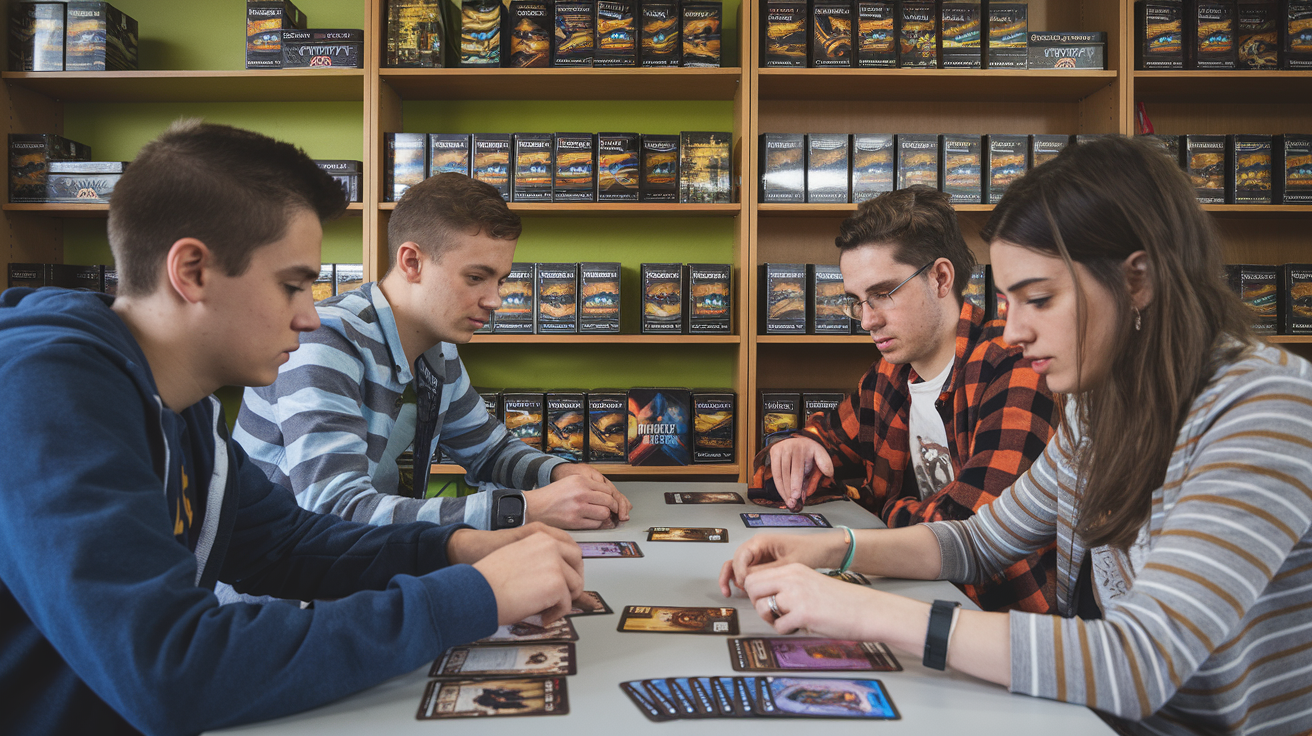
Keywords and abilities in Magic: The Gathering add layers of strategic depth to the game. Understanding these mechanics is crucial for optimizing your deck and outplaying your opponents.
Common Keywords:
- Flying: Creatures with Flying can only be blocked by creatures with Flying or Reach. This makes them effective attackers against opponents without aerial defenses.
- Trample: If a creature with Trample deals lethal damage to a blocking creature, excess damage “tramples over” to the defending player or planeswalker.
- First Strike: A creature with First Strike deals combat damage before creatures without First Strike. This can allow a smaller creature with First Strike to destroy a larger creature without First Strike.
- Deathtouch: Any amount of damage from a creature with Deathtouch is considered lethal damage to another creature.
- Haste: Creatures with Haste can attack and tap the turn they enter the battlefield, ignoring summoning sickness.
- Vigilance: Creatures with Vigilance do not tap when they attack, allowing them to also block on the opponent’s turn.
- Reach: Creatures with Reach can block creatures with Flying.
- Hexproof: A permanent with Hexproof can’t be targeted by spells or abilities your opponents control. This makes them very difficult to remove.
- Menace: Creatures with Menace can only be blocked by two or more creatures.
- Lifelink: Whenever a creature with Lifelink deals damage, you gain that much life.
- Indestructible: Permanents with Indestructible cannot be destroyed by damage or effects that say “destroy”.
Planeswalkers:
Planeswalkers are powerful permanents representing legendary mages. They have loyalty counters and activated abilities.
- Loyalty Counters: Planeswalkers enter the battlefield with a starting number of loyalty counters.
- Activating Abilities: Planeswalker abilities have varying loyalty costs. Activating an ability adds or subtracts the indicated number of loyalty counters. Abilities can range from offensive effects (dealing damage) to defensive actions (gaining life) to game-changing ultimates.
- Attacking Planeswalkers: Planeswalkers can be attacked by creatures. Damage dealt to a planeswalker removes that many loyalty counters. If a planeswalker’s loyalty reaches zero, it is sent to the graveyard. You can strategically target your opponent’s planeswalkers with your creatures to remove them from the battlefield.
Different Ways to Play Magic
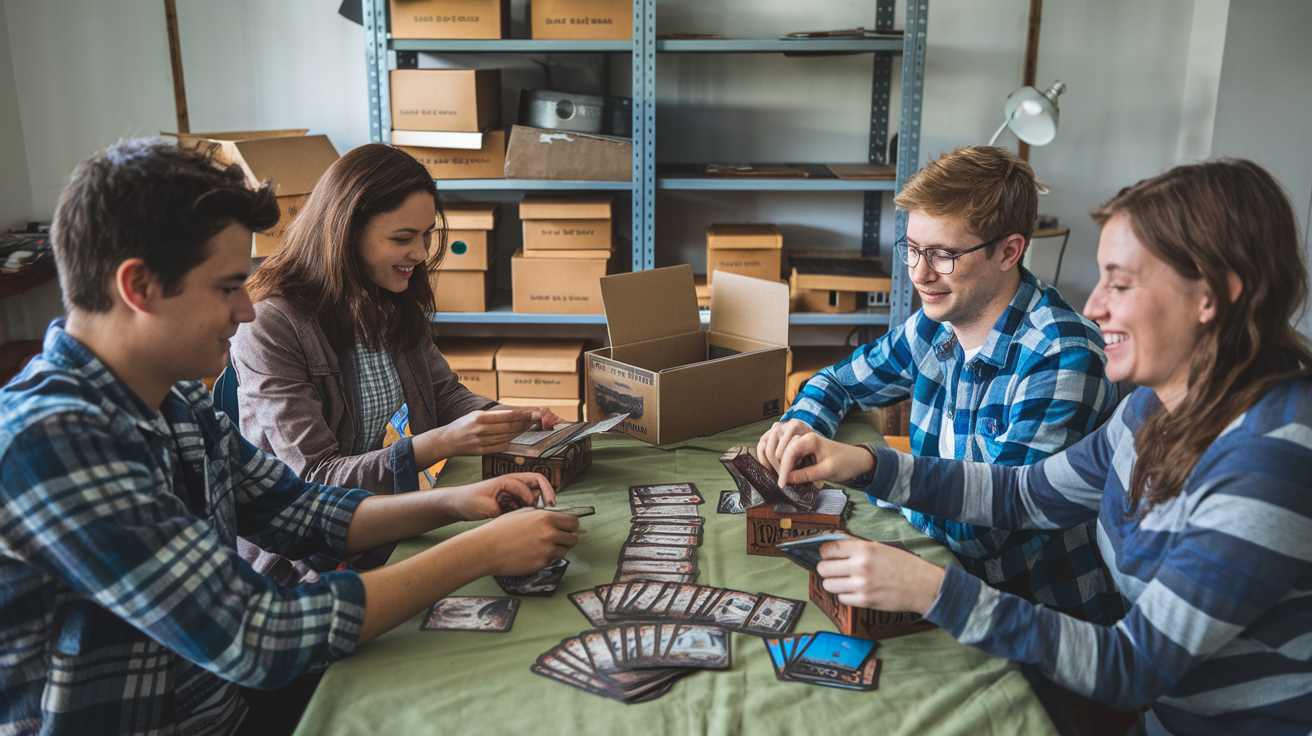
Magic: The Gathering offers a rich variety of game formats, each with its own rules and strategic landscape. This caters to diverse playstyles, from casual kitchen-table magic to high-level competitive tournaments.
Magic: The Gathering Format Comparison
| Feature | Standard | Pioneer | Modern | Legacy | Vintage | Commander (EDH) | Sealed Deck | Draft |
|---|---|---|---|---|---|---|---|---|
| Card Pool | Rotating (latest sets) | Return to Ravnica onward | 8th Edition onward | Almost all cards (with banlist) | Almost all cards (with banlist & restricted list) | Almost all cards (with banlist), 1 copy of each card (except basic lands) | Cards from 6 booster packs + basic lands | Cards drafted from booster packs + basic lands |
| Deck Size | 60 minimum | 60 minimum | 60 minimum | 60 minimum | 60 minimum | 100 cards, singleton | 40 minimum | 40 minimum |
| Typical Players | 1v1 | 1v1 | 1v1 | 1v1 | 1v1 | Multiplayer (3-5 typical) | 1v1 (can be multiplayer) | Multiplayer (usually 8) |
| Metagame | Dynamic, shifts with set rotations | Evolving | Diverse, established | Very diverse, powerful combos | Diverse, powerful combos & single card strategies | Highly variable, focused on individual commanders | Highly variable, dependent on opened packs | Variable, dependent on drafted cards and player skill |
| Competitive Play | Very popular | Growing | Very popular | Popular | Niche | Casual, some competitive variations | Casual, some LGS events | Casual, some LGS and online events |
| Banned & Restricted List | Yes | Yes | Yes | Yes | Yes (both banned and restricted) | Yes | Usually follows current Standard banlist | Usually follows current Standard banlist |
| Beginner Friendliness | Moderate (rotating sets can be expensive) | Moderate | Low (can be expensive) | Low (very expensive) | Very Low (extremely expensive) | Moderate (complex rules, but can be budget-friendly) | High | High |
Constructed Formats:
In constructed formats, you build your deck in advance.
- Standard: This dynamic format utilizes the most recent Magic: The Gathering sets. The card pool rotates regularly, ensuring a fresh and evolving metagame.
- Pioneer: Pioneer uses a select card pool from Return to Ravnica forward.
- Modern: Modern uses a larger card pool than Standard, including sets from Eighth Edition onward. This results in a diverse metagame with various viable deck archetypes.
- Legacy: Legacy boasts the vastest card pool of the commonly played formats, creating a strategically rich environment. Certain cards are banned due to their power level.
- Vintage: Similar to Legacy, Vintage allows nearly every card printed in Magic’s history, with a restricted list limiting certain powerful cards to one copy.
- Commander (EDH): This popular multiplayer format involves 100-card decks built around a legendary creature, called the commander. Only one copy of each card (except basic lands) is allowed.
Limited Formats:
In limited formats, you build your deck from a limited pool of cards.
- Sealed Deck: You receive six booster packs and construct a deck using only those cards plus any number of basic lands. This format tests your ability to build a cohesive deck from a random assortment of cards.
- Draft: Draft involves opening booster packs and selecting cards one at a time to create your deck. This format emphasizes adaptability and strategic card evaluation.
Understanding Banned and Restricted Lists:
Each format has a banned and restricted list, detailing cards not allowed (banned) or limited in number (restricted) in that format. These lists help maintain a balanced and enjoyable play experience.
Advanced Strategies and Pro Tips
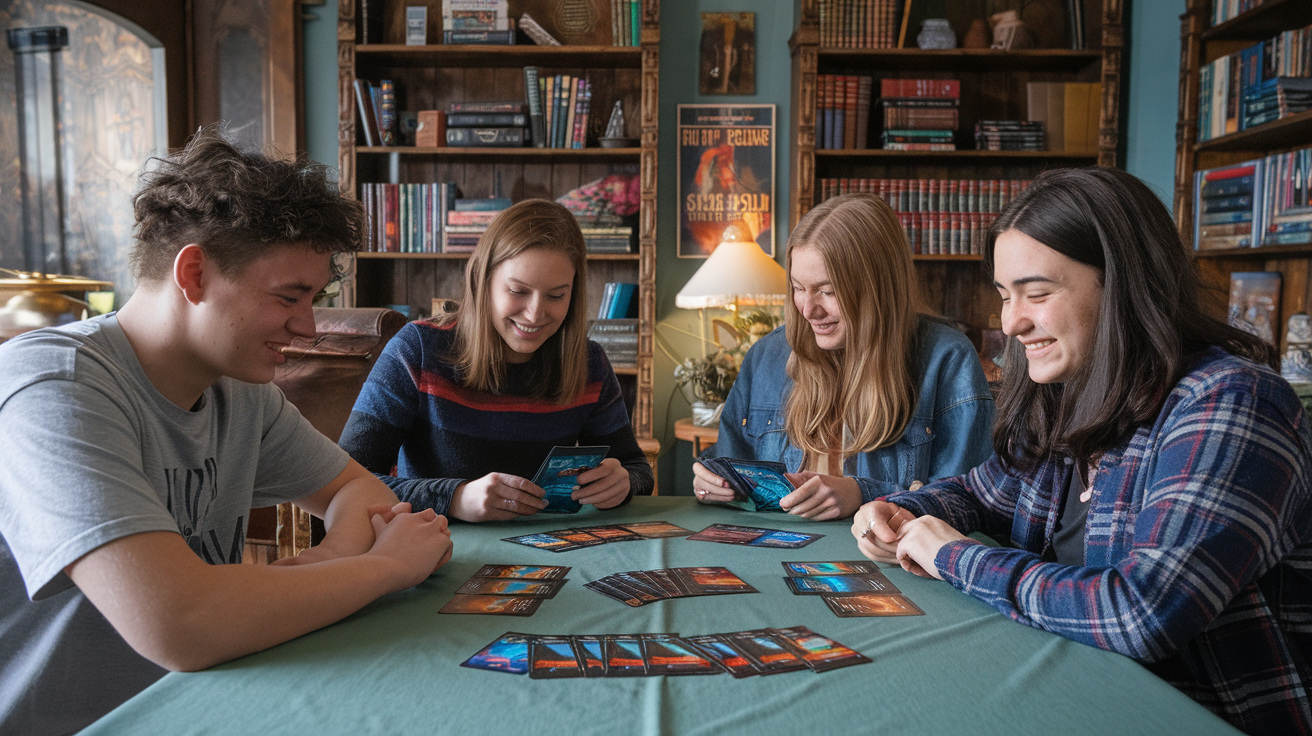
Mastering Magic: The Gathering goes beyond understanding the rules. It involves strategic thinking, resource management, and adapting to your opponent. This section explores advanced concepts and provides pro tips to elevate your gameplay.
Thinking Ahead: Anticipating Your Opponent:
Effective Magic play involves anticipating your opponent’s moves and potential plays. Consider their available resources, likely strategies based on their deck archetype (e.g., Aggro, Control, Midrange, Combo), and potential responses to your actions. For example, holding back a key threat if you suspect your opponent has a removal spell can be crucial for maintaining tempo.
Resource Management: Sequencing and Tempo:
Magic is a game of resource management. Sequencing your plays effectively – the order in which you play your lands, cast your spells, and use your abilities – can maximize your impact. Controlling the tempo of the game, dictating the pace of play and deploying threats at opportune moments, is a vital aspect of strategic play. (Example: Playing a land and then casting a two-mana creature on turn two establishes stronger board presence than waiting until turn three, potentially losing tempo).
Mana Curve and Card Advantage:
A well-constructed mana curve (the distribution of mana costs in your deck) ensures you can consistently cast your spells throughout the game. Maintaining card advantage (having more cards in hand than your opponent) gives you more options and flexibility. These are fundamental principles of strong deck construction and gameplay.
Synergy and Deck Cohesion:
Building a cohesive deck where cards work together synergistically amplifies their individual power. Look for combinations that create powerful effects, exceeding the sum of their parts. (Example: A creature that creates token creatures combined with an anthem effect (a spell that buffs all your creatures) generates a formidable army).
Sideboarding: Adapting Your Strategy:
In tournament play, sideboarding is essential. Your sideboard, a separate 15-card deck, allows you to adapt your strategy between matches. Against an aggro deck, you might bring in extra removal spells or life gain. Against a control deck, card draw and counter-spells can be invaluable. (Example: “Lightning Bolt” – Sideboard Card Against – Aggro decks, “Disdainful Stroke” – Sideboard Card Against – Control decks).
Bluffing and Mind Games:
Magic has a psychological element. Bluffing, like representing a counter-spell even if you don’t have one, can force your opponent into suboptimal plays. This requires reading your opponent and understanding their potential lines of play.
Analyzing Your Games:
Reflecting on past games is crucial for improvement. Identify your mistakes and successful plays. Consider journaling your matches, noting key decisions and outcomes.
Staying Informed: The Evolving Metagame:
The metagame (the current trends in competitive play) is constantly evolving. Websites like MTGGoldfish, Magic news sites, and community forums provide valuable insights into popular decks and strategies. Staying informed helps you anticipate opponent strategies and adapt your own.
Targeted Removal vs. Board Wipes:
Understanding the different types of removal is crucial for disrupting your opponent’s game plan. Targeted removal eliminates a single threat, while board wipes clear the battlefield of multiple creatures, resetting the board state. Choosing the right type of removal at the right moment can be game-changing. (Example: “Lightning Bolt” – Targeted Removal, “Wrath of God” – Board Wipe).
A Glossary of Magic Terms

This glossary defines key terms and mechanics used in Magic: The Gathering, providing a quick reference for navigating the game’s terminology.
- Activated Ability: An ability that a player can choose to activate by paying a specific cost. Activated abilities are written with the format “[Cost]: [Effect]” (e.g., “{T}: Add {G}”).
- Artifact: A permanent card type representing a magical object or device.
- Aura: An enchantment that enchants a permanent.
- Battlefield: The designated play area where permanents, such as creatures and artifacts, are placed.
- Casting a Spell: The process of playing a spell by paying its mana cost and following the instructions on the card.
- Commander (in Commander format): A legendary creature that serves as the focal point of a Commander deck.
- Creature: A permanent card type representing a creature under a player’s control. Creatures attack and block in combat.
- Counter: A marker placed on a permanent or player to track a game mechanic (e.g., +1/+1 counters, poison counters).
- Deck: A collection of cards used to play Magic: The Gathering. Different formats have specific deck construction rules (e.g., minimum deck size, banned/restricted cards).
- Emblem: A permanent created by some planeswalker abilities. Emblems have continuous effects and are not cards.
- Exile: A game zone outside the battlefield and graveyard. Cards exiled are removed from the game indefinitely.
- Flying: (Keyword ability) A creature with Flying can only be blocked by creatures with Flying or Reach.
- Graveyard: The zone where discarded or destroyed cards are placed.
- Hand: The cards a player is currently holding.
- Instant: A spell type that can be cast at almost any time during the game.
- Land: A permanent card type that produces mana.
- Library: A player’s deck of cards, placed face down and used for drawing cards.
- Lifelink: (Keyword Ability) Whenever a creature with Lifelink deals damage, you gain that much life.
- Mana: Magical energy used to cast spells.
- Mana Cost: The cost required to cast a spell, represented by mana symbols on the card.
- Mana Pool: Where mana is held before being used to cast spells.
- Mulligan: The act of shuffling your starting hand back into your library and drawing a new, smaller hand at the beginning of the game.
- Permanent: A card that remains on the battlefield after being cast (e.g., creature, artifact, enchantment, planeswalker).
- Phase: A distinct stage of a turn (e.g., Beginning Phase, Main Phase, Combat Phase, Ending Phase).
- Planeswalker: A powerful permanent type representing a legendary mage with unique abilities.
- Priority: The opportunity for each player to cast spells or activate abilities.
- Reach: (Keyword ability) A creature with Reach can block creatures with Flying.
- Sorcery: A spell type that can only be cast during a player’s main phases.
- Stack: An imaginary zone where spells and abilities wait to resolve.
- Step: A smaller division within a phase (e.g., Untap step, Draw step, Declare Attackers step).
- Tapping: Turning a card sideways to indicate that it has been used.
- Token: A permanent that is not a card. Tokens are typically created by other cards or abilities.
- Trample: (Keyword Ability) If a creature with Trample deals excess damage beyond what’s needed to destroy a blocker, that excess damage is dealt to the defending player or planeswalker.
- Triggered Ability: An ability that automatically happens when a certain condition is met, indicated by “when,” “whenever,” or “at”.
- Turn: A single cycle of play in Magic, consisting of phases and steps.
- Untapping: Returning a tapped card to its upright position.
Want more card game fun? Check out our curated lists for couples, 1 player, 2 players, 3 players, 4 players, 5 players, and 6 players card games!
