
Rain, snow, or a scorching hot day – sometimes Mother Nature has other plans for outdoor recess.
But here’s the good news: being stuck inside doesn’t mean your students have to miss out on the fun (or the much-needed energy release)
With the right indoor recess games, you can turn a dreary day into an epic celebration of movement, laughter, and learning.
These 16 games are designed to keep your students engaged, active, and happy – no playground required.
They’re perfect for kindergarten and elementary classrooms, easy to set up, and flexible enough to adapt to your space and schedule. Plus, they sneak in skills like listening, cooperation, and focus while your kids are having a blast. Let’s dive in!
1. Find It Fast

This game turns your classroom into a high-speed scavenger hunt, and kids absolutely love the challenge of thinking quickly under pressure.
Best for: All ages, large groups, burning energy while staying focused
Time to Play: 10-15 minutes
Players: Whole class
What You’ll Need:
Just your classroom and the items in it!
How to Play:
1. Have students gather on the rug or sit at their table spots.
2. Call out a descriptor – something like “something square”, “something soft”, or “something red”.
3. Students must quickly find an object in the classroom that matches your description and either point to it or hold it up.
4. Give everyone a moment to look around and see what their classmates found – there are no wrong answers, and it’s fascinating to see how their creative minds work!
5. Discuss a few interesting choices for a minute or two, then call out another descriptor and go again.
Pro Tip: Ramp up the difficulty by giving them a countdown timer or combining two descriptors like “something blue AND round”. You’ll be amazed at how fast they move!
2. Musical Spots (Chairs Optional!)
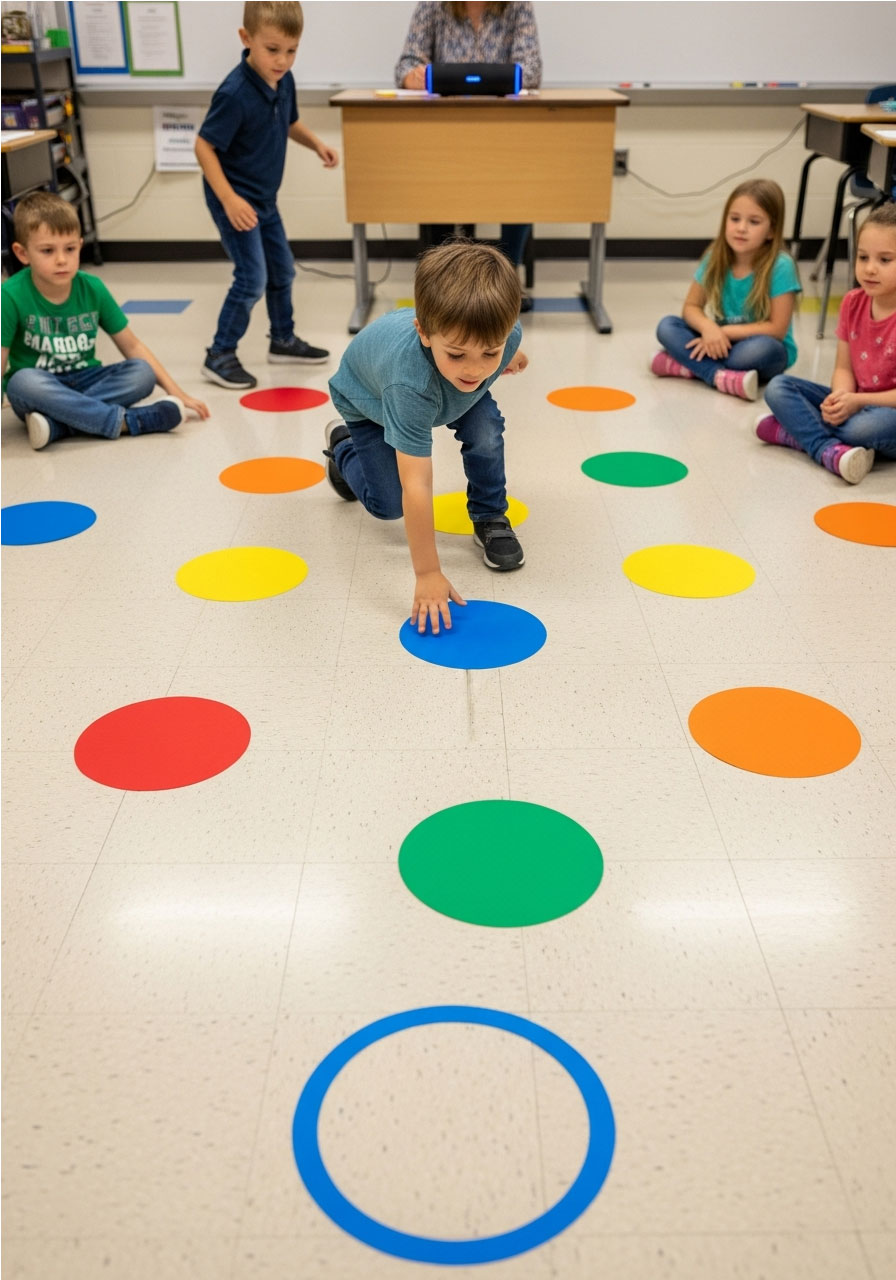
All the fun of Musical Chairs without the chaos of tipping furniture or bumped heads? Yes, please! This is a classroom-safe twist on the classic game that kids beg to play over and over.
Best for: High-energy groups, practicing good sportsmanship
Time to Play: 15-20 minutes
Players: 10-30 kids
What You’ll Need:
Carpet spots or laminated construction paper circles
A music player
How to Play:
1. Arrange your carpet spots in a circle or scattered pattern, making sure there’s a little space between each one.
2. Start with one fewer spot than you have players.
3. Play some upbeat music and have students walk (not run!) around the spots.
4. When the music stops, everyone rushes to sit on the closest spot. The student left standing is out.
5. Remove one spot and keep playing until only one player remains!
Pro Tip: If your class is large, split into two groups and run simultaneous games. It keeps the action moving and no one has to wait too long for their turn.
3. Flyswatter Frenzy
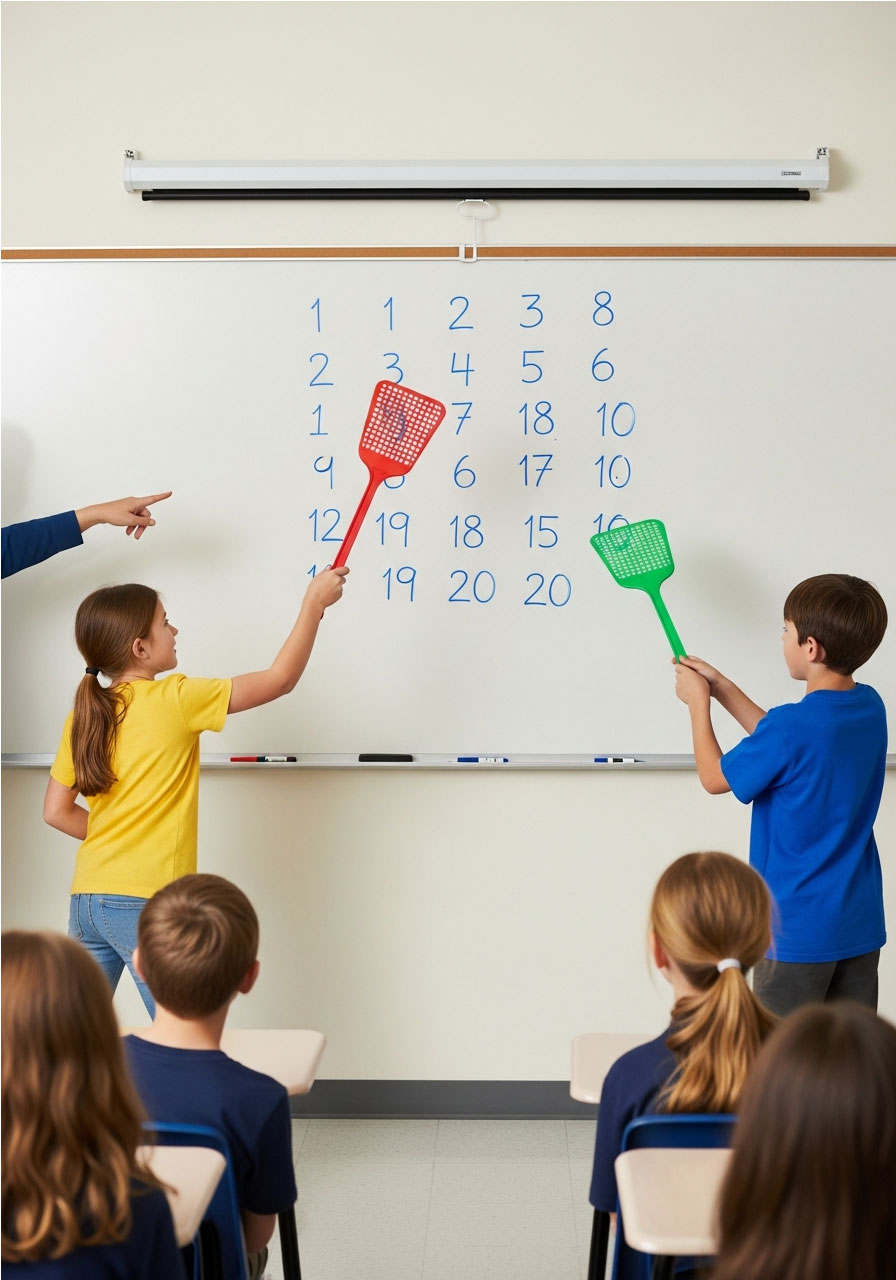
Get ready for some serious excitement! This game combines learning with fast reflexes, and the competitive element keeps everyone locked in and eager to participate.
Best for: Reviewing academic concepts, team building
Time to Play: 15-20 minutes
Players: Whole class in two teams
What You’ll Need:
Large poster board, whiteboard, or big post-it pad
2 plastic flyswatters
Markers to write answers
How to Play:
1. Before playing, create an answer board with whatever concept you’re reviewing – numbers for math facts, sight words, pictures of items to count, etc.
2. Divide your class into two teams and have them line up in two parallel lines facing the board.
3. Give the first player from each team a flyswatter.
4. Call out a question or prompt (like “Find the number 8!” or “Swat the word ‘they’re’ in this sentence!”).
5. The first player to correctly swat the answer wins and stays up front. The other player goes to the back of their team’s line.
6. Bring up the next player and keep the game rolling!
Fun Variation: This game is incredibly flexible! Use it to teach homophones (to/too/two), Spanish vocabulary, state capitals, or anything else your students are working on.
4. Movement Memory
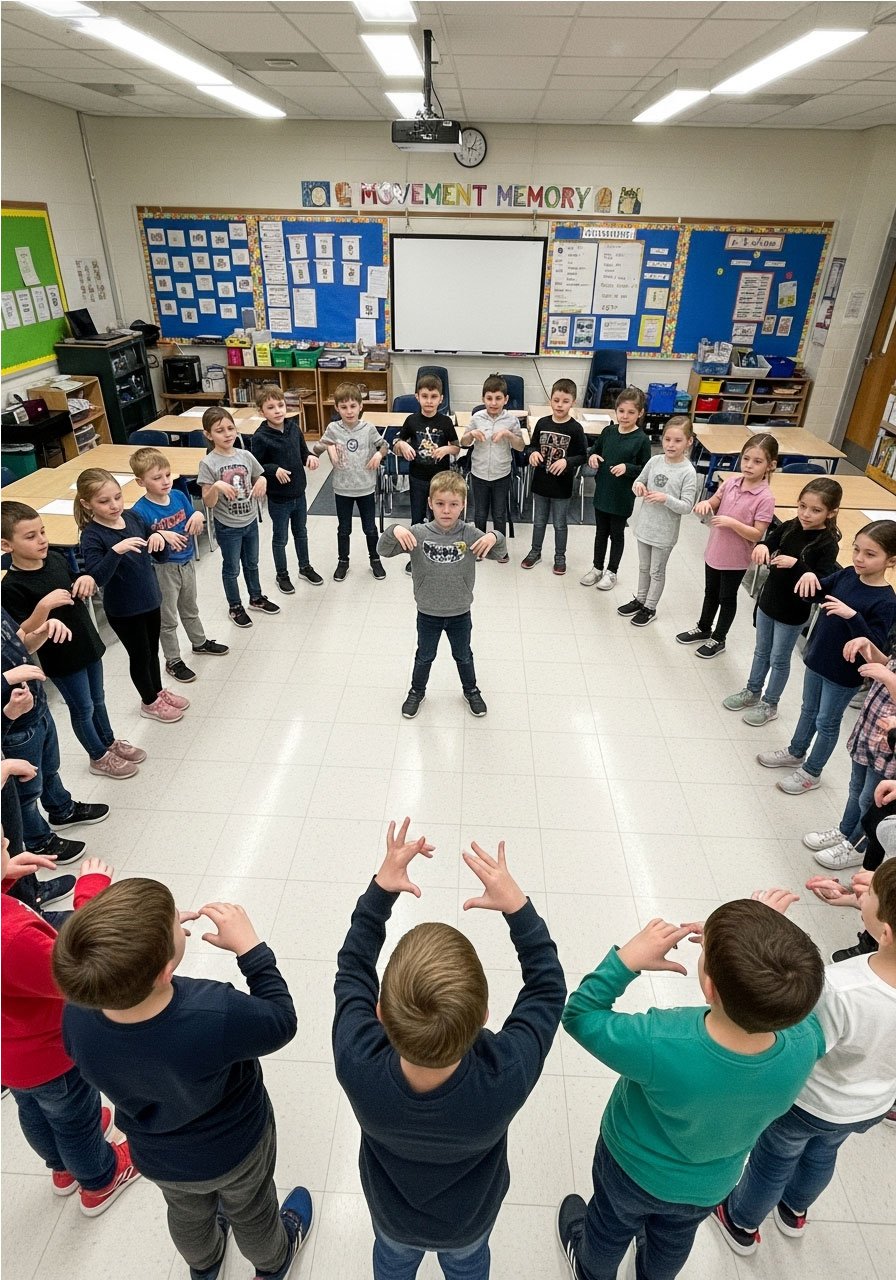
Think “Simon Says” meets improv dance party. This game builds memory skills and gets kids moving—a winning combo for indoor recess!
Best for: Building focus, getting wiggles out
Time to Play: 10-15 minutes
Players: Whole class
What You’ll Need:
Just your students and some space!
How to Play:
1. Have students stand in one large circle.
2. Pick one player to start. That player steps into the center, makes a movement (like three claps or a spin), then steps back.
3. The next player steps forward, repeats the first movement, adds their own (like jazz hands), then steps back.
4. Each player must repeat all the previous movements in order before adding a new one.
5. When someone forgets a movement or does them out of sequence, that round ends and a new one begins with a different starting player.
Pro Tip: Start slow and let the movements get sillier as kids get comfortable. By round three, you’ll have some truly hilarious sequences happening!
5. Picnic Basket Memory
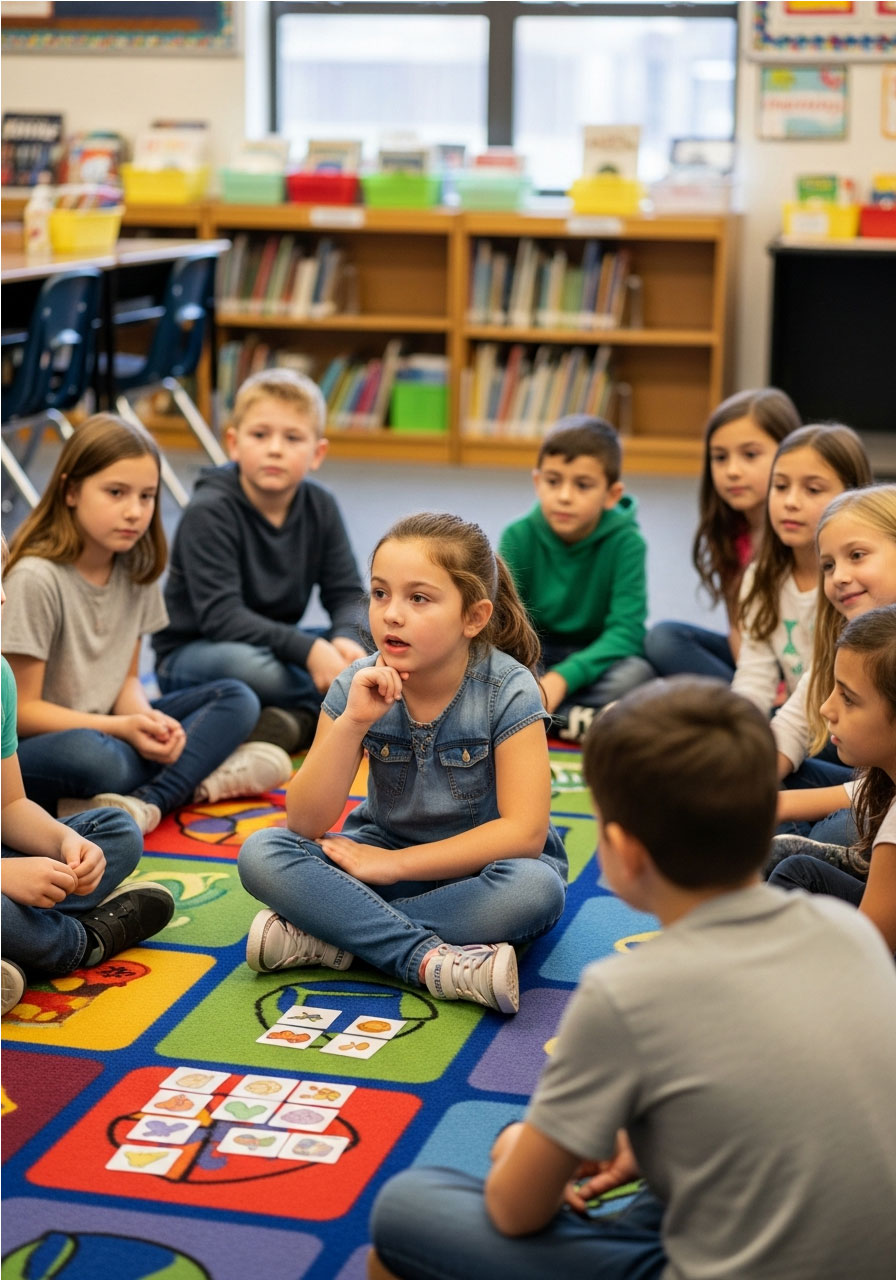
This is the verbal version of Movement Memory, and it’s perfect for building listening skills and vocabulary while giving kids a chance to be creative.
Best for: Quieter groups, building focus
Time to Play: 10-15 minutes
Players: Whole class
What You’ll Need:
Nothing but brainpower!
How to Play:
1. Have students sit in a circle.
2. The first player says, “In my basket for the picnic, I packed…” and names one item (like “sandwiches”).
3. The next player repeats the sentence and the first item, then adds their own: “In my basket for the picnic, I packed sandwiches and lemonade”.
4. Each player must repeat all previous items in order before adding a new one.
5. When someone forgets an item or gets the order wrong, start a fresh round!
Fun Variation: Change the theme to match what you’re learning! Try “In my suitcase to the beach…” or “In my backpack for school…” or even “On my spaceship to Mars…”
6. Freeze Dance

You can’t go wrong with this absolute classic! It’s simple, requires zero setup, and never fails to get kids smiling and moving.
Best for: Burning energy fast, lifting classroom mood
Time to Play: 5-10 minutes
Players: Whole class
What You’ll Need:
Upbeat music and a music player
How to Play:
1. Clear some floor space and turn on the music!
2. Let students dance, jump, and move however they want.
3. When you stop the music, everyone must freeze in place.
4. Anyone who moves while the music is paused is out (or just does a silly pose – you decide how competitive to make it!).
5. Start the music again and keep playing.
Pro Tip: Play different genres of music to keep things interesting. Classical music creates graceful movements, while pop or dance music brings out the high-energy wiggles!
7. Mystery Sound Challenge
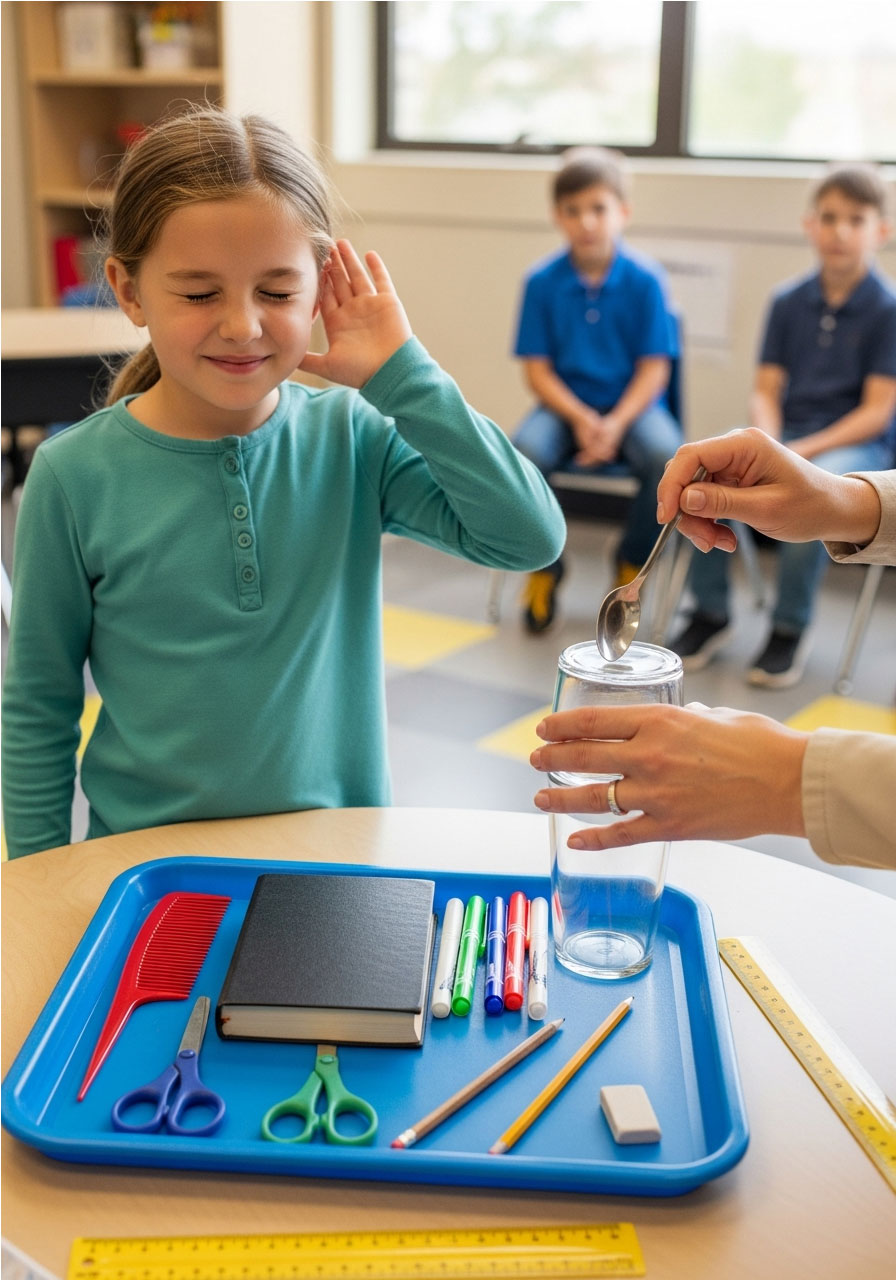
This listening game is weirdly satisfying and surprisingly challenging. Kids love trying to figure out which everyday object is making each sound!
Best for: Practicing listening skills, smaller groups
Time to Play: 10-15 minutes
Players: 5-30 kids
What You’ll Need:
A tray or basket
Common classroom items (comb, glass, book, markers, scissors, etc.)
Something to cover the tray
How to Play:
1. Show students the tray of items and give them a minute to look at everything.
2. Cover or hide the tray, then call up one student.
3. Have that student close their eyes while you pick one item and make a sound with it (run a stick along a comb, tap a glass with a spoon, open and close a book, etc.).
4. The student must guess which item made the sound without peeking!
5. Continue with different students until all items have been used.
Pro Tip: Make sounds that are subtle and tricky – it’s more fun when the answer isn’t obvious! Rubbing two erasers together or sliding a ruler across paper can be surprisingly hard to identify.
8. Alphabet Four Square Challenge

This fast-paced game combines writing, drawing, and quick thinking. It’s perfect for those days when you need something that’s both fun and educational.
Best for: Practicing letters and vocabulary, individual or partner work
Time to Play: 10-15 minutes
Players: Whole class (individual or pairs)
What You’ll Need:
Dry erase boards and markers (one per student or pair)
A timer
How to Play:
1. Have students divide their dry erase board into four squares and label them: Name, Place, Animal, Thing.
2. Set a timer for 10-15 seconds and sing the alphabet song together.
3. When the timer goes off, note which letter you stopped on.
4. Students must quickly write or draw something for each category that starts with that letter (like Mom, Mountains, Mouse, Mug for the letter M).
5. Erase and play again with a new letter!
Fun Variation: Change up the categories based on what you’re studying – Character, Setting, Problem, Solution for story elements, or Color, Shape, Number, Pattern for math!
9. Four Corners
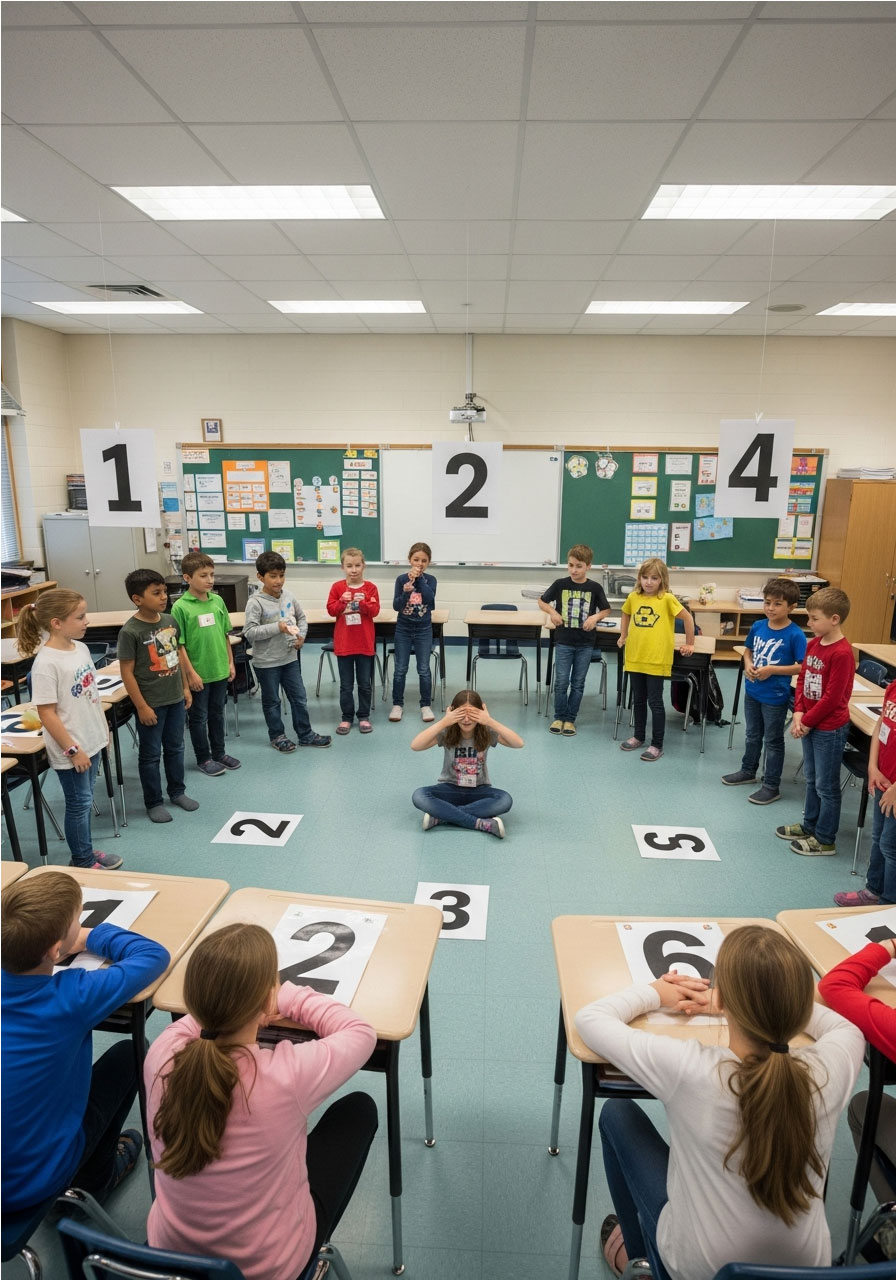
This game has been a recess favorite for generations, and for good reason. It’s simple, exciting, and keeps kids on their toes (literally!).
Best for: Large groups, high energy
Time to Play: 15-20 minutes
Players: 10+ kids
What You’ll Need:
Four corners of your classroom
Number labels 1-4 (optional)
How to Play:
1. Assign each corner of the room a number from 1 to 4.
2. Choose one student to be the caller. They sit in the middle with their eyes closed.
3. The caller counts to 10 while the other students move around and choose a corner to stand in.
4. Before opening their eyes, the caller shouts out a number (1-4).
5. Everyone in that corner is out and must sit down.
6. Keep playing until only one student remains – they’re the winner and become the next caller!
Fun Variation: Label corners with sight words, states, colors, or anything else you’re learning. The caller can say the word instead of a number, and everyone in that corner is out.
10. Hot and Cold Treasure Hunt
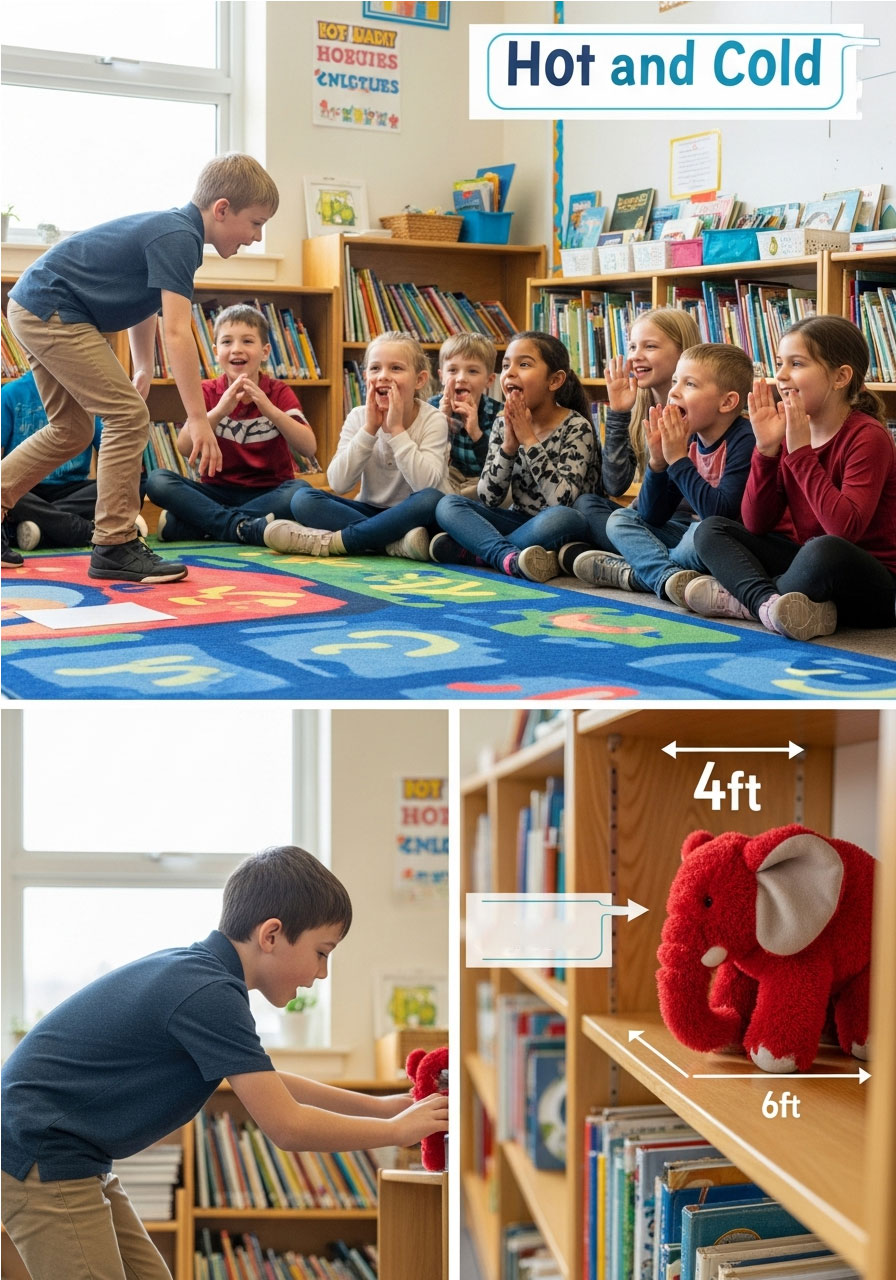
The suspense in this game is real! Kids love being the detective and getting warmer as they close in on the hidden treasure.
Best for: Practicing directional language, building teamwork
Time to Play: 10-15 minutes
Players: Whole class
What You’ll Need:
One “treasure” object (stuffed animal, colorful water bottle, anything eye-catching)
How to Play:
1. Choose one student to be the treasure hunter and have them step outside the room (with an adult supervising nearby).
2. As a class, quietly decide where to hide the treasure somewhere visible but not obvious.
3. Bring the treasure hunter back in and let them start searching!
4. The class can only give clues by saying: Hot (really close), Warm (kind of close), Cool (kind of far), or Cold (really far).
5. Play continues until the treasure is found, then choose a new hunter!
Pro Tip: Establish a rule that students can only give clues when the hunter is looking in a direction or moving – it keeps the game from becoming too easy!
11. Silent Ball
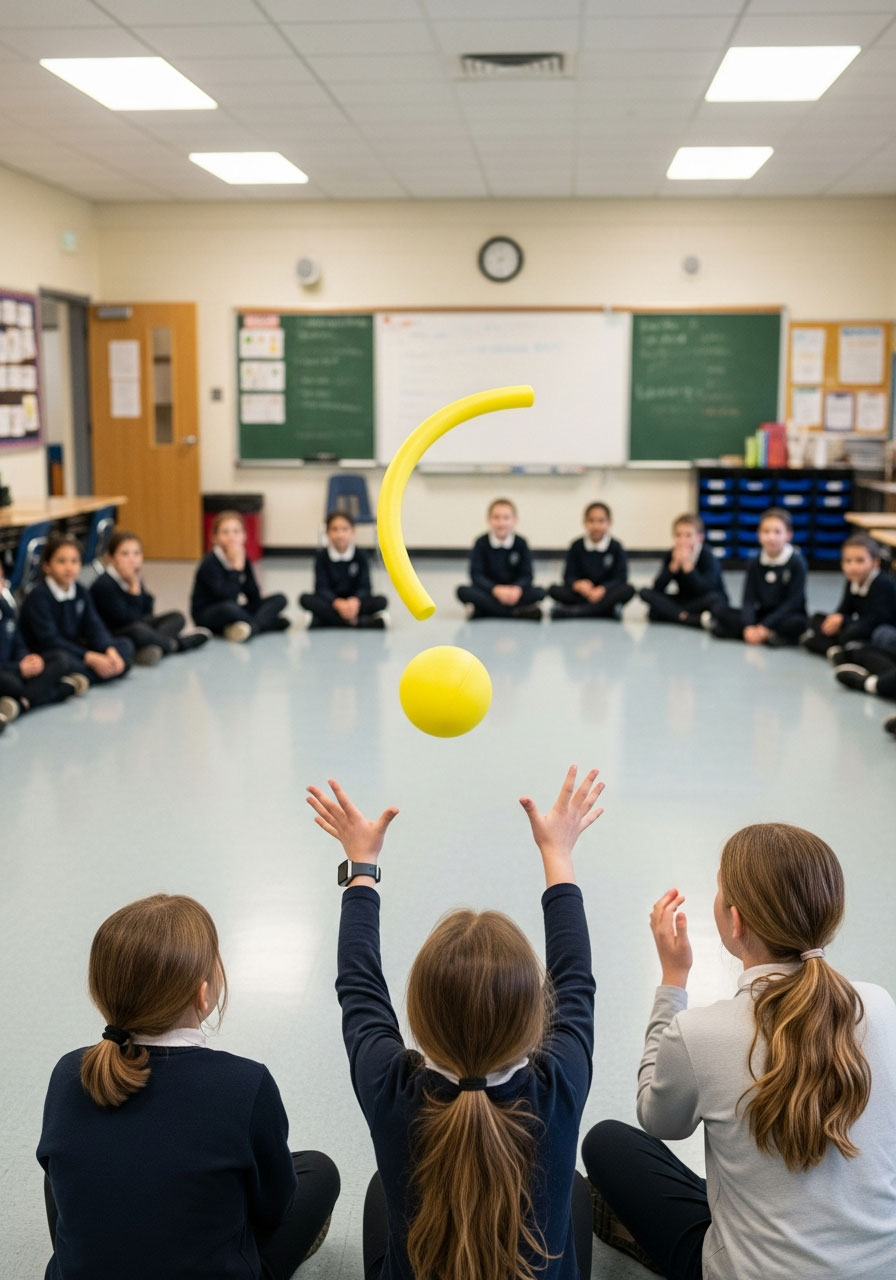
Think your class can stay completely silent while tossing a ball around? This game is harder than it looks and absolutely hilarious when someone inevitably cracks!
Best for: Practicing self-control, winding down energy
Time to Play: 10-15 minutes
Players: Whole class
What You’ll Need:
One soft, squishy ball
How to Play:
1. Have students sit or stand in a large circle.
2. Start the game with a countdown: “3… 2… 1… SILENT!”
3. Students pass the ball to each other in any direction – no talking, no noises, no fake coughs or sneezes!
4. You’re out if you: talk, make noise, throw a bad pass, or drop the ball.
5. Play until only a few students remain, or until the giggles become too much to handle!
Pro Tip: Set clear expectations before starting. Silly sounds count as breaking silence just as much as talking does!
12. Human Knot
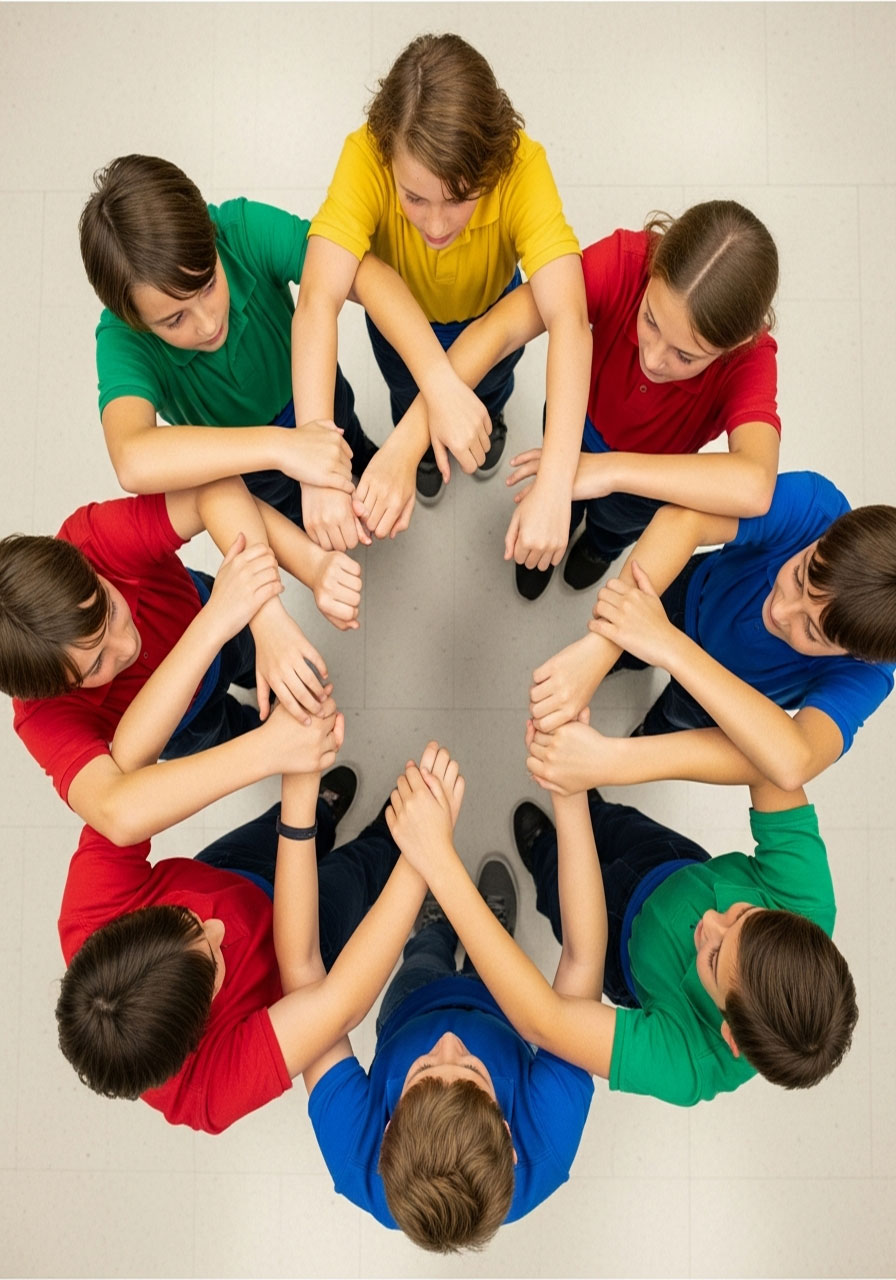
This is teamwork in action! Kids have to communicate and problem-solve together to untangle themselves – and it’s way harder than it looks.
Best for: Building cooperation, problem-solving
Time to Play: 10-20 minutes
Players: Groups of 8-10
What You’ll Need:
Just your students!
How to Play:
1. Divide your class into circles of 8-10 students.
2. Have everyone in each circle reach across and grab the hand of someone who is NOT standing next to them with their right hand.
3. Then have them grab a different person’s hand with their left hand (again, not the person next to them).
4. Now comes the fun part: students must untangle the human knot without letting go of hands!
5. They can step over or under arms, twist and turn – whatever it takes to create one big circle.
Pro Tip: This game requires patience! Remind students to communicate clearly and work together. Some knots are easier than others, so if a group gets truly stuck, you can allow one “break” to reconnect differently.
13. Pass the Rubber Chicken

Trust us – investing in one rubber chicken is worth it for the sheer hilarity this game brings. Kids will be cracking up while racing to answer questions!
Best for: Reviewing any subject, big laughs
Time to Play: 15-20 minutes
Players: Whole class
What You’ll Need:
One rubber chicken (the more ridiculous, the better!)
A YouTube video of the Chicken Dance for teaching
How to Play:
1. First, teach your students the Chicken Dance using a YouTube tutorial. Practice once or twice – this is important!
2. Have students sit in a circle and give the rubber chicken to one player.
3. Ask that student a review question like “Name six things that start with the letter K” or “What’s 7 + 8?”
4. As soon as you ask the question, they pass the chicken to the person on their right, who passes it to the next person, and so on around the circle.
5. If the chicken makes it all the way around before the student answers correctly, they must stand up and do the Chicken Dance!
6. If they answer in time, whoever is holding the chicken becomes the next person to answer a question.
Pro Tip: Tailor your questions to whatever you’re studying – math facts, spelling words, state capitals, you name it. The pressure of that chicken coming around makes even easy questions feel intense!
14. Museum Guard

There’s something magical about pretending to be a statue that comes to life when no one’s watching. This game is suspenseful, silly, and always a hit!
Best for: Practicing self-control, creative movement
Time to Play: 10-15 minutes
Players: Whole class
What You’ll Need:
Just space to move!
How to Play:
1. Choose one student to be the museum guard. Everyone else is a statue.
2. The guard stands at one end of the classroom and turns their back to the statues.
3. While the guard’s back is turned, the statues come to life! They can move, dance, and groove – but they must stay quiet.
4. When the guard turns around, every statue must freeze instantly in whatever position they’re in.
5. If the guard catches anyone moving, that player is out and must sit down.
6. Play continues until only one statue remains. They become the next guard!
Fun Variation: Have students freeze in specific poses when the guard turns around – balancing on one foot, making a silly face, or posing like a famous statue. It adds an extra challenge!
15. Would You Rather

This game is fantastic for helping students get to know each other better while also practicing decision-making and explaining their thinking.
Best for: Building classroom community, sparking conversation
Time to Play: 10-20 minutes
Players: Whole class
What You’ll Need:
Tape or a visible line down the middle of your classroom
How to Play:
1. Clear your floor space and put a long line of tape down the center of the room.
2. Ask a “Would You Rather” question like “Would you rather eat a spider or walk ten miles?” As you ask, point to each side of the tape to designate which answer is which side.
3. Students move to the side of the room that matches their choice.
4. Give them time to look around and see who chose the same thing and who chose differently.
5. If there’s time, ask a few students from each side to explain why they chose what they did!
6. Ask another question and repeat!
Pro Tip: Mix in silly questions with thought-provoking ones. Try “Would you rather have a pet dragon or be able to fly?” or “Would you rather always tell the truth or always be kind?”
16. Telephone (The Whispering Game)
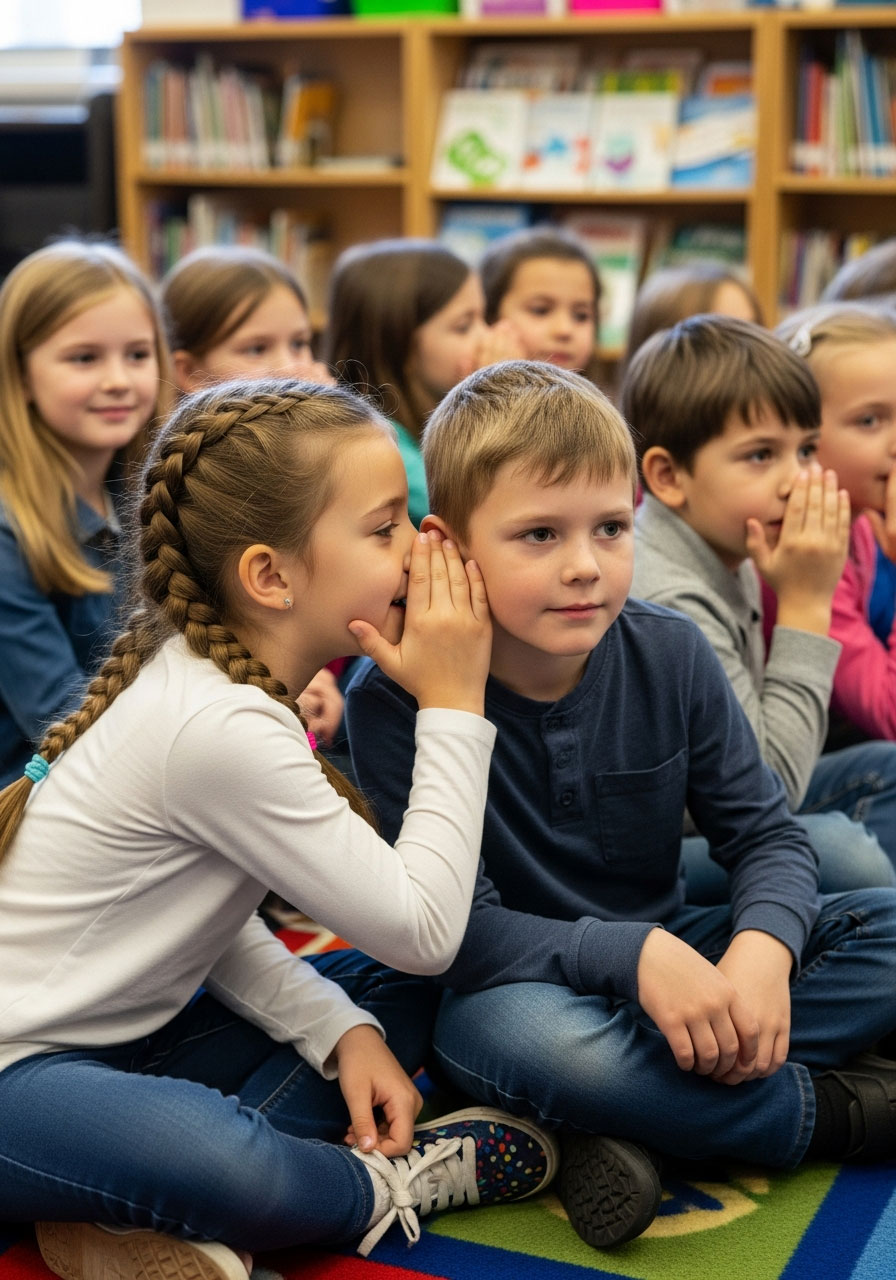
The classic game of miscommunication! This one always results in giggles when the final message is revealed and compared to what was originally said.
Best for: Practicing listening skills, building patience
Time to Play: 10-15 minutes
Players: 10+ kids
What You’ll Need:
Nothing but your students!
How to Play:
1. Have students sit in a circle or line.
2. Whisper a message to the first student – something like “The purple elephant wore sparkly shoes to the dance party”.
3. That student whispers what they heard to the next person, who whispers to the next, and so on down the line.
4. The last person says the message out loud, and you reveal what the original message was!
5. It’s always hilarious to hear how the message changed as it traveled around the circle.
Pro Tip: Keep messages age-appropriate but slightly tricky. Longer phrases with specific details are harder to remember and lead to funnier results!
Turn Indoor Recess Into the Highlight of the Day
Who says being stuck inside has to be boring? With these 16 games in your back pocket, you’re ready to transform any rainy day into an opportunity for fun, learning, and connection. Your students will bond, burn off energy, and practice important skills – all while having the time of their lives.
The best part? Most of these games require little to no supplies and can be adapted on the fly to match your students’ moods, energy levels, and what you’re currently teaching. So the next time dark clouds roll in or the thermometer dips too low, smile – because you’ve got this!
More Kid’s Party Ideas to Keep the Fun Rolling:
Painting With Cars: The Messiest (and Most Awesome) Art Project Your Kids Will Beg to Do Again
20 Fun Indoor Games For Kids That’ll Save Your Sanity (And Keep Everyone Entertained!)
Toddler Scooping Activity: The Genius Life Skill Hiding in Your Pantry
55 Minute to Win It Games for Kids, Teens, & Adults
Transform Old Yogurt Tubs Into Stunning Tissue Paper Lanterns
33+ Epic Outdoor Games That’ll Turn Your Backyard Into the Ultimate Family Fun Zone
Sticker Sorting Activity: The 5-Minute Setup That’ll Keep Your Toddler Busy (and Learning!)
