
Get ready to transform your circle time from chaotic to amazing with these easy, engaging activities that toddlers and preschoolers actually love!
Circle time can feel like herding cats – we get it. You’ve got wiggly toddlers, preschoolers with the attention span of a goldfish, and about five minutes before someone needs a snack.
But here’s the good news: circle time doesn’t have to be stressful. With the right activities up your sleeve, you can turn those precious minutes into a fun, engaging experience that helps little ones learn social skills, practice listening, and actually enjoy being part of a group.
Whether you’re a daycare teacher, a preschool pro, a homeschool parent, or just looking for structured play ideas for your little ones, these 27 circle time activities are about to become your secret weapon.
They’re simple to set up, easy to explain, and guaranteed to keep those tiny humans entertained.
Best for: Toddlers (18 months-3 years) and Preschoolers (3-5 years)
Time: 5-20 minutes (depending on age and attention span)
What You’ll Need: Varies by activity – most require minimal supplies!
Before You Dive In: Set Yourself Up for Success
Let’s talk strategy for a second. If you’re new to circle time, start small. Five minutes with toddlers is a win. You can always build up to longer sessions as kids get the hang of the routine.
Here’s a simple circle time flow that works:
1. Start with a welcome song to signal it’s circle time
2. Quick chat about the day, date, or weather
3. Play a game or do an activity (this is where our 24 ideas come in!)
4. Read a story together
5. End with a goodbye song
Pro Tip: Younger toddlers might only last 5 minutes – and that’s totally okay! The goal is engagement, not perfection. As kids get older and more comfortable, you can gradually extend the time.
Songs & Music Activities (Because Kids Love a Good Tune!)
1. The Days of the Week Song
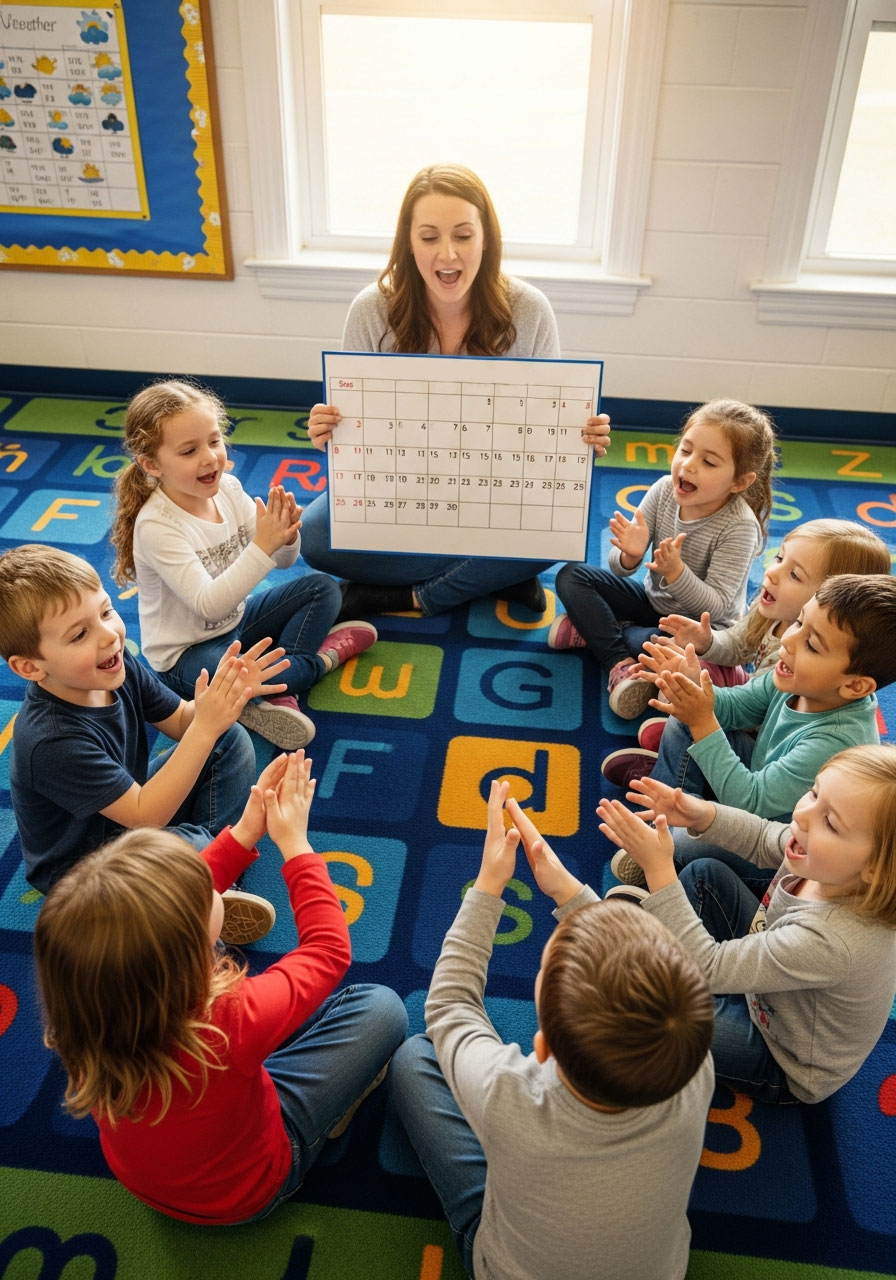
Teach little ones the days of the week by singing to the tune of the Addams Family theme song. It’s catchy, it’s silly, and they’ll be snapping along in no time.
Best for: Preschoolers learning the calendar
Time to Play: 2-3 minutes
How to Play:
1. Gather everyone in a circle and explain you’re learning the days of the week with a special song
2. Sing: “Days of the week (snap snap), Days of the week (snap snap), Days of the week, days of the week, days of the week (snap snap)”
3. Continue with: “There’s Sunday and there’s Monday, there’s Tuesday and there’s Wednesday, there’s Thursday and there’s Friday, and then there’s Saturday!”
4. Repeat and encourage kids to snap or clap along
Pro Tip: Add hand motions for each day to help kinesthetic learners remember the sequence!
2. Circle Time Hello Song
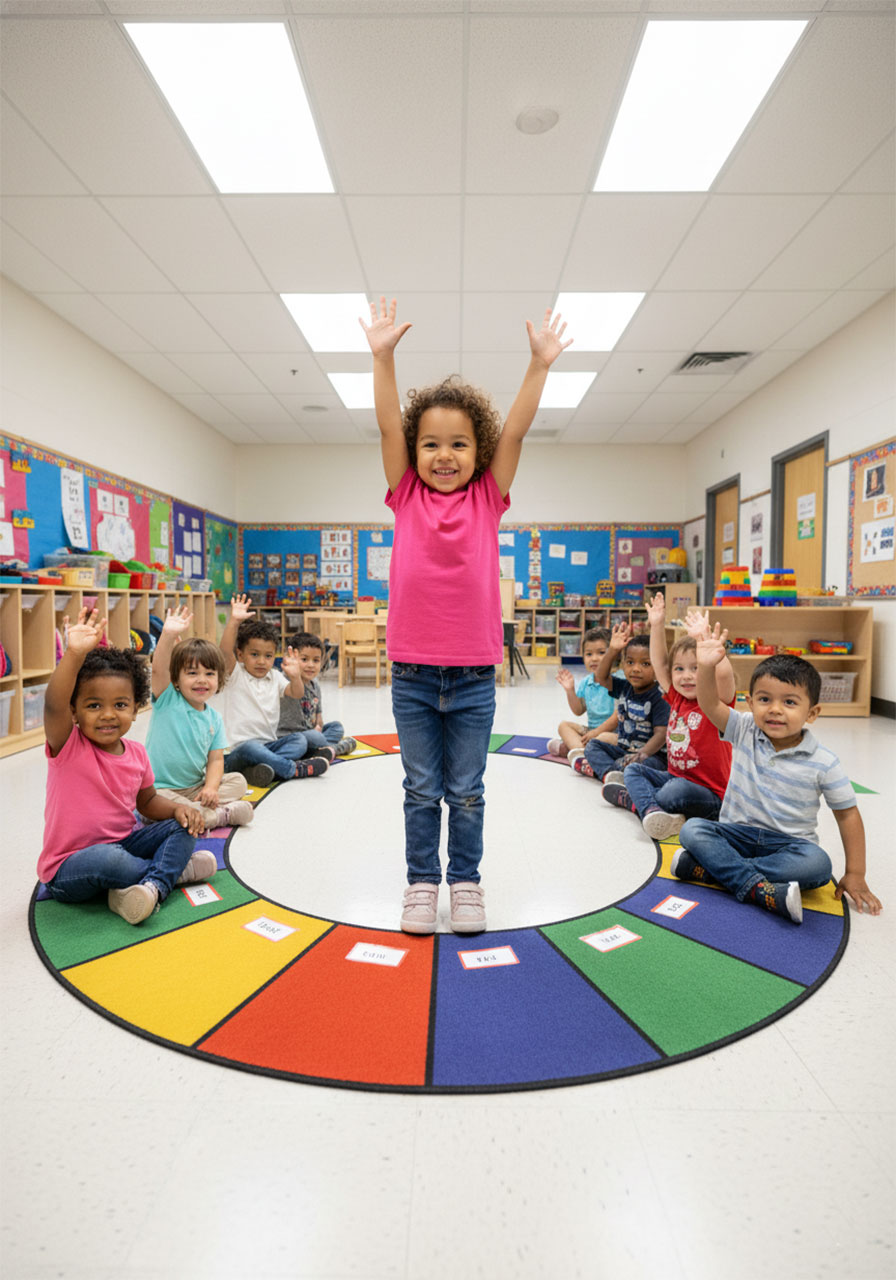
Kick off your circle time with a personalized greeting song that makes each child feel special and welcomed.
Best for: All ages, especially for building community
Time to Play: 3-5 minutes
How to Play:
1. Sit in a circle and start singing: “Hello [child’s name], hello [child’s name], we’re so glad you’re here today!”
2. Go around the circle, singing to each child individually
3. Encourage everyone to wave at the child being greeted
4. Have kids clap or do a special motion when it’s their turn
Pro Tip: Let kids choose their own greeting motion (high-five, fist bump, wave) to make it even more personal!
3. The Itsy Bitsy Spider
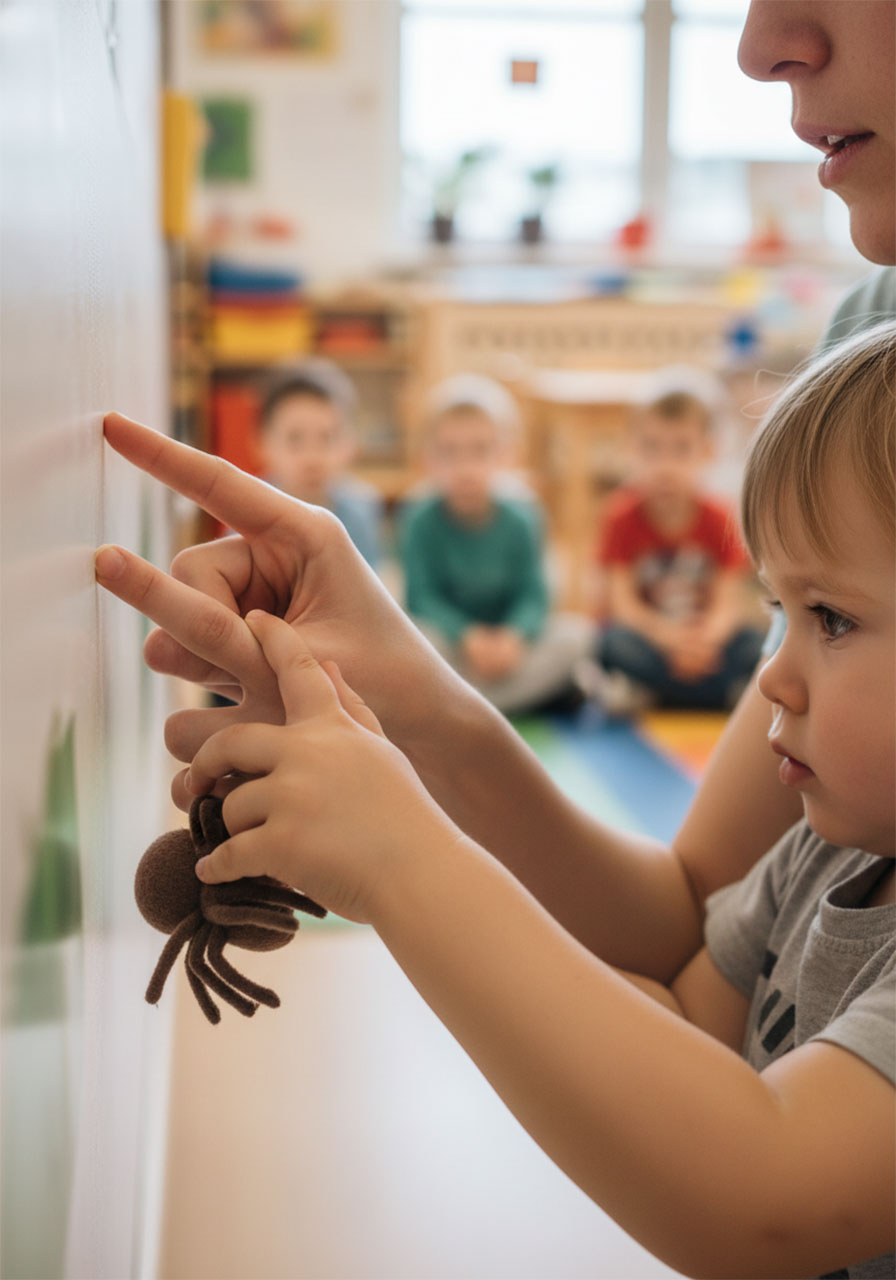
This classic finger-play song is perfect for developing fine motor skills and teaching sequencing.
Best for: Toddlers and young preschoolers
Time to Play: 2-3 minutes
How to Play:
1. Teach the hand motions first: fingers climbing up, rain falling down, sun coming out, spider climbing again
2. Sing slowly at first so little ones can follow along
3. Once everyone knows the motions, sing at regular speed
4. Repeat 2-3 times – repetition helps toddlers learn!
Fun Variation: Try the “Eensy Weensy Spider” version with tiny finger motions, then the “Great Big Spider” with huge, dramatic movements!
4. The Wheels on the Bus
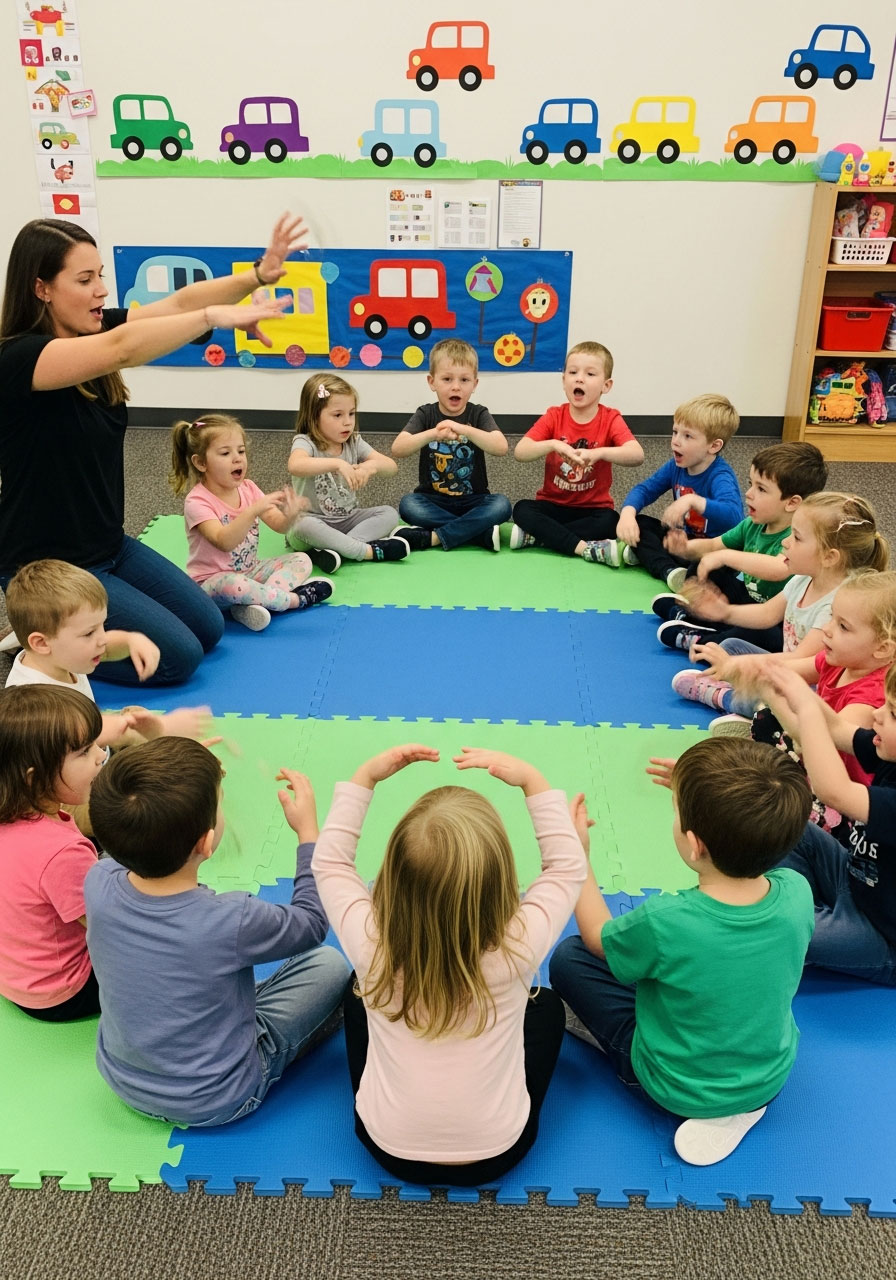
Get everyone moving and singing with this interactive favorite that has endless verses to keep kids engaged.
Best for: All ages – it’s a crowd-pleaser!
Time to Play: 3-5 minutes
How to Play:
1. Start with the classic verse: “The wheels on the bus go round and round”
2. Add verses like “the wipers”, “the horn”, “the babies”, “the parents”
3. Encourage big, enthusiastic motions for each verse
4. Let kids suggest new verses (“the dinosaurs on the bus go ROAR ROAR ROAR”)
Pro Tip: This is a lifesaver when you need to fill a few extra minutes – you can literally keep adding verses forever!
5. Old McDonald Had a Farm
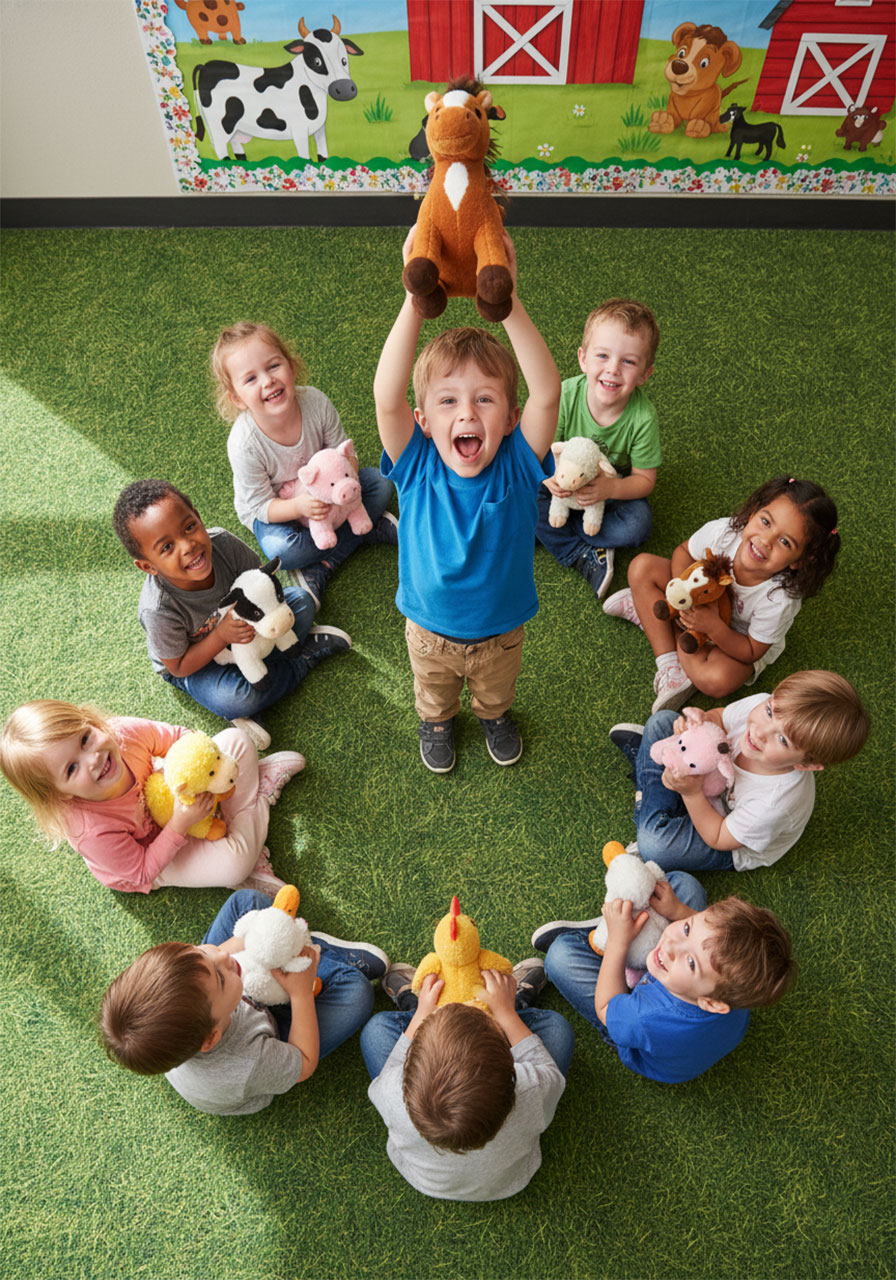
Teach animal sounds and let kids get silly with this barnyard classic.
Best for: Toddlers and early preschoolers
Time to Play: 3-5 minutes
How to Play:
1. Start with familiar animals: cow, pig, sheep, chicken
2. Let each child choose an animal for the next verse
3. Make the animal sounds together with enthusiasm
4. Add hand motions or movements for each animal
Fun Variation: Try “Old McDonald Had a Zoo” with wild animals, or “Old McDonald Had a Dinosaur Park” for dino-obsessed kids!
6. Rain, Rain Go Away

This simple song is perfect for discussing weather and emotions.
Best for: Toddlers and preschoolers
Time to Play: 2 minutes
How to Play:
1. Sing: “Rain, rain go away, come again another day, [child’s name] wants to play!”
2. Go around the circle, inserting each child’s name
3. Add simple rain motions (fingers tapping down like raindrops)
4. Talk about what kids like to do on rainy vs. sunny days
Pro Tip: Pair this with a weather chart activity (see #9) to make the learning connection even stronger!
7. So Long, See You Later Goodbye Song
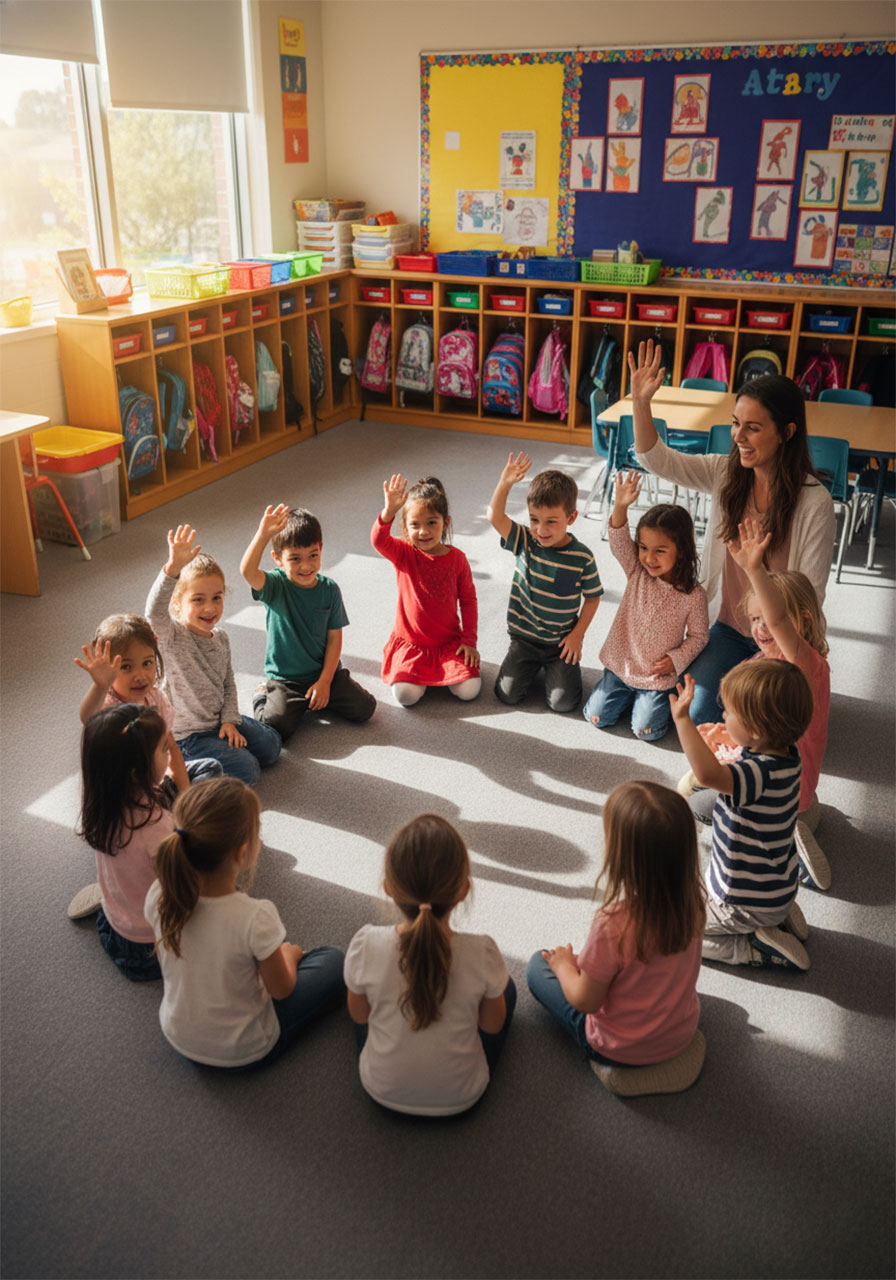
End circle time on a positive note with a cheerful closing song that signals transition time.
Best for: All ages – routine is key!
Time to Play: 2 minutes
How to Play:
1. Sing: “So long, farewell, see you later, we had fun today!”
2. Have everyone wave goodbye to each other
3. Add a special closing motion like blowing kisses or a group high-five
4. Keep it consistent so kids know circle time is ending
Pro Tip: This helps little ones transition smoothly to the next activity without meltdowns!
8. DIY Musical Instrument Time
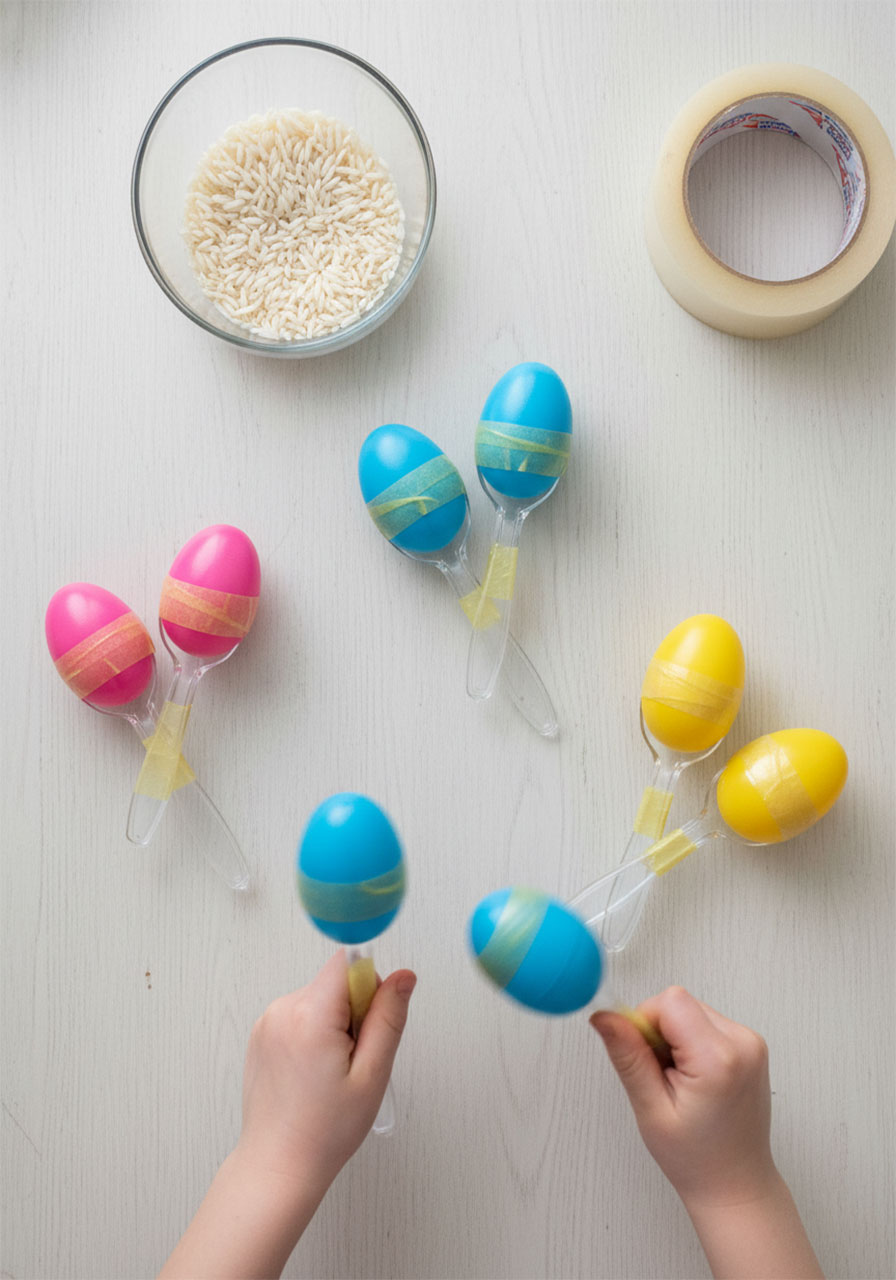
Let kids create and play their own instruments during circle time – it’s loud, it’s fun, and they’ll love it!
Best for: Preschoolers who need to burn energy
Time to Play: 5-10 minutes
What You’ll Need:
Plastic spoons and plastic Easter eggs (for maracas)
Rice or beans to fill the eggs
Tape to secure them
How to Play:
1. Have kids help make simple maracas by filling eggs with rice and taping two spoons around them
2. Play music and let everyone shake their maracas to the beat
3. Practice loud vs. soft shaking, fast vs. slow
4. Create a marching band and parade around the room!
Pro Tip: Keep these maracas handy for future circle times – kids will request them again and again!
Games & Interactive Activities (Get Ready for Giggles!)
9. Weather Chart & Calendar Talk
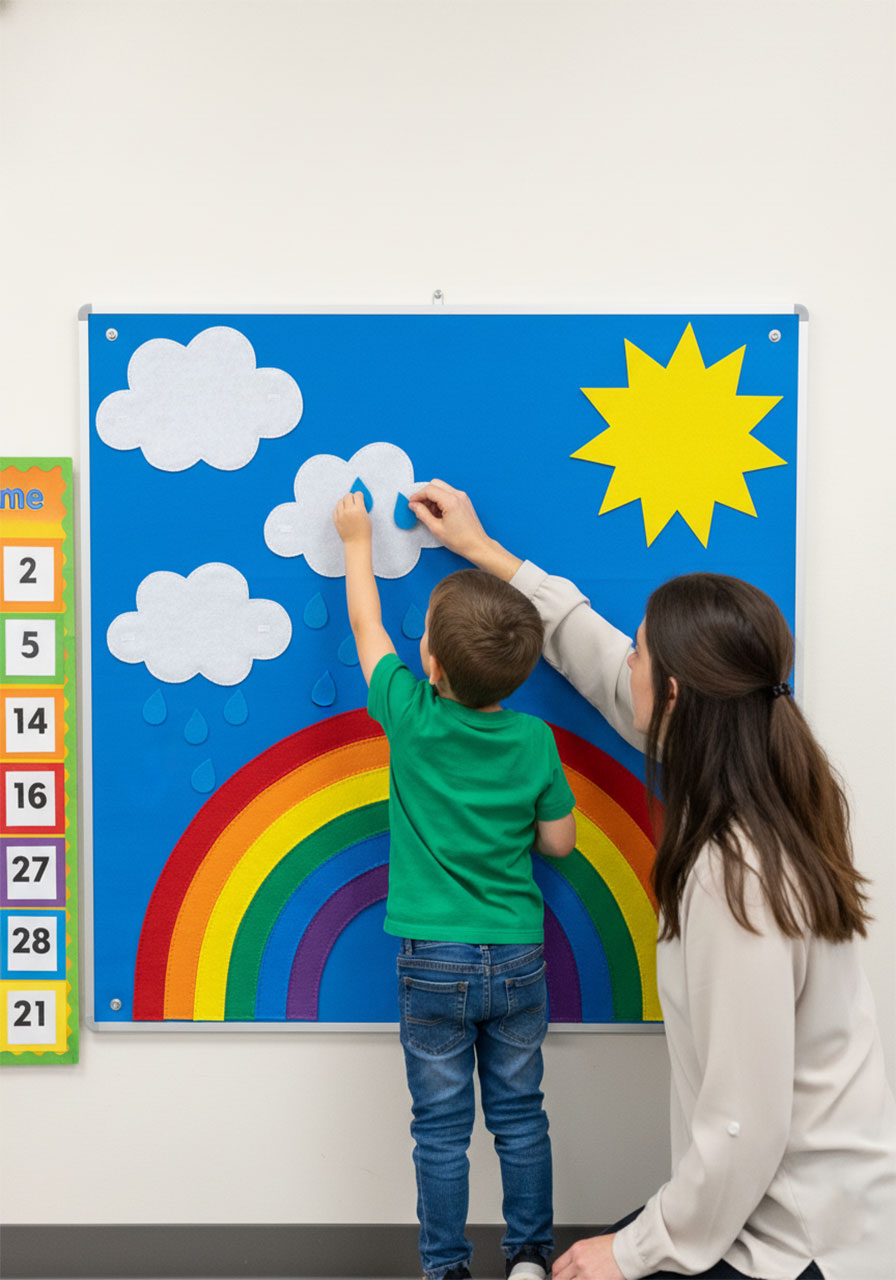
Start your circle time with this daily routine that teaches concepts of time, seasons, and observation skills.
Best for: Preschoolers (3-5 years)
Time to Play: 3-5 minutes
What You’ll Need:
DIY weather felt board or chart
Felt pieces showing sun, clouds, rain, rainbow, snow
Calendar chart
How to Play:
1. Ask: “Who can tell me what the weather is like today?”
2. Let a child choose the correct felt piece and place it on the board
3. Discuss the day of the week and date
4. Talk about yesterday vs. today vs. tomorrow
5. Count how many days until a special event (weekend, birthday, field trip)
Pro Tip: Let a different child be the “weather reporter” each day to give everyone a turn being the leader!
10. Remote Control
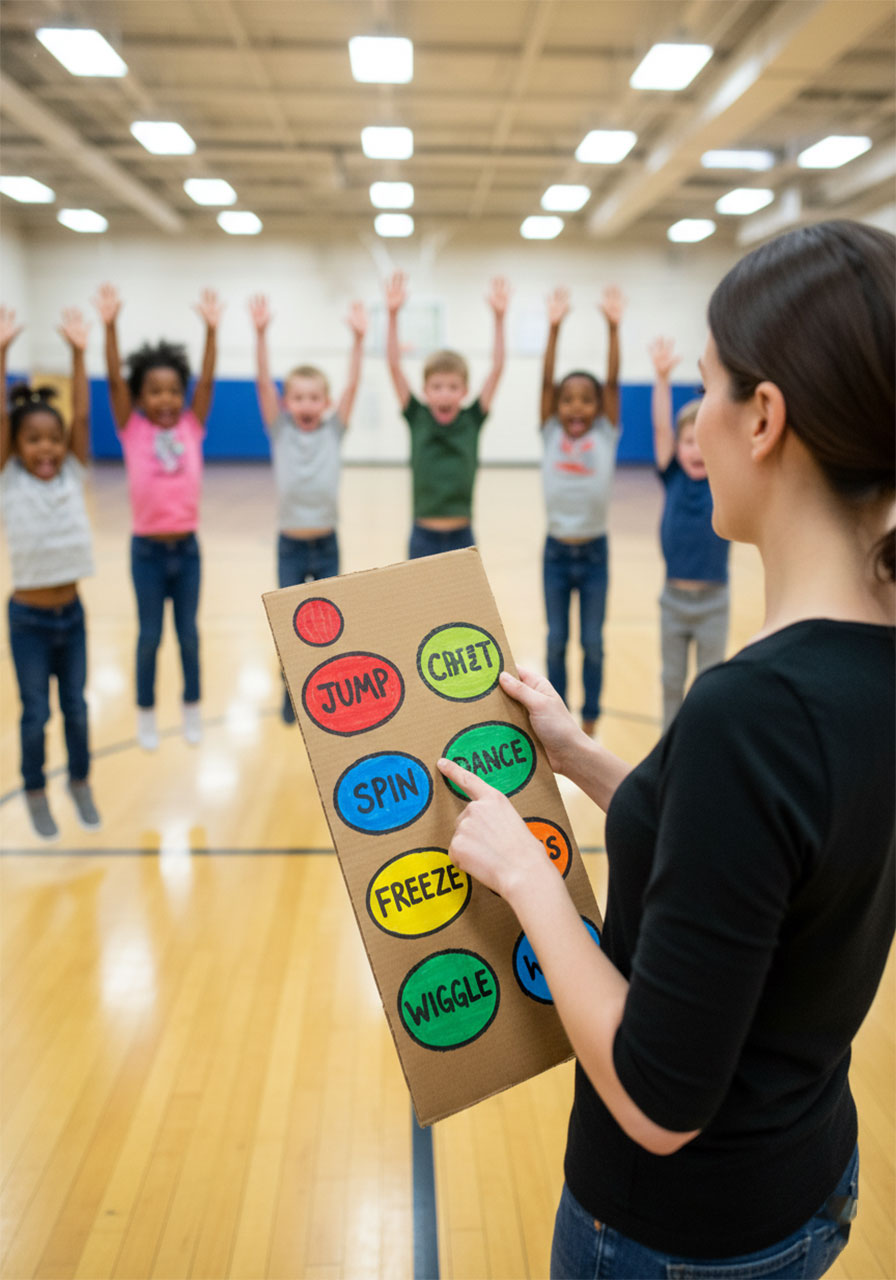
This hilarious game turns YOU into a remote control that makes kids do funny actions – prepare for lots of laughter!
Best for: Mixed ages, high-energy groups
Time to Play: 5-10 minutes
What You’ll Need:
Large cardboard or poster board decorated like a TV remote
Markers to draw buttons
How to Play:
1. Create your remote with buttons labeled: Jump, Spin, Freeze, Dance, Squat, Wiggle, etc.
2. Let kids help decide which actions go with which buttons
3. Hold up the remote and “press” a button by pointing to it
4. Kids perform the action until you press another button
5. Let kids take turns being the remote controller!
Fun Variation: Add a “Rewind” button where everyone does the last action in reverse or super slow-motion!
11. Finger Puppets & Finger Play
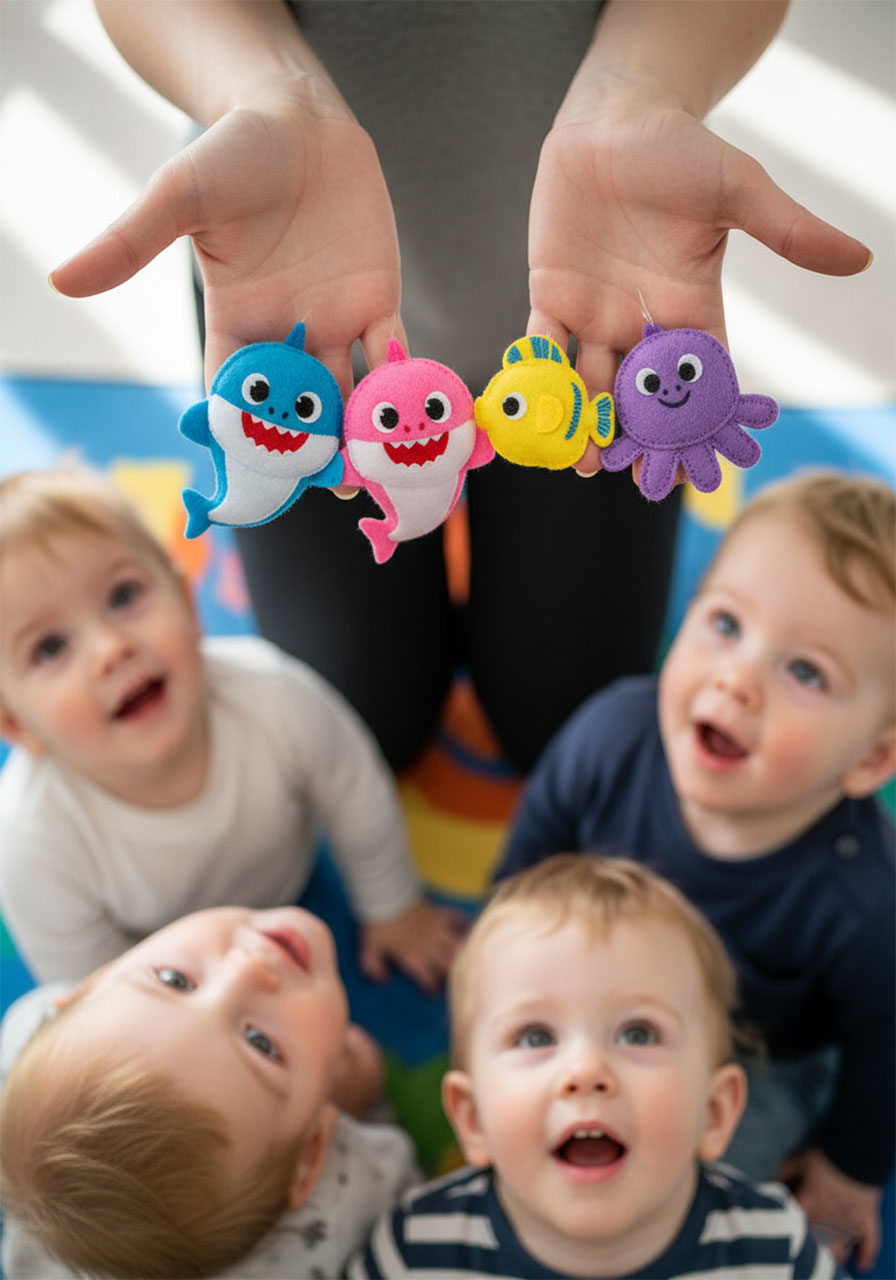
Toddlers are mesmerized by finger puppets – use them for songs, stories, and imaginative play.
Best for: Toddlers (18 months-3 years)
Time to Play: 5-10 minutes
What You’ll Need:
Finger puppets (DIY or store-bought)
Ideas: Baby Shark puppets, velvet animals, or homemade felt puppets
How to Play:
1. Introduce each puppet character with a fun voice
2. Use puppets to act out simple stories or songs
3. Let each child choose a puppet to wear
4. Sing songs together with the puppets “performing”
5. Have puppets “talk” to each child individually
Pro Tip: Pipe cleaner puppets are super easy to make and kids can help create them during craft time!
12. Snowball Matching Game
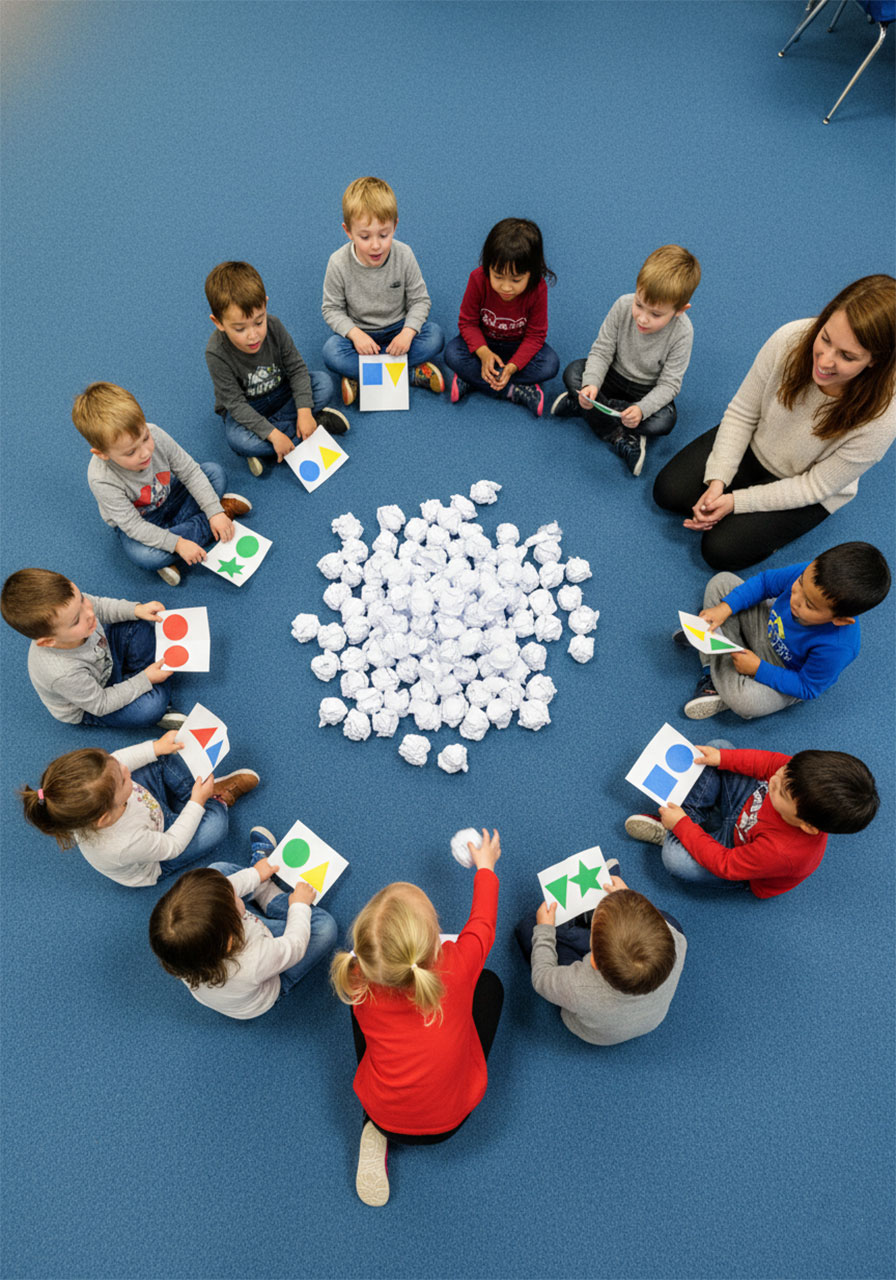
This is secretly a matching activity disguised as a super fun throwing game – genius!
Best for: Preschoolers learning shapes and matching
Time to Play: 5-7 minutes
What You’ll Need:
Paper (one sheet per child)
Markers or crayons
How to Play:
1. Draw shapes or simple pictures on paper – make matching pairs (if you have 10 kids, draw 5 pairs)
2. Give each child a paper with a symbol
3. Have kids crunch their paper into a “snowball”
4. Everyone throws their snowball into the middle of the circle
5. Each child grabs a different snowball, opens it, and finds their matching partner!
Pro Tip: For younger toddlers, use colors instead of shapes to make matching easier.
13. Pass the Rhythm

Turn your circle into a rhythm machine where everyone copies and creates beats – it’s like Simon Says meets drumming!
Best for: Preschoolers (great for music and pattern recognition)
Time to Play: 5-8 minutes
How to Play:
1. Start simple: pat knees twice, clap once, tap shoulders once
2. Have everyone copy your rhythm
3. Go around the circle, letting each child create their own rhythm
4. Everyone copies each child’s rhythm before moving to the next person
5. Make it progressively more challenging as kids get the hang of it
Fun Variation: Add sound effects with your mouth (clicks, pops, whistles) for older preschoolers!
14. Act the Emotion
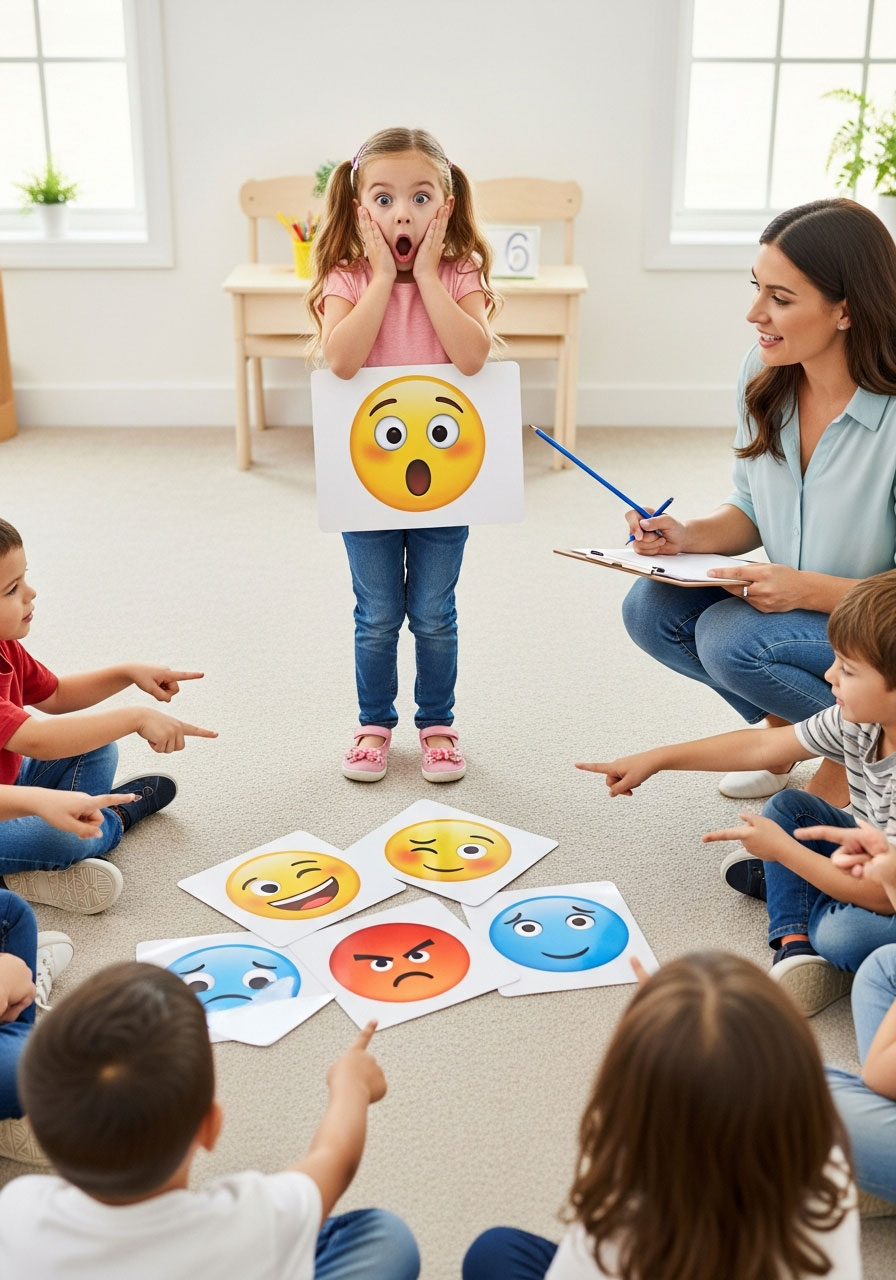
Teach emotional intelligence by having kids act out and identify different feelings – crucial for social development!
Best for: Preschoolers (3-5 years)
Time to Play: 5-10 minutes
What You’ll Need:
5-6 cards with simple emotion faces drawn on them (happy, sad, angry, surprised, scared, excited)
How to Play:
1. Show the emotion cards to the group and discuss each feeling
2. One child picks a card (without showing others) and acts out that emotion
3. Everyone else guesses which emotion they’re showing
4. Discuss times when we feel that emotion
5. Continue until everyone has had a turn
Pro Tip: Connect it to stories: “Remember when the bear was scared in our book? Can you show me a scared face?”
15. Hot Potato
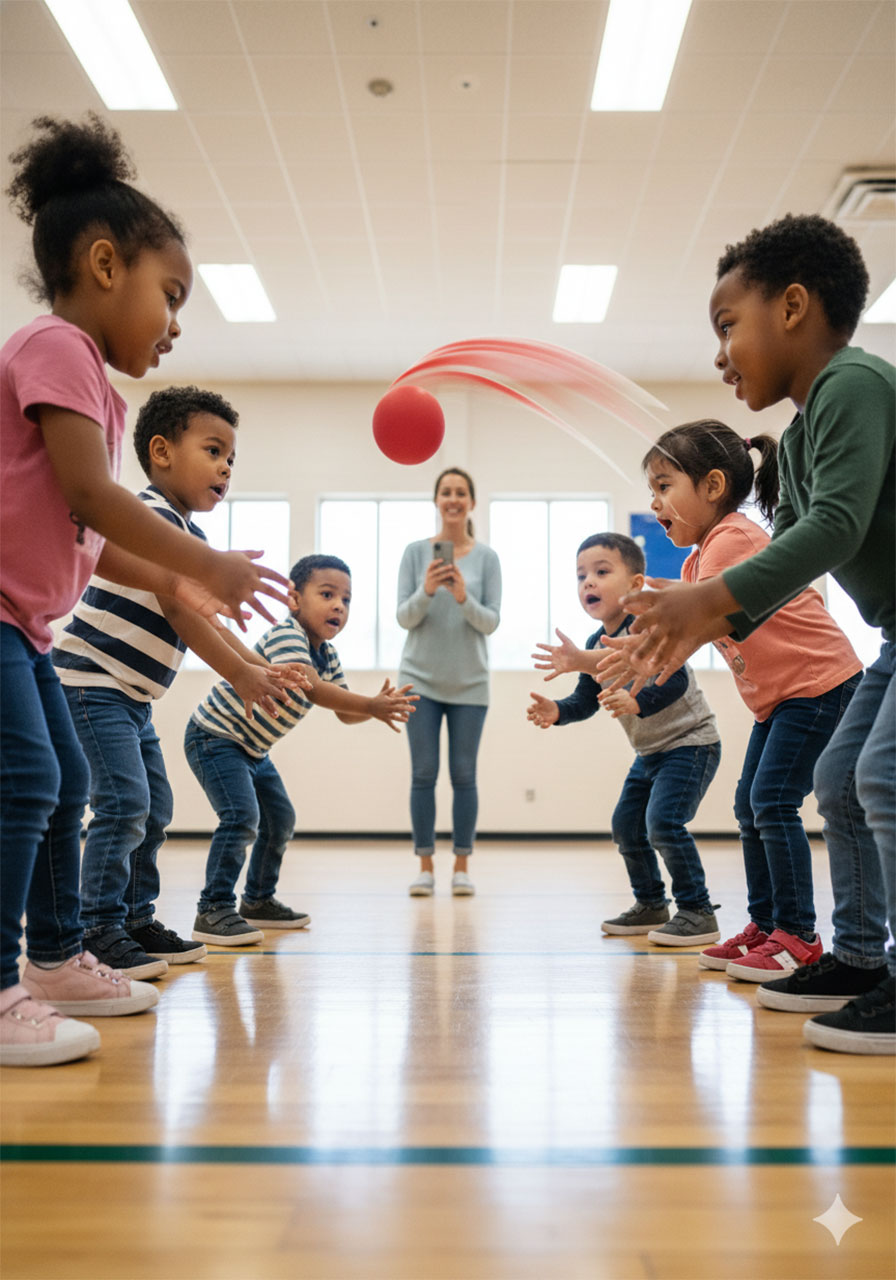
The classic game that never gets old – just add music and watch the excitement!
Best for: All ages (even toddlers love this!)
Time to Play: 5-8 minutes
What You’ll Need:
One soft ball or stuffed animal
Music player
How to Play:
1. Sit in a circle and start passing the “potato” (ball) around
2. Play music while kids pass the potato quickly
3. When the music stops, whoever is holding the potato is out (or does a silly dance and stays in for younger kids)
4. Continue until one child remains as the winner
Fun Variation: For toddlers who might get upset about being “out”, have them do a funny action instead (hop on one foot, spin around, make an animal sound).
16. Wonkey Donkey
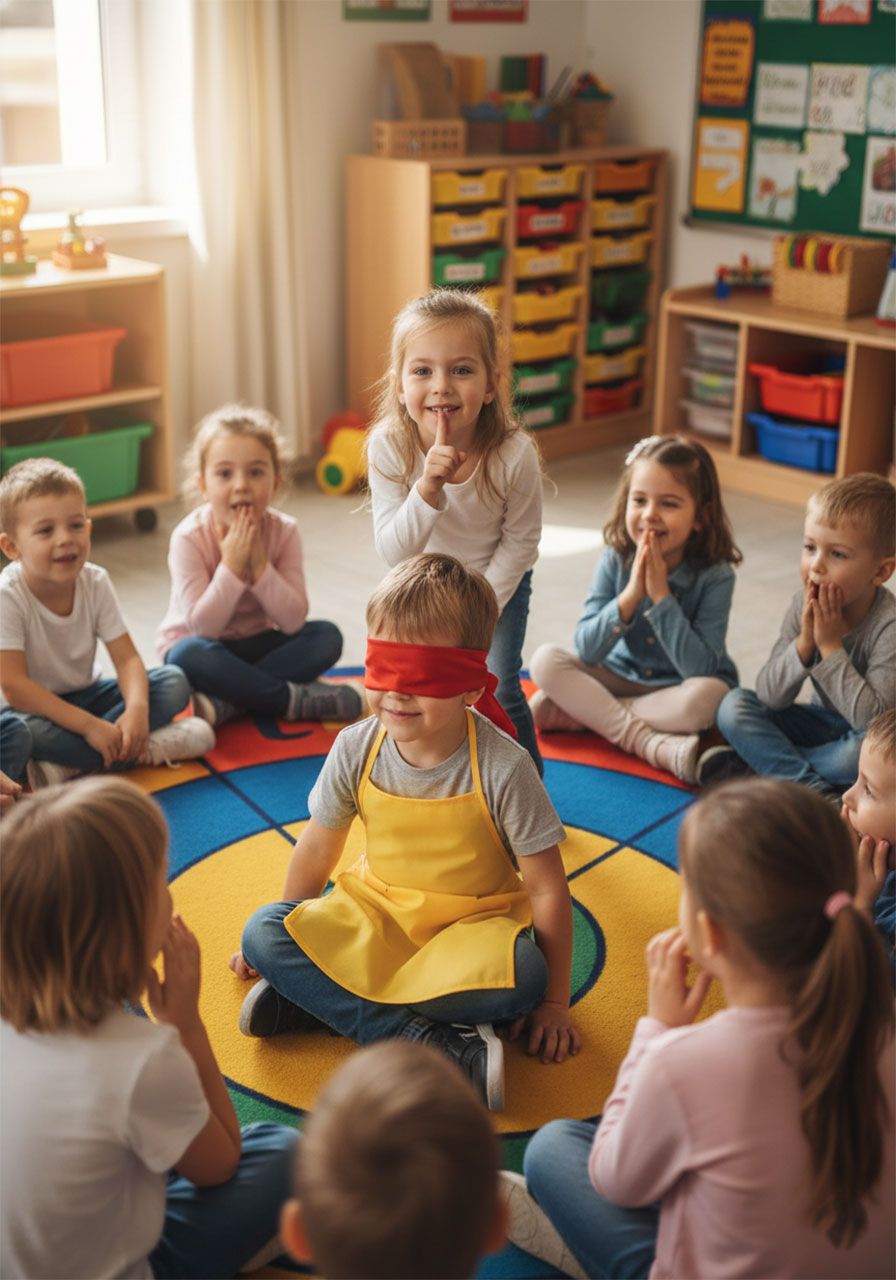
This listening game is hilarious and helps kids practice voice recognition and observation skills.
Best for: Preschoolers (4-5 years)
Time to Play: 5-10 minutes
What You’ll Need:
Blindfold or eye mask
Loose shirt or apron to act as a “donkey tail”
How to Play:
1. One child sits in the middle of the circle wearing the blindfold and “donkey tail”
2. Point to another child to quietly walk up and gently tug the tail
3. That child says “Wonkey Donkey!” in their normal voice (or a silly voice for a challenge)
4. The blindfolded child guesses who tugged their tail based on the voice
5. If correct, they switch places; if wrong, try again with a new tugger
Pro Tip: This game is amazing for building trust and confidence in a safe, silly way!
17. Pass the Expression

Practice facial expressions and eye contact with this simple but powerful social-emotional activity.
Best for: Toddlers and early preschoolers
Time to Play: 3-5 minutes
How to Play:
1. Choose one expression to pass around the circle (smile, wink, silly face, surprised look)
2. Look at the child next to you and make the expression clearly
3. That child makes eye contact with the next person and passes the expression
4. Continue until the expression travels all the way around the circle
5. Try different expressions each round!
Pro Tip: This is an excellent activity for shy children – it’s low-pressure and helps them practice social connection!
18. Mystery Sensory Box
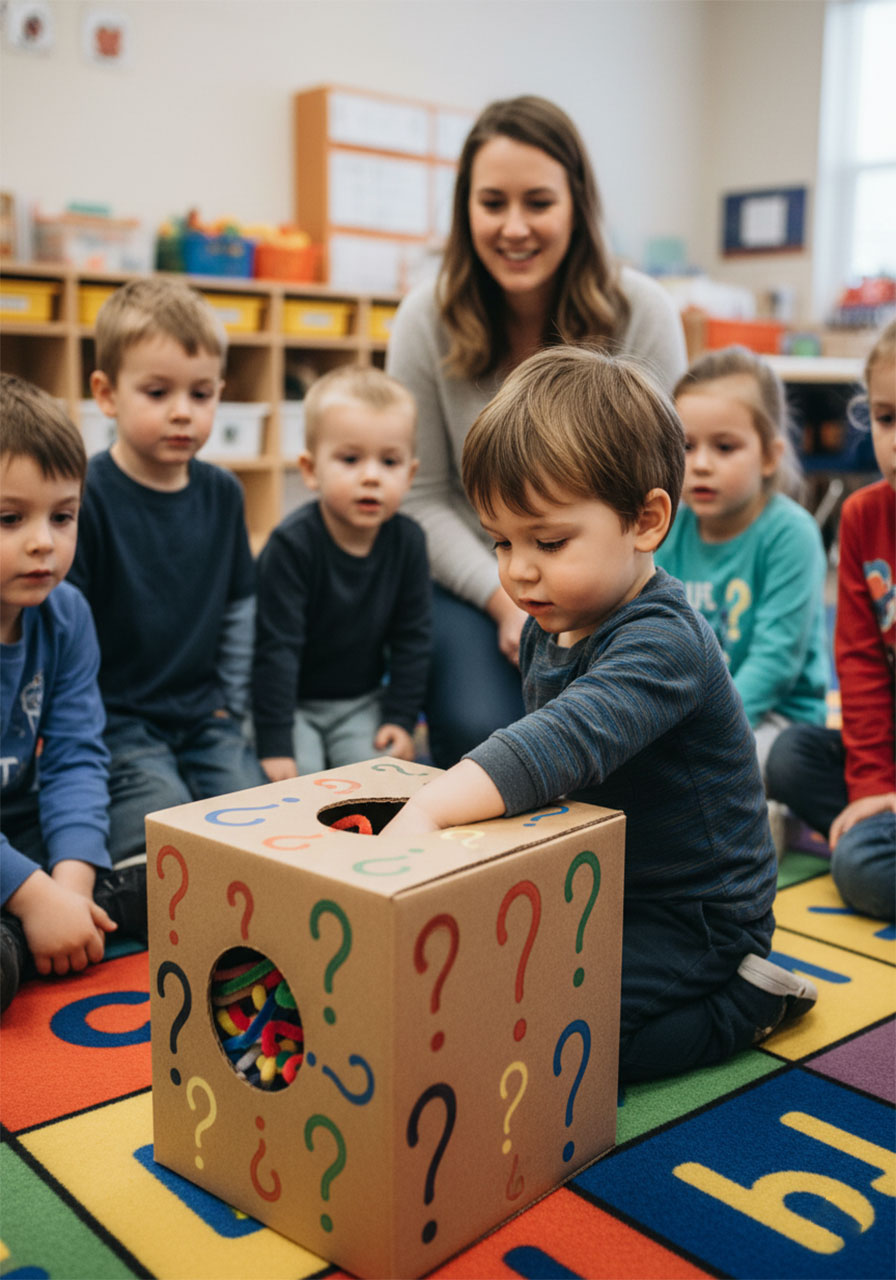
Get those little hands exploring with this tactile guessing game that’s always a hit!
Best for: All ages – toddlers and preschoolers love mystery!
Time to Play: 5-10 minutes
What You’ll Need:
Non-transparent box with a hand-sized hole cut in it
Various safe sensory objects (pom poms, pipe cleaners, marshmallows, cooked noodles, cotton balls, soft toys)
How to Play:
1. Place sensory items in the box without showing the kids
2. Pass the box around the circle, letting each child reach in and feel (no peeking!)
3. Let kids shake the box to hear sounds too
4. After everyone has had a turn, have each child guess what’s inside
5. Reveal the mystery objects with a dramatic flourish!
Pro Tip: Change the theme monthly – autumn leaves, winter mittens, spring flowers, summer shells!
19. Picnic Memory Game
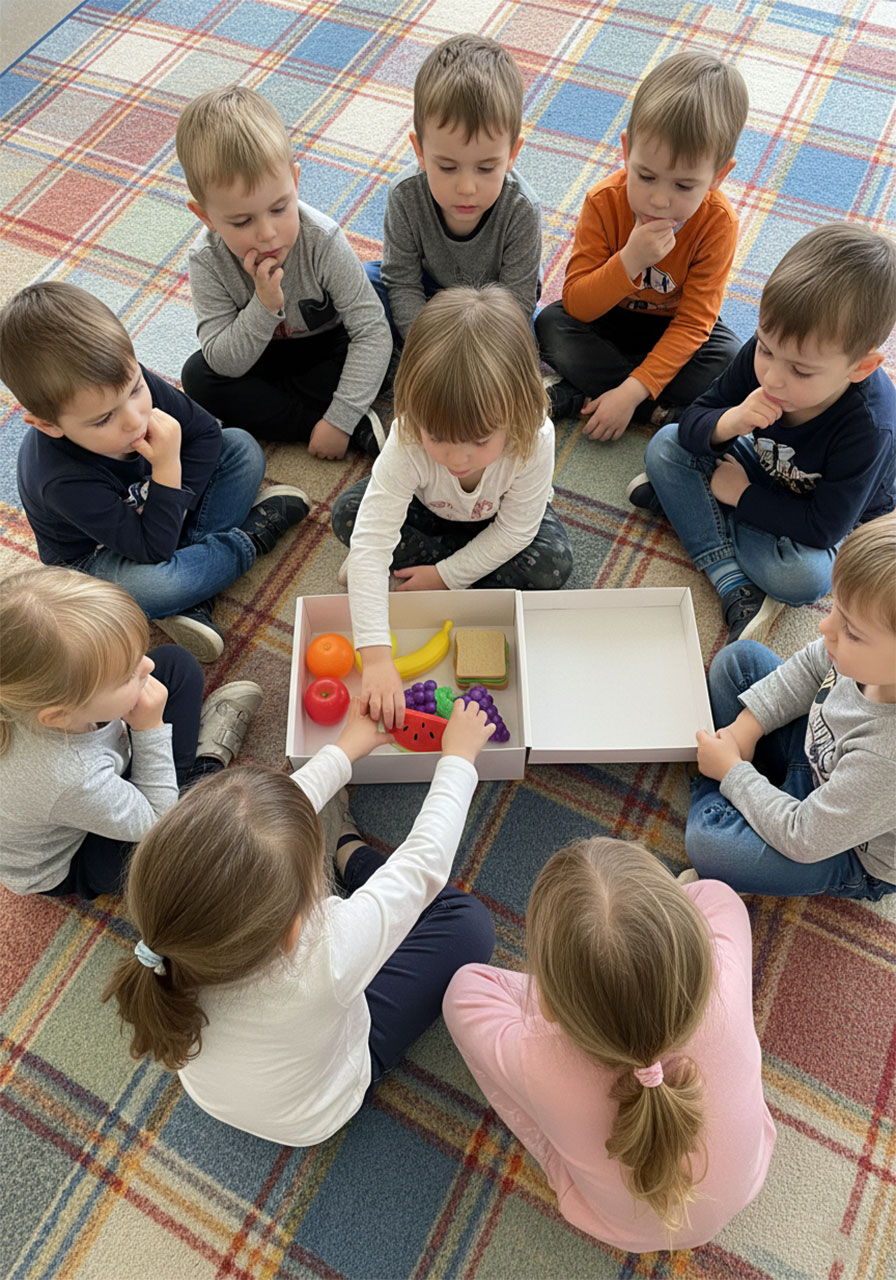
This memory challenge disguised as a pretend picnic is perfect for building cognitive skills and sequencing.
Best for: Preschoolers (4-5 years)
Time to Play: 10-15 minutes
What You’ll Need:
Box with lid
Themed toy items (play food, zoo animals, camping gear, etc.)
How to Play:
1. Choose a theme: “We’re going on a picnic!” (or to the zoo, camping, etc.)
2. First child says: “On our picnic, I’m bringing an orange” and places the toy orange in the box
3. Second child says: “On our picnic, I’m bringing an orange and an apple” and adds their item
4. Each child must remember and recite all previous items before adding their own
5. If someone forgets, they’re out, or can get help from friends!
Fun Variation: For toddlers, skip the memory part and just practice naming items as they’re added to the box.
20. I Spy Circle Time Edition
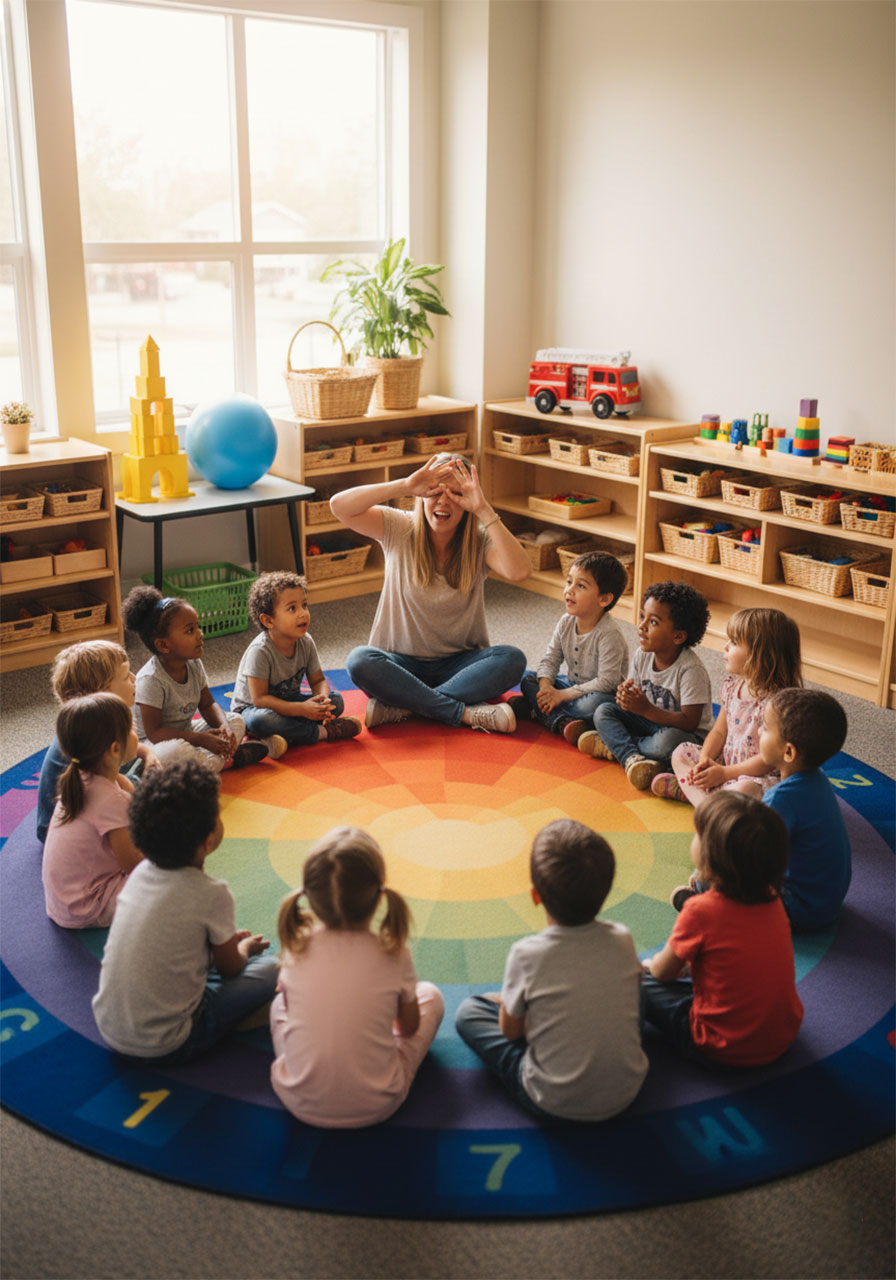
The timeless classic adapted perfectly for circle time – helps with colors, shapes, and observation!
Best for: Preschoolers (3-5 years)
Time to Play: 5-10 minutes
How to Play:
1. One person says: “I spy with my little eye something that is [color/shape]”
2. Kids take turns guessing what object you’re describing
3. The child who guesses correctly gets to be the next spy
4. Keep items within view of the circle so everyone can participate
5. Start with colors for younger kids, add shapes for older preschoolers
Pro Tip: Make it educational by incorporating your lesson theme – “I spy something that rhymes with ‘hat'” or “I spy something that starts with the letter B!”
21. Pass the Puppet (Talking Time!)

This is brilliant for teaching turn-taking, listening skills, and giving shy kids a chance to share.
Best for: All ages – it’s calming and inclusive
Time to Play: 5-10 minutes
What You’ll Need:
One special puppet, doll, or stuffed animal
How to Play:
1. Introduce the puppet and create a theme: “Mr. Bear wants to know what makes everyone happy!”
2. Pass the puppet around the circle – only the person holding the puppet can talk
3. Each child shares their answer when it’s their turn
4. Other themes: things that make us sad, excited, or scared; favorite foods; weekend activities
5. Everyone else practices listening quietly while waiting for their turn
Pro Tip: This is amazing for managing talkative groups – the puppet becomes the “talking stick” that keeps order!
22. Matching Socks
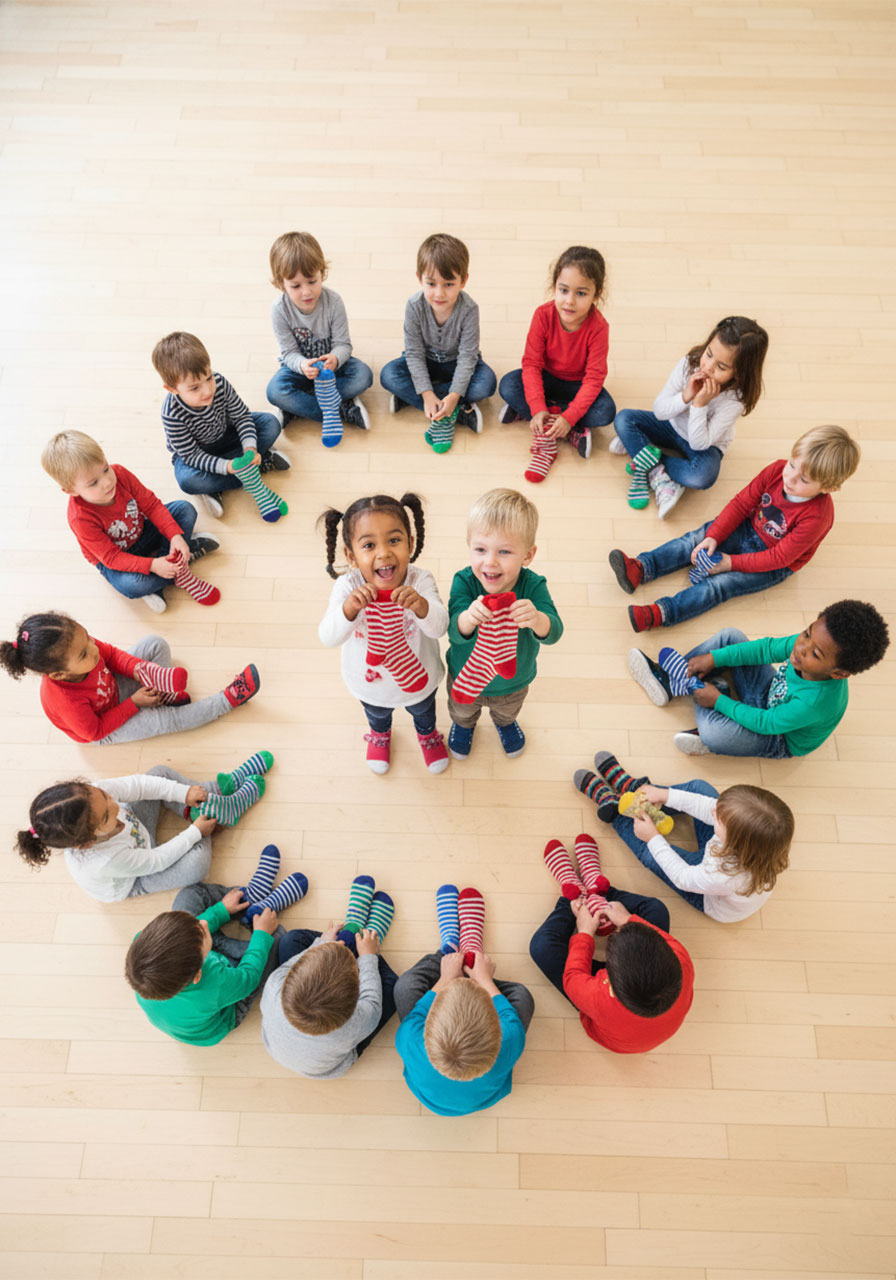
Pattern recognition meets problem-solving in this adorable partner-finding game!
Best for: Preschoolers (3-5 years)
Time to Play: 5-8 minutes
What You’ll Need:
Pairs of patterned socks (enough for each child to have one)
How to Play:
1. Mix up the socks and give one to each child at random
2. Have kids look closely at their sock’s pattern, colors, and design
3. On your signal, everyone stands up and finds their matching sock partner
4. Once pairs are found, they sit down together
5. Check each pair to make sure they matched correctly!
Fun Variation: Use the same concept with matching picture cards or colored shapes for younger toddlers.
23. Who’s Missing? / Who’s Hiding?

This classic attention game never fails – kids love the mystery and surprise!
Best for: All ages – even toddlers enjoy this!
Time to Play: 5-7 minutes
How to Play:
1. Have all children sit in the circle (they don’t need to be in perfect order)
2. Ask everyone to close their eyes tight – no peeking!
3. Quietly tap one child on the shoulder – they tiptoe away to hide nearby
4. Count to three and have everyone open their eyes
5. First person to figure out who’s missing wins! (Or everyone guesses together)
Pro Tip: For younger toddlers, make it easier by having the hiding child just crouch behind you instead of leaving the room.
24. Story Time (The Perfect Closer!)
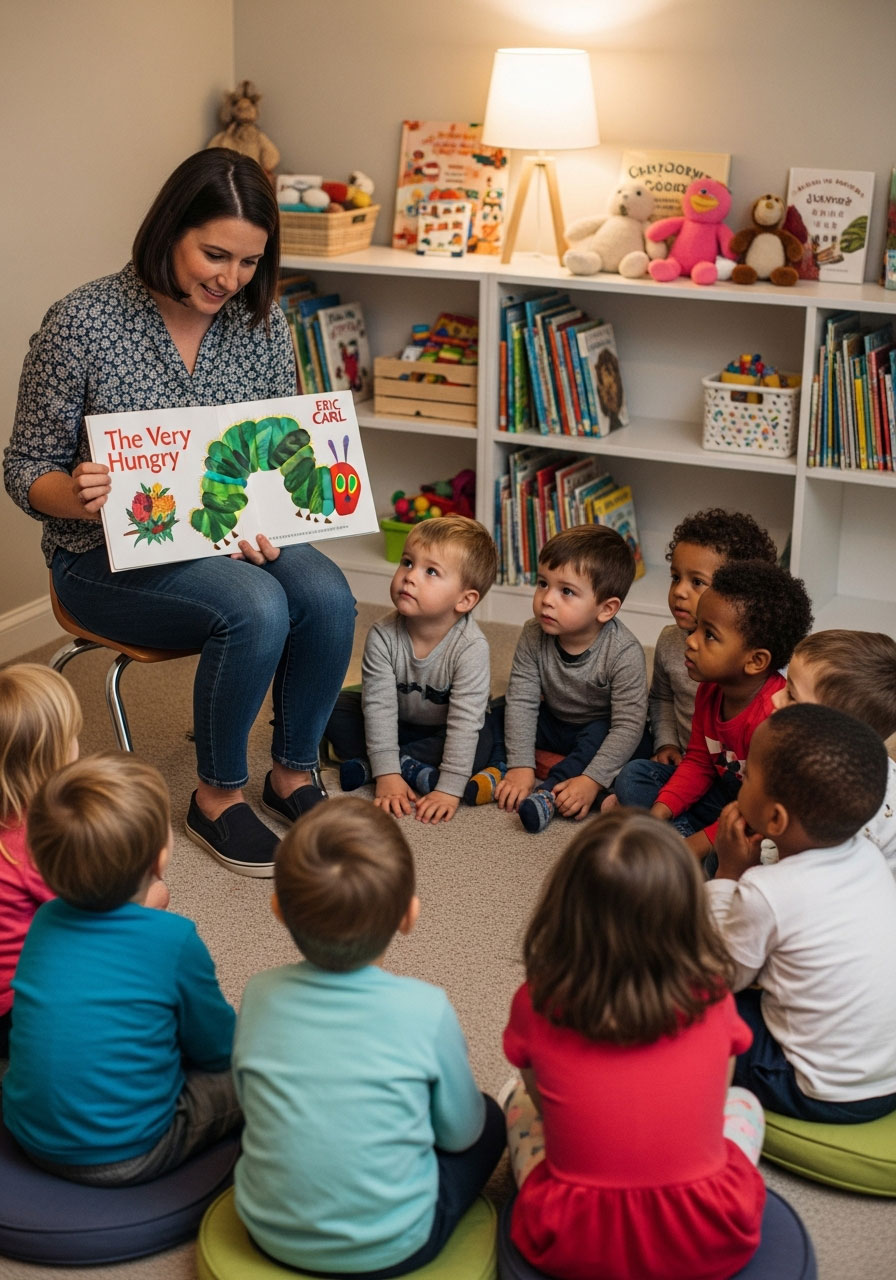
End your circle time with a carefully chosen book that matches your theme and keeps little eyes glued to the pages.
Best for: All ages – books are universal!
Time to Play: 5-10 minutes
What You’ll Need:
An engaging, age-appropriate book
How to Play:
1. Let kids vote on 2-3 pre-selected books if you have time
2. Make your voice animated and use different character voices
3. Pause to ask prediction questions: “What do you think will happen next?”
4. Point to pictures and let kids help tell the story
5. Connect the story back to your circle time theme
Pro Tip: Choose books with repetitive phrases that kids can say along with you- participation keeps attention!
Learning Activities (Make Circle Time Educational Too!)
25. Clothespin Letter Matching
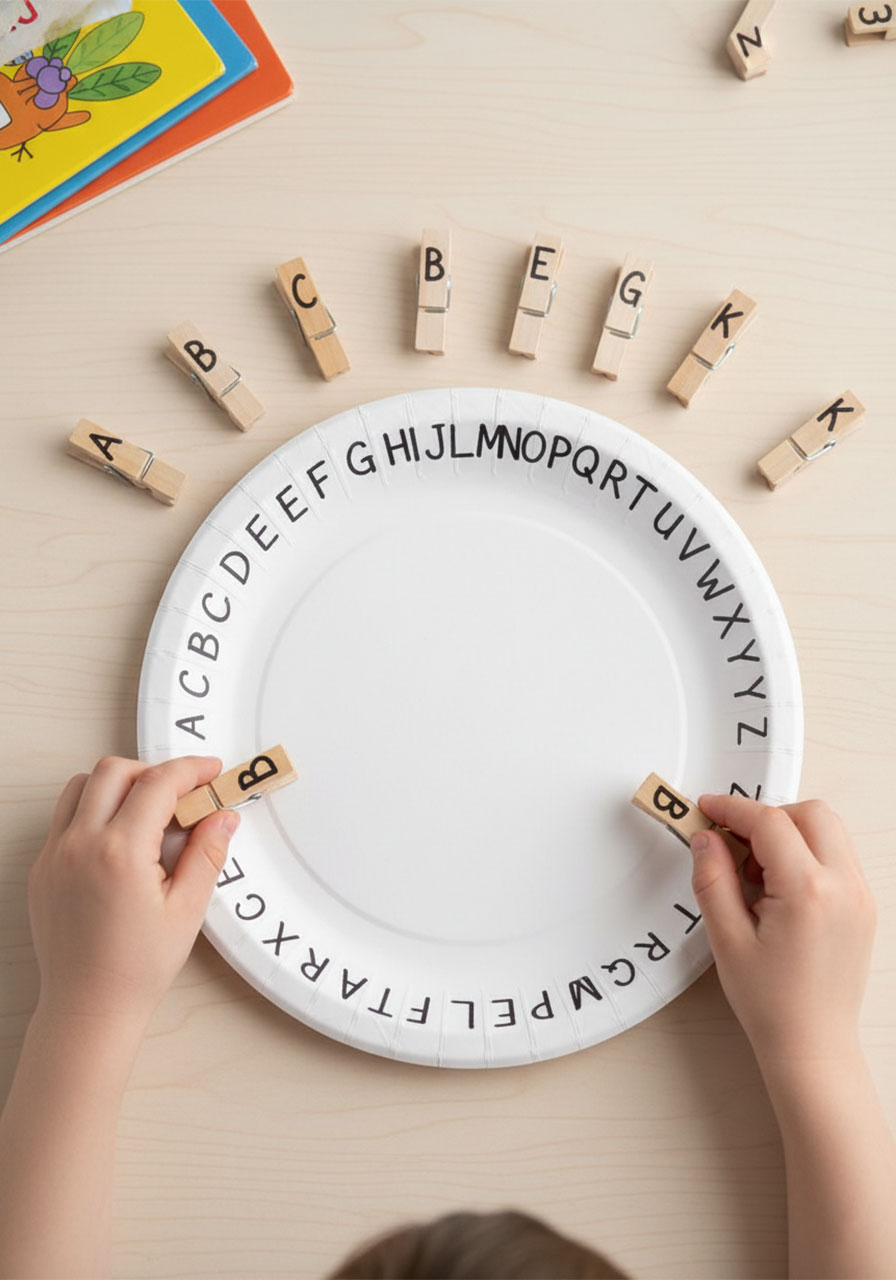
Sneak in alphabet practice with this hands-on activity that builds fine motor skills too!
Best for: Preschoolers (4-5 years)
Time to Play: 10-15 minutes
What You’ll Need:
Paper plate with alphabet written around the rim
Clothespins with letters written on them
Alphabet-themed book
How to Play:
1. Read an alphabet book together first (try “Chicka Chicka ABC” or “Dr. Seuss’s ABC”)
2. Give the plate to one child at a time
3. Call out a letter and have them find the matching clothespin
4. Clip it to the correct letter on the plate
5. Pass to the next child and repeat!
Fun Variation: Use pictures instead of letters for younger kids – match the apple clothespin to the picture of an apple!
26. Rainbow Wheel Color Matching
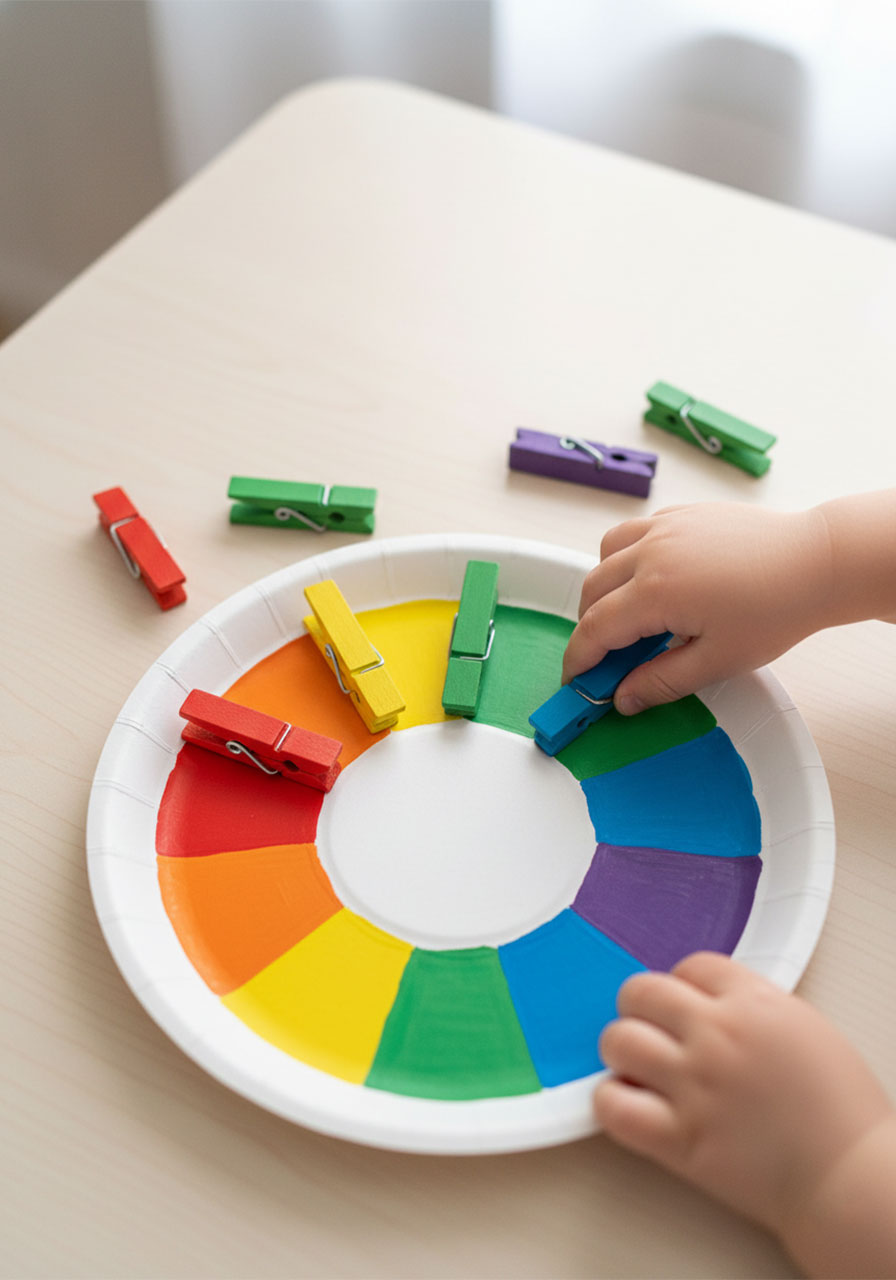
Teach colors in the most visually stunning way possible with this colorful matching game!
Best for: Toddlers and early preschoolers
Time to Play: 5-10 minutes
What You’ll Need:
Paper plate with rainbow colors painted around the rim
Clothespins painted to match each rainbow color
How to Play:
1. Show the rainbow wheel and name each color together
2. Hold up one clothespin and ask: “What color is this?”
3. Let the child find the matching color on the wheel and clip it
4. Continue until all colors are matched
5. Sing a rainbow song while doing this activity!
Pro Tip: This is perfect for teaching color words in different languages too!
27. Sun Roll-and-Cover Math Mat
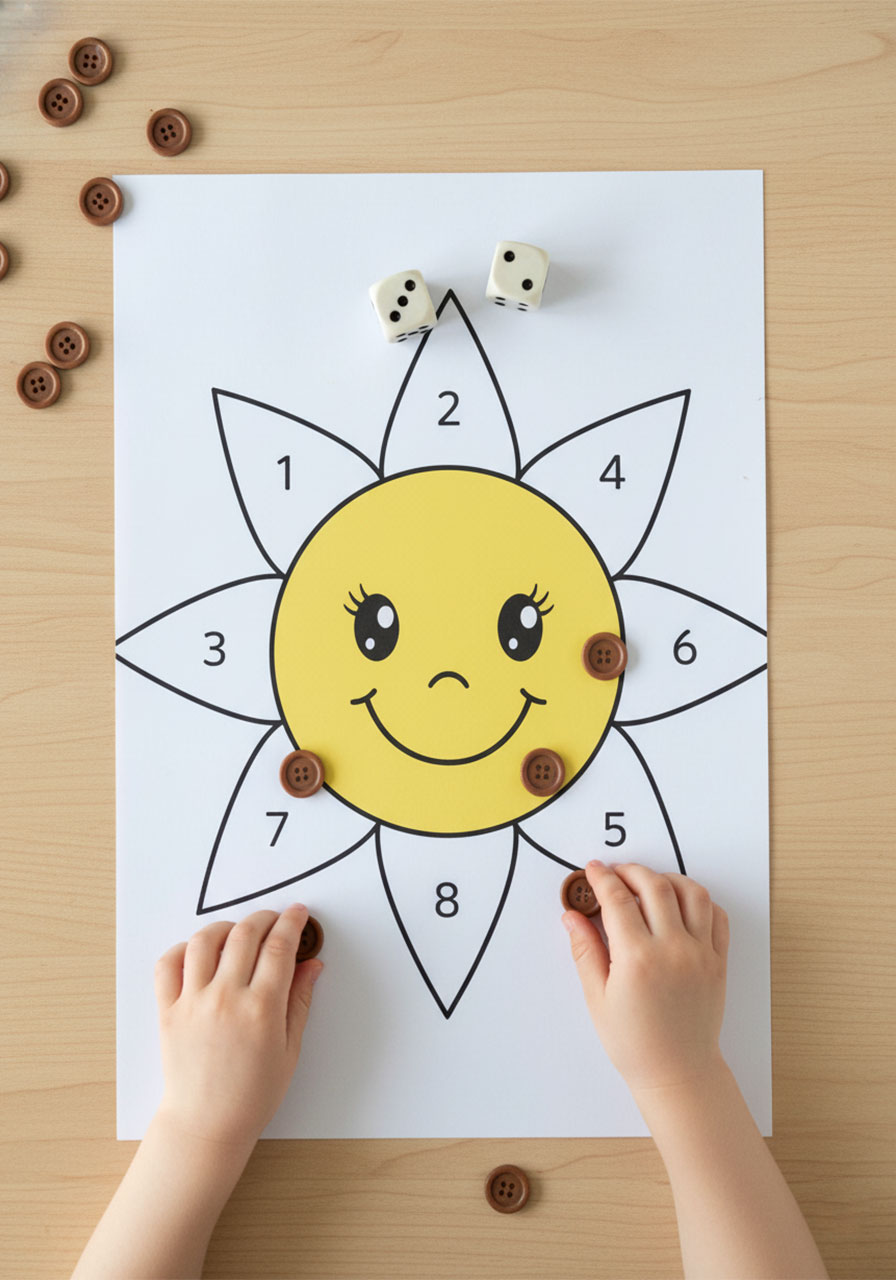
Make early math fun with this dice game that practices number recognition and one-to-one correspondence.
Best for: Preschoolers learning numbers
Time to Play: 10-15 minutes
What You’ll Need:
Free printable sun math mat (search online for templates)
Dice
Small counters (buttons, pom poms, coins, or cereal)
How to Play:
1. Give each child their own mat and counters
2. Take turns rolling the dice
3. Count the dots on the dice together
4. Cover that number on the mat with counters
5. First person to cover their whole sun wins!
Pro Tip: For younger toddlers, use a dice with only 1-3 dots to keep it manageable.
You’re Ready to Rock Circle Time!
There you have it – 27 circle time ideas that’ll transform your daily routine from “please sit still” to “can we do circle time again?!” The secret is variety, enthusiasm, and keeping activities short and sweet for those tiny attention spans.
Quick Recap for Success:
- Start with 5 minutes and build up as kids get comfortable
- Mix active games with calming activities
- Use songs and music to signal transitions
- Let kids help choose activities when possible
- Celebrate participation over perfection
Remember, the best circle time activities are the ones that make YOU excited too. Kids can sense when you’re genuinely having fun, and that energy is contagious. So pick a few favorites from this list, give them your own spin, and watch as circle time becomes the highlight of your day.
Got a little one who still won’t sit still? That’s totally normal. Some kids need to wiggle, and that’s okay – let them stand or sway in place. The goal is engagement, not perfect posture.
Now go make some circle time magic happen! Your kids are about to have a blast.
More Kid’s Party Ideas to Keep the Fun Rolling:
25 All-Time Best Documentaries for Kids (and Parents Who Don’t Want to Fall Asleep)
11 Epic Card Games for Kids (with One Simple Card Deck) That’ll Keep Them Entertained for Hours
How to Build an Epic LEGO Plinko Board (That Actually Works!)
7 Epic Spring Minute to Win It Games That’ll Make Your Party Bloom
DIY Bubble Wand Making Station: The Ultimate Summer Activity Kids Will Beg to Do Again
Pom Pom Tube Drop: The 5-Minute Activity That’ll Keep Your Toddler Entertained (And Learning!)
How to Make Fluffy Pet Rocks: The Cutest DIY Craft That’ll Have Kids Obsessed

This is so helpful. it really covered all my questions i needed