
Let’s be real: toddlers have the attention span of a goldfish and the energy of a caffeinated squirrel. One minute they’re happily playing, and the next they’re plotting world domination from atop your kitchen counter. That’s where these 16 toddler games come in – they’re specifically designed to channel all that wild energy into actual fun (and give you a few moments of peace). These aren’t just activities to keep tiny humans occupied; they’re opportunities for learning, laughing, and making memories. Plus, most require minimal prep and use stuff you already have lying around. Let’s dive in!
1. Color Hunt Adventure

Turn your living room into a treasure hunt zone! This simple game teaches colors while burning off that endless toddler energy.
Best for: Ages 2-4, indoor play, teaching colors
Time to Play: 10-15 minutes
Players: 1+ toddlers
What You’ll Need:
- Objects in various colors around your home
- A basket or bag (optional)
How to Play:
1. Call out a color like “Find something RED!”
2. Watch your toddler zoom around searching for red items – toys, books, clothing, whatever they can find.
3. Celebrate each find with high-fives and excitement to keep the energy up.
4. Switch colors and repeat until they’ve hunted through the rainbow.
5. Level up by asking them to find two items of the same color or by racing against a timer.
Pro Tip: Make it competitive (in a fun way) by seeing who can find the most items in one minute. Spoiler alert: they’ll want to play this game approximately 47 times in a row, so pace yourself!
2. Dance Freeze Party

This classic gets toddlers moving and teaches them the incredibly important life skill of self-control (sort of).
Best for: High-energy toddlers, burning off energy before naptime
Time to Play: 10-20 minutes
Players: 1+ toddlers
What You’ll Need:
- Music (phone, speaker, or just sing yourself)
- Space to dance
How to Play:
1. Crank up their favorite songs and encourage wild, silly dancing.
2. Randomly pause the music – when you do, everyone must freeze in place like statues.
3. Catch anyone moving and give them a silly consequence (make a funny face, do a silly walk, etc.).
4. Resume the music and let the dance party continue!
5. Keep playing until they’re happily exhausted or you’ve preserved your sanity – whichever comes first.
Fun Variation: Switch it up with “Dance Like a…” and have them freeze while imitating animals. “Dance like a monkey… FREEZE!” Instant giggles guaranteed.
3. Bubble Pop Extravaganza
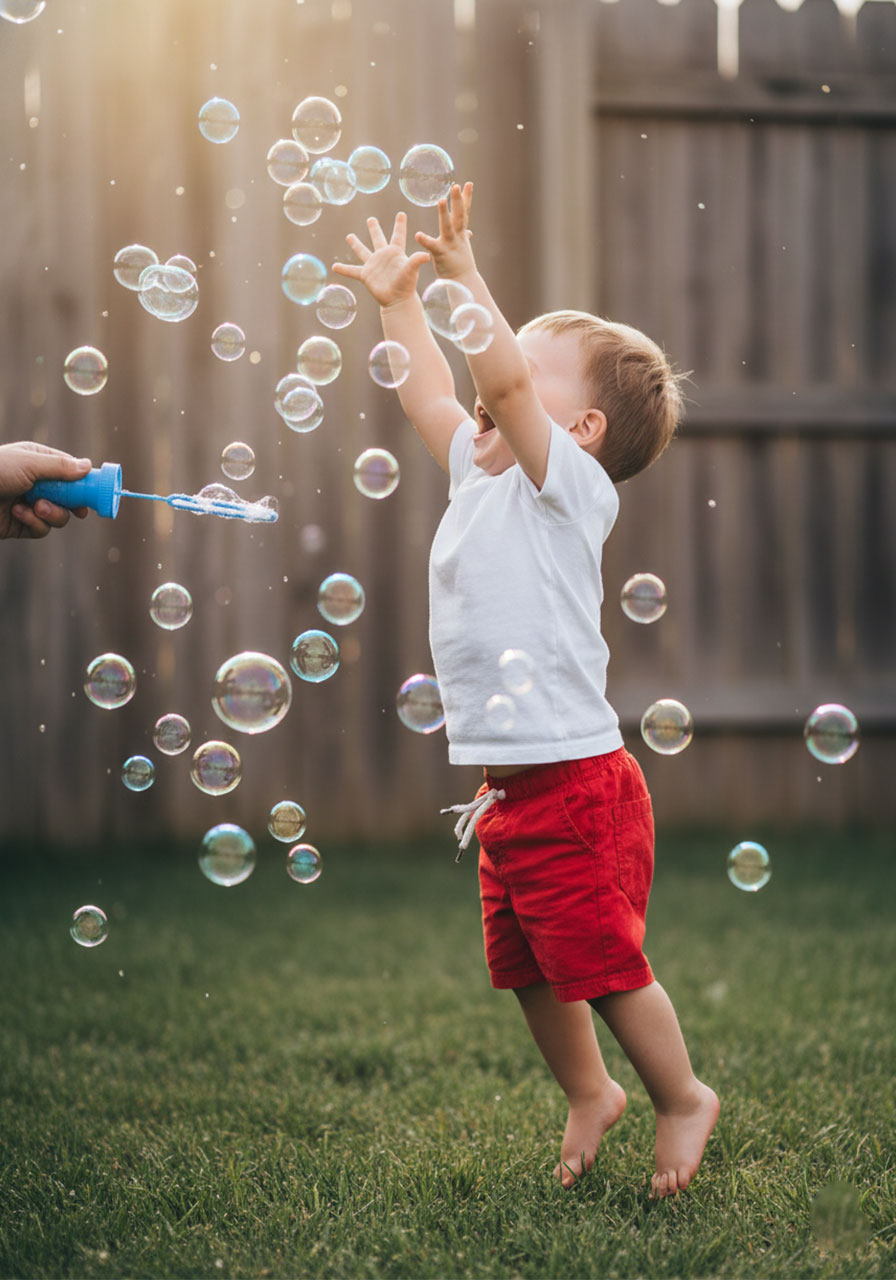
Bubbles are basically toddler magnets. This game combines their obsession with popping things with gross motor skill development.
Best for: Ages 1-4, outdoor or indoor (just avoid the fancy furniture)
Time to Play: 15-20 minutes
Players: 1+ toddlers
What You’ll Need:
- Bubble solution and wand
- Open space
How to Play:
1. Blow bubbles into the air at different heights and speeds.
2. Encourage your toddler to chase and pop as many bubbles as possible.
3. Mix it up by blowing bubbles high (jumping practice!), low (squatting!), or far away (running!).
4. Count together how many they can pop in a row.
5. Let them try blowing bubbles themselves for even more fun (and adorable frustration).
Pro Tip: Use a battery-operated bubble machine for endless bubbles without the arm workout. Your future self will thank you.
4. Obstacle Course Challenge
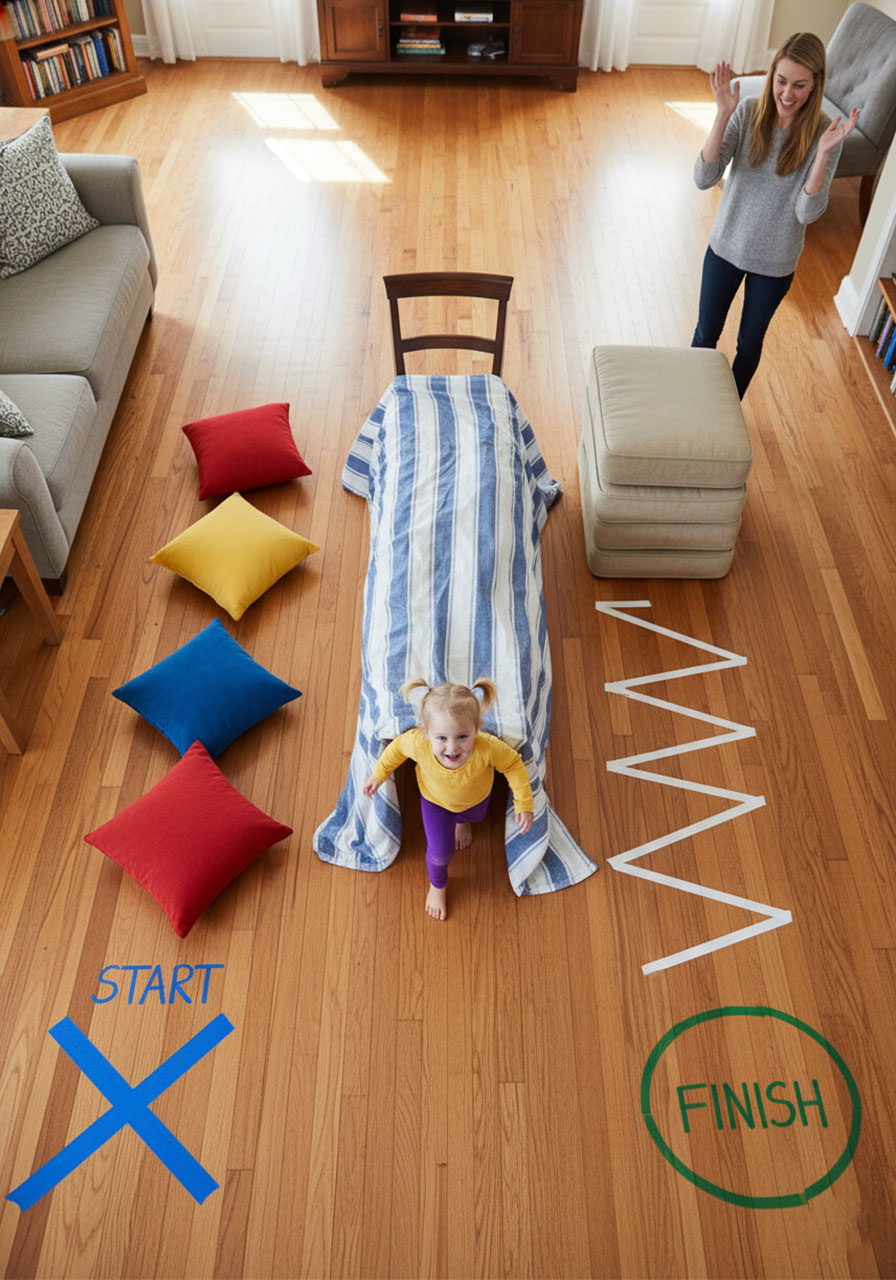
Transform your home into an adventure course that would make American Ninja Warrior jealous (toddler edition).
Best for: Active play, rainy days, developing coordination
Time to Play: 15-30 minutes
Players: 1+ toddlers
What You’ll Need:
- Pillows, cushions, boxes
- Tape for marking paths
- Household items (chairs, blankets, etc.)
How to Play:
1. Create stations using household items: crawl under a blanket fort, hop over pillows, walk along a tape line, climb over cushions.
2. Demonstrate each station first so they understand what to do.
3. Let them complete the course while you cheer like they’re Olympic athletes.
4. Time them (even if you’re making it up) to add excitement.
5. Switch up the course regularly to keep it interesting.
Fun Variation: Make it themed! A “lava floor” where they can only step on cushions, or a “jungle adventure” where they’re exploring wild terrain.
5. Sensory Bin Exploration

This is the game that tricks toddlers into quiet, focused play. It’s basically magic in a container.
Best for: Ages 1-3, quiet time, sensory development
Time to Play: 20-30 minutes
Players: 1-2 toddlers (more gets chaotic)
What You’ll Need:
- Large plastic bin or container
- Filler material (rice, dried beans, water beads, kinetic sand)
- Scoops, cups, small toys, funnels
- Towel for cleanup (trust me)
How to Play:
1. Fill your bin with your chosen sensory material.
2. Hide small toys or objects inside for them to discover.
3. Provide tools like cups, spoons, and funnels for pouring and scooping.
4. Let them explore freely – touching, pouring, digging, discovering.
5. Supervise closely (especially with younger toddlers) and narrate what they’re doing to build vocabulary.
Pro Tip: Set this up in a contained area (bathtub, large shower, or plastic sheet on the floor) because sensory materials have a way of escaping to every corner of your home.
6. Animal Action Game

This game combines movement with animal sounds, which is basically a toddler’s dream combination.
Best for: Ages 2-4, learning animal names, active play
Time to Play: 10-15 minutes
Players: 1+ toddlers
What You’ll Need:
- Just your imagination and energy!
How to Play:
1. Call out an animal name like “Elephant!”
2. Everyone moves and sounds like that animal – stomp around with a “trunk” (your arm) and make elephant sounds.
3. Switch animals frequently to keep their attention: hop like bunnies, slither like snakes, fly like birds.
4. Let your toddler pick the next animal for bonus engagement.
5. Add challenges like “Fast bunny!” or “Sleepy bear!” to mix it up.
Fun Variation: Turn it into an animal parade! March around the house while being different animals. It’s like a zoo, but louder and in your living room.
7. Tape Road City
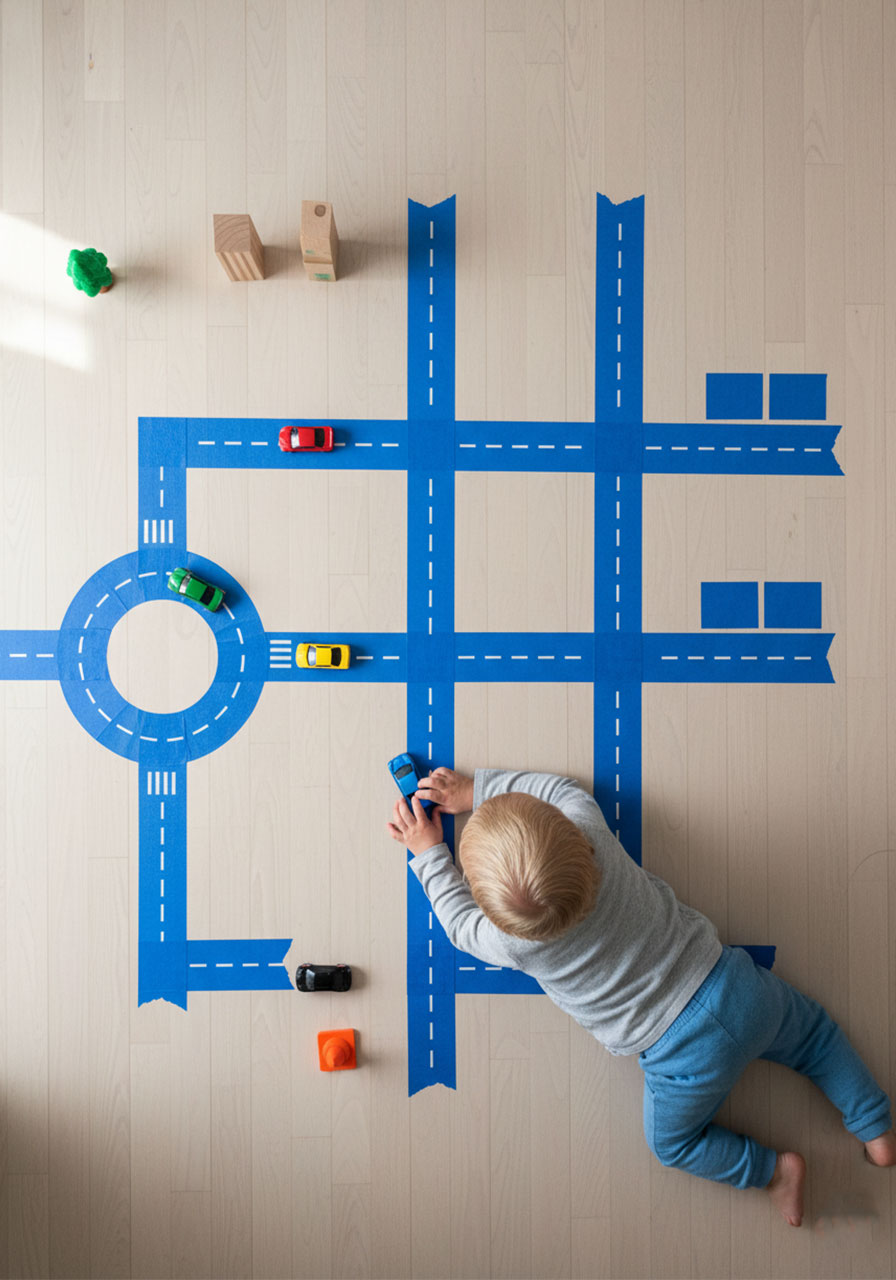
All you need is painter’s tape and suddenly your floor becomes the coolest toy ever invented.
Best for: Ages 2-4, creative play, rainy days
Time to Play: 30-60 minutes (if you’re lucky!)
Players: 1+ toddlers
What You’ll Need:
- Painter’s tape or masking tape
- Toy cars, stuffed animals, blocks
How to Play:
1. Create roads on your floor using tape – make intersections, parking spots, even bridges over pillows.
2. Add buildings using blocks or boxes alongside your roads.
3. Let your toddler drive toy cars along the roads you’ve created.
4. Play together by adding traffic rules, red lights (stop!), or rescue missions.
5. Expand the city as their imagination grows – add a zoo, a park, or a car wash!
Pro Tip: This setup can last for days! Just leave it up and they’ll return to it again and again. Plus, painter’s tape peels up easily without damaging floors.
8. Ball Roll Bowling

Set up your own toddler bowling alley using items you definitely already own.
Best for: Ages 2-4, hand-eye coordination, indoor play
Time to Play: 15-20 minutes
Players: 1+ toddlers
What You’ll Need:
- Plastic bottles, paper towel rolls, or stacking cups
- Any ball that rolls
How to Play:
1. Set up your “pins” in a triangle formation at one end of a hallway or room.
2. Mark a starting line with tape a few feet away.
3. Show your toddler how to roll (not throw!) the ball toward the pins.
4. Celebrate every knock-down with ridiculous enthusiasm.
5. Count the pins together and help them reset for the next turn.
Fun Variation: Put stickers on the bottles and assign point values, or let them decorate their own pins before playing!
9. Sorting Station Game

Toddlers are basically tiny organizational experts who love categorizing things (even if the categories make no sense to us).
Best for: Ages 2-3, learning colors/shapes, quiet play
Time to Play: 15-20 minutes
Players: 1-2 toddlers
What You’ll Need:
- Muffin tin, egg carton, or small bowls
- Small objects to sort (pom poms, buttons, blocks, toy animals)
- Tongs or fingers!
How to Play:
1. Gather a mix of small objects in different colors, sizes, or types.
2. Set out your containers with one section for each category.
3. Demonstrate sorting by color, size, type, or any category that makes sense.
4. Let them sort independently while you narrate: “You put the red pom pom in the red spot!”
5. Mix everything up and start again – they’ll happily repeat this approximately infinity times.
Pro Tip: Use tongs or tweezers for sorting to sneak in some fine motor skill practice. They’ll think it’s way more fun than just using their fingers!
10. Hide and Seek (Toddler Edition)

The classic game, modified for tiny humans who think hiding behind a lamp counts as “invisible”.
Best for: Ages 2-4, learning to take turns, indoor fun
Time to Play: 15-20 minutes
Players: 2+ (you’re definitely playing)
What You’ll Need:
- Just your home and patience
How to Play:
1. Explain the rules simply: “I’ll count, you hide!”
2. Count to 10 slowly (or 5 for younger toddlers) while they find a spot.
3. Search dramatically – “Where could they be?? Not under the table!” (even when they obviously are).
4. Make a huge deal when you “find” them: “There you are!”
5. Switch roles and let them count while you hide (in obvious spots).
Fun Variation: Play “Hide the Toy” instead – hide their favorite stuffed animal and help them search with hot/cold clues. This works great for toddlers who get nervous hiding themselves.
11. Sticker Scene Creation

This quiet activity feels like play but secretly develops fine motor skills and creativity.
Best for: Ages 2-4, quiet time, travel activity
Time to Play: 20-30 minutes
Players: 1+ toddlers
What You’ll Need:
- Sticker sheets (reusable ones are genius)
- Paper or a reusable sticker book
- Your supervision
How to Play:
1. Give your toddler stickers and a blank page or scene.
2. Let them create freely – sticking, peeling, repositioning without rules.
3. Engage by asking questions: “Where should the dog go?” or “Can you find a red sticker?”
4. Make up stories about their sticker scenes together.
5. Display their masterpiece on the fridge because you’re a supportive parent!
Pro Tip: Invest in reusable sticker books for travel. They’re lifesavers on planes, in restaurants, or anywhere you need 20 minutes of peace.
12. Water Transfer Station

Playing with water = instant toddler happiness. Add some cups and spoons and you’ve got entertainment gold.
Best for: Ages 2-4, outdoor play or contained indoor setup
Time to Play: 20-30 minutes
Players: 1-2 toddlers
What You’ll Need:
- Two large containers or bowls
- Water
- Cups, spoons, basters, sponges, funnels
- Towels (so many towels)
How to Play:
1. Fill one container with water and leave the other empty.
2. Challenge your toddler to transfer all the water from one container to the other.
3. Provide different tools to make it interesting – spooning, pouring, squeezing sponges.
4. Let them experiment with which tool moves water fastest.
5. Add food coloring or soap for extra sensory fun.
Pro Tip: Set this up in the bathtub or outside to contain the inevitable flood. You can also freeze small toys in ice and let them “rescue” them with warm water!
13. Simon Says (Simplified)

The classic listening game, adapted for toddlers who are still figuring out the whole “following directions” thing.
Best for: Ages 2-4, teaching body parts, following directions
Time to Play: 10-15 minutes
Players: 2+
What You’ll Need:
- Just your voice and enthusiasm
How to Play:
1. Start with “Simon Says” followed by simple actions: “Simon says touch your nose!”
2. Keep it simple for toddlers – skip the “trick” element where they’re out if they move without “Simon Says”.
3. Focus on fun actions: jump, spin, clap, stomp, wiggle!
4. Let them be Simon and give commands (prepare for chaos).
5. Praise every attempt even if they get it mixed up – it’s about fun, not perfection.
Fun Variation: Make it themed! “Baby Shark Says” or “Dinosaur Says” for extra engagement with their favorite characters.
14. Puzzle Play Marathon

Puzzles aren’t just quiet time activities – they’re brain-building powerhouses disguised as fun.
Best for: Ages 2-4, developing problem-solving, independent play
Time to Play: 15-30 minutes
Players: 1 toddler (with your occasional help)
What You’ll Need:
- Age-appropriate puzzles (chunky pieces for younger toddlers)
- Flat surface
How to Play:
1. Start with the frame/edge pieces together to create structure.
2. Let them try fitting pieces independently first.
3. Offer hints when needed: “What color should go here?” or “Let’s find all the animal pieces”.
4. Celebrate completion with genuine excitement.
5. Rotate puzzles regularly to maintain interest – borrow from the library if you can!
Pro Tip: Start with 4-6 piece puzzles for beginners and gradually increase complexity. Too hard = frustration meltdown, too easy = boredom chaos.
15. Beanbag Toss Target Practice

This game works on aim, counting, and gives them something to throw that won’t break your TV.
Best for: Ages 2-4, developing coordination, active play
Time to Play: 15-20 minutes
Players: 1+ toddlers
What You’ll Need:
- Beanbags (or rolled-up socks work!)
- Target (laundry basket, hula hoop on the floor, cardboard box)
- Painter’s tape for marking throw line
How to Play:
1. Set up your target a few feet away from your starting line.
2. Show them how to toss the beanbag toward the target.
3. Count together how many land inside.
4. Move the target closer or farther based on their skill level.
5. Cheer for every success and encourage trying again after misses.
Fun Variation: Label targets with numbers or colors, or create multiple targets at different distances for point values. “Can you hit the blue basket?”
16. Dress-Up Parade

Let them raid the costume bin and transform into whoever (or whatever) they want to be today.
Best for: Ages 2-4, imaginative play, rainy day fun
Time to Play: 30-60 minutes
Players: 1+ toddlers
What You’ll Need:
- Old clothes, costumes, hats, scarves, accessories
- A mirror (optional but toddlers LOVE seeing themselves)
- Your phone for photos (trust me, capture these moments)
How to Play:
1. Set out your dress-up collection and let them choose their outfit.
2. Help with tricky items but let them lead the creative process.
3. Once dressed, host a fashion show parade through the house.
4. Play music and let them strut their stuff.
5. Ask about their character: “Who are you today?” and play along with their story.
Pro Tip: Hit up thrift stores for cheap dress-up clothes, or create a “costume swap” with other toddler parents. One kid’s old Halloween costume is another’s new favorite outfit!
Wrapping Up the Toddler Entertainment Mission
There you have it – 16 tried-and-true games that’ll keep your toddler busy, engaged, and (hopefully) out of the dog food. The secret to toddler games isn’t complexity; it’s repetition, enthusiasm, and your willingness to act like every round of “Color Hunt” is the most exciting thing that’s ever happened.
Remember: toddlers don’t need expensive toys or elaborate setups. They need your attention, some creative problem-solving with household items, and the freedom to be their wonderfully weird little selves. These games are designed to meet them where they are – with short attention spans, boundless energy, and an unshakeable belief that everything is either a toy or a snack.
So bookmark this list, screenshot your favorites, and keep these ideas in your back pocket for those moments when “I’m bored” threatens to derail your entire day. You’ve got this, and your toddler is lucky to have someone willing to play Color Hunt for the 47th time today.
Now go forth and conquer toddlerhood – one silly game at a time!
More Kid’s Party Ideas to Keep the Fun Rolling:
How to Make Bouncy Balls: A 5-Minute DIY That’ll Have Kids Begging for More
Easy Baking Soda & Vinegar Fireworks: A Science Experiment That’ll Make You the Coolest Parent Ever
How to Make Puffy Paint: The 3-Ingredient Recipe That’ll Blow Your Mind
DIY Bottle Rockets: The Backyard Science Experiment That’ll Launch Your Summer Into the Stratosphere
How to Make Stunning DIY Glue Suncatchers (So Easy, Kids Can Do It!)
27 Epic Camping Activities That’ll Make Your Kids Forget About Their Screens
