
Got a deck of UNO cards collecting dust in your game cabinet? Time to unleash their full potential! These colorful cards aren’t just for the classic game – they’re secretly one of the most versatile tools in your entertainment arsenal.
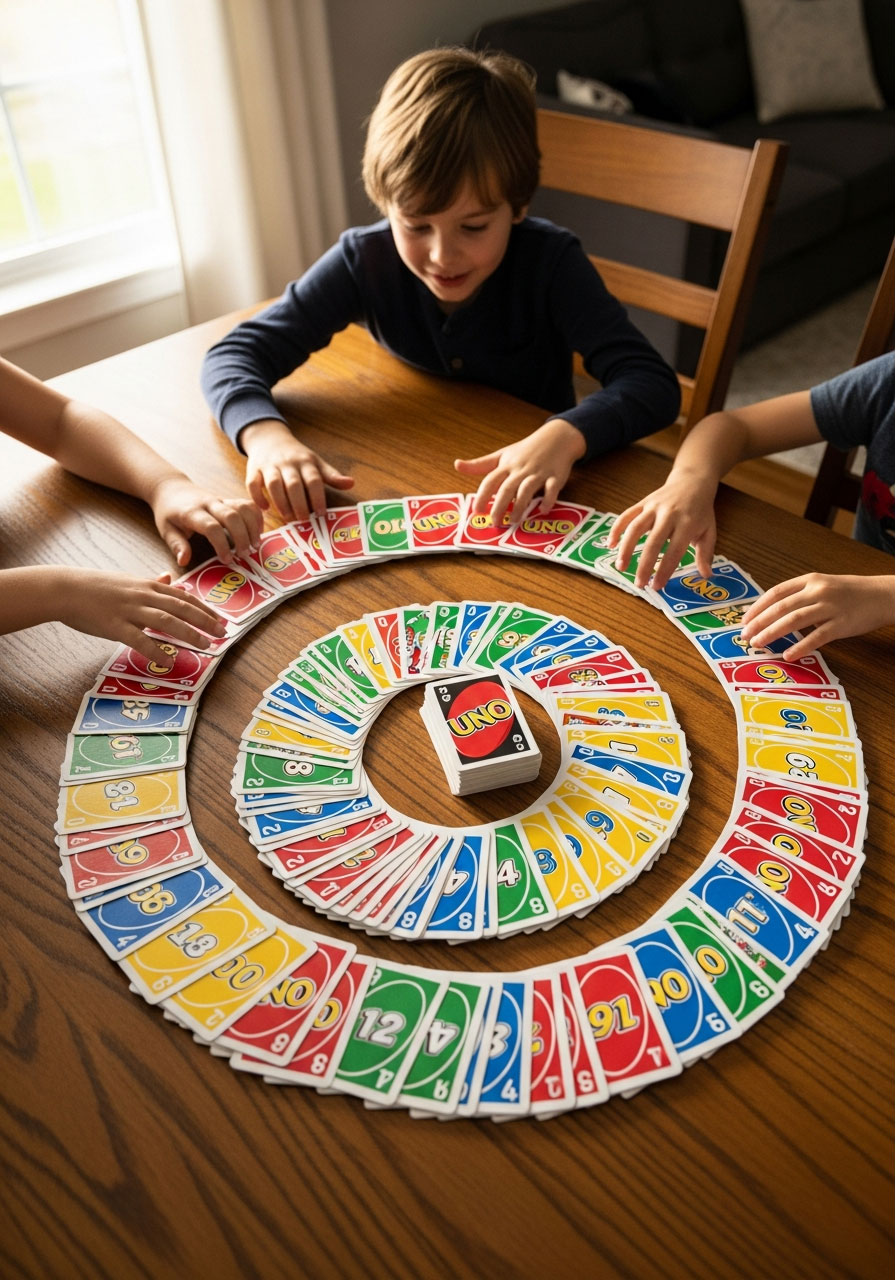
Whether you’re a parent looking to sneak in some learning during playtime, a teacher searching for engaging classroom activities, or anyone who needs to keep kids entertained during those dreaded waiting room moments, this humble deck of cards has got you covered.
Pop a pack in your bag, your car, or your classroom supply bin. You’ll be amazed at how these 108 cards can transform boredom into laughter, teach essential skills without feeling like “learning,” and create memories that stick around long after the cards are shuffled away.
Let’s dive into 15+ creative ways to play with UNO cards that’ll make you wonder why you ever stuck to just one game!
For Little Learners (Perfect for Preschool & Early Elementary)
These first few games are designed with your youngest players in mind, but don’t be surprised when older siblings want to jump in too!
1. Color & Number Sorting
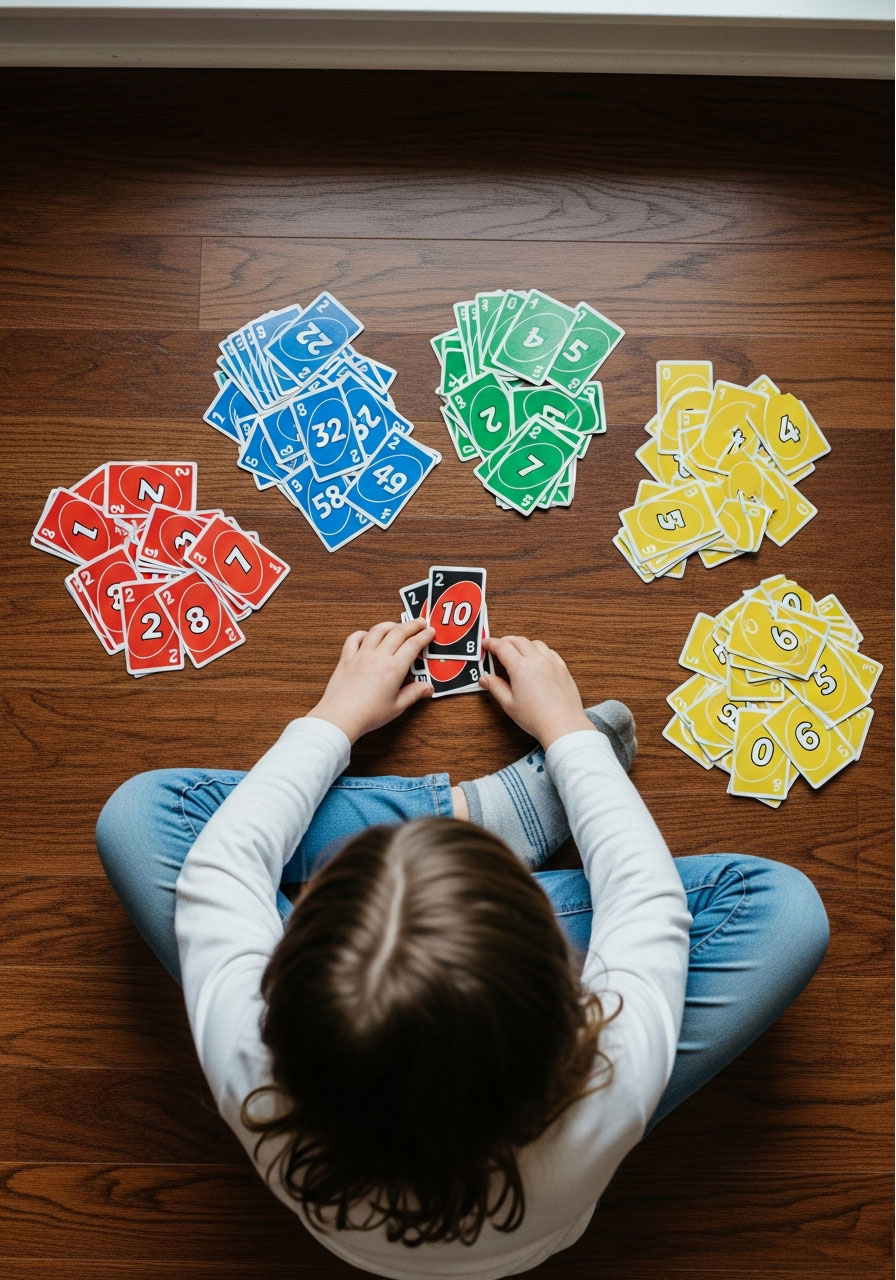
Why it’s awesome: This simple activity disguises important math skills as play. You’re building the foundation for categorizing, pattern recognition, and logical thinking – all while kids think they’re just playing with pretty cards.
Best for: Preschoolers (ages 3-5), individual or small group play
Time to Play: 5-15 minutes
Players: 1-4
What You’ll Need:
- One deck of UNO cards
- A flat surface to spread out
How to Play:
1. Start with colors: Spread out a handful of cards face-up. Ask your child to name each color they see.
2. Sort by color: Have them create piles by matching all the reds together, all the blues together, and so on.
3. Level up to numbers: Once color sorting is mastered, introduce number sorting. “Can you find all the 3s?”
4. Combine both skills: Challenge them to sort cards that match BOTH attributes. “Let’s find all the red 5s!”
Pro Tip: Turn it into a timed challenge for older kids. “How fast can you sort the entire deck by color?” Use a timer and try to beat your personal best each time!
2. Number Grab Game
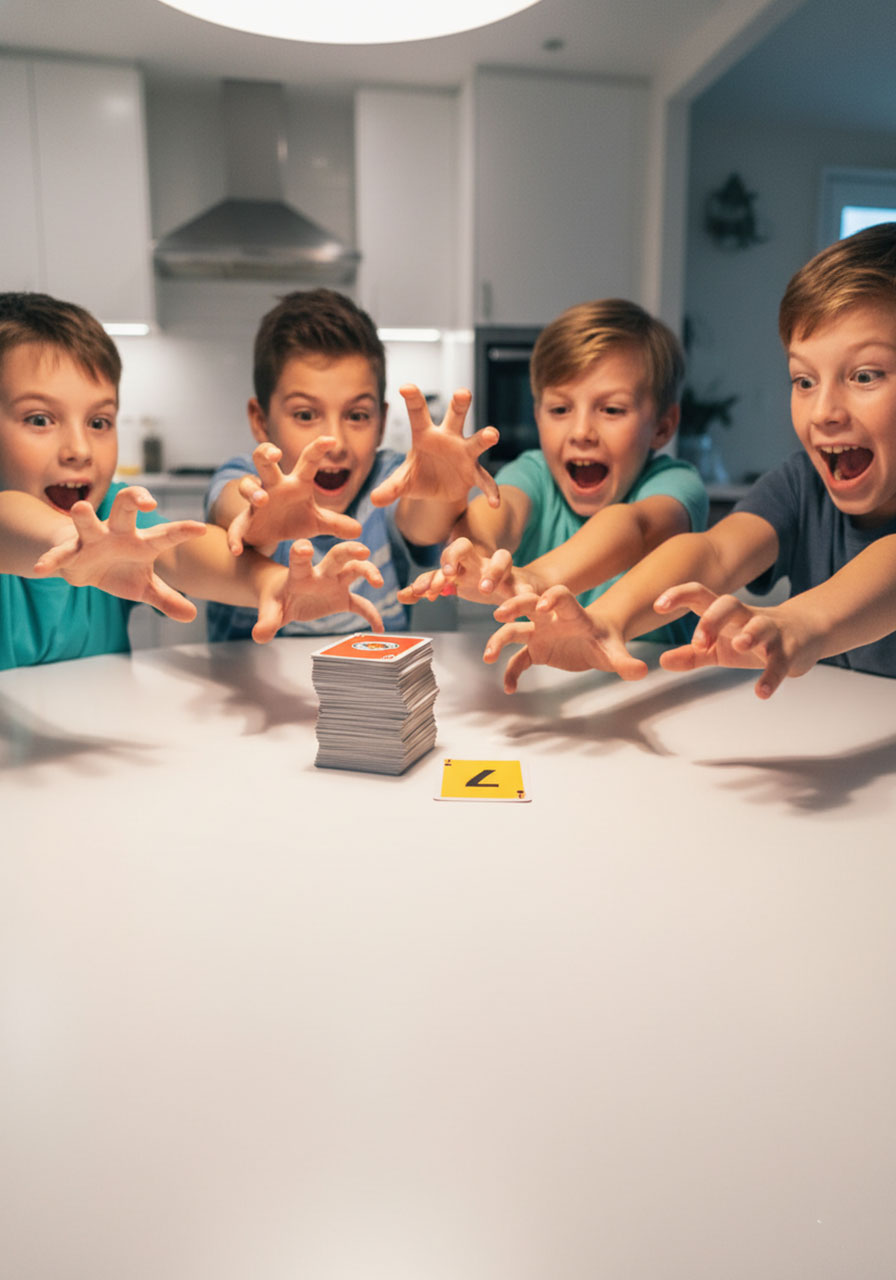
Why it’s awesome: Lightning-fast number recognition practice that feels like a competition, not homework. Kids won’t even realize they’re strengthening their math skills while they’re racing to win!
Best for: Ages 4-8, groups of 2-6
Time to Play: 10-15 minutes
Players: 2-6
What You’ll Need:
- Number cards only (remove action and wild cards)
- Quick reflexes!
How to Play:
1. Place the shuffled number cards face-down in a pile between all players.
2. Flip over the top card so everyone can see it.
3. The first person to shout out the correct number wins that card.
4. Keep playing until you’re out of cards. The player with the most cards wins!
For Older Kids – Make It Harder:
Two-Digit Challenge: Flip two cards at once. The first person to correctly read them as a two-digit number (like “23” for a 2 and a 3) keeps both cards.
Math Mode: Flip two cards and the first person to create a correct math equation wins them. For example, with a 2 and a 3, you could say “2 + 3 = 5” or “2 × 3 = 6.”
Pro Tip: For mixed-age groups, let younger players just call out the number while older kids have to do math equations. Everyone stays engaged at their own level!
3. Pattern Play
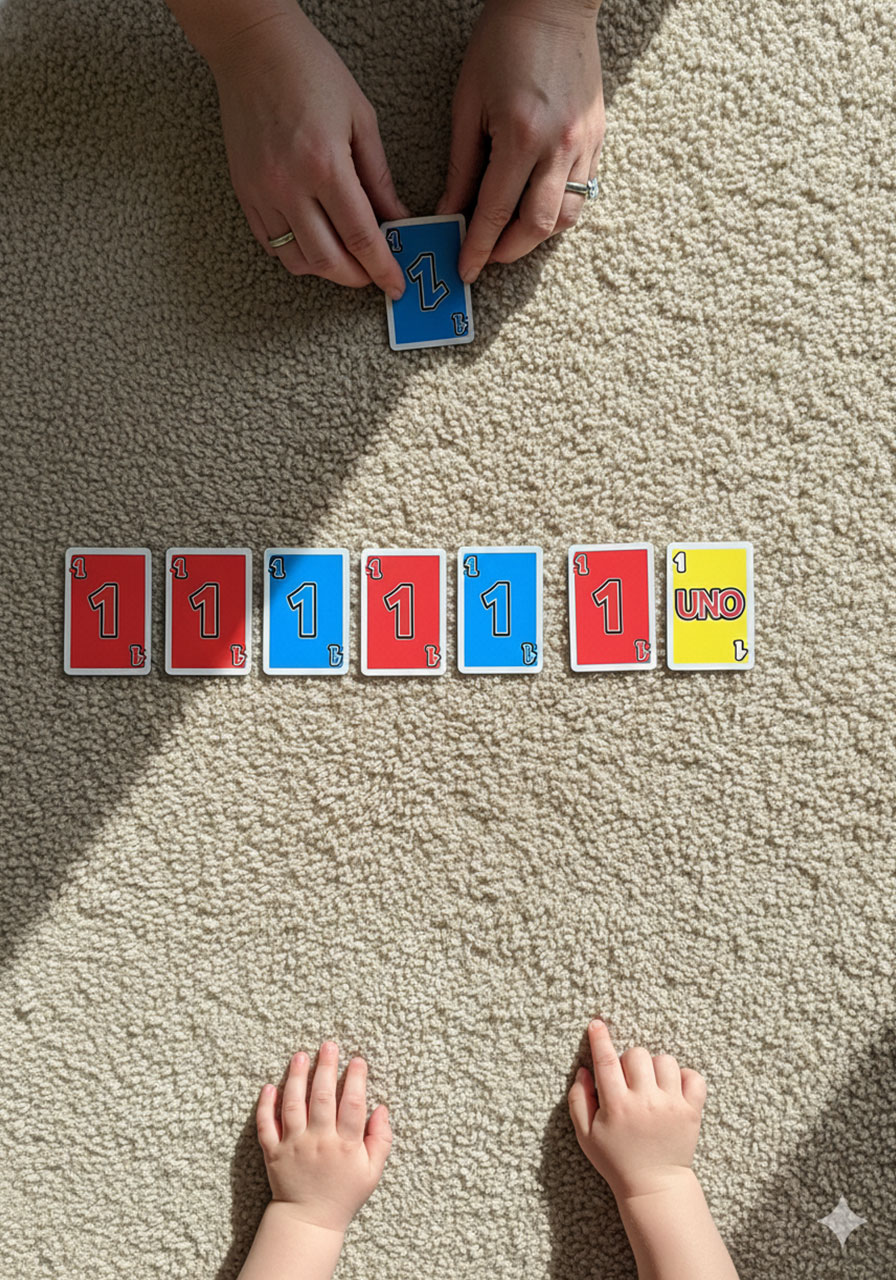
Why it’s awesome: Pattern recognition is a crucial pre-algebra skill, and UNO cards make it colorful and hands-on. This game grows with your child – start simple and increase complexity as they master each level.
Best for: Ages 4-10, individual or partner play
Time to Play: 10-20 minutes
Players: 1-4
What You’ll Need:
- UNO cards (number cards work best)
- A flat surface
How to Play:
1. You start the pattern: Lay out a simple sequence. For beginners, try: red 1, blue 1, red 1, blue 1…
2. They continue it: Ask your child, “What comes next?” and have them place the next card.
3. Increase the challenge: Once they’ve got it, make patterns more complex:
- Alternate numbers: 1, 2, 1, 2, 1, 2…
- Combine both: red 1, yellow 2, red 1, yellow 2…
- Create three-part patterns: red 1, blue 2, green 3, red 1, blue 2, green 3…
4. Let them be the teacher: Kids love this part! Have them create a pattern for YOU to solve.
Pro Tip: Turn this into a “pattern detective” game. Create a pattern with one intentional mistake and see if they can spot what’s wrong. It builds critical thinking skills!
4. Count & Color Match
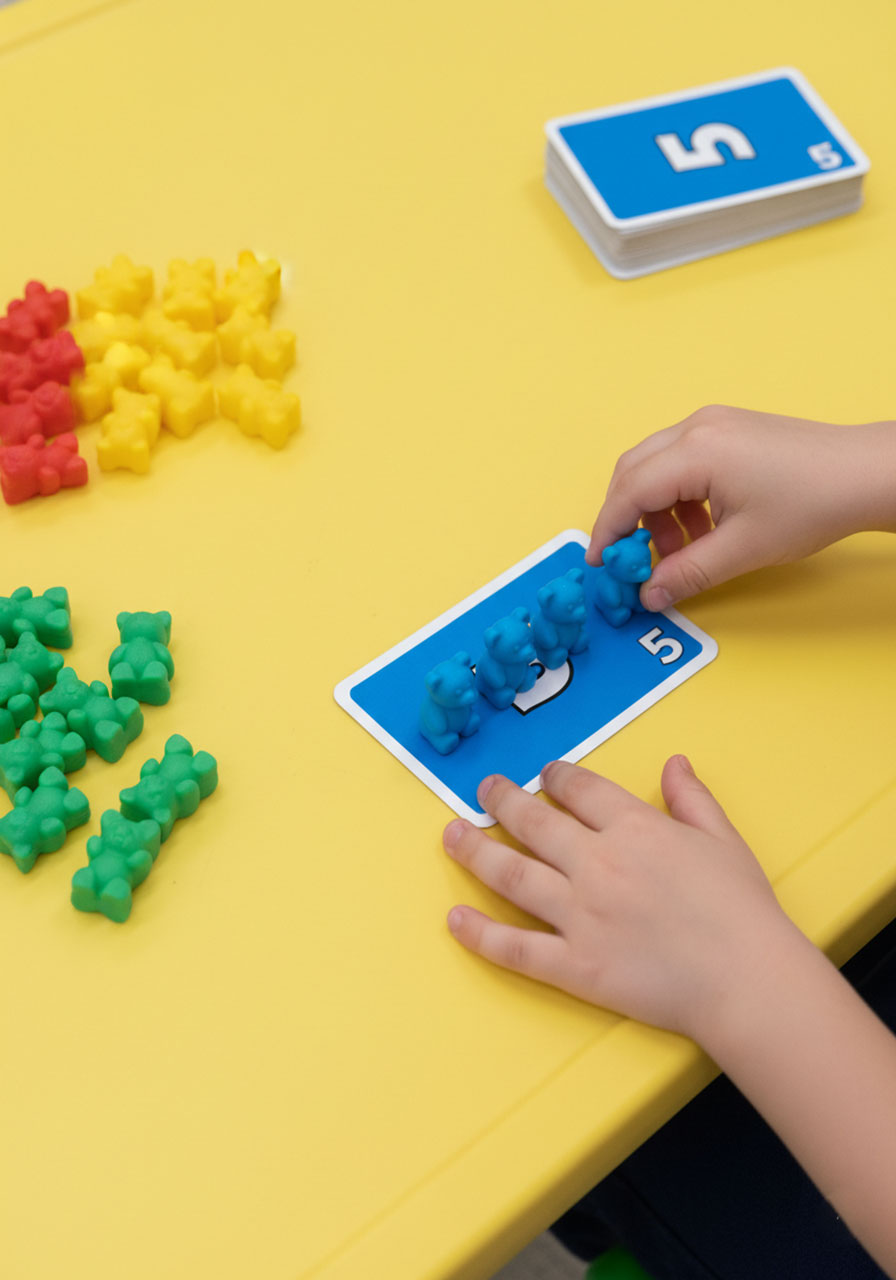
Why it’s awesome: This combines counting practice with fine motor skills and color recognition – three skills in one simple, satisfying activity.
Best for: Ages 3-6, individual or small group
Time to Play: 10-15 minutes
Players: 1-4
What You’ll Need:
- Number cards from the UNO deck
- Counters in matching colors (red, blue, green, yellow) – you can use buttons, LEGO bricks, colored paper pieces, or even M&Ms for extra motivation!
How to Play:
1. Turn over one UNO card from the pile.
2. Identify the number and color together: “This is a blue 5!”
3. Count out that many counters in the matching color.
4. Place them directly on the card.
5. Count them again together to reinforce the number.
6. Move on to the next card!
Pro Tip: For kids who are ready for a challenge, flip multiple cards and have them count out counters for all of them. Then practice addition: “You have 3 red counters and 4 blue counters. How many do you have altogether?”
For All Ages (Games Everyone Can Enjoy!)
These classics work beautifully with UNO cards and are perfect for family game night or classroom free time.
5. UNO Snap
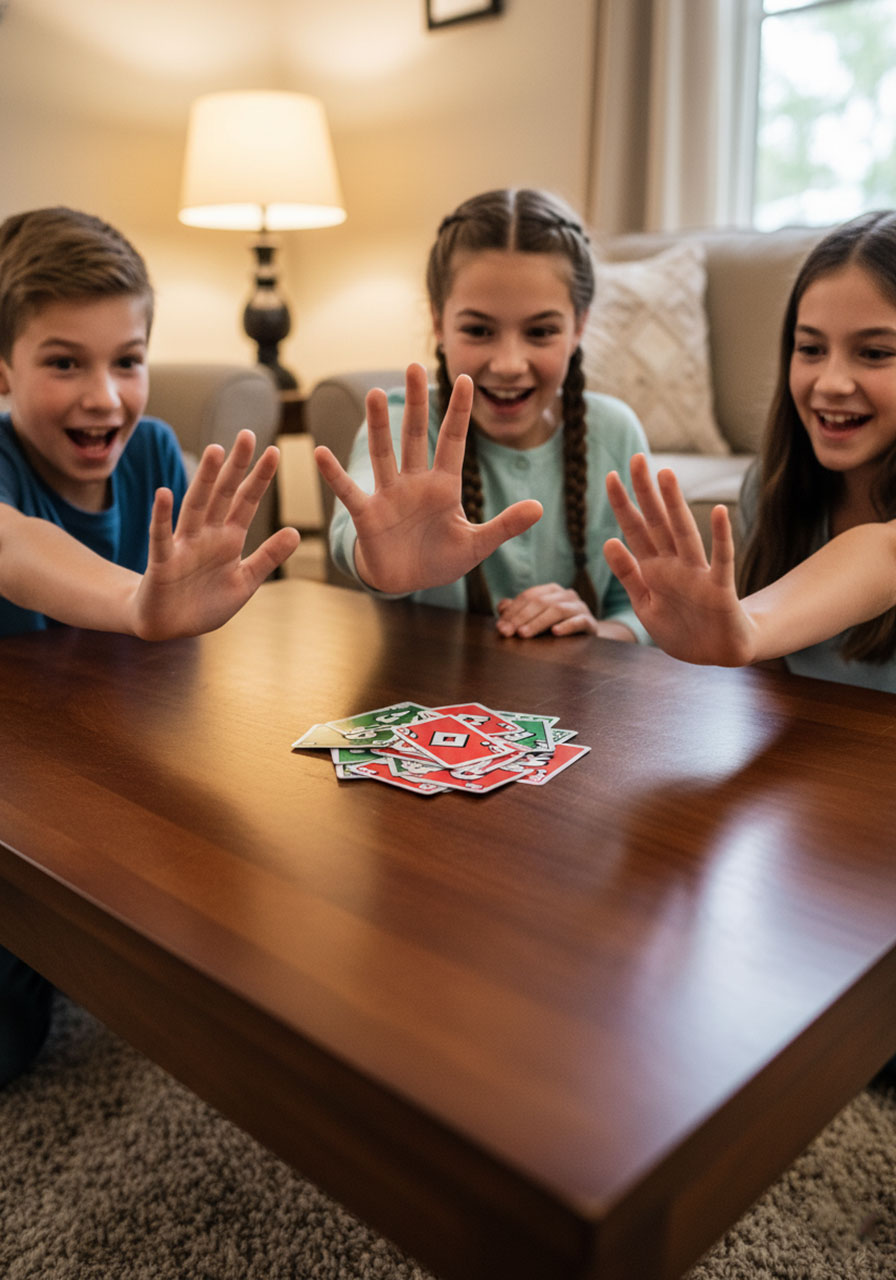
Why it’s awesome: Snap is a timeless favorite, and UNO cards actually make it EASIER for young kids to play because they’re only matching one attribute (color OR number) instead of worrying about suits like in regular playing cards.
Best for: Ages 5+, groups of 2-6
Time to Play: 10-15 minutes
Players: 2-6
What You’ll Need:
- One UNO deck (for beginners, use just 2-3 of each number in all colors; for longer games, use the full deck)
How to Play:
1. Deal all cards evenly among players, face-down. Players don’t look at their cards.
2. Players take turns flipping their top card face-up into a central pile.
3. When two cards that match (same color OR same number) appear in a row, everyone races to slap their hand on the pile and shout “SNAP!”
4. The first person to snap correctly wins the entire pile and adds it to their deck.
5. If you snap incorrectly, you give one card to every other player (ouch!).
6. Keep playing until one person has all the cards, or the player with the most cards when time runs out wins.
Pro Tip: Playing with very young kids? Let them only watch for matching colors at first. As they get better, introduce the rule that matching numbers also count. This keeps the game accessible for mixed-age groups!
6. UNO Memory
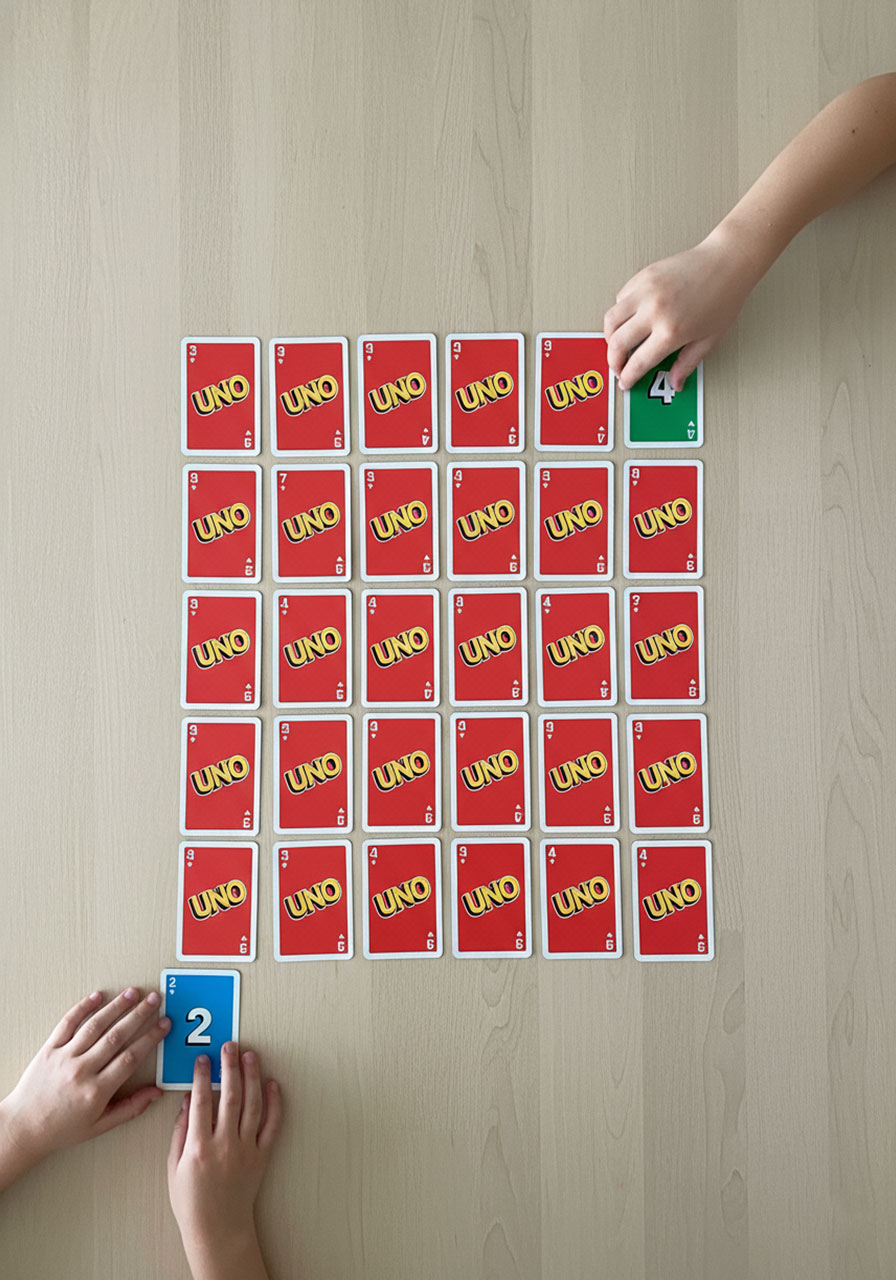
Why it’s awesome: Memory games strengthen concentration, visual recall, and focus. Adding UNO rules into the mix keeps older kids from getting bored with this classic.
Best for: Ages 4+, groups of 2-6
Time to Play: 15-25 minutes
Players: 2-6
What You’ll Need:
- UNO cards (for younger kids, start with numbers 0-4 in all colors; for older kids, add more numbers and action cards)
How to Play:
1. Lay all cards face-down in a grid pattern.
2. Players take turns flipping over two cards, trying to find a matching pair (same number AND same color).
3. If you find a match, keep the pair and take another turn.
4. If they don’t match, flip them back face-down and the next player goes.
5. The player with the most pairs when all cards are matched wins!
Add UNO Rules for Extra Fun:
- Match a pair of Skip cards? The next player loses their turn!
- Match a pair of Reverse cards? The turn order reverses!
- Match a pair of Draw Two cards? You get to take another turn immediately.
Pro Tip: Challenge older kids by letting them match pairs of the same number in ANY color (so a red 5 and blue 5 would match). This makes the game longer and requires more memory power!
7. UNO Go Fish
Why it’s awesome: Go Fish is simple enough for young kids but strategic enough to keep adults engaged. The UNO twist adds an element of surprise that creates hilarious moments.
Best for: Ages 5+, groups of 2-6
Time to Play: 15-20 minutes
Players: 2-6
What You’ll Need:
- UNO deck with number cards only (or include action cards for experienced players)
How to Play:
1. Deal 5 cards to each player (7 cards for 2-3 players). Place the remaining cards face-down as a draw pile.
2. Players look at their cards and organize them by matches (you need two cards of the same number AND color to make a pair).
3. On your turn, ask another player: “Do you have any green 5s?” (or whatever card you’re looking for).
4. If they have it, they must give it to you, and you get to ask again.
5. If they don’t have it, they say “Go Fish!” and you draw a card from the pile.
6. When you collect a pair, place it face-up in front of you.
7. The player with the most pairs when all cards are gone wins!
Add the UNO Twist:
- Include Draw Two and Wild Draw Four cards in the deck.
- If someone asks for one of these cards and you don’t have it, the person who asked must draw TWO or FOUR cards from the pile instead of just one!
Pro Tip: For younger players, allow them to ask for just a number OR just a color (not both). This simplifies the game while they’re learning.
8. Who Am I? (UNO Number Edition)
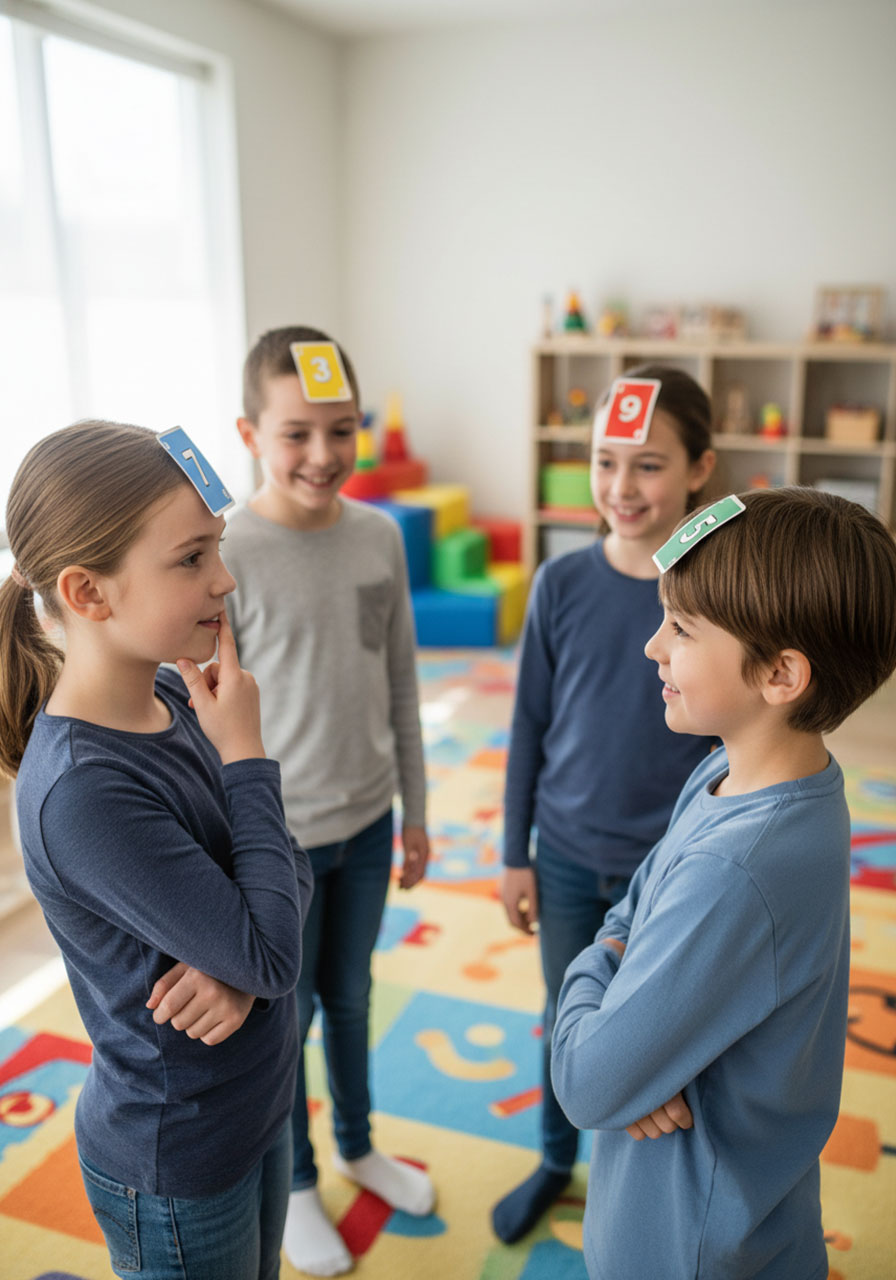
Why it’s awesome: This silly game builds deductive reasoning and question-asking skills. Kids learn to narrow down possibilities by asking strategic yes/no questions – a life skill disguised as playtime!
Best for: Ages 6+, groups of 2+
Time to Play: 10-15 minutes per round
Players: 2-8
What You’ll Need:
- Number cards only from the UNO deck
How to Play:
1. Each player draws one card WITHOUT looking at it and holds it up to their forehead (or tapes it to their back) so everyone else can see it.
2. Players take turns asking yes or no questions to figure out what card they are:
- “Am I higher than 5?”
- “Am I red?”
- “Am I an even number?”
3. Based on the answers, try to guess your card!
4. First person to correctly guess their number (and color, if you’re playing advanced mode) wins that round!
Pro Tip: For younger kids, let them ask questions about JUST the number or JUST the color to make it easier. Older kids can try to guess both at the same time for an extra challenge!
Active & Creative UNO Games (Get Those Wiggles Out!)
Time to get moving! These games combine physical activity with card play – perfect for high-energy kids or classroom brain breaks.
9. Find It Fast
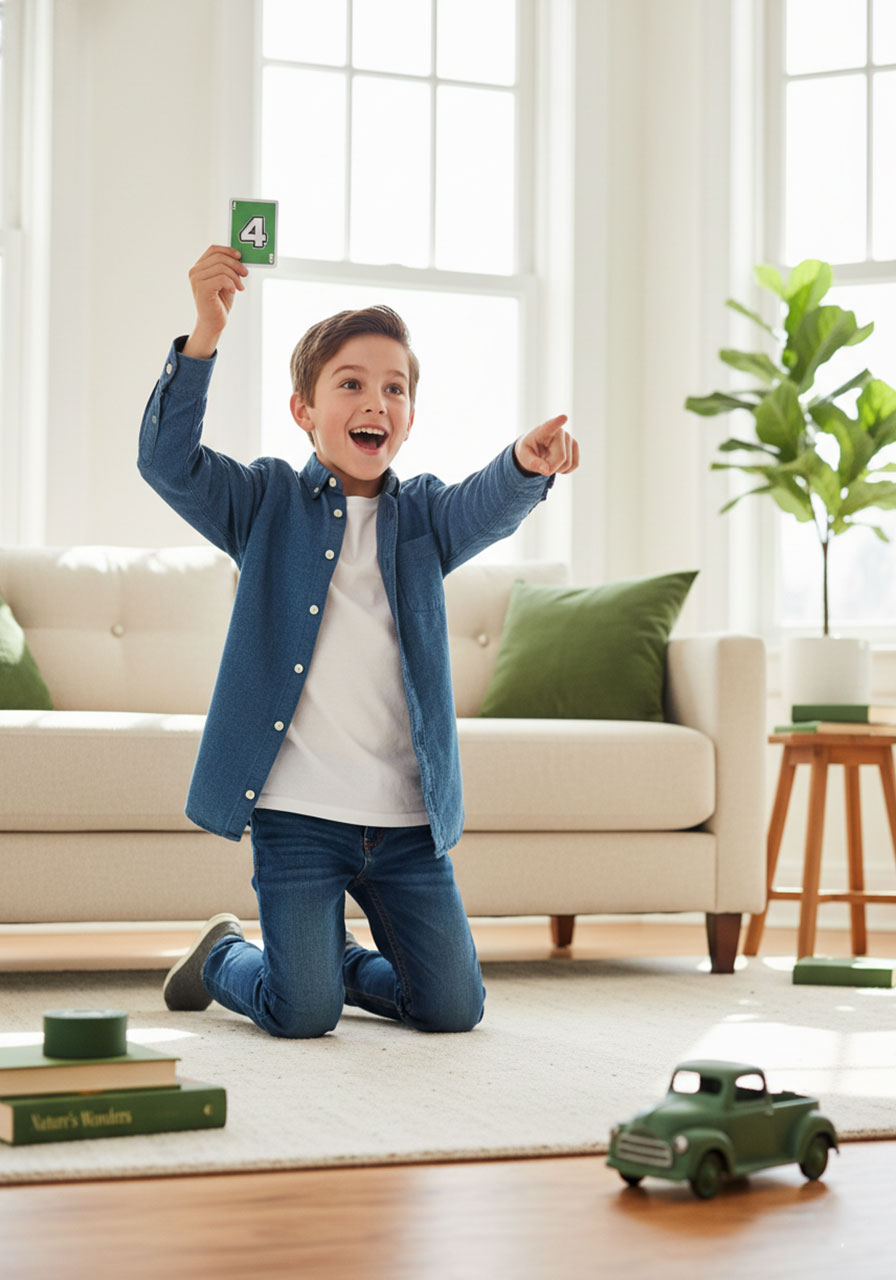
Why it’s awesome: This game turns your space into a giant scavenger hunt. Kids burn energy while reinforcing color recognition and counting skills. It’s sneaky learning at its finest!
Best for: Ages 4-10, groups of 2-6
Time to Play: 15-20 minutes
Players: 2-6
What You’ll Need:
- Number cards from the UNO deck
- A room or outdoor space with various objects
How to Play:
1. Shuffle the number cards and place them face-down in a pile.
2. One player flips over the top card.
3. Everyone races to find (or list) that many objects in the matching color.
- Example: Flip a green 3? Find three green things!
- Flip a red 5? Find five red things!
4. The first player to correctly identify the right number of objects in that color wins the card.
5. Play continues until you’re out of cards. Most cards wins!
Fun Variation: Instead of racing, give everyone 30 seconds to write down as many items as they can find in that color and number. Then share your lists – no repeats allowed! The player with the most unique items wins the card.
Pro Tip: Play this during a nature walk! It makes hiking more engaging for kids who complain about walking.
10. Move It!
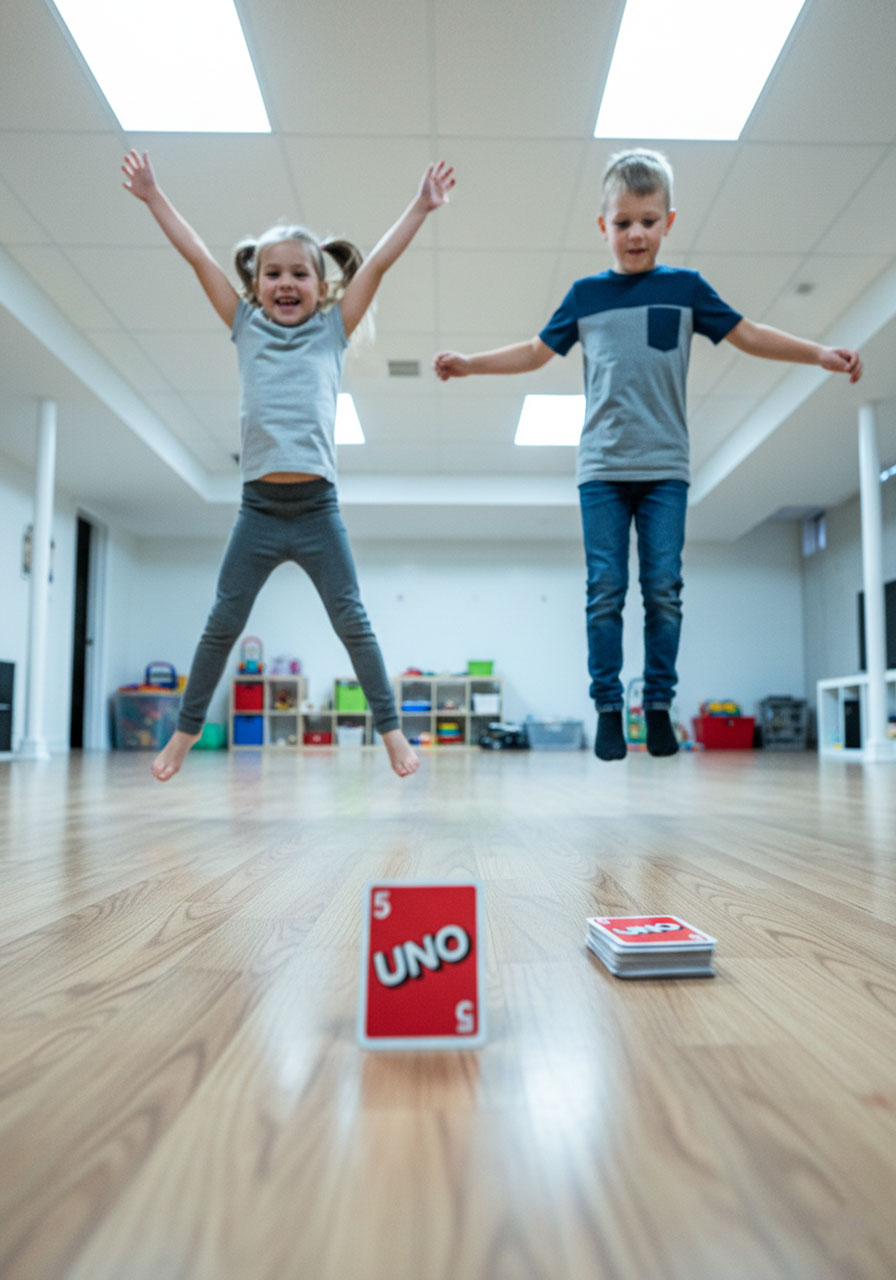
Why it’s awesome: Perfect for burning off excess energy during indoor recess, classroom transitions, or when kids have been sitting too long. Every adult needs this game in their back pocket!
Best for: Ages 4-12, groups of 1-20
Time to Play: 10-15 minutes
Players: 1-20 (yes, really!)
What You’ll Need:
- Number cards from the UNO deck
- Wild cards (optional)
- Some space to move around
How to Set Up:
Before you start, assign each color an action. Here are some ideas:
- Red: Jumping jacks
- Blue: Hops on one foot
- Green: Arm circles
- Yellow: Touch your toes
How to Play:
1. Shuffle the cards and place them face-down in a pile.
2. Each player takes turns flipping a card.
3. Everyone must do the action that matches the card’s color, repeated as many times as the number on the card.
- Flip a blue 7? Everyone does 7 hops on one foot!
- Flip a red 3? Time for 3 jumping jacks!
4. Wild card? The person who flipped it gets to choose any action and any number (up to 10) for everyone to do!
Pro Tip: Let kids take turns being the “Fitness Leader” who assigns actions to each color at the start of each game. They’ll be more invested when they get to make the rules!
11. Card Toss Challenge
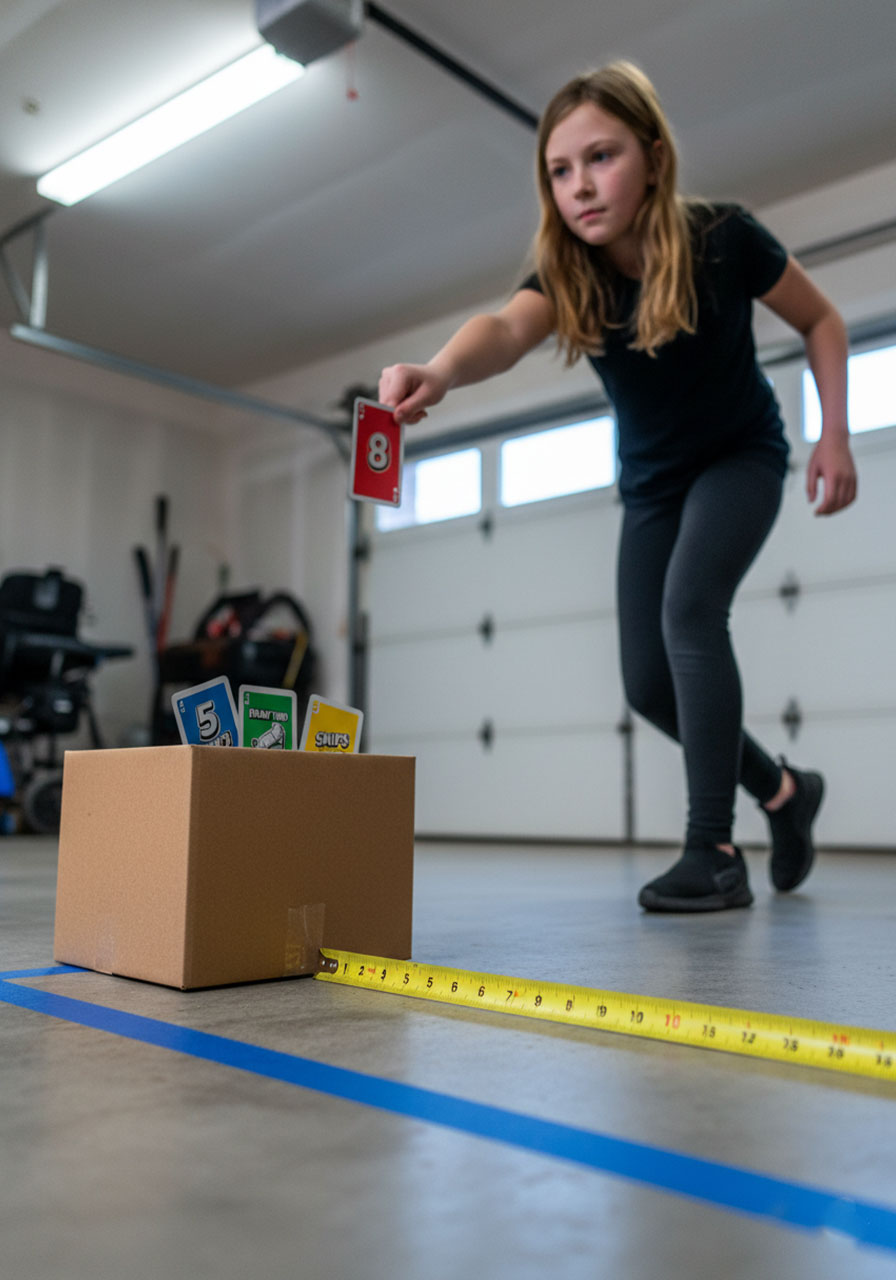
Why it’s awesome: Cards fly through the air completely differently than balls, which makes this way more challenging (and hilarious) than it looks. Plus, it’s surprisingly great for developing hand-eye coordination!
Best for: Ages 5+, groups of 1-6
Time to Play: 10-15 minutes
Players: 1-6
What You’ll Need:
- UNO cards (any cards work!)
- A container (basket, bowl, bucket, or even a hat)
- Tape or a marker to mark throwing lines
How to Play:
1. Place your container on the floor and mark a throwing line with tape 3-5 feet away (closer for younger kids, farther for older kids).
2. Each player gets 10 cards.
3. Take turns tossing your cards, trying to land them IN the container.
4. Each card that lands inside counts as 1 point.
5. After everyone throws their 10 cards, count up the points. Highest score wins!
Make It Harder:
- Assign different point values to different containers at various distances.
- Try different throwing techniques: overhand, underhand, frisbee-style.
- Set challenges like “toss with your non-dominant hand” or “toss while standing on one foot.”
Pro Tip: Use this game to teach about force, angles, and air resistance. Ask kids, “What happens when you throw a card flat versus when you hold it vertically?” Science + fun = winning combination!
Creative Building & Construction Projects
Transform your UNO cards into an engineering challenge! These activities develop spatial reasoning, patience, and problem-solving skills.
12. UNO Card Houses
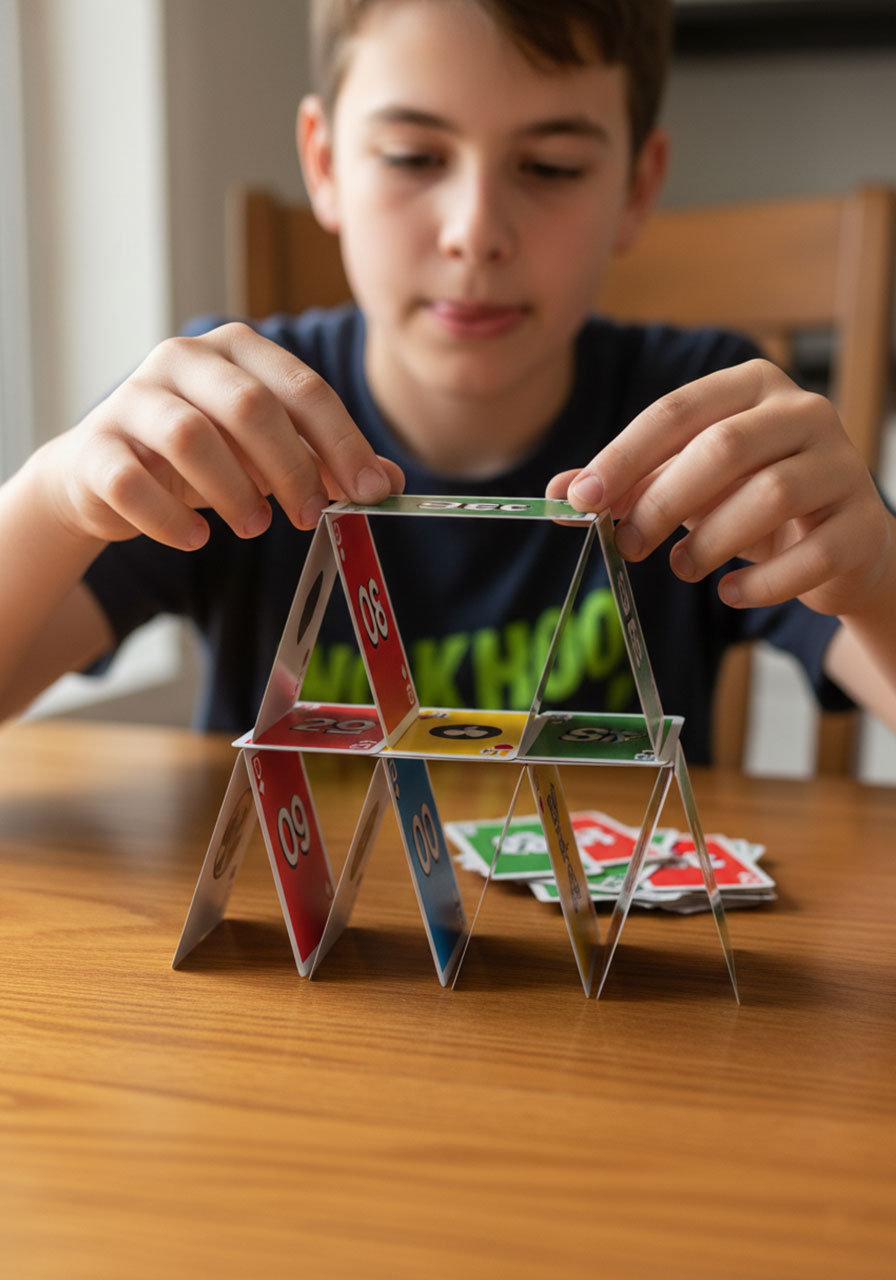
Why it’s awesome: Building card houses requires patience, steady hands, and an understanding of balance – all while being incredibly satisfying when you finally get it to stand! It’s meditative for kids who need calming activities.
Best for: Ages 6+, individual or partner play
Time to Play: 15-30 minutes
Players: 1-4
What You’ll Need:
- A well-worn deck of UNO cards (newer, slippery cards are harder to balance)
- A flat, stable surface
- Blu-Tack or sticky tack (optional, for beginners)
How to Play:
1. Start with the base: Create an upside-down “V” shape by leaning two cards together at the top.
2. Add more walls: Place additional card pairs next to your first one, creating a row of standing cards.
3. Build the floor: Carefully lay cards flat across the tops of your standing pairs to create a second level.
4. Keep going up: Repeat the process, building higher and higher!
5. The challenge: How many levels can you build before it tumbles?
Beginner Tip: Use Blu-Tack at the base of each card to help them stick. As kids get better, gradually reduce the amount of sticky tack until they can build without it. Carpet is also easier than hard floors or tables!
Pro Tip: Turn it into a competition: Who can build the tallest tower? Who can build the most creative structure? Take photos before they collapse so you can remember your architectural achievements!
13. UNO Construction Set
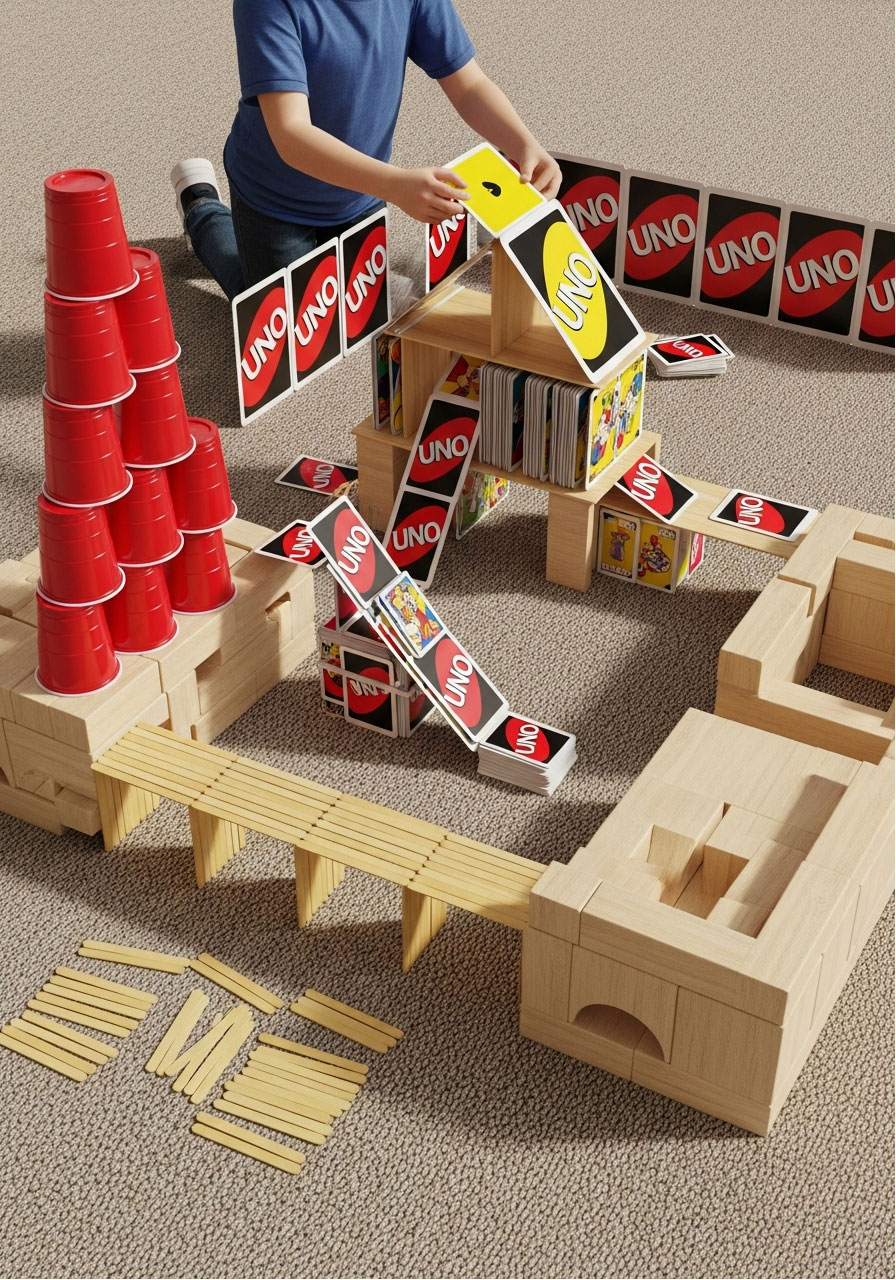
Why it’s awesome: Combining UNO cards with other building materials opens up a whole new world of creative possibilities. Kids learn that materials can have multiple uses and that creativity has no limits!
Best for: Ages 4-12, individual or group play
Time to Play: 20-45 minutes
Players: 1-6
What You’ll Need:
- UNO cards
- Additional building materials: plastic cups, craft sticks, wooden blocks, LEGO bricks, cardboard tubes, etc.
How to Play (Freestyle):
1. Spread out all your building materials, including the UNO cards.
2. Challenge kids to build something specific:
- A bridge that can hold a toy car
- The tallest tower possible
- A maze for a small toy
- A house with rooms
3. UNO cards can be used as walls, roofs, ramps, floors, or decorative elements.
4. Let imagination lead the way!
Structured Challenges:
The Bridge Challenge: Build a bridge using only UNO cards and craft sticks that can span between two cups and hold the weight of 10 pennies.
The Tower Challenge: Who can build the tallest freestanding structure in 10 minutes?
The Creativity Challenge: Build something that represents your favorite book or movie.
Pro Tip: This is an amazing STEM activity for classrooms! Split kids into teams and have them explain their design process: What did you build? Why did you choose these materials? What would you do differently next time?
14. Advanced Card Constructions
Why it’s awesome: If you have an old, beat-up deck you’re ready to retire, this is its perfect second life! These geometric constructions are mesmerizing to build and teach principles of engineering and architecture.
Best for: Ages 8+, patient builders
Time to Play: 30-60 minutes
Players: 1-4
What You’ll Need:
- An old UNO deck you don’t mind cutting up
- Scissors
- Patience!
How to Play:
You can create amazing 3D geometric shapes by cutting slits in cards and sliding them together:
1. For a simple cube: Cut a small slit halfway up the middle of 6 cards. Slide them together at right angles to form a cube shape.
2. For complex structures: Look up “card construction techniques” online for patterns to create dodecahedrons, geodesic domes, and more!
3. Bridge Building Challenge: Use the cards to build a bridge that can hold progressively heavier objects. Test how much weight your design can support!
Pro Tip: Document the process with photos at each step. Kids can create an instruction manual for other builders to follow. This builds technical writing skills alongside engineering skills!
15. UNO Domino Effect
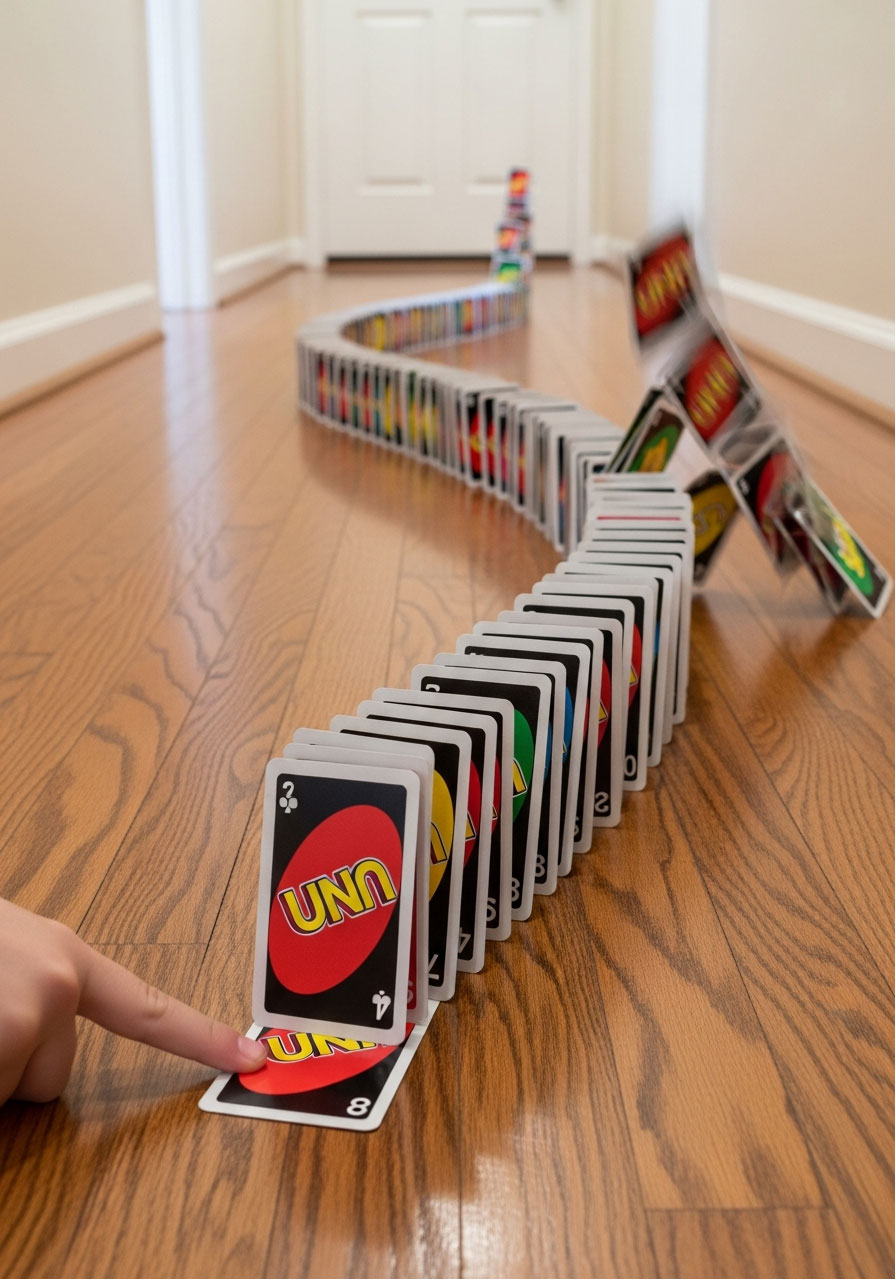
Why it’s awesome: If you’ve got a truly ancient deck that’s seen better days, give it one last hurrah with this satisfying chain reaction activity. Kids learn about kinetic energy, momentum, and cause-and-effect while having a blast!
Best for: Ages 5+, individual or group
Time to Play: 20-40 minutes (setup) + 10 seconds (the glorious payoff!)
Players: 1-8
What You’ll Need:
- Old UNO cards
- A flat surface with plenty of room
- Patience for the setup!
How to Play:
1. Fold each card: Put a slight crease down the middle of each card so they can stand on their edge like a traditional domino.
2. Line them up: Stand the cards in a line, spacing them close enough that when one falls, it’ll knock over the next one.
3. Get creative with your path:
- Create curves and turns
- Make the line split into two paths
- Build ramps using books
- Create patterns with the colors
4. Knock over the first card and watch the chain reaction!
Challenge Ideas:
- How long of a chain can you create before something goes wrong?
- Can you make the dominoes go up a ramp?
- Can you incorporate other items (like toy cars or balls) into the sequence?
Pro Tip: Film the final run in slow-motion using a smartphone! Kids love rewatching their creation fall in slo-mo, and it’s a great way to study the physics of the chain reaction.
16. SPAZ (From a Reader!)
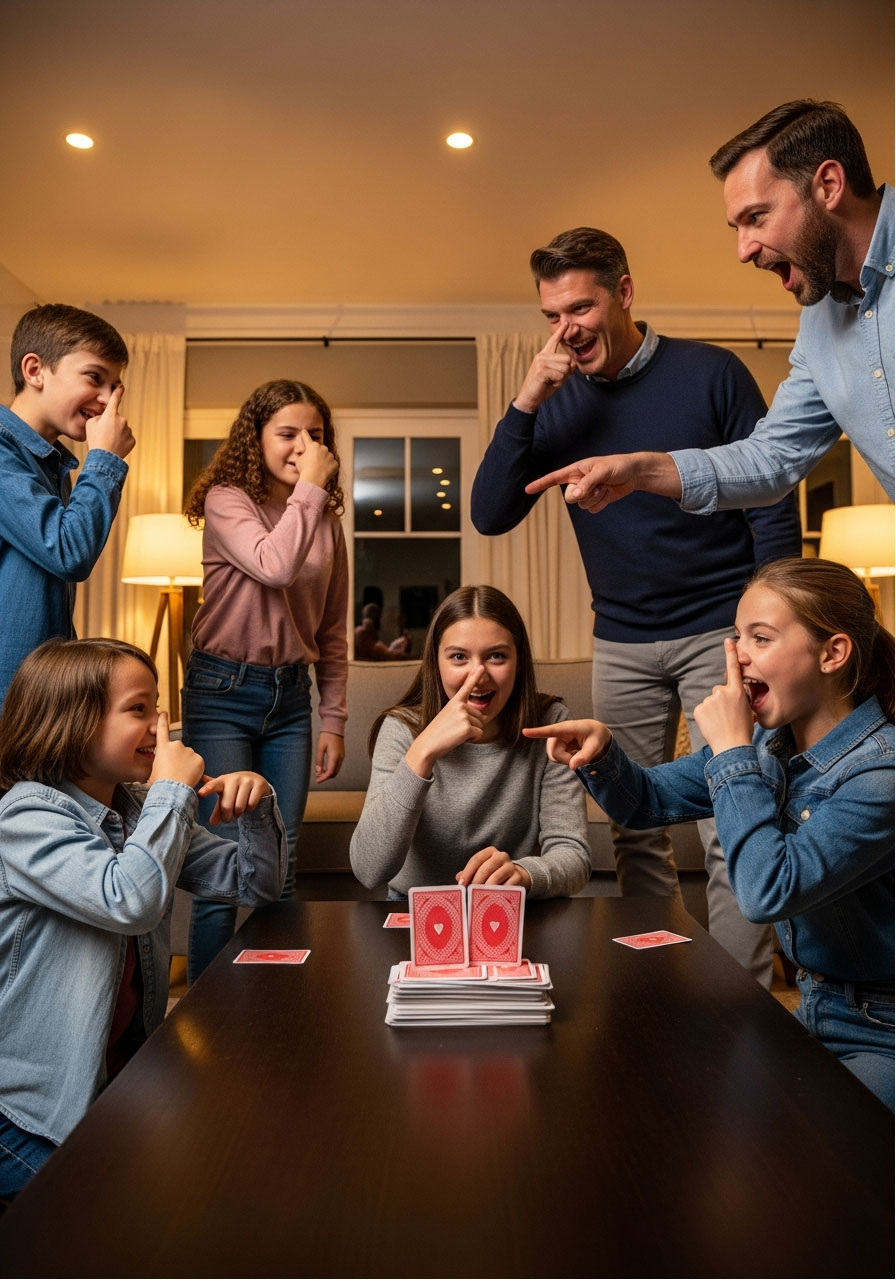
Why it’s awesome: This fast-paced game submitted by one of our readers gets everyone giggling and moving. It’s best played late at night when everyone’s already got the giggles – trust us on this one!
Best for: Ages 6+, groups of 3-8
Time to Play: 15-20 minutes
Players: 3-8
What You’ll Need:
- One full UNO deck
How to Set Up:
Choose a silly pose for each color before you start:
- Red: Stick out your tongue
- Blue: Touch your nose with your finger
- Green: Make peace signs with both hands
- Yellow: Flap your arms like a chicken
How to Play:
1. Deal all cards evenly to all players. Don’t look at your cards!
2. Players take turns placing one card face-up in the center discard pile WITHOUT looking at it first.
3. Watch the discard pile carefully. When two cards of the SAME COLOR are played in a row, everyone must immediately strike the pose for that color!
4. The LAST person to make the pose takes the entire discard pile into their hand.
5. The goal is to get rid of all your cards first.
6. Wild cards: The person playing a wild card announces which color it represents.
7. Action cards (Skip, Reverse, Draw Two): These only matter for their color, not their action.
Pro Tip: Play this during a sleepover or family game night when everyone’s already in a silly mood. The poses get funnier and funnier as the game goes on and everyone gets more tired. You’ll laugh until your face hurts!
Why UNO Cards Are a Game-Changer
Here’s the bottom line: a single deck of UNO cards is one of the best investments you can make for your family or classroom. For less than $10, you get:
✨ 15+ different games and activities (and counting – readers are always sharing new ideas!)
✨ Learning disguised as play (math, memory, critical thinking, physical coordination)
✨ Portable entertainment that fits in any bag or glove compartment
✨ Age-scalable fun that grows with your kids
✨ Screen-free engagement that brings people together
Whether you’re facing a rainy afternoon, a long wait at the doctor’s office, an indoor recess, or just a regular Tuesday when everyone needs something fun to do, UNO cards have your back.
So grab that deck from the closet, try a few of these games, and watch as a simple set of cards transforms ordinary moments into extraordinary memories. And when you discover your own creative UNO card game, share it in the comments – we love hearing how you’re making play even more fun!
Ready to level up your game collection? Explore more party game ideas and activities that’ll make you the hero of every gathering!
More Kid’s Party Ideas to Keep the Fun Rolling:
Cup Stacking Tower Challenge: The Epic Building Game That’ll Keep Kids Busy for Hours
Build a LEGO Slingshot Car: The Epic Racing Activity Your Kids Will Beg to Do Again
Muffin Tin Coin Counting Activity: The Sneakily Brilliant Math Game Kids Actually Want to Play
Matching Pairs: The Toddler Activity That’s Equal Parts Learning and Fun
The Paper Plate Phone Game: A Genius Hands-On Way to Teach Kids Their Phone Number
Catapult Bowling STEM Game: The Ultimate DIY Challenge That Turns Physics Into Pure Fun
The Ultimate Duck Boat Challenge: A STEAM Activity That’ll Make a Splash With Kids (PreK-12)
