

Transform scattered toys into an educational treasure hunt that’ll keep your little one engaged for 20+ minutes!
If you’re looking for a toddler activity that sneaks in serious learning while keeping things fun, you’ve just hit the jackpot. Matching Pairs combines the magic of sensory play with a brilliant educational twist – and the best part? You already have everything you need at home.
This isn’t your average sensory bin. We’re talking about a setup that teaches vocabulary, builds sorting skills, and develops hand-eye coordination while your toddler digs, discovers, and has an absolute blast. I’ve seen kids as young as 18 months completely absorbed in this activity, and my own 2.5-year-old literally whispers “pairs go together” to himself while he plays. It’s that good.
What Makes Matching Pairs So Genius
Here’s why parents and teachers love this activity:
For the Toddler:
- Sensory heaven with rice, beans, or cornmeal
- The thrill of discovering hidden “treasure”
- Hands-on learning that doesn’t feel like learning
- Perfect for visual discrimination and sorting practice
For You:
- Uses toys you already own
- Minimal cleanup with a simple towel setup
- 15-30 minutes of focused engagement (translation: coffee time!)
- Sneaky vocabulary building (“pairs are the same!”)
Best for: Toddlers 18 months to 4 years
Time to Play: 15-30 minutes
Mess Level: Low (with proper setup)
What You’ll Need
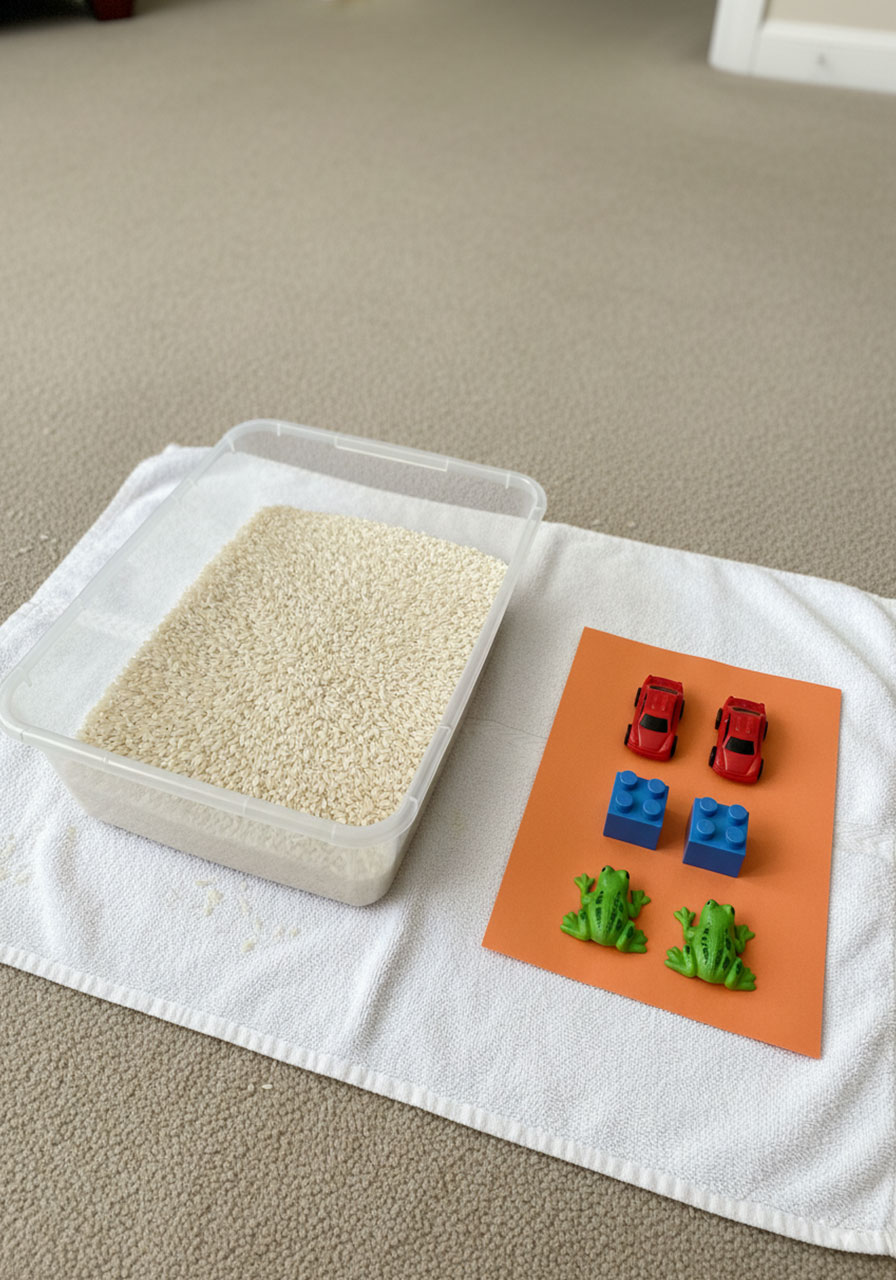
A shallow container or bin (plastic storage bins work perfectly)
Sensory base: 3-4 lbs of rice, dried beans, or cornmeal
6-10 pairs of small objects from around your house (think: toy cars, action figures, blocks, plastic animals, bottle caps)
One large towel (for containing the inevitable spills)
One sheet of paper or small tray (this is the genius part – keep reading!)
Optional: Small scoops or cups for digging
Pro tip: Save rice in a ziplock bag after use – you can reuse it for months!
How to Set Up Your Matching Pairs Bin
Step 1: Hunt for Pairs
Walk around your house collecting pairs of objects. You’re looking for things like:
- Two identical toy cars
- Two of the same building blocks
- Two matching action figures
- Two bottle caps or jar lids
- Two plastic animals
- Two game pieces
Keep objects toddler-safe – nothing too small or sharp. Aim for 6-10 pairs total.

Step 2: Build the Bin
Lay out your towel on the floor (this catches the inevitable rice avalanche). Place your container on the towel. Arrange all your object pairs inside the bin, then pour your sensory base over everything until the objects are completely buried. Give it a good mix to hide everything.

Step 3: The Secret Weapon
Place a sheet of paper or small tray next to the bin. This simple addition is what makes the activity work – it gives your toddler a designated spot to place discovered pairs. Without it, you’ll have objects scattered everywhere and the whole “matching” concept gets lost. This paper becomes the official “pairs go here” zone.
How to Introduce the Activity
This part is important! Here’s exactly what to say:
Start with enthusiasm: “Wow! Look what I set up for you today! We’re going to find PAIRS!”
Define it simply: “Pairs are the SAME. Pairs go TOGETHER.”
Model it once: Dig into the bin and dramatically pull out one object. “Oh! I found a car! Now I need to find the OTHER car because pairs are the same!” Dig again until you find the match. “YES! These are pairs! They go together!” Place both on the paper with fanfare.
Hand it over: “Now you try! Can you find a pair?”

Why This Works So Well
The learning is layered: While your toddler thinks they’re just digging in rice, they’re actually:
- Building hand-eye coordination through digging and sorting
- Developing visual discrimination by identifying matches
- Practicing sorting and categorization skills
- Learning vocabulary (the word “pairs” and object names)
- Engaging in sensory exploration
- Getting ready for more complex matching games later

It’s self-directed: Once you’ve shown them how, toddlers can play independently. Many kids will finish finding all the pairs and then continue playing – lining them up, creating stories, or just enjoying the sensory bin on its own terms.
It grows with them: 18-month-olds might just love the digging. 2-year-olds start understanding the matching concept. 3-year-olds can name objects and get creative with their play.

Pro Tips from Real Parents
Contain the mess: That towel setup is non-negotiable. Also, keep a small handheld vacuum nearby for quick cleanup. Rice WILL escape – it’s the law of toddler physics.
Refresh your pairs: Switch out objects every few weeks. The novelty of new items to find keeps the activity fresh and exciting.
Theme it up: Use all cars, all animals, or all blocks for an extra learning layer. “Let’s find pairs of animals today!”
Add challenge for older toddlers: Mix in objects that are similar but NOT matching (like two different colored blocks). This takes the activity up a notch.
Reuse, reuse, reuse: Store your rice in a gallon ziplock bag. I’ve been using the same 4 lbs of rice for over a year across dozens of sensory activities.
Time it right: Set this up when you need 20-30 minutes to prep dinner, answer emails, or just sit with your coffee. The focused engagement is chef’s kiss.
Fun Variations to Try
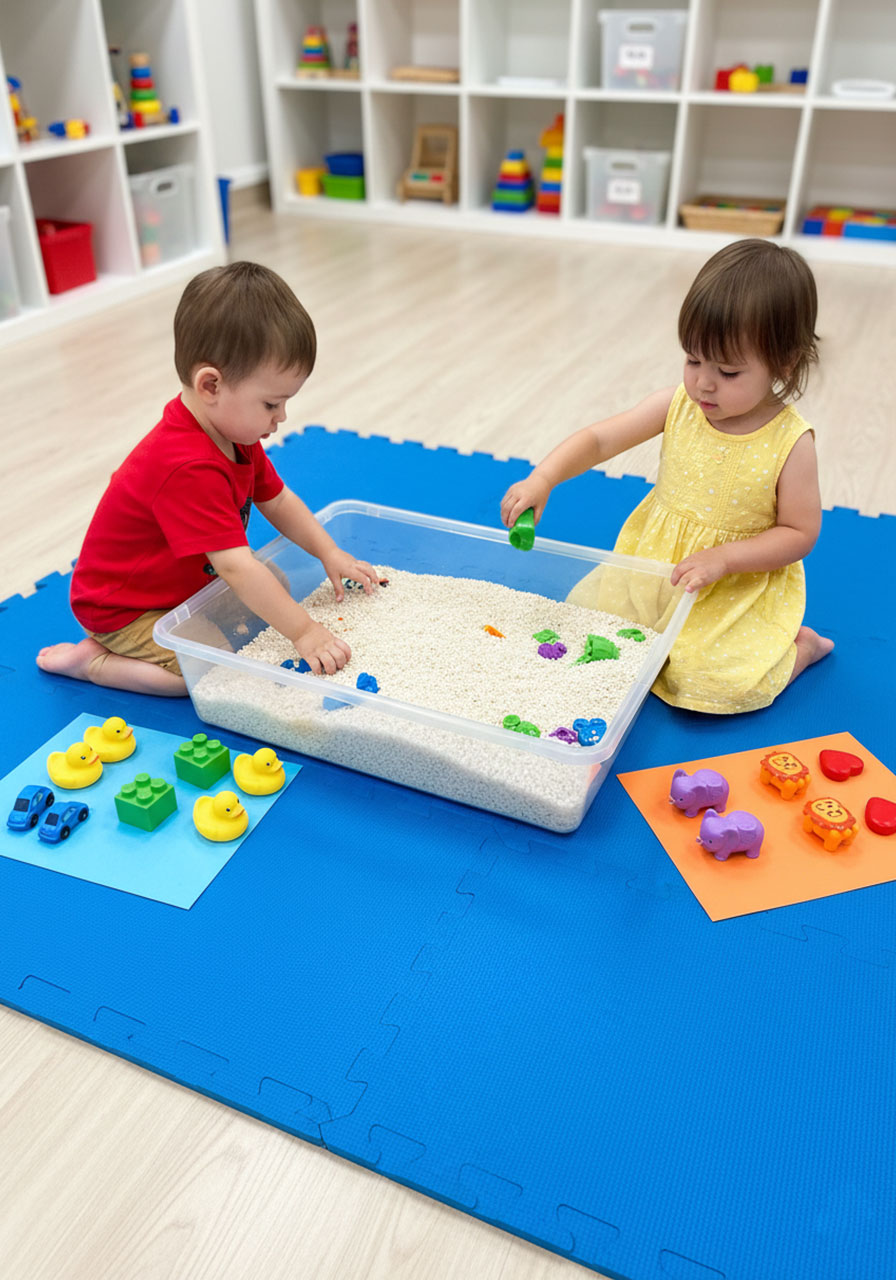
Color Sorting Pairs: Use only objects in specific color pairs (two red cars, two blue blocks, etc.) and have your toddler sort by color first, THEN find matches.
Size Exploration: Include pairs of different sizes – two big blocks and two small blocks. Talk about “big pairs” and “little pairs.”

Texture Mix: Use different sensory bases for different days. Monday is rice day, Wednesday is beans, Friday is cornmeal. Your toddler will notice!
Hide and Seek Twist: For older toddlers (3-4 years), hide pairs in different locations around the room instead of in the bin. Same concept, bigger space!

The Bottom Line
Matching Pairs is one of those activities that looks simple but delivers serious developmental benefits. It’s the kind of activity that makes you look like a rockstar parent or teacher while requiring minimal effort on your end.
Your toddler gets sensory play, learning, and that dopamine hit of discovery. You get time to breathe, a house that doesn’t look completely ransacked, and the satisfaction of knowing you’re supporting their development.
Set up Matching Pairs once, and I guarantee it’ll become a regular rotation in your toddler activity arsenal. The real magic? Hearing your little one whisper “pairs are the same” while they play. That’s when you know it’s working.
Ready to level up your toddler activities? Save this one for a rainy day, a busy morning, or any time you need 30 minutes of peace and purposeful play. Your toddler (and your sanity) will thank you!
More Kid’s Party Ideas to Keep the Fun Rolling:
The Paper Plate Phone Game: A Genius Hands-On Way to Teach Kids Their Phone Number
Catapult Bowling STEM Game: The Ultimate DIY Challenge That Turns Physics Into Pure Fun
The Ultimate Duck Boat Challenge: A STEAM Activity That’ll Make a Splash With Kids (PreK-12)
How to Make a Bug Hotel Craft: The Ultimate Nature Activity Your Kids Will Obsess Over
DIY Marshmallow Catapult: The Ultimate STEM Activity That Kids Actually Beg to Do
How To Make Magical Light-Up Fireflies (That Kids Go Absolutely Crazy For!)
