
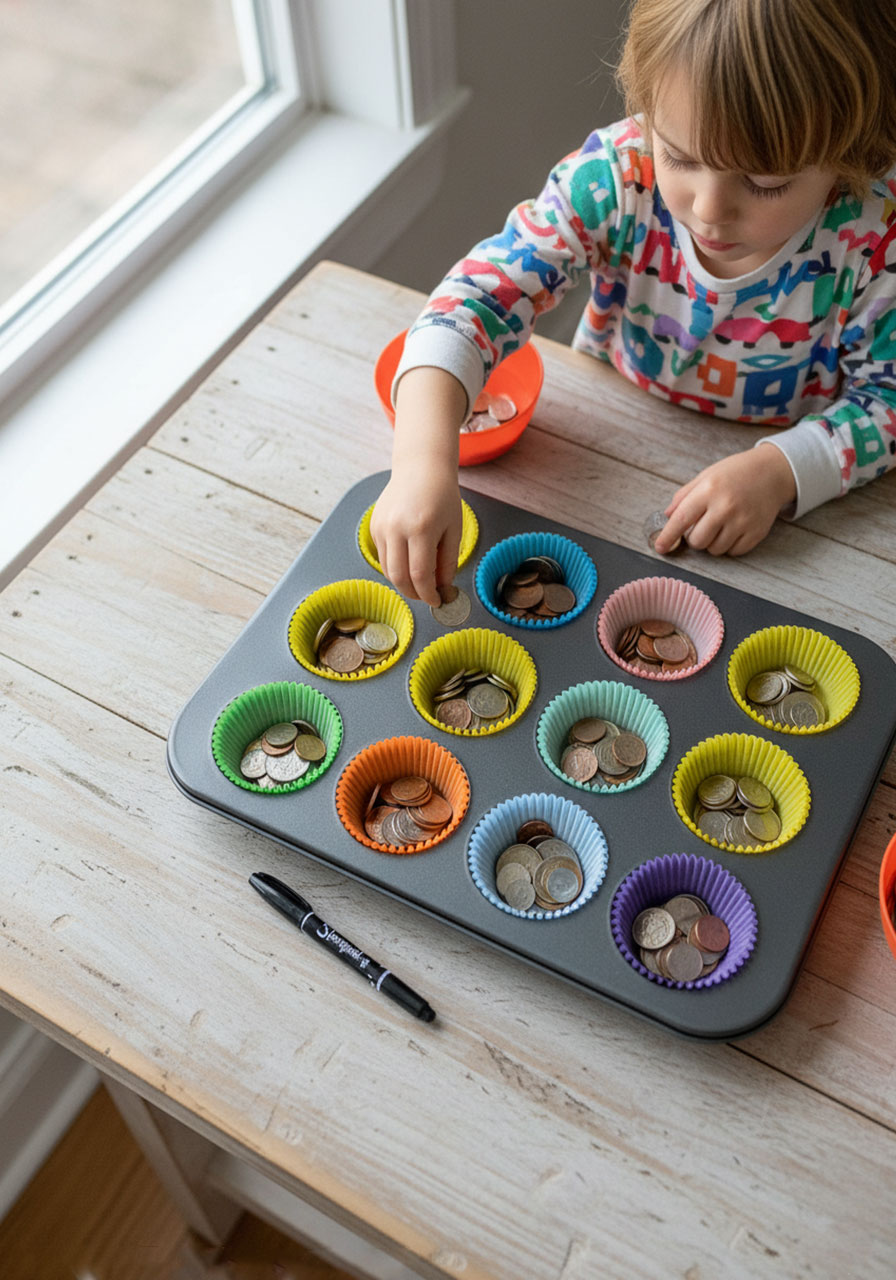
If you’re looking for a hands-on math activity that keeps little learners genuinely engaged – without a single complaint – this one is an absolute winner. The Muffin Tin Coin Counting Activity turns an everyday kitchen item into an exciting challenge, and it works beautifully for both classroom math centers and at-home learning sessions. Trust us: once your kids (or students) try this, they’ll be asking to play again.
Why This Activity Works So Well
Here’s the thing – kids love sorting, filling, and completing things. A muffin tin hits that sweet spot perfectly. Each cup has a clear target amount written inside, and the goal is simple: use real coins to match the amount in every single cup. It feels like a game, but the math happening under the hood is no joke.
This activity is especially effective because it lets children work independently. Once you set it up, they can self-check, problem-solve, and build confidence – all on their own. And for you? That means a few peaceful minutes while your learner is fully absorbed. Win-win.
Who Is This Perfect For?
Best for: Ages 5 – 8 (Kindergarten through 2nd Grade)
Learning Focus: Coin identification, coin values, counting money, making change
Setting: Classroom math center, independent work time, or at-home practice
What You’ll Need
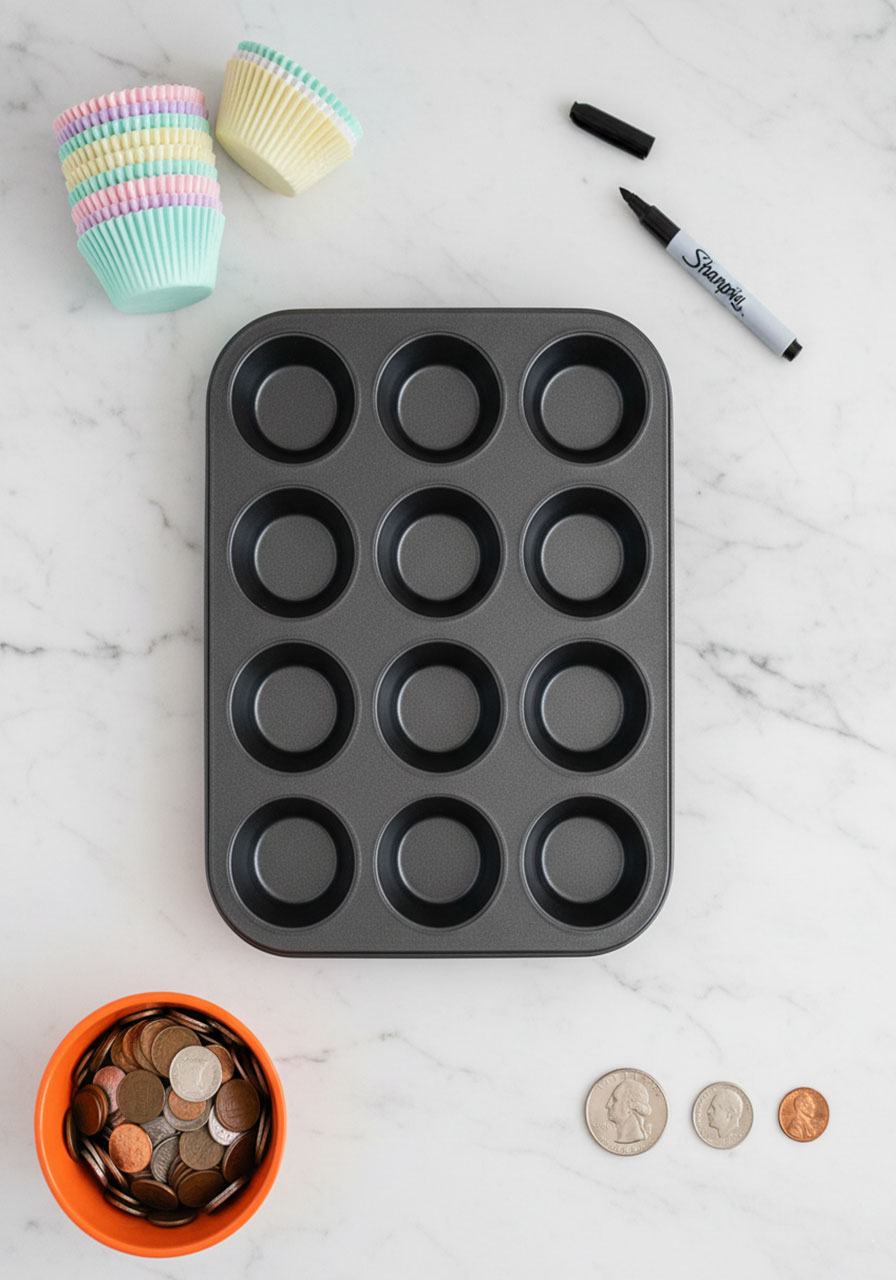
A 12-cup muffin tin
Colorful paper or silicone cupcake liners (12)
A black marker
A mixed collection of real coins (pennies, nickels, dimes, and quarters)
A small bowl or container to hold the coins
How to Set It Up
This is one of the easiest activities you’ll ever prep – and that’s exactly why it’s so great.
1. Write the target amounts. Using your marker, write a different money amount on the inside of each cupcake liner. For younger learners (ages 4–5), stick to smaller amounts using only pennies – something like 3¢, 5¢, or 7¢. For kids aged 6–8, mix it up with amounts like 16¢, 37¢, 50¢, 75¢, or even $1.00. The key is to choose amounts that match the coin skills you’re currently working on.

2. Place the liners in the muffin tin. Tuck each labeled liner into a cup so the amount is clearly visible. The colorful liners add a fun pop of visual appeal – and they make cleanup a breeze too.
3. Set out the coins. Pour your mixed coins into the small bowl and place it next to the muffin tin. This becomes the “coin bank” your learner will draw from.
4. Hand it over and let them go! That’s truly it. The setup is done, and the learning has begun.
How to Play
1. Explain the challenge. Let your child or student know that their mission is to fill each muffin cup with the exact coins that add up to the amount written inside. Every cup needs to be filled – no skipping!
2. Let them work independently. This is where the magic happens. Kids can pick coins from the bowl, count them out, and place them into the matching cup at their own pace. There’s no timer, no pressure – just focused, hands-on learning.

3. Encourage self-checking. Once they’ve filled every cup, have them go back and recount the coins in each one to make sure the totals are correct. This step builds a huge habit of checking their own work – a skill that pays off way beyond math class.
4. Review together. When they’re finished, sit down and go through the muffin tin together. Celebrate the cups they nailed, and for any that are off, ask guiding questions like “How many more cents do you need?” or “Is there a bigger coin you could use instead?” This turns any mistakes into a learning moment – not a frustrating one.

Pro Tip: Make It Stick With These Easy Variations
Once your learner has the hang of the basic version, keep the challenge fresh with these simple tweaks:
Fewer Coins Challenge: After they complete the activity, ask them to go back and try to make each amount using the fewest coins possible. For example, instead of using five pennies for 5¢, can they find a nickel? This is an incredibly effective way to teach coin value and efficient counting – and kids love the puzzle of it.

Penny-Only Round (For Younger Learners): If your child is just starting to learn about coins, set up a version using only pennies. Write smaller amounts (1¢–10¢) on the liners and let them count one penny at a time. It’s a confidence-building warm-up before introducing nickels and dimes.

Speed Round (For a Fun Twist): Set a gentle timer and see how many cups they can fill correctly before time runs out. This adds a little excitement and works great as a quick review activity or a classroom challenge.
Why the Muffin Tin Makes All the Difference
You might wonder – why not just use paper cups or little piles on a table? Here’s the secret: the muffin tin keeps everything neat, visible, and contained. Coins don’t roll off the table, piles don’t get knocked over, and when you come to check their work, you can see every single cup at a glance. It’s hands-on learning with zero mess. For busy parents and teachers, that’s everything.
A Quick Look at What to Write on the Liners
Here’s a sample set of amounts that works beautifully for the 6–8 age range. Feel free to mix and match based on what your learner is working on:
| Cup | Target Amount |
|---|---|
| 1 | 15¢ |
| 2 | 22¢ |
| 3 | 28¢ |
| 4 | 37¢ |
| 5 | 41¢ |
| 6 | 43¢ |
| 7 | 50¢ |
| 8 | 65¢ |
| 9 | 75¢ |
| 10 | 16¢ |
| 11 | 18¢ |
| 12 | $1.00 |
For younger learners, simply replace these with smaller penny-based amounts like 2¢, 4¢, 6¢, 8¢, and 10¢.
The Bottom Line
The Muffin Tin Coin Counting Activity is one of those rare finds that checks every box: it’s quick to set up, genuinely fun to play, easy to adapt for different ages and skill levels, and it builds real math skills without feeling like “schoolwork.” Whether you’re a parent looking for a low-stress way to practice money skills at home or a teacher searching for a reusable math center activity, this one deserves a permanent spot in your rotation.
Now grab that muffin tin, toss in some coins, and watch your little learner light up. Because the best kind of math practice? The kind they don’t even realize they’re doing.
More Kid’s Party Ideas to Keep the Fun Rolling:
Matching Pairs: The Toddler Activity That’s Equal Parts Learning and Fun
The Paper Plate Phone Game: A Genius Hands-On Way to Teach Kids Their Phone Number
Catapult Bowling STEM Game: The Ultimate DIY Challenge That Turns Physics Into Pure Fun
The Ultimate Duck Boat Challenge: A STEAM Activity That’ll Make a Splash With Kids (PreK-12)
How to Make a Bug Hotel Craft: The Ultimate Nature Activity Your Kids Will Obsess Over
DIY Marshmallow Catapult: The Ultimate STEM Activity That Kids Actually Beg to Do
How To Make Magical Light-Up Fireflies (That Kids Go Absolutely Crazy For!)
