
You know the struggle. The sun is shining, the kids are ready to bolt out the door, and you’re standing there with a bottle of sunscreen like a human speed bump.
“Mom, we don’t need it!” “It smells weird!” “Can we just go PLEASE?”
Oh, sweet summer chaos.
Here’s the thing, though – kids don’t fight sunscreen because they’re being difficult. They fight it because they can’t see what it’s doing for them. It’s invisible. Boring. An obstacle between them and the sandbox.
So what if you could show them, in the most hands-on, wow-worthy way possible, exactly what sunscreen does?
That’s what this sunscreen painting activity is all about. It’s a simple, no-fuss summer science project that turns one of your daily parenting battles into a genuinely magical learning moment. And trust me – after they see the results, they’ll be asking you to put the sunscreen on.
No joke.
This is one of those rare activities that checks every box: it’s creative, it teaches real science, it requires almost zero prep, and it doubles as a beautiful reminder that protecting what matters – our bodies, our children, ourselves – is always worth the extra minute it takes.
Let’s do this.

What Is Sunscreen Painting?
Sunscreen painting is exactly what it sounds like – you use sunscreen as your “paint” on dark construction paper, then leave it out in the sun for a couple of hours.
When you come back? The paper has faded everywhere except where the sunscreen was painted.
The sunscreen-covered areas stay bright and bold. The exposed areas fade. The result is a stunning, nature-developed piece of art that basically paints itself – using the power of the sun.
It looks like magic. But it’s science. And your kids get to experience both at the same time.
It’s perfect for a lazy summer afternoon, a backyard playdate, a summer school enrichment activity, or honestly just a Tuesday when you need something to do that isn’t another episode of whatever they’re currently obsessed with.
Why This Activity Is So Good for Kids (and for You)
Let’s talk about why this one is worth adding to your summer activity list – because it’s not just about keeping little hands busy.
It teaches real science in a way kids actually understand. We’re talking UV rays, chemical bonds, physical barriers, absorption – real concepts, explained through a hands-on experience they’ll never forget.
It builds healthy habits. When a child sees the sunscreen protecting the paper from the sun, they make the connection: if it does that for paper, imagine what it’s doing for my skin. That’s a lesson that sticks.
It’s low-prep and low-cost. You probably already have everything you need. This is not a Pinterest project that requires a trip to three different craft stores. It’s sunscreen. Paper. A paintbrush. Done.
It creates something beautiful. The finished artwork is genuinely cool – a sun-developed masterpiece that your kids made themselves. Fridge-worthy, for sure.
It gives you a moment of peace. While the artwork “develops” outside, you get a built-in two-hour window. You’re welcome.
As moms, we’re constantly looking for ways to nourish our kids – body, mind, and spirit. This activity quietly does all three. It protects their body by teaching sun safety. It grows their mind through real science. And there’s something genuinely joyful about watching a child’s face light up when their artwork “magically” appears after sitting in the sun.
Joy is good for the spirit. Every single time.
What You’ll Need
Seriously, that’s it:
Sunscreen (any SPF – the higher the better for this experiment!)
A paintbrush
Black construction paper (or any dark color – blue, navy, dark purple, or dark green all work great)
A paper plate or small cup to squeeze the sunscreen into
A few small rocks or heavy objects to weigh down the paper outside
Direct sunlight and 2 hours of patience
That’s genuinely all you need. No trip to the store required if you’ve got sunscreen sitting in your bag right now – which, as a prepared mom, you absolutely do.
How to Do Sunscreen Painting (Step-by-Step)
Step 1: Set Up Your “Art Studio”
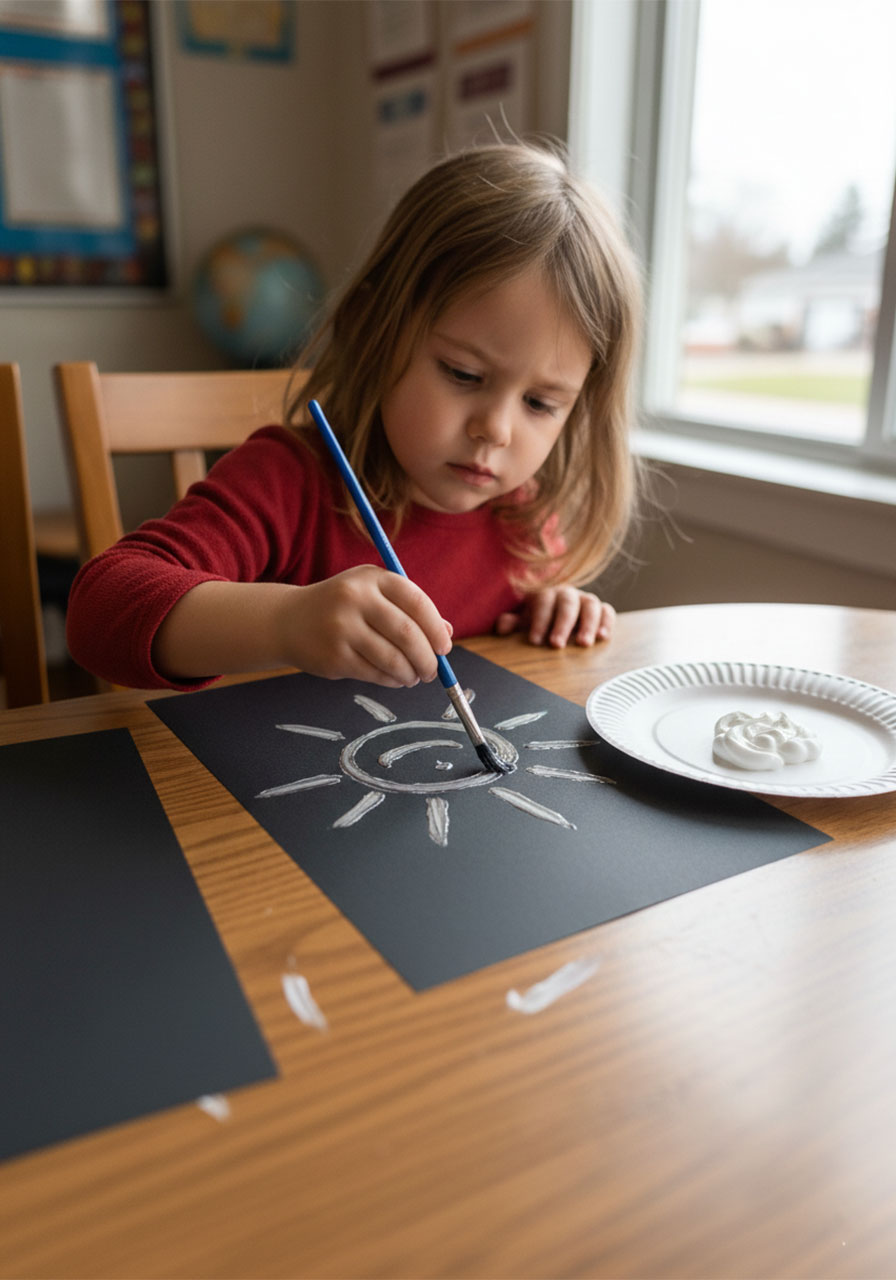
Squeeze some sunscreen onto a paper plate or into a small cup – just like you’d squeeze out paint before an art project. Give your child a paintbrush and a sheet of black construction paper.
Let them know: today, the sunscreen is their paint. They can paint anything they want – their name, a sun, flowers, a silly face, or just abstract squiggles. There are no rules here. Only fun.
Step 2: Paint Away!
Let your child paint freely on the dark paper using the sunscreen. Encourage them to apply it fairly generously – thick, clear brushstrokes will give the most dramatic results.
The sunscreen will look wet and slightly shiny on the paper but will be mostly transparent. That’s totally normal! The “reveal” comes later, and that’s part of the excitement.
At this stage, it almost feels like they’re painting with water. Invisible. Secret. Which makes the result even more wow-worthy.
Step 3: Take It Outside
Once your child has finished their masterpiece, it’s time to head outside. Find a spot in direct sunlight – a sidewalk, a driveway, a sunny patch of lawn.
Place the paper flat in the sun and use small rocks at each corner to keep it from blowing away. Even on a calm day, add the rocks. You’ll thank yourself later. (Also – tuck a rock right at the corner where the paper hasn’t been painted to preserve one spot of “original color” for comparison later. Mind = blown when they lift it.)

Step 4: Wait (The Hardest Part)
Leave the painting outside for at least 2 hours. The longer, the more dramatic the result.
This is your moment, mama. Make a coffee. Sit on the porch. Read a chapter of your book. Say a little prayer of gratitude for slow summer afternoons. Let this be a gift to yourself too.
If your kids are the impatient type, set a timer and let them know the sun is “developing” their artwork – just like old-school photographs used to develop in a darkroom. The anticipation builds excitement.
Step 5: The Big Reveal
When the time is up, head back outside together. Have your child pick up the paper and look at it.
The sunscreen-painted areas will still be the original rich, dark color. The rest of the paper? Faded and washed out from the UV rays.
Their painting will have “appeared” – revealed by the power of the sun itself. It is absolutely magical. Kids lose their minds over this moment, and honestly? So do the adults watching.
Lift up one of the corner rocks and show them the original paper color underneath. That rock did the same thing as the sunscreen – it physically blocked the UV rays and kept the color safe.
Then ask the big question: “If sunscreen can protect paper like that – what do you think it does for your skin?”
Watch those little wheels turn. And then watch them reach for the sunscreen bottle all on their own.

The Science Behind the Magic (Kid-Friendly Explanation)
Here’s the cool part – and you can absolutely share this with your kids in simple terms.
Sunshine contains ultraviolet (UV) rays. These rays are powerful enough to actually break down the chemical bonds in the dye that gives dark paper its color. When those bonds break down, the color fades. That’s why outdoor furniture, rugs, and even hair gets lighter in the sun over time.
Sunscreen acts as a shield between those UV rays and whatever it’s protecting – whether that’s paper or skin.
There are two main types of protection:
Physical Barrier: Ingredients like zinc oxide and titanium dioxide physically reflect UV rays, bouncing them away before they can cause damage. This is the old-school “white nose” sunscreen you’ve seen in movies. Modern versions are clear but work the same way.
Chemical Barrier: Other ingredients work differently – they absorb UV rays and release that energy as heat instead of letting it reach your skin. Most sunscreens today use a combination of both.
What this activity makes beautifully clear is that sunscreen isn’t just lotion. It’s a shield. A guardian. A barrier between your child’s precious skin and something that could genuinely harm it.
That’s a lesson worth teaching – and an activity worth doing every single summer.
Pro Tips for the Best Results
Use the darkest paper you can find. Black construction paper shows the most dramatic fading. Dark navy or deep purple also work well. Lighter colors won’t give you nearly the same wow factor.
Choose a bright, sunny day. Overcast days won’t give you strong UV exposure, and the fading will be subtle. Full direct sunlight is where the magic happens.
Apply the sunscreen thickly. Thin, wispy brushstrokes might not leave a strong enough barrier. Encourage your child to paint with intention – nice, solid coverage.
Leave it longer for stronger results. Two hours is a good starting point, but if you’ve got the time, 3–4 hours will give an even more dramatic contrast.
Try different SPFs as an experiment. Have two pieces of paper and paint one with SPF 15 and one with SPF 50. Leave them out together. Compare the results. Which one protected the paper more? This turns the activity into a full science experiment with a hypothesis and everything.
Let kids choose their own design. The more ownership they feel over the artwork, the more emotionally invested they are in the reveal. A kid who painted their own name in sunscreen is going to be WAY more excited to see it appear than one who copied a template.
Fun Variations to Try
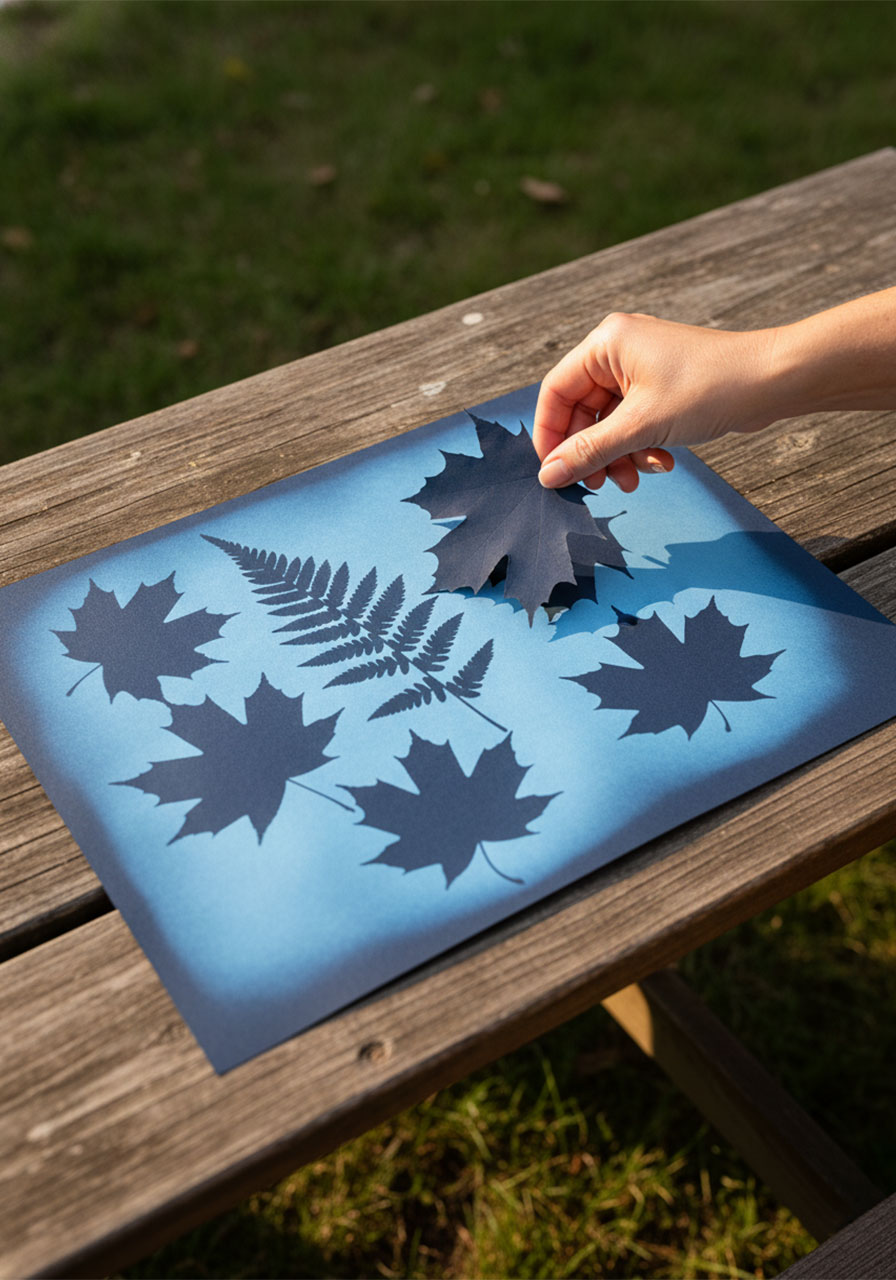
Nature stencils: Instead of painting, have your child arrange leaves, flowers, or cut-out shapes directly on the paper. The shapes will block the UV rays and leave behind gorgeous silhouettes after sun exposure.
Finger painting: Skip the brush and let littler ones use their fingers. Messy, joyful, and effective.
Message reveal: Write a secret word or draw a hidden picture with sunscreen, then let it “develop” in the sun. The message appears like it was always there, waiting to be discovered. Kids absolutely love this one.
Sunscreen vs. no sunscreen comparison: Use two identical pieces of paper. Paint one with sunscreen, leave the other unprotected. Place them both outside. After a couple of hours, compare the two. It’s the most visual, visceral demonstration of what sunscreen does – and no kid forgets it.
Talking Points to Use With Your Kids While You Wait
While the painting is out in the sun, use that time for a little gentle conversation. Not a lecture – just curiosity-led questions that plant seeds.
“What do you think is happening to the paper right now?”
“Why do you think the sunscreen parts might look different?”
“Have you ever noticed how Mom’s old towels got kind of faded from being left outside? The sun did that!”
“What do you think the sun does to skin if we don’t protect it?”
Let them wonder. Let them guess. Science isn’t just about answers – it’s about learning to ask good questions. And you’re doing that with them, right here, on an ordinary summer afternoon.
That matters more than you know.

Why This Moment Is Worth More Than You Think
Here’s a little truth for you, mama – because this space is about body, mind, and spirit, and I don’t want to skip over the spirit part.
The moments we create with our kids in the ordinary, unhurried hours of summer? Those are the ones they carry with them. Not the big vacations or the expensive outings. The afternoon when Mom grabbed a bottle of sunscreen and a paintbrush and said, “Let’s try something.”
Teaching your child to protect their body is an act of love. It’s also a quiet form of stewardship – caring for the people God put in your care, with the resources He put in your hands. A $5 bottle of sunscreen. A piece of black paper. An afternoon of sunshine.
It’s more than enough to make something beautiful.
And that’s what this activity really is – a reminder that the best moments don’t require much. They just require showing up, paying attention, and being willing to let the ordinary things become extraordinary.
Frequently Asked Questions
What kind of sunscreen works best for this activity?
Any sunscreen will work! Higher SPF tends to give more dramatic results since it blocks more UV rays. Both chemical and mineral (physical) sunscreens work. You can even use this as an opportunity to experiment with different types – see which one protects the paper best!
How long does it need to stay in the sun?
At minimum, 2 hours in direct sunlight. 3–4 hours will give you a more dramatic contrast. Overcast days may require longer exposure or may not work as well.
Does the paper need to be black specifically?
Black gives the most dramatic results, but any dark-colored construction paper will work – dark navy, purple, or dark green are all great options. Lighter papers simply won’t show the fading contrast as clearly.
Can I use this with really young kids?
Yes! Toddlers and preschoolers can absolutely participate – especially with finger painting. Just supervise to make sure they don’t eat the sunscreen. The science discussion can be kept very simple: “The sunscreen kept the paper safe from the sun, just like it keeps your skin safe!”
What do I do with the finished artwork?
Display it! It’s genuinely beautiful. Frame it, hang it on the fridge, or photograph it before it fades further. You can also use it as a card for Dad or Grandma – “I made this with the sun!”
You’ve Got Everything You Need
One bottle of sunscreen. One sheet of dark paper. A sunny afternoon and a willing kid.
That’s the whole recipe for one of the coolest summer science activities you’ll ever try together.
The art that comes out of it is stunning. The science lesson is unforgettable. And the sunscreen battle? Consider it officially over.
Save this one, share it with a friend who needs a summer activity idea, and go soak up every golden moment of this season – safely protected, of course.
Happy painting! ☀️
More Summer Craft & Activity Ideas to Keep the Fun Rolling:
Sun Threading Activity for Kids (Easy Summer Fine Motor Fun!)
Yarn Pom Pom Turtle Craft (Printable Template!)
How to Make Easy Painted Fairy Houses for the Garden (Kids Will Absolutely Love This!)
Paper Plate Butterfly Craft: The Easiest, Most Colorful Kids Project You’ll Make This Season
