
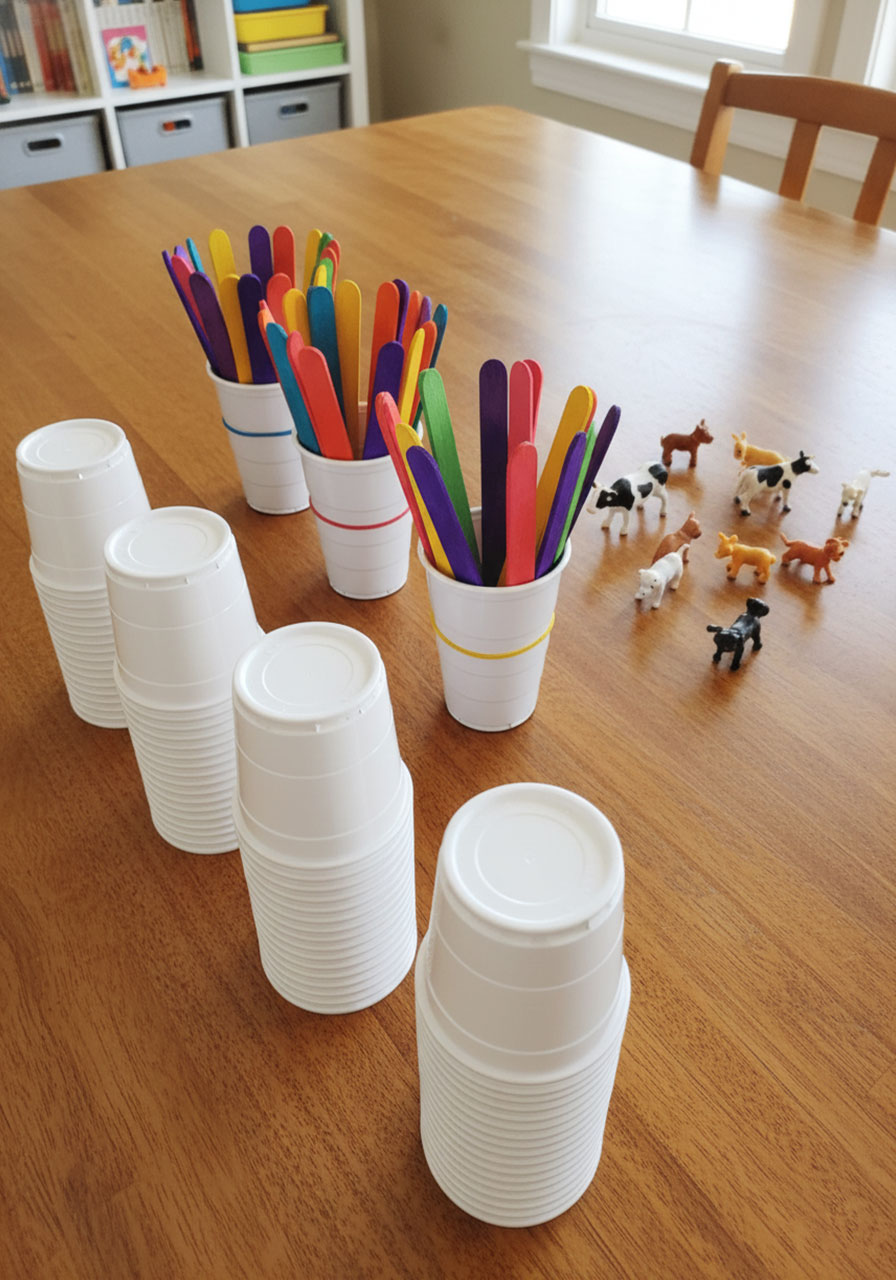
Looking for an indoor activity that’ll have kids completely absorbed and begging for “just five more minutes”? This cup and popsicle stick tower challenge is about to become your secret weapon for rainy days, indoor recess, and those “I’m bored!” afternoons.
We’re talking serious engineering fun here – the kind where kids don’t even realize they’re learning problem-solving, spatial reasoning, and teamwork because they’re too busy trying to build the tallest tower in the room. And the best part? You probably already have everything you need sitting in your pantry or craft drawer.
Why This Building Challenge is a Total Winner
Here’s what makes this activity so ridiculously good: it’s simple to set up, endlessly engaging, and works for pretty much any age. Kindergarteners will love the basic stacking challenge, while older kids will strategize like tiny architects trying to engineer the most stable structure possible.
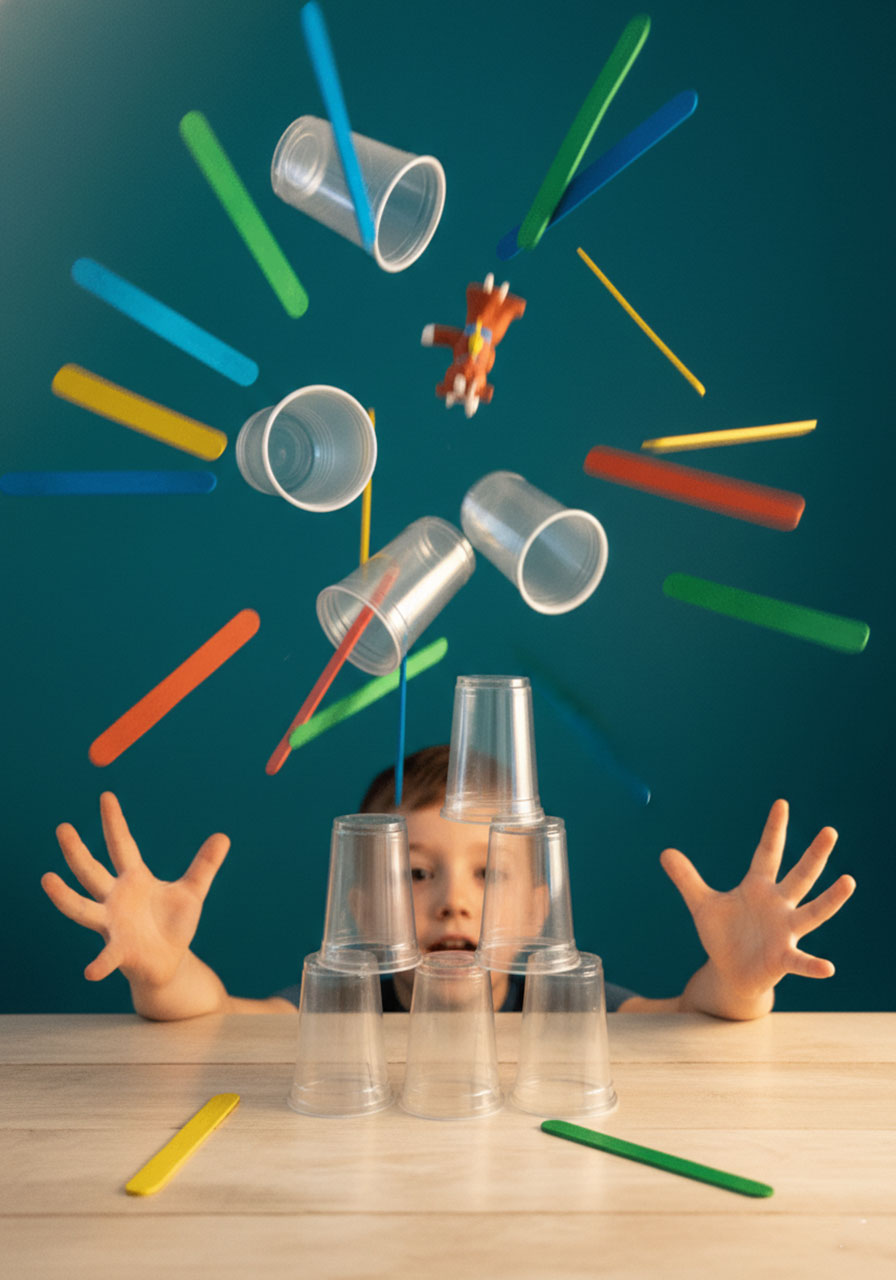
Plus, you’ll get to witness that magical moment when a tower tumbles and instead of frustration, you hear “Okay, let’s try it a different way!” That’s the kind of resilience-building we’re after.
Best for: Kids ages 4-12, classroom activities, rainy day fun, STEM learning, indoor recess
Time to Play: 20-45 minutes (though kids will want to keep going!)
Players: Works solo or in teams of 2-4
What You’ll Need
The beauty of this challenge? The supply list is refreshingly short:
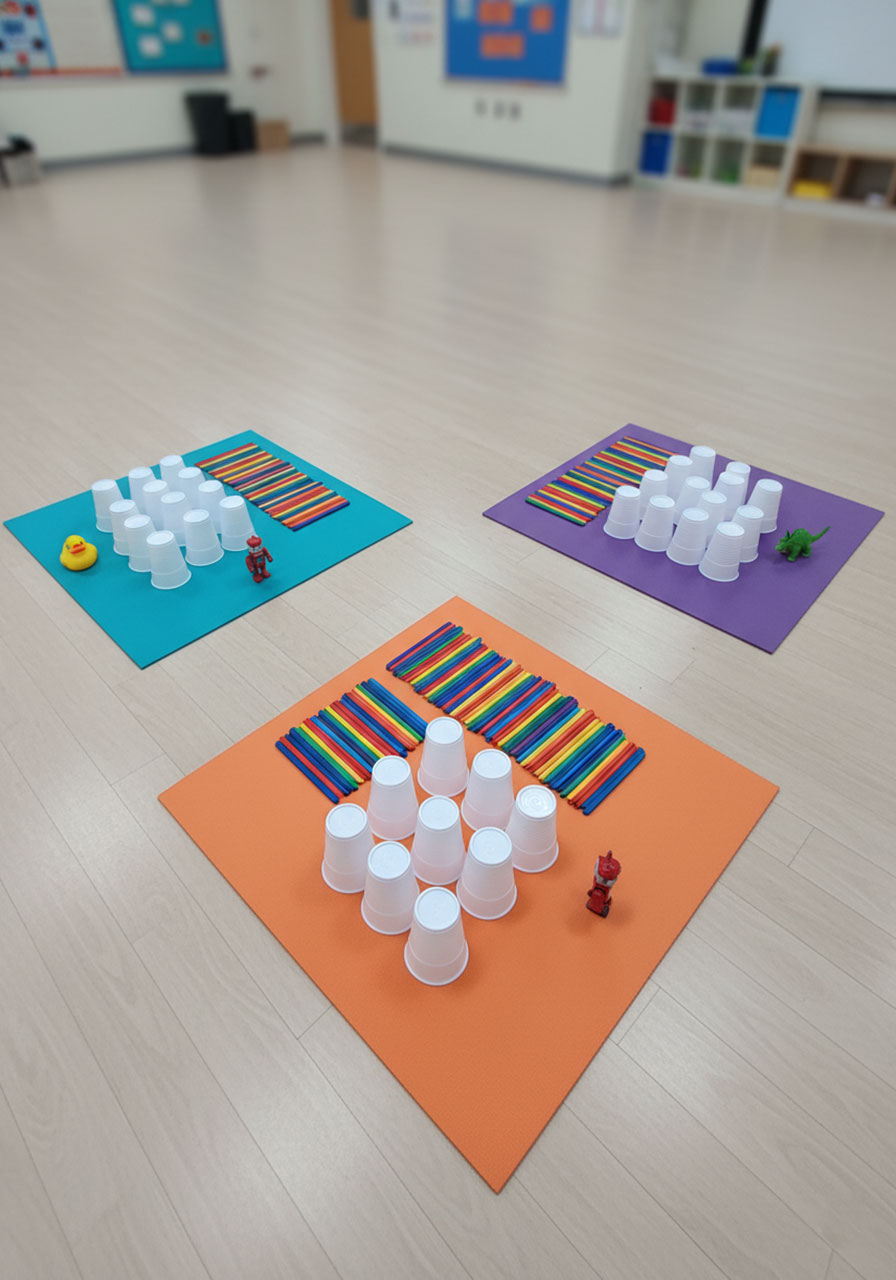
Plastic cups (15-20 per child or team) – Solo cups, clear party cups, or even foam cups work great
Large popsicle sticks (about 20 per child or team) – Jumbo craft sticks or tongue depressors are perfect
Small toy figure (optional but highly recommended) – A plastic animal, LEGO person, or small figurine gives kids a “client” to build for
Ruler or measuring tape (for measuring the final towers)
Don’t have popsicle sticks? No problem! Cut cardboard into long rectangles (about 6 inches by 1 inch) and you’re good to go. It works surprisingly well!
How to Set Up the Challenge
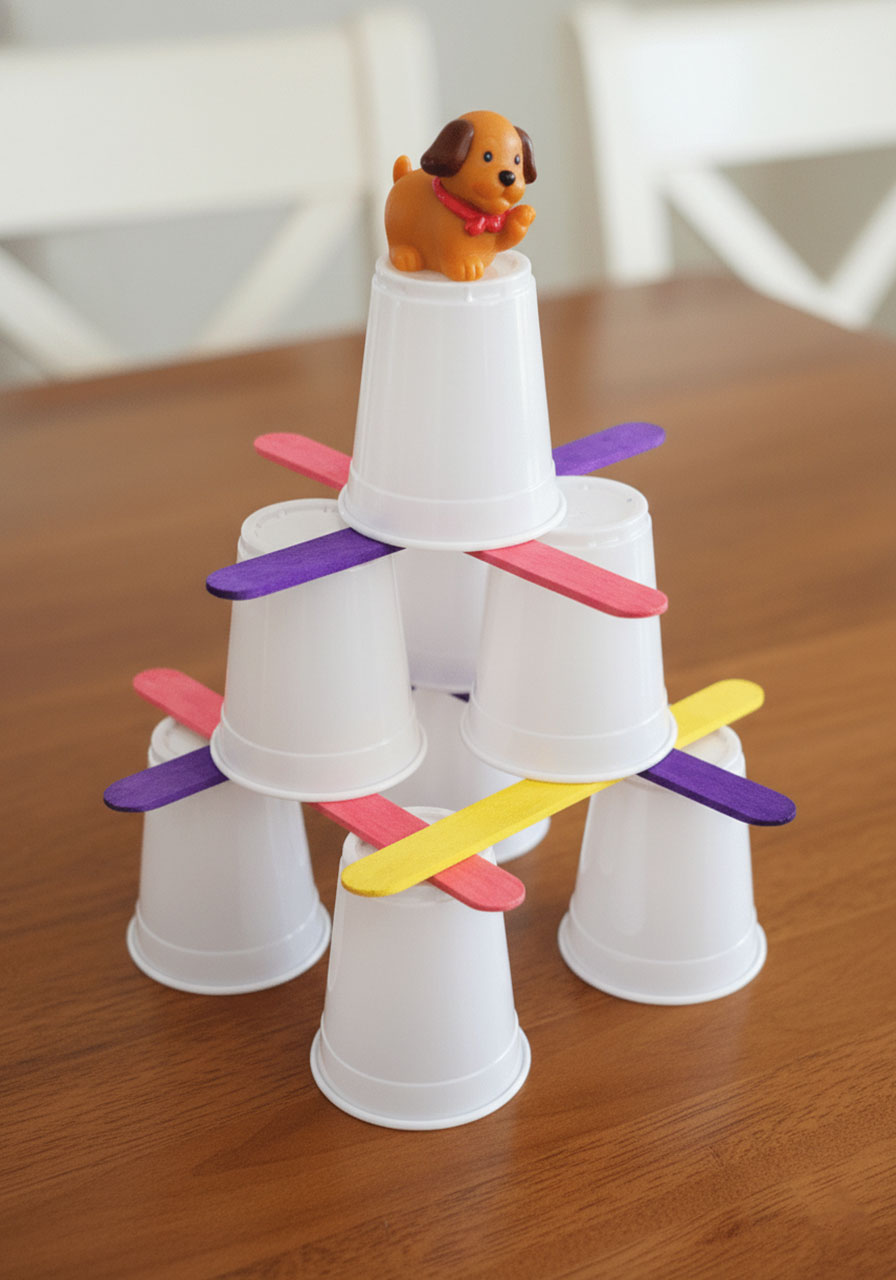
Step 1: Gather your materials and set up a building zone on the floor or a large table. Make sure there’s enough space for structures to spread out – some kids build tall, others build wide!
Step 2: If you’re working with multiple kids, divide them into teams of 2-4. Partnerships work wonderfully because they encourage communication and collaborative problem-solving.
Step 3: Give each child or team their stack of cups, popsicle sticks, and a toy figure (if using).
Step 4: Announce the mission: Build the tallest (or longest, or most creative) tower you can, and make sure it’s strong enough to hold your toy figure on top without collapsing.
Step 5: Set a time limit if you want (20-30 minutes works well), or let them build until they’re satisfied with their creation.
Step 6: Step back and let the magic happen! Resist the urge to jump in with solutions – kids need time to experiment, fail, and figure things out.
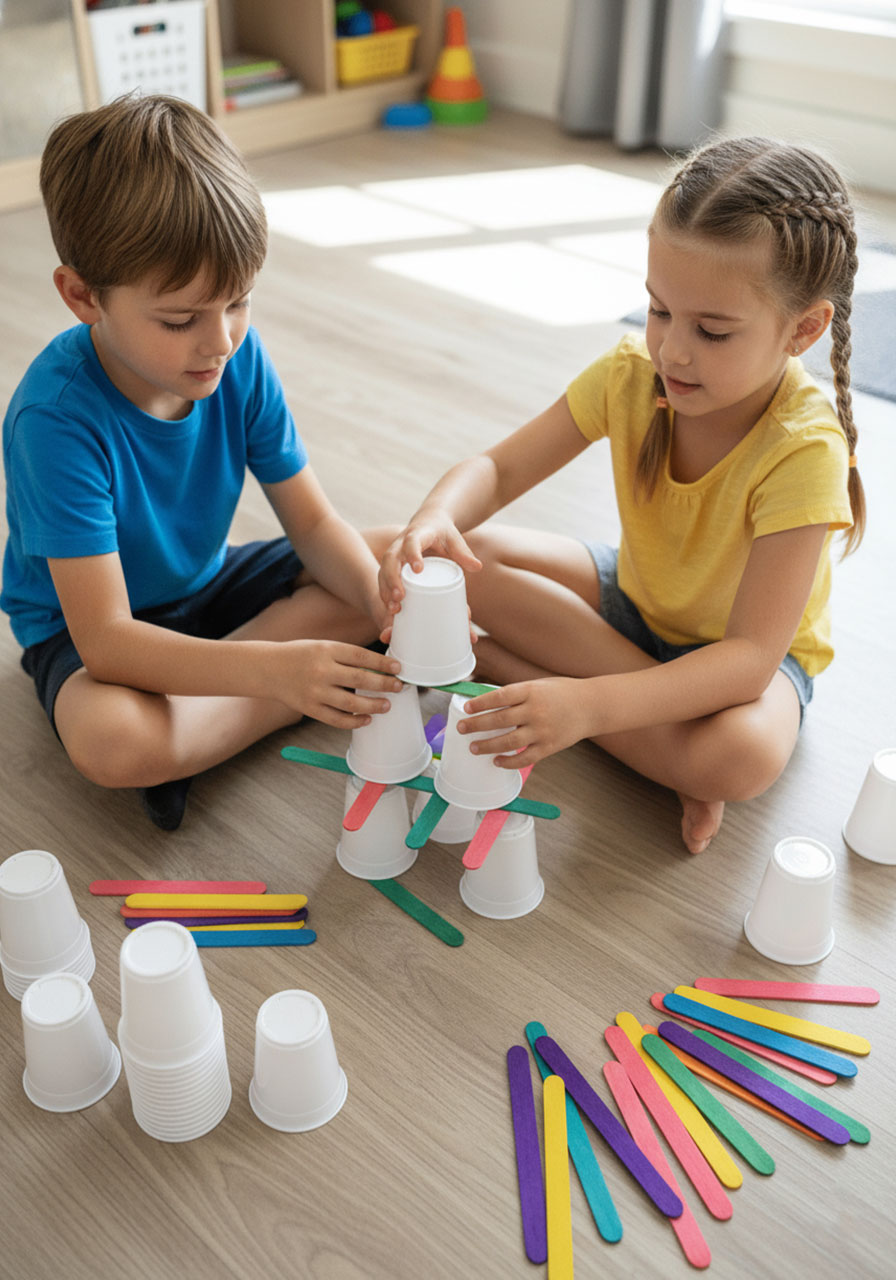
The Building Process: What to Expect
Here’s what’s going to happen in the first 10-15 minutes: kids will stack cups. Just cups. Cup after cup after cup. And that’s exactly what should happen!
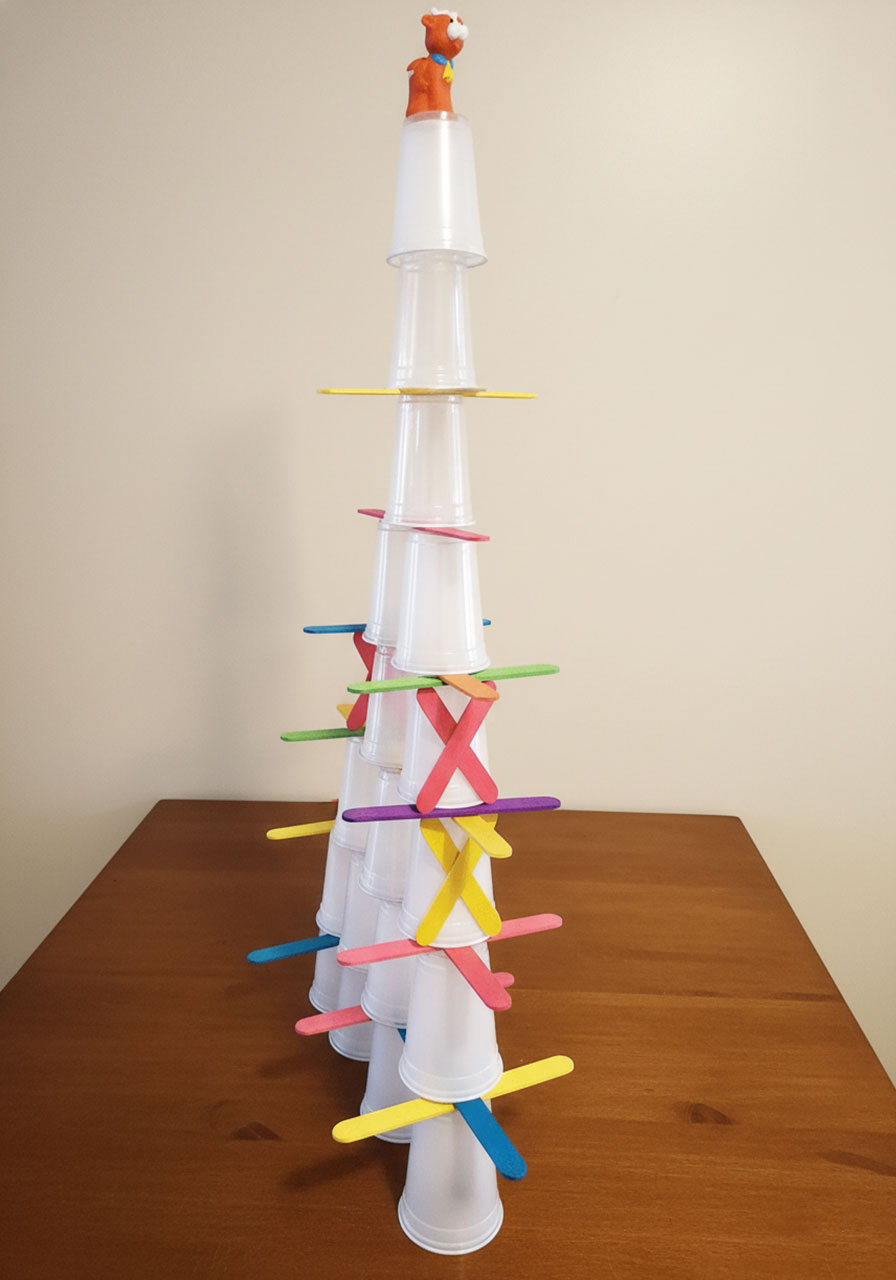
This exploration phase is crucial. They’re testing gravity, balance, and stability. They’re discovering that cups can nest inside each other or stack rim-to-rim. They’re learning what works and what sends everything crashing down.
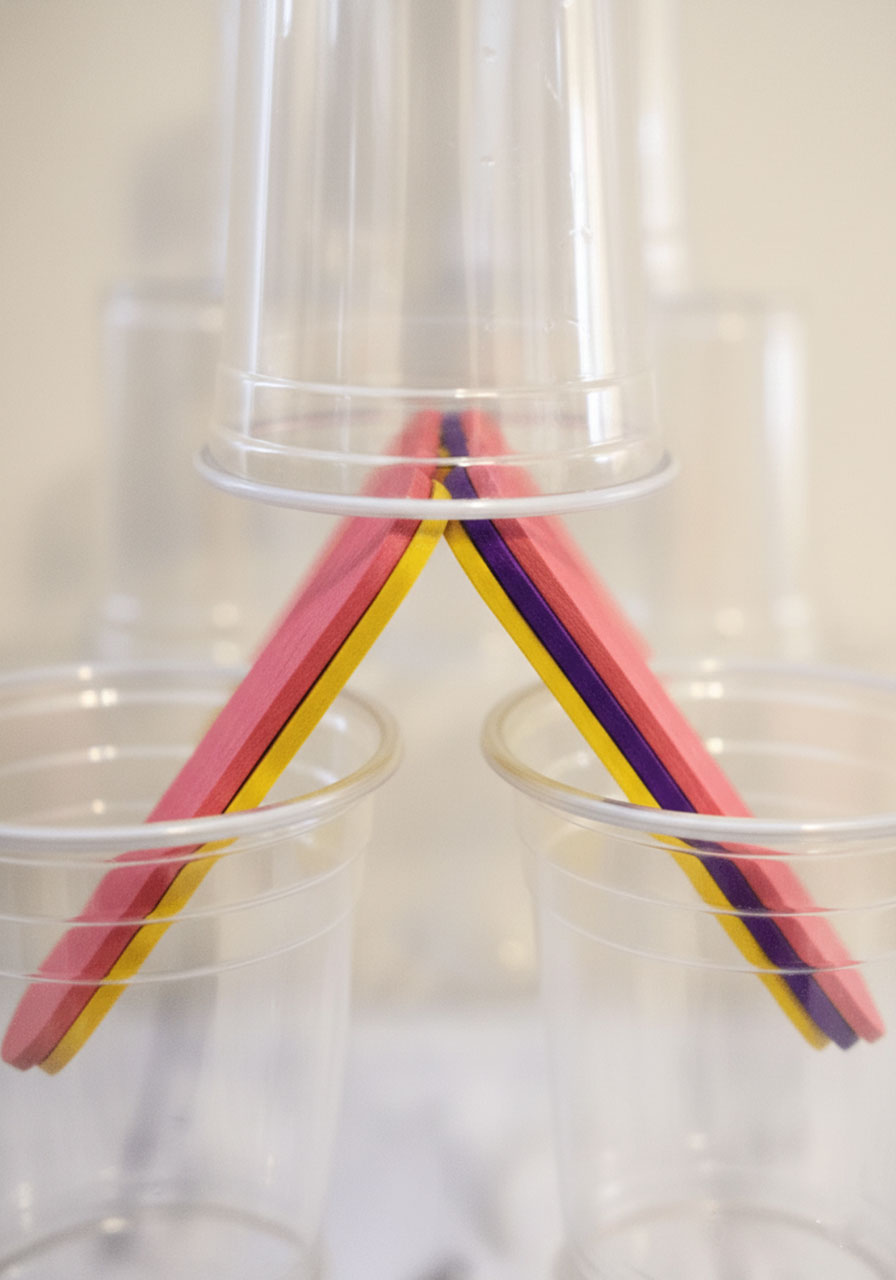
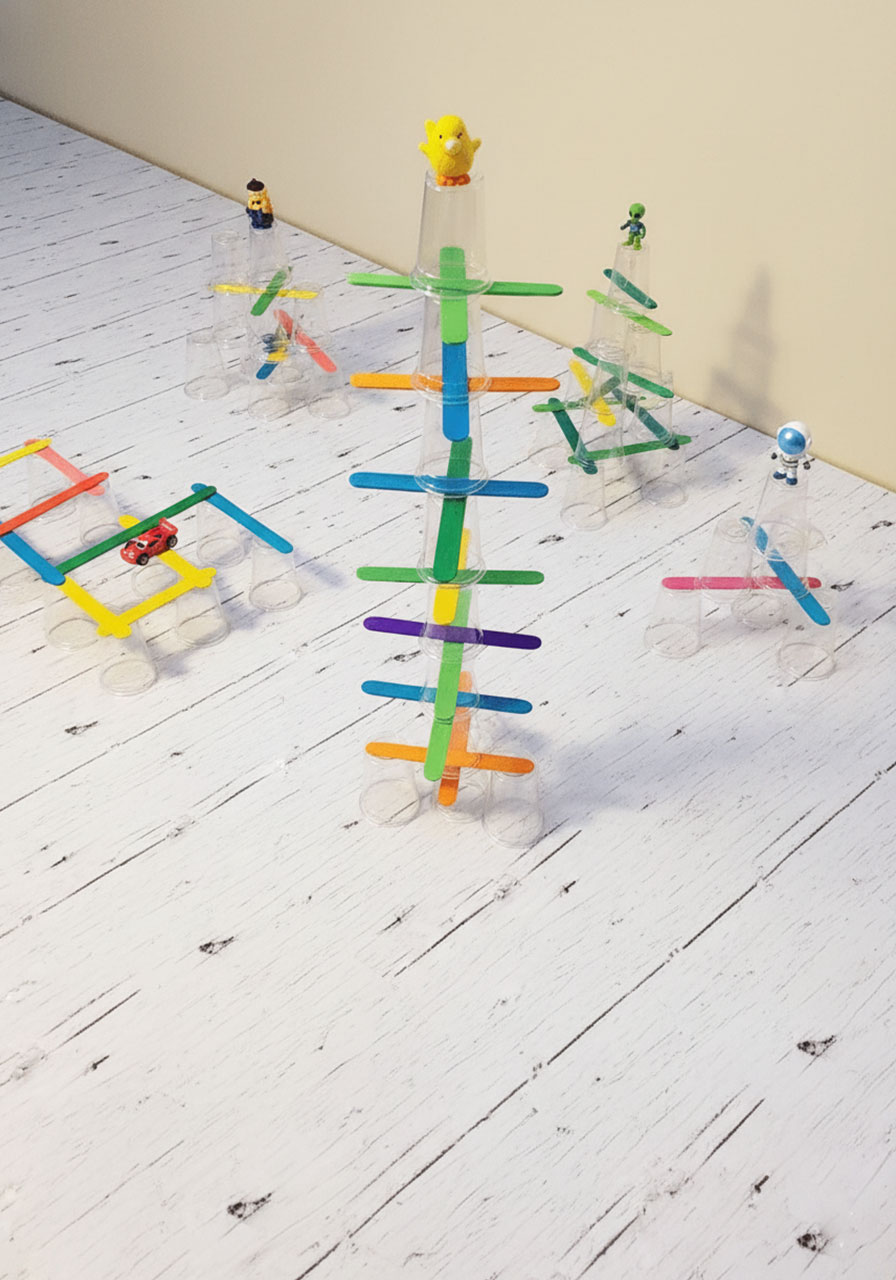
Once they’ve got a feel for the materials, you’ll see the real engineering begin. They’ll start using popsicle sticks as bridges between levels, creating stabilizers, or designing platforms. Every group tends to discover this solution independently – it’s absolutely fascinating to watch!
Pro Tips for Maximum Success
For younger kids (ages 4-6): Start with a simpler goal like “build a tower 5 cups high” or “create a house for your toy.” The smaller challenge helps build confidence before tackling taller structures.
For older kids (ages 7-12): Add constraints to make it trickier! Try “you can only use 10 cups” or “your tower must include a doorway” or “build the tallest tower using the fewest materials possible.”
For the competitive crowd: Turn it into a friendly competition. Who can build the tallest tower? The widest? The most creative? Measure the final structures and crown winners in different categories so everyone gets recognition.
The golden rule: When (not if!) a tower collapses, celebrate the learning opportunity! Say something like “Okay, now you know that design doesn’t work – what will you try differently?” This mindset shift is pure gold.
Creative Variations to Try
Once kids have mastered the basic tower challenge, shake things up with these awesome twists:
The Measurement Challenge: Give kids a ruler and challenge them to build a tower that’s exactly 12 inches tall (or any specific measurement). This sneaks in some math practice!
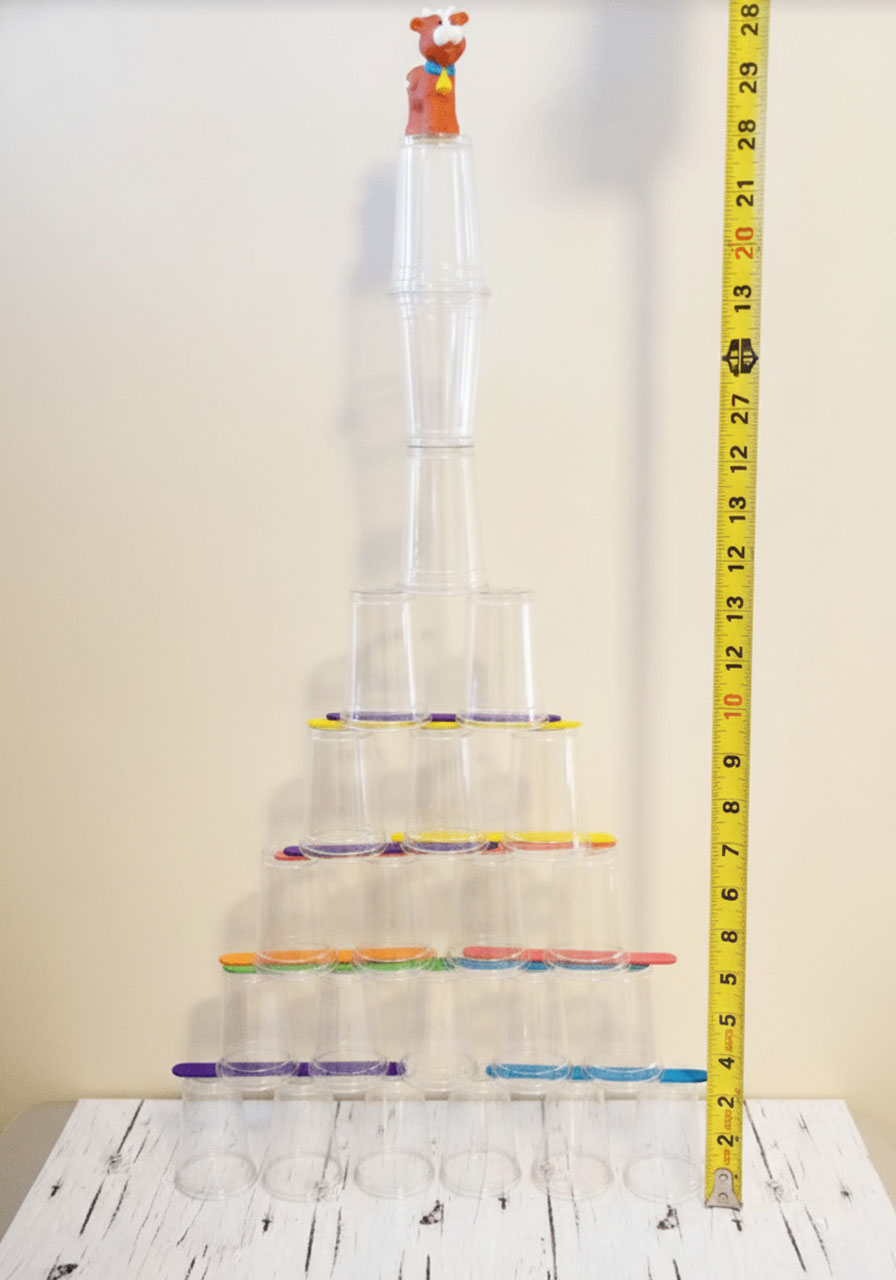
The Limited Supply Challenge: Instead of giving them all the materials at once, say “You can only use 8 cups and 10 popsicle sticks – build the tallest tower possible.” Constraints spark creativity!
The Doorway Challenge: The tower must include a doorway or archway that’s big enough for their toy figure to walk through. This adds a whole new level of complexity!
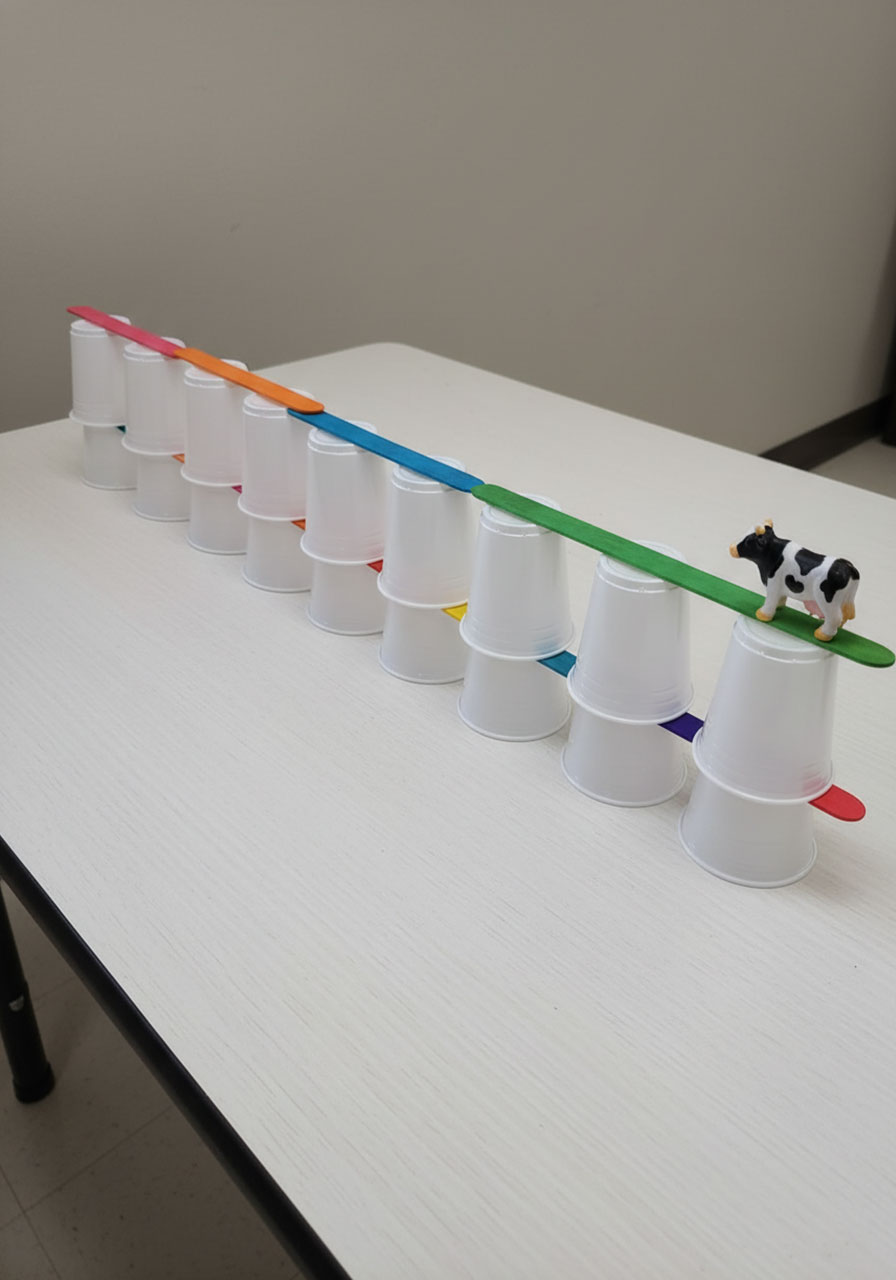
The Horizontal Build: Challenge kids to build OUT instead of UP. Can they create a bridge or platform that’s longer than they are tall?
The Team Relay: For larger groups, turn it into a relay where each team member can only add 3 pieces before tagging the next person. Communication becomes critical!
What Makes This Activity So Powerful
Beyond keeping kids happily occupied (which, let’s be honest, is reason enough), this building challenge delivers some serious developmental benefits:
Problem-solving skills: When a tower falls for the third time, kids learn to analyze what went wrong and adjust their strategy.
Fine motor development: Balancing cups and placing sticks precisely takes coordination and control – great for younger kids still developing these skills.
Spatial reasoning: Figuring out how pieces fit together and visualizing a 3D structure exercises important cognitive skills.
Resilience and persistence: The most valuable lesson isn’t about building towers – it’s about trying again after failure. When you hear a kid say “That’s okay, we can rebuild it better,” you know they’re learning something way more important than engineering.
Teamwork and communication: Partners have to discuss strategies, compromise on designs, and work together toward a common goal.
Tips for Teachers and Parents
For classroom use: This makes an outstanding STEM center activity or indoor recess option. Set up the materials in a designated area and let small groups rotate through. You can even create challenge cards with different building goals to keep it fresh.
For home: Keep a cup-and-stick building kit in a bin for easy access on rainy days or during school breaks. Once kids know the activity, they can pull it out independently whenever they need something to do.
Documentation: Take photos of completed towers! Kids love seeing their creations documented, and you can use the photos for comparison (“Your tower today was 3 cups taller than last time!”) or to inspire future builds.
Extension activities: After building, have kids draw their tower design or write about their building process. What worked? What didn’t? What would they try next time?
The Bottom Line
With just cups and popsicle sticks, you’ve got an activity that’ll keep kids engaged, challenged, and learning – all while having a blast. The setup takes about two minutes, the cleanup is easy (just stack the cups and collect the sticks), and the entertainment value is off the charts.
Whether you’re a teacher looking for a hands-on STEM activity, a parent desperate for a screen-free rainy day solution, or just someone who wants to see kids get excited about building and creating, this tower challenge delivers.
So grab those cups, raid your craft supplies for popsicle sticks, and get ready to hear “Can we do this again tomorrow?”
Trust us – you’ll be amazed at what kids can create when you give them simple materials and the freedom to experiment.
More Kid’s Party Ideas to Keep the Fun Rolling:
Build a LEGO Slingshot Car: The Epic Racing Activity Your Kids Will Beg to Do Again
Muffin Tin Coin Counting Activity: The Sneakily Brilliant Math Game Kids Actually Want to Play
Matching Pairs: The Toddler Activity That’s Equal Parts Learning and Fun
The Paper Plate Phone Game: A Genius Hands-On Way to Teach Kids Their Phone Number
Catapult Bowling STEM Game: The Ultimate DIY Challenge That Turns Physics Into Pure Fun
The Ultimate Duck Boat Challenge: A STEAM Activity That’ll Make a Splash With Kids (PreK-12)
How to Make a Bug Hotel Craft: The Ultimate Nature Activity Your Kids Will Obsess Over
