
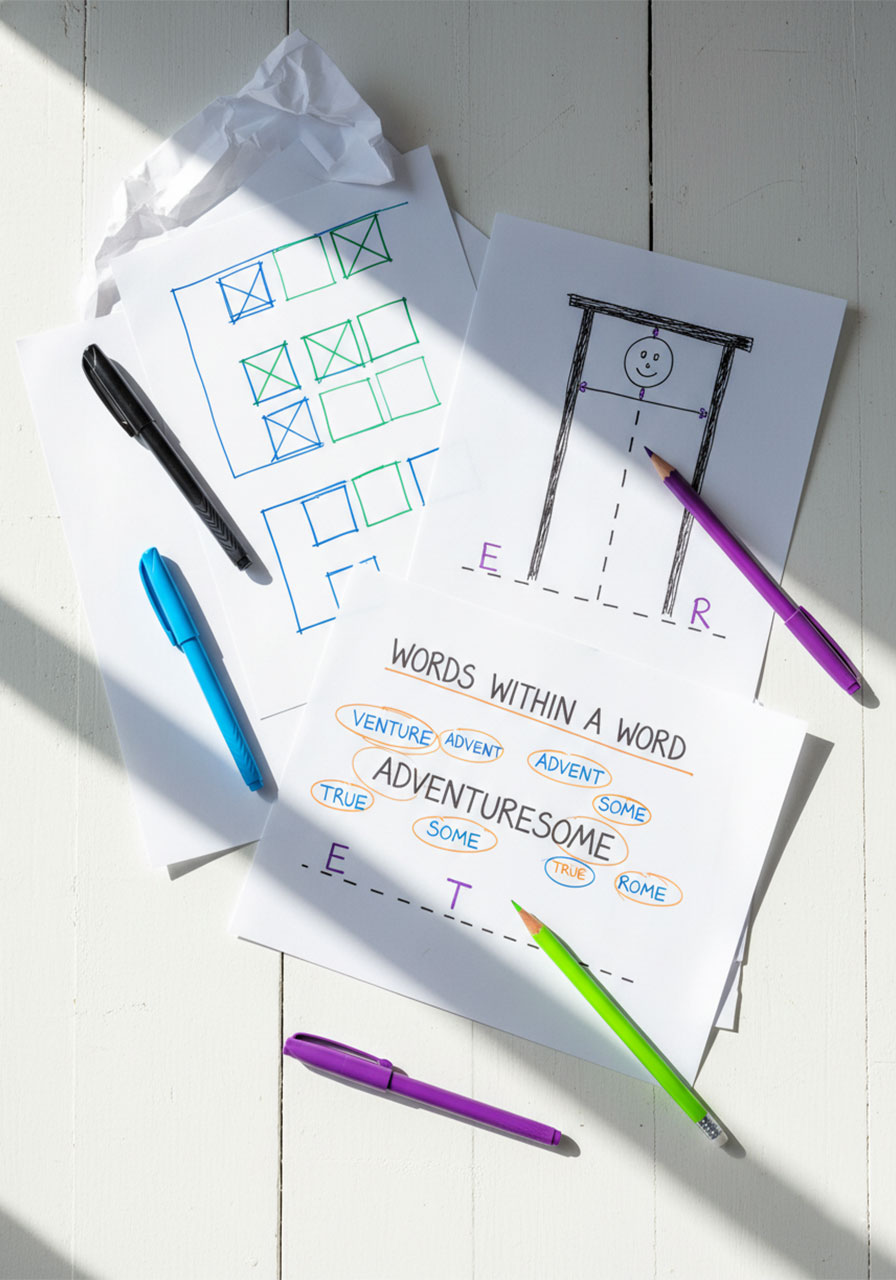
Stuck in a waiting room? Rainy afternoon with a restless group of kids? Looking for something to keep the class engaged without pulling out a single device? These pen and paper games are your secret weapon.
All you need is a pen or pencil and a piece of paper – that’s it. No apps, no batteries, no setup drama. Whether you’re a parent searching for a quick activity at the kitchen table or a teacher looking for a no-prep brain break, this list has you covered for every situation.
We’ve organized everything by group size so you can jump straight to what works for your crew right now.
Single-Player Pen and Paper Games
These are perfect for keeping one child quietly occupied – and yes, they’re actually fun, not just busy work. Several of them can also be played side by side or turned into a friendly competition with a second player.
1. Blind Drawing
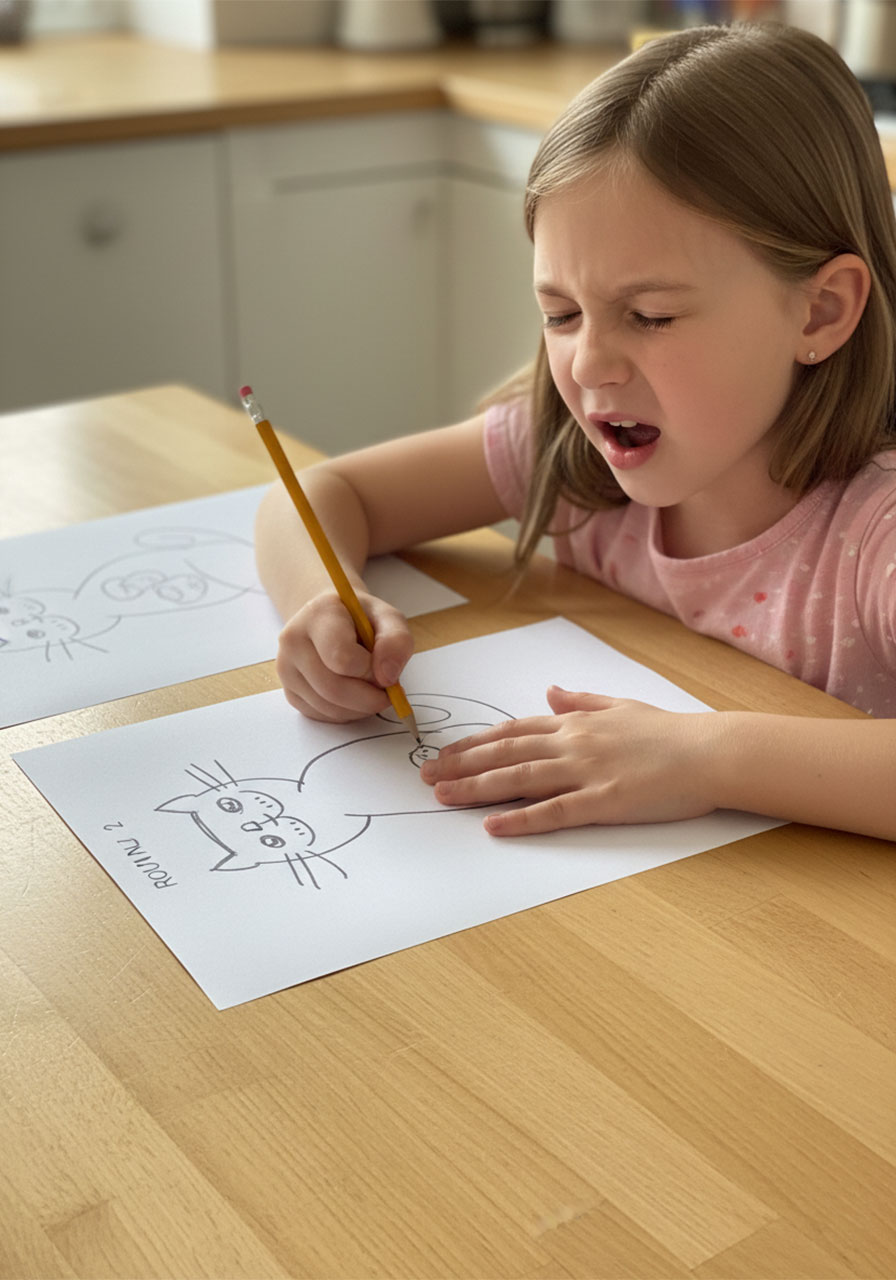
This one is a guaranteed giggle-fest – especially when the final drawing looks absolutely nothing like the original object.
Best for: All ages, solo or side-by-side
Time to Play: 5–10 minutes
Players: 1+
What You’ll Need:
Pencil and paper for each player
How to Play:
1. Look around the room and pick one object to draw – a chair, a shoe, a coffee mug.
2. Put your pencil on the paper, close your eyes completely, and draw the object from memory without lifting your pencil off the page.
3. Open your eyes and see what you’ve created!
4. If playing with others, everyone draws the same object, then compare results at the end.
Pro Tip: Challenge older kids and adults to draw a face or a whole scene with their eyes closed. The more detailed the subject, the funnier (and more chaotic) the results!
2. Word Flip
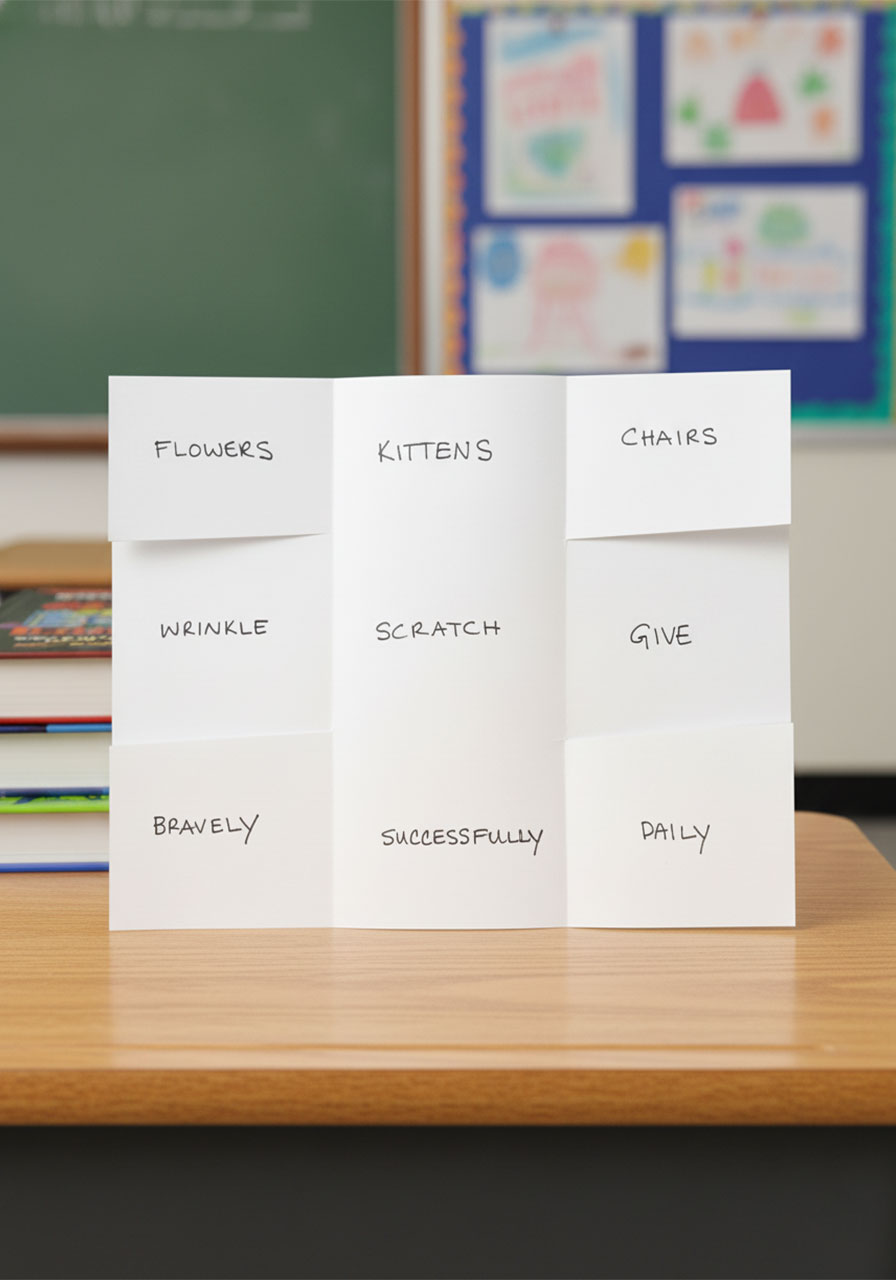
Part grammar practice, part hilarious nonsense generator – this is one of those games that gets funnier the more rounds you play. Prepare for some truly unhinged sentences.
Best for: Kids learning grammar, classroom warm-up, families
Time to Play: 10–15 minutes
Players: 1–4
What You’ll Need:
A piece of paper per player
A pen or pencil
How to Play:
1. Fold a piece of paper into three equal vertical columns.
2. In the first column, write a list of nouns (things: flowers, kittens, chairs).
3. In the middle column, write a list of verbs (actions: scratch, give).
4. In the third column, write adverbs or more nouns (bravely, successfully, daily).
5. Now mix and match a word from each column to build random sentences. The results are wonderfully weird – “Kittens scratch chairs bravely” anyone?
6. Pass your paper to another player and let them build sentences from your word lists for extra laughs.
Pro Tip: In the classroom, use themed word lists (animals + action verbs + adverbs) to make it a sneaky grammar lesson. Kids won’t even realize they’re learning!
Two-Player Pen and Paper Games
Got two players and a couple of pens? These classic games are easy to explain in under a minute and endlessly replayable. Grab two different-colored pens for the ones that need them!
3. Dots and Boxes
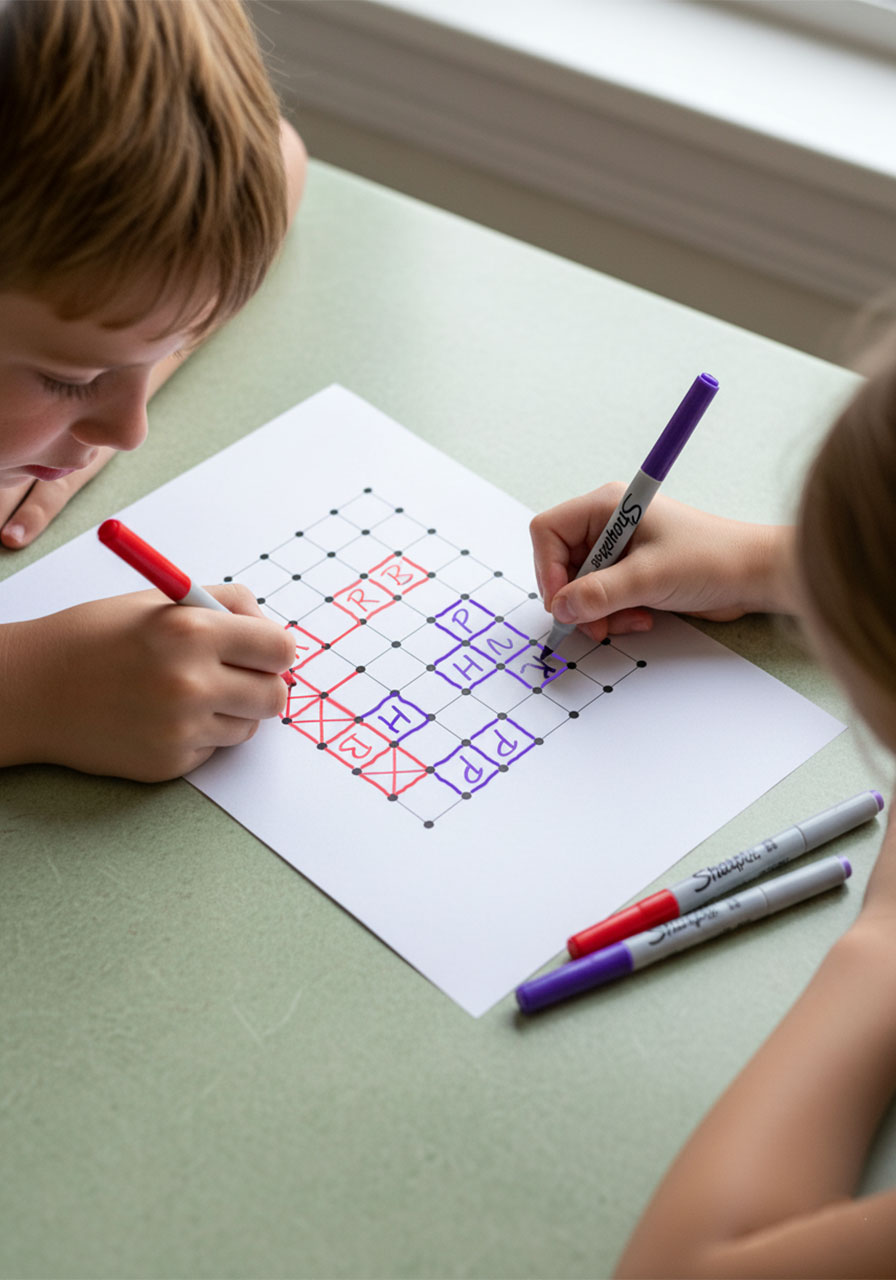
This timeless strategy game looks deceptively simple – until someone starts blocking all your boxes and stealing the win. It’s sneaky, competitive, and totally addictive.
Best for: Kids ages 6+, classrooms, road trips
Time to Play: 10–15 minutes
Players: 2
What You’ll Need:
Paper
Two pens or pencils in different colors
How to Play:
1. Draw a grid of dots on the paper – a 5×5 or 6×6 array is a great starting size.
2. Players take turns drawing one horizontal or vertical line connecting two adjacent dots.
3. When a player draws the fourth and final side of a box, they write their initial inside it and claim it as theirs – then they get to draw one more line as a bonus turn.
4. The game ends when all possible lines have been drawn.
5. Count up each player’s boxes. The player with the most boxes wins!
Pro Tip: The strategy kicks in when you realize that creating a chain of open boxes is like setting a trap – your opponent is forced to close the first one and hand you all the rest. Once kids catch on to this, the game gets seriously strategic!
4. Hangman
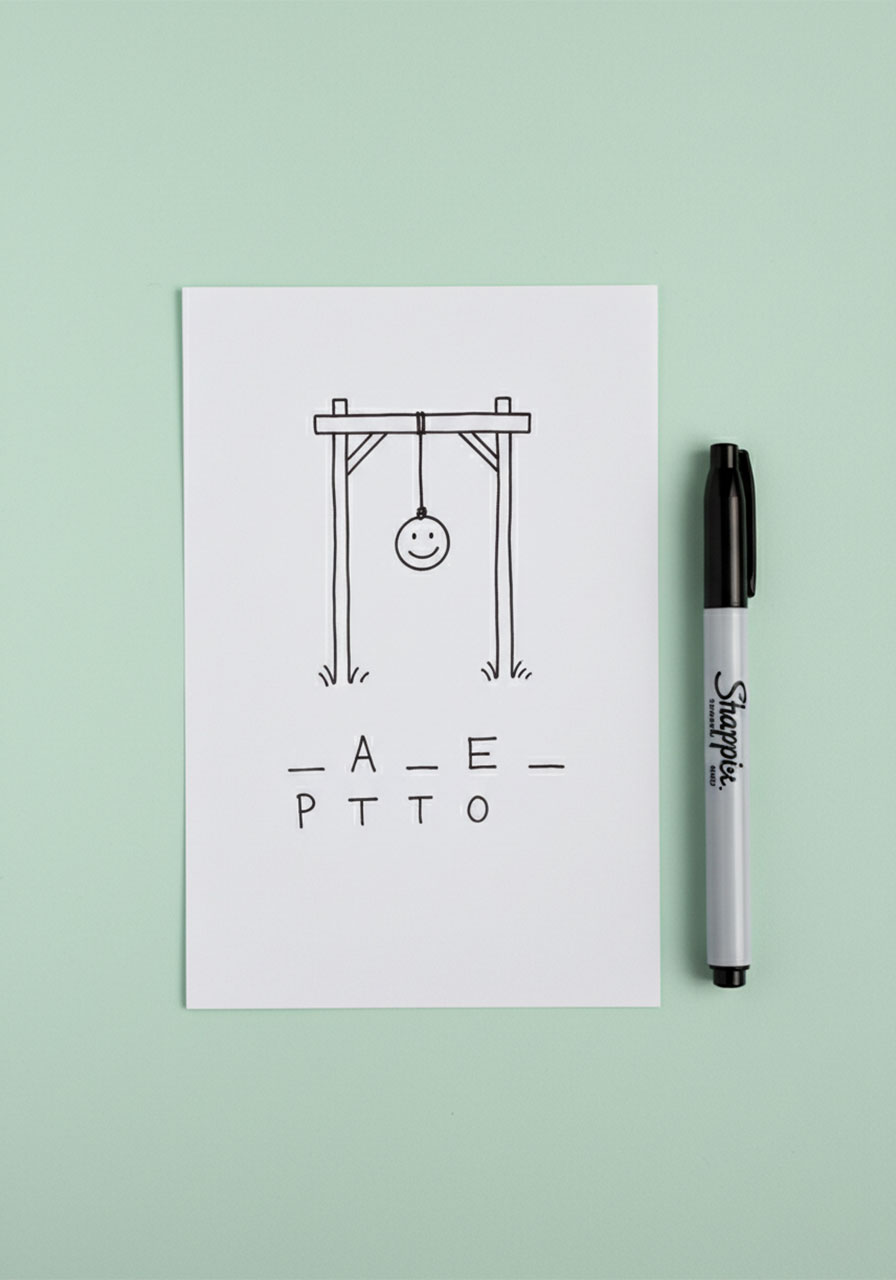
The all-time classic word-guessing game. It’s been entertaining kids (and adults) for generations, and for good reason – it’s the perfect mix of vocabulary challenge and suspense.
Best for: All ages, spelling practice, quick waiting-room game
Time to Play: 5–10 minutes per round
Players: 2
What You’ll Need:
Paper
Pen or pencil
How to Play:
1. Player 1 thinks of a word and draws one dash per letter on the paper. For example, a 5-letter word gets five dashes: _ _ _ _ _
2. Above the dashes, draw the gallows: a vertical line with a horizontal top and a small platform at the base.
3. Player 2 guesses one letter at a time.
4. If the letter is in the word, Player 1 fills it in on the correct dash(es).
5. If the letter is not in the word, Player 1 draws one body part of the hangman figure (head, torso, left arm, right arm, left leg, right leg – 6 parts total) and writes the incorrect letter below as a reference.
6. Player 2 wins by guessing the full word before all 6 body parts are drawn. Player 1 wins if the figure is completed first!
Pro Tip: For younger kids, use simple categories like animals or food and give them a hint – “It’s something you eat for breakfast.” For a classroom challenge, use vocabulary or spelling words from the current week’s lesson!
5. Apple Tree (Kid-Friendly Hangman Alternative)
Love Hangman but want something a little less gloomy for younger kids? Apple Tree is the perfect swap – same brilliant gameplay, completely cheerful theme.
Best for: Young children ages 4–7, classroom use
Time to Play: 5–10 minutes per round
Players: 2
What You’ll Need:
Paper
Pen or pencil
How to Play:
1. Player 1 thinks of a word and draws the corresponding dashes.
2. Draw a tree with 7 apples hanging on it above the dashes.
3. Player 2 guesses one letter at a time. Correct letters get filled in on the dashes.
4. For every incorrect guess, Player 1 fills in one apple (or draws an “X” inside it).
5. Player 2 wins by guessing the word before all 7 apples are filled. If all 7 apples are gone – the harvest is done and Player 1 wins!
Pro Tip: Let kids take turns being the “word chooser” to practice spelling. Drawing the tree at the start is half the fun for little ones!
6. Nim
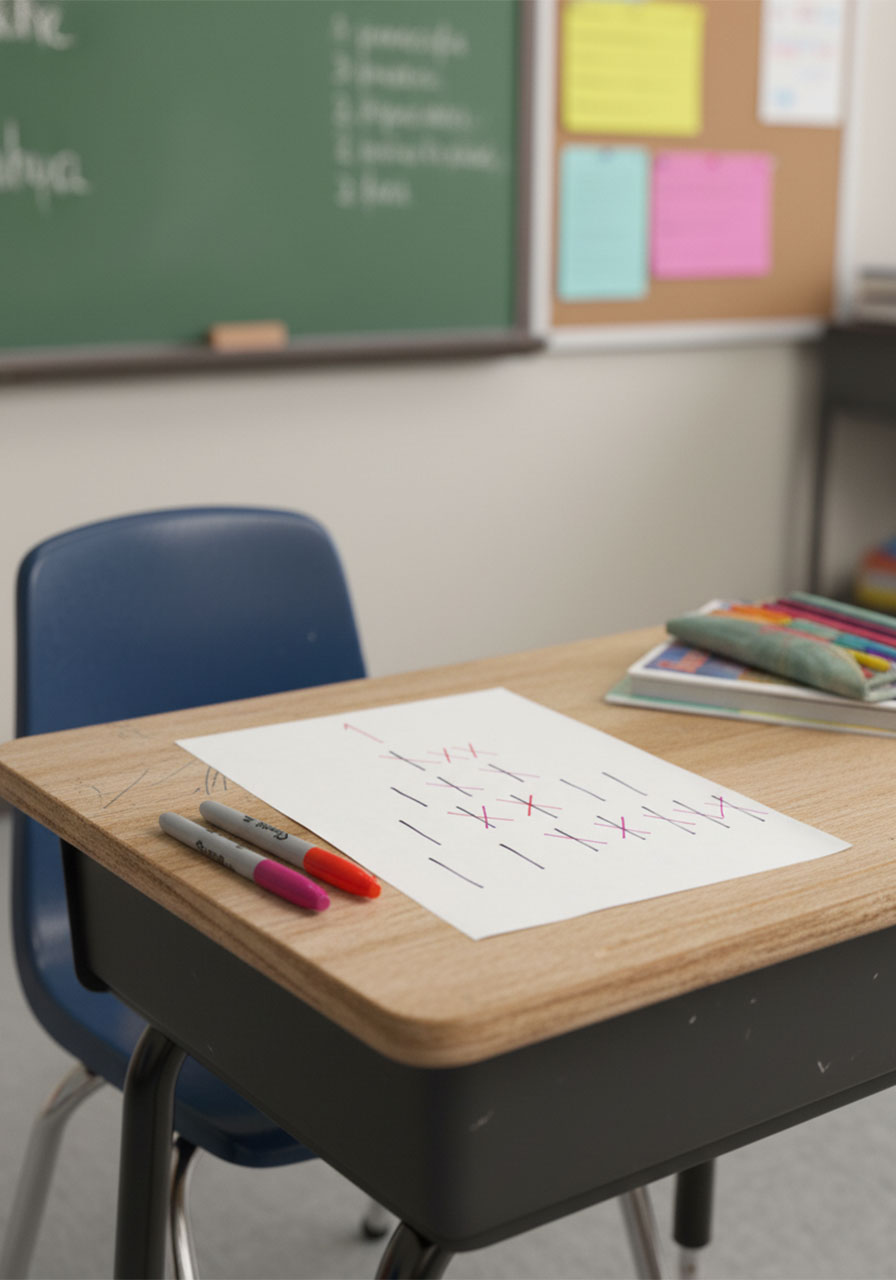
This ancient strategy game has been played for thousands of years – and once your kid figures out the winning strategy, they will beat every adult at the table. Consider yourself warned.
Best for: Ages 7+, critical thinking, math enrichment
Time to Play: 5–10 minutes
Players: 2
What You’ll Need:
Paper
Pen or pencil
How to Play:
1. Draw marks in the shape of a pyramid: 1 mark on the top row, 3 on the next, 5 on the next, and 7 on the bottom row (16 marks total).
2. Players take turns crossing out marks. On your turn, you can cross out as many marks as you want – but they must all come from the same row.
3. You must cross out at least one mark on every turn.
4. The player who is forced to cross out the very last mark loses!
Pro Tip: There is a mathematical winning strategy to this game. Older kids and adults who enjoy a puzzle will love trying to figure it out through repeated play. Hint: it has to do with binary numbers – but shhh, let them discover it themselves!
7. Bridges
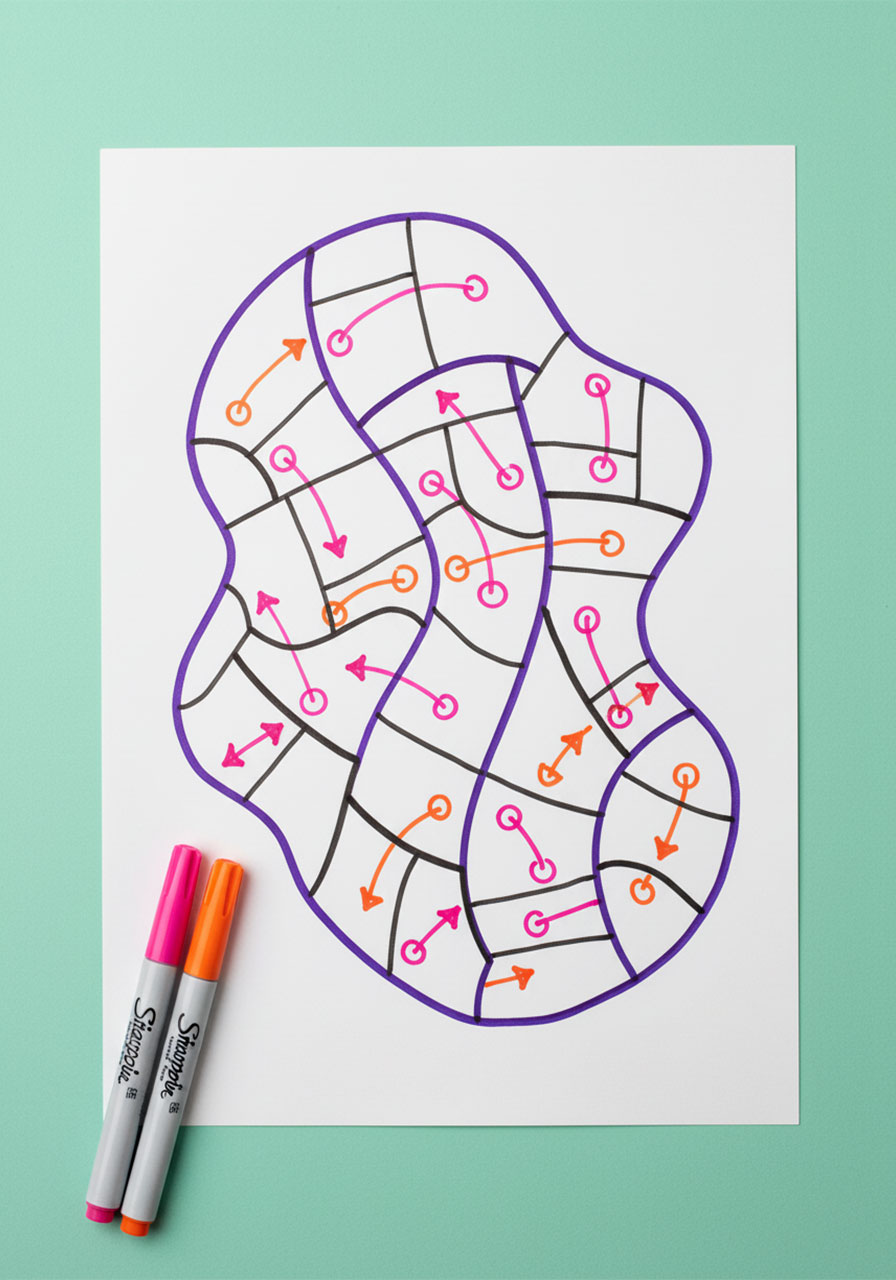
Part art, part strategy – this creative two-player game produces a gorgeous-looking result while getting your brain working overtime. No two games ever look the same!
Best for: Ages 8+, creative thinkers, families
Time to Play: 15–20 minutes
Players: 2 (can try with 3!)
What You’ll Need:
Paper
Two pens in different colors
How to Play:
1. One player draws a large abstract blob shape on the paper, then divides it into sections using irregular lines – aim for 30 to 50 sections. It should look like a stained-glass window.
2. Players take turns drawing “bridges.” A bridge starts in one section, passes through a second section, and ends in a third section.
3. Here’s the key rule: no section can be used more than once – not as a starting point, a crossing point, or an ending point.
4. Keep taking turns until no more valid bridges can be drawn.
5. The last player to successfully place a bridge wins!
Pro Tip: The more sections you divide the shape into, the longer the game. Start with around 30 sections for your first game and adjust from there based on how long you want to play.
8. Sim
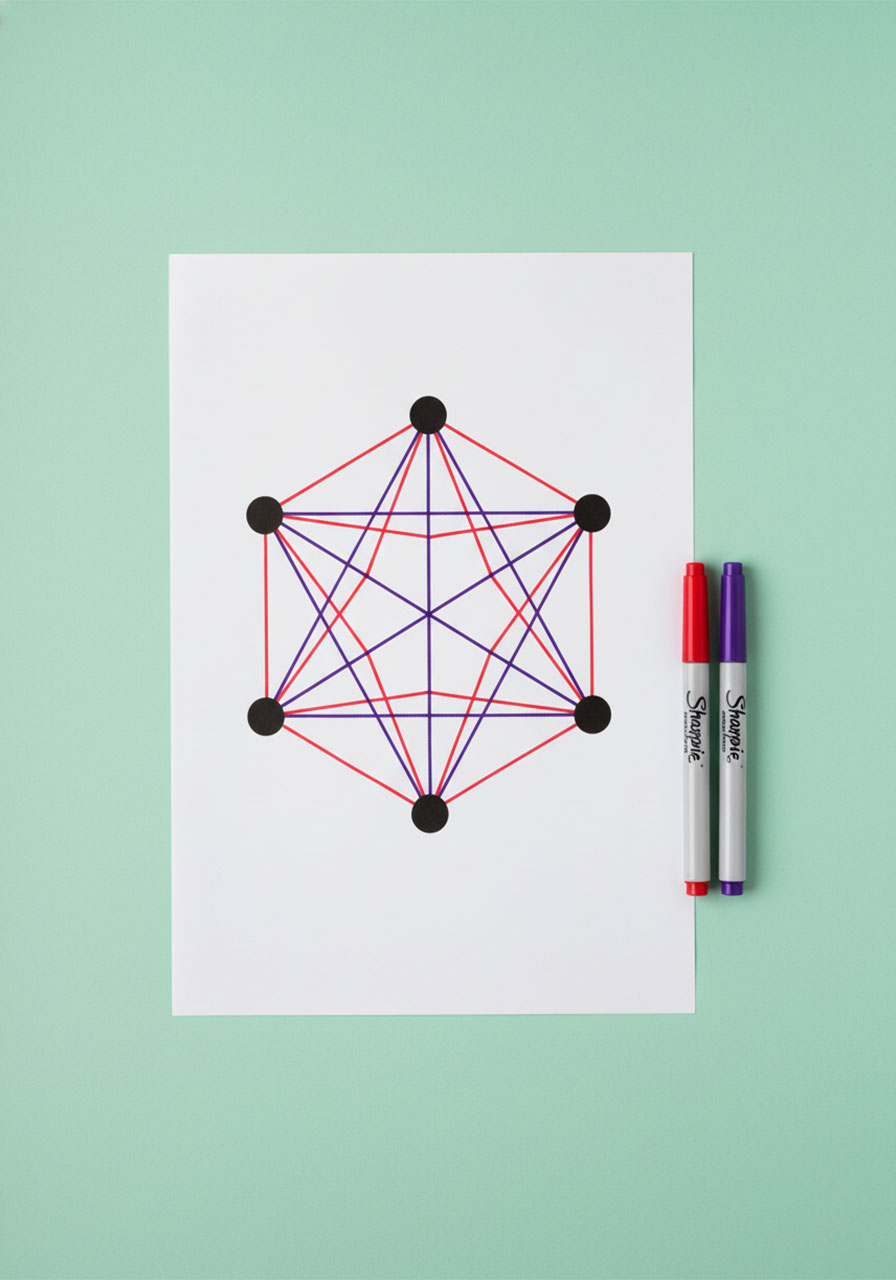
Six dots. Two colors. One loser. Sim is a deceptively deep strategy game that looks impossibly simple – until you realize avoiding a triangle of your own color is harder than it sounds.
Best for: Ages 10+, math enrichment, logic lovers
Time to Play: 10–15 minutes
Players: 2
What You’ll Need:
Paper
Two pens in different colors
How to Play:
1. Draw 6 dots arranged in a hexagon shape (like the points of a star).
2. Players take turns drawing a straight line between any two dots using their own color. Every turn, you must connect two dots that haven’t been connected yet.
3. The goal is to avoid creating a triangle where all three sides are your color – using any three of the hexagon’s 6 dots as the corners.
4. The first player who is forced to complete a triangle in their own color loses!
Pro Tip: Here’s a mind-bending math fact to share with curious kids: it’s mathematically impossible for this game to end in a draw. One player will always be forced to create a triangle. That makes every game go all the way to the finish!
9. Lasso
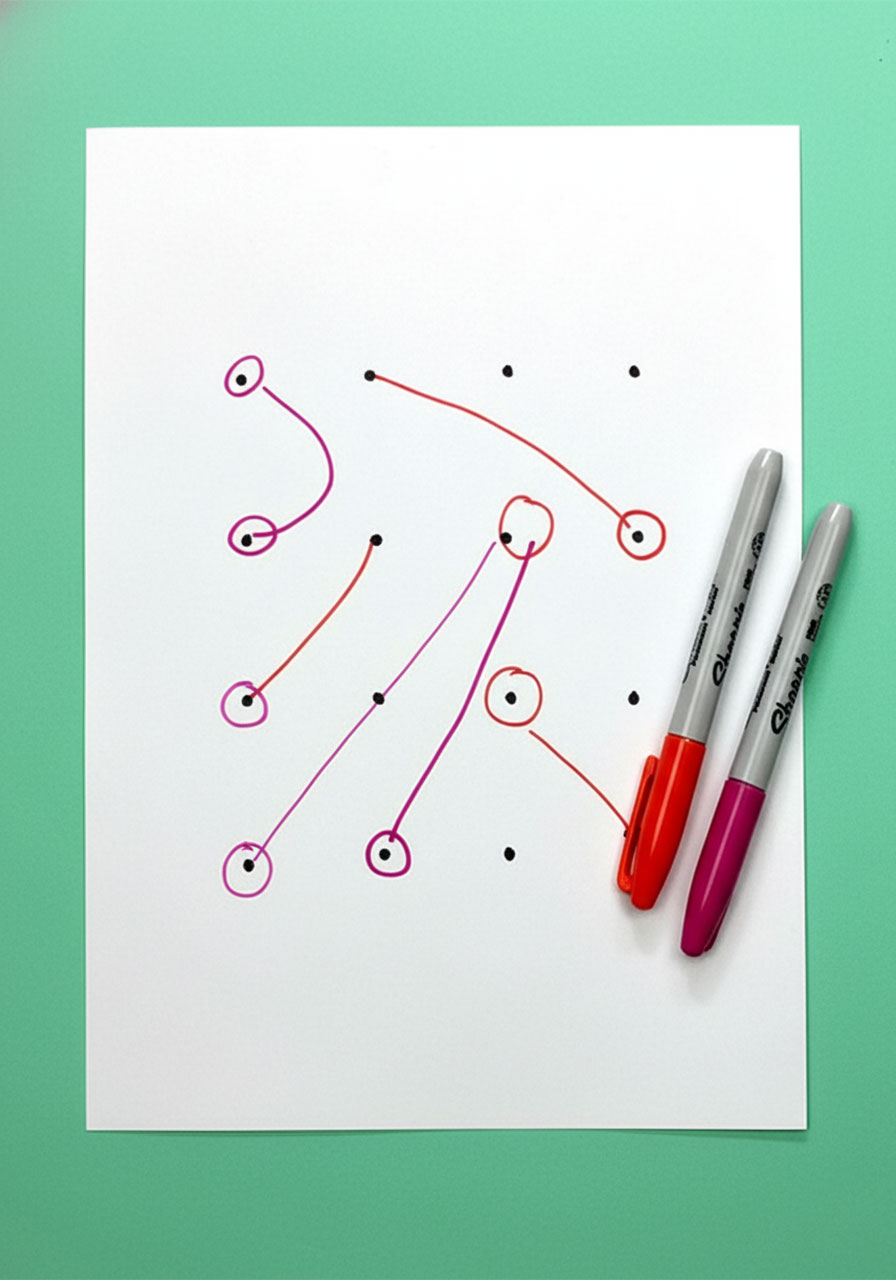
Simple to explain, surprisingly tricky to master – Lasso is a dot-and-line game where every move matters and one wrong turn can cost you the win.
Best for: Ages 8+, strategic thinkers
Time to Play: 10–15 minutes
Players: 2 (can try with 3!)
What You’ll Need:
Paper
Two pens in different colors
How to Play:
1. Draw a grid of dots on your paper – start with a 5×5 or 6×6 grid.
2. Players take turns. On your turn, choose a starting dot, draw a line to any other dot in the grid, and then draw a small circle around the dot you ended on (the “lasso”).
3. Important rules: your line cannot cross any previously drawn line, and the dot you circle must not have been circled before. You can start from a dot that has already been used as a starting point.
4. Play continues until no valid lasso moves remain.
5. The last player to successfully draw a lasso wins!
Pro Tip: Experiment with different grid sizes! A larger grid (8×8) makes for a longer, more complex game. A smaller grid (4×4) is great for a quick round with younger players.
Two or More Players
Got a bigger group? These games shine with three, four, or even a whole classroom of players. No teams, no complicated rules – just grab your paper and go.
10. Unscramble
A scrambled word challenge that you can theme around anything – holiday words, food, animals, sports. First one to crack all the codes wins bragging rights!
Best for: All ages, classroom activity, family game night
Time to Play: 5–10 minutes
Players: 2+
What You’ll Need:
Paper and pen for each player
How to Play:
1. One player (or the teacher) writes a list of 8–10 words with their letters scrambled up. For example: kcae, kieooc, epi (cake, cookie, pie).
2. For extra fun, keep all words within a single theme – animals, holidays, school supplies, whatever fits your group.
3. Hand the scrambled list to all players at the same time.
4. The first player to correctly unscramble every word wins!
Pro Tip: In a classroom, this doubles as a fantastic spelling or vocabulary review. Use words from that week’s lesson list and watch engagement skyrocket. For family game night, crank up the challenge with longer, trickier words for the adults.
11. Words Within a Word
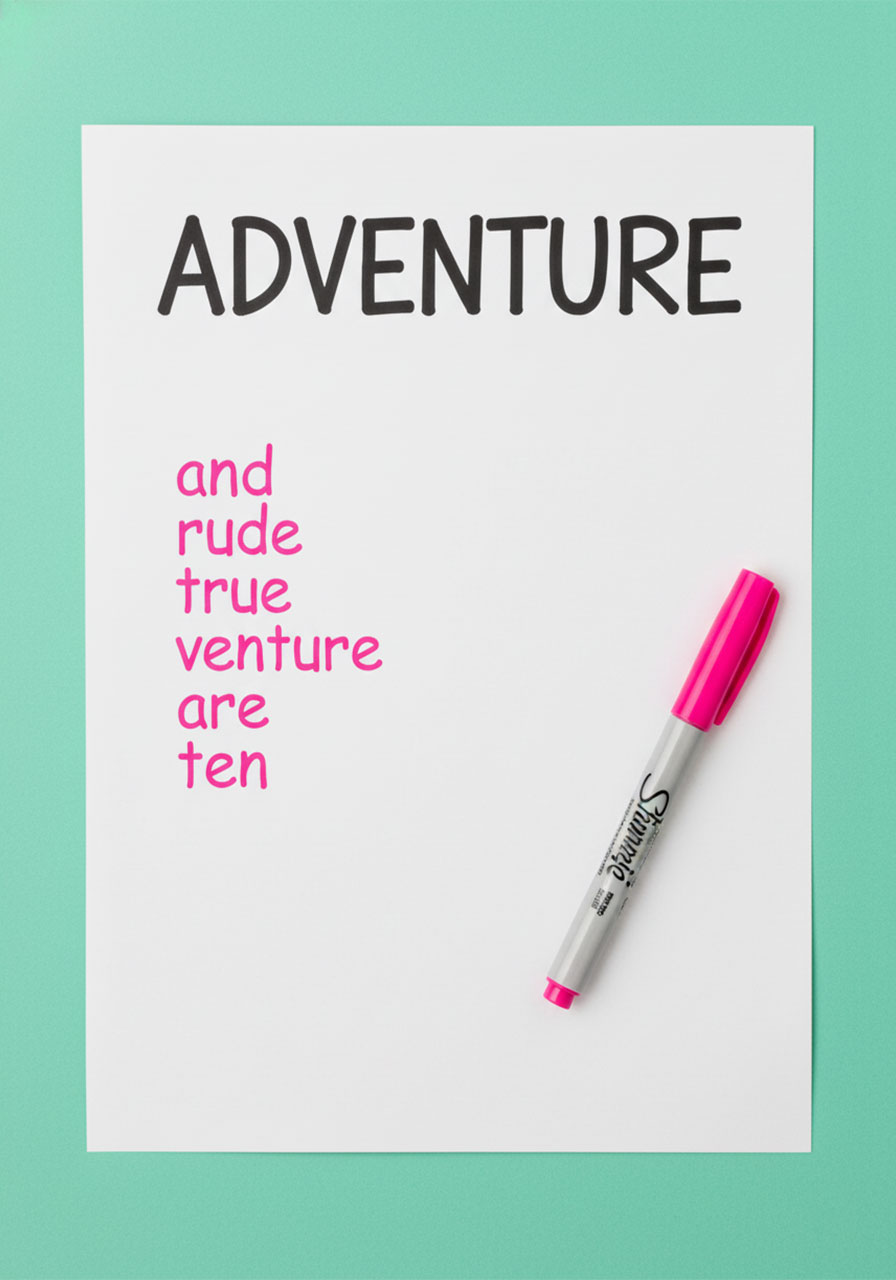
Pick a long word. Set a timer. See who can squeeze the most smaller words out of it before time runs out. It’s a vocab workout disguised as pure fun – and it works for ages 6 to 60.
Best for: All ages, classroom brain break, family activity
Time to Play: 5–10 minutes
Players: 2+
What You’ll Need:
Paper and pen for each player
How to Play:
1. Everyone agrees on one long word – ADVENTURE, CHOCOLATE, SEPTEMBER, BUTTERFLY – the longer the better!
2. Write that word at the top of everyone’s paper.
3. Set a timer for 3–5 minutes.
4. Everyone races to write as many smaller words as they can find using only the letters in the big word. You can only use each letter as many times as it appears in the original word.
5. When the timer goes off, compare lists. The player with the most valid words wins!
Pro Tip: For younger kids, allow plurals and simple two-letter words to keep it accessible. For older players or adults, add a rule that words must be at least 4 letters long – that’s when the game gets really tough!
Bonus: Scattergories-Style List Game

This one comes highly recommended by families who’ve been playing it for years – and once you try it, you’ll understand why. It’s endlessly customizable and works for players of all ages at the same table.
Best for: Mixed-age family groups, multi-generational gatherings, classrooms
Time to Play: 15–20 minutes
Players: 2+
What You’ll Need:
Paper and pen for each player
How to Play:
1. Together, choose 6 categories and write them across the top of everyone’s paper as column headers. Classic options: Boy’s Name, Girl’s Name, Animal, Food, Color, Country. Adapt the categories to your group!
2. One player calls out a random letter of the alphabet.
3. Everyone races to fill in every column with a word starting with that letter. For example, with the letter “S”: Sam, Sofia, Shark, Strawberry, Silver, Spain.
4. When the first player finishes all their columns, everyone stops writing.
5. Go around and read out your answers. Scoring: 10 points for a unique answer no one else has; 5 points if two players share the same answer; 2 points if three or more match; 0 if you left it blank.
6. Play 5–6 rounds with different letters. Highest total score wins!
Pro Tip: Customize the categories for your group! A classroom might use: Book Character, Math Word, Science Term, Country, Sport, Food. A family might add silly categories like “Something in Grandma’s purse” or “A reason to call in sick to school.” Keep spelling flexible – the point is the fun, not perfect spelling.
Quick Recap: Which Pen and Paper Game Should You Play?

1. Need something solo or low-key? → Blind Drawing or Word Flip
2. Want a head-to-head strategy challenge? → Dots and Boxes, Nim, Lasso, or Sim
3. Looking for a word and spelling game? → Hangman, Words Within a Word, or Unscramble
4. Got a big group of mixed ages? → Scattergories-Style List Game or Unscramble
5. Teaching a class and need a quick brain break? → Words Within a Word or Apple Tree
The best thing about pen and paper games? There’s zero setup, zero cleanup, and zero excuses. A pencil and a scrap of paper is all it takes to turn a boring wait, a rainy afternoon, or a restless classroom into a genuinely fun experience.
So next time you hear “I’m bored” – hand over a pen and point to this list. You’ve got this.
More Kid’s Party Ideas to Keep the Fun Rolling:
Paper Bag Fairy House: The Cutest Kids’ Craft You Can Make in Under an Hour
Frozen Dinosaur Eggs: The Coolest Summer Activity Kids Will Beg to Do Every Year
Floating Ball Activity: The Easy DIY Science Game Kids Can’t Stop Playing
Floating City STEM Challenge: Can Your Kid Build a City That Survives the Waves?
Dot Sticker Addition: The Hands-On Math Activity Kids Actually Want to Do Again and Again
Water Gun Painting: The Most Fun Kids Art Activity This Summer
How to Make a LEGO Sundial: A Hands-On Science Activity Kids Will Love
Rabbit Hole: The Hilarious Gross Motor Group Game Kids Will Beg to Play Again
