
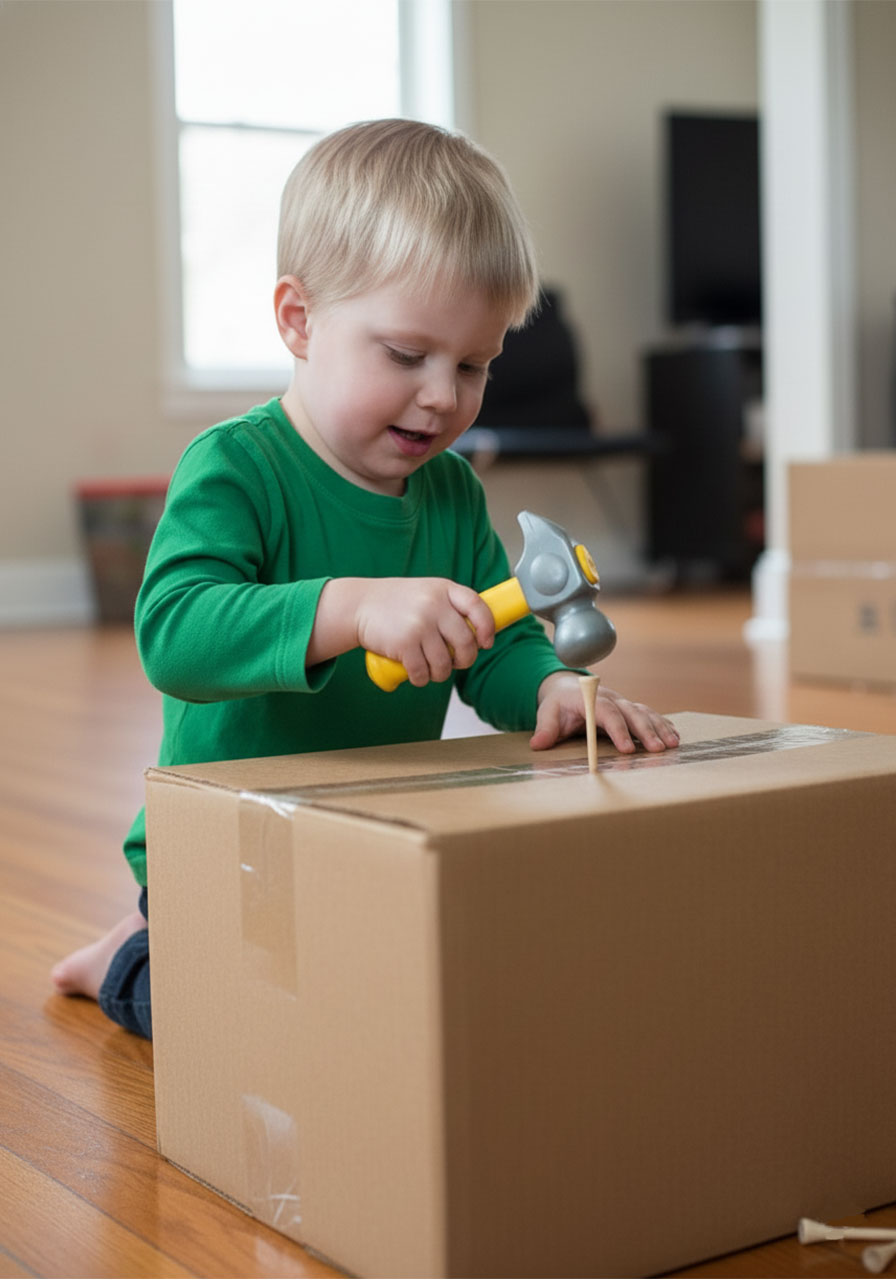
If your toddler has boundless energy and a serious love for banging things – first of all, same. Second of all, this activity was made for them. Hammering golf tees into a cardboard box is one of those rare activities that keeps little ones completely focused, builds real skills, and costs next to nothing to set up. It’s a total win for parents and teachers alike.
The best part? You probably already have everything you need sitting in your recycling bin right now.
Why Toddlers Go Absolutely Wild for This Activity
There’s something deeply satisfying about hammering – and toddlers feel it too. This activity taps into their natural drive to do, build, and make things happen. Every tap of the hammer gives instant, visible feedback, which is exactly the kind of cause-and-effect play that little brains are wired to love at this stage.
Beyond the fun factor, this activity is quietly doing a lot of heavy lifting developmentally. Kids are building hand-eye coordination, strengthening the small hand muscles they’ll eventually need for writing, and sharpening their focus and concentration – all while thinking they’re just having a blast.
Best for: Toddlers (18 months+) and Preschoolers
Group size: One child or small group
Time: 20–40 minutes (they may surprise you!)
Prep time: 5 minutes
What You’ll Need
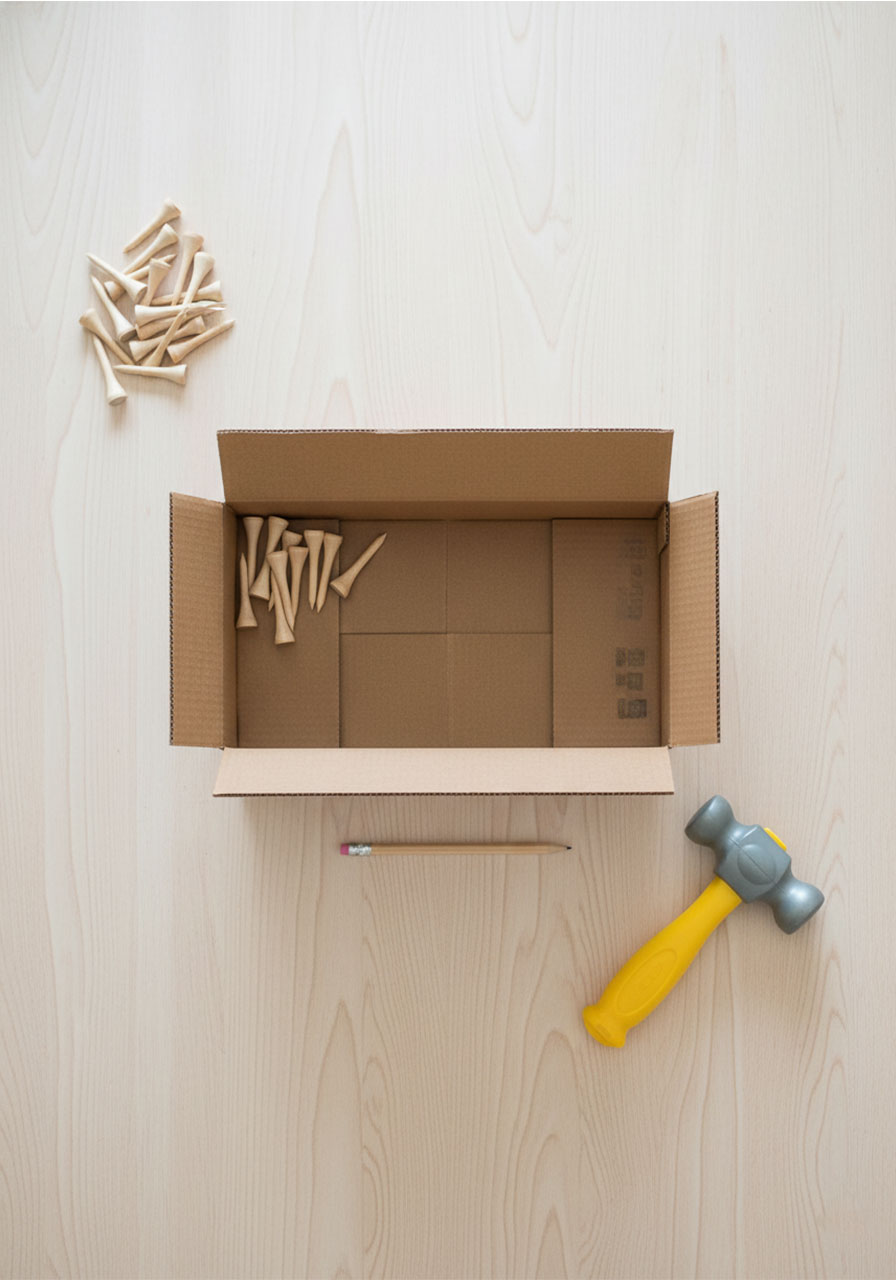
1 cardboard box (any size – a medium shipping box works great)
A bag of wooden golf tees
A toy hammer (the chunky plastic kind with a yellow handle is perfect)
Optional: A pen or pencil to pre-punch starter holes
Pro Tip: Got multiple kids joining in? Grab a second box so they each have their own – no sharing frustration, double the fun.
How to Set It Up
1. Grab your cardboard box. Any size works! Flatten it, stand it upright, or keep it in full box form – each position creates a slightly different activity (more on that below).
2. Pre-punch a few starter holes. Toddlers can struggle to break through fresh cardboard with a toy hammer alone. Use a pen or pencil to poke 6–10 starter holes across the surface before handing it over. This small step makes a huge difference and lets your child feel successful right away.
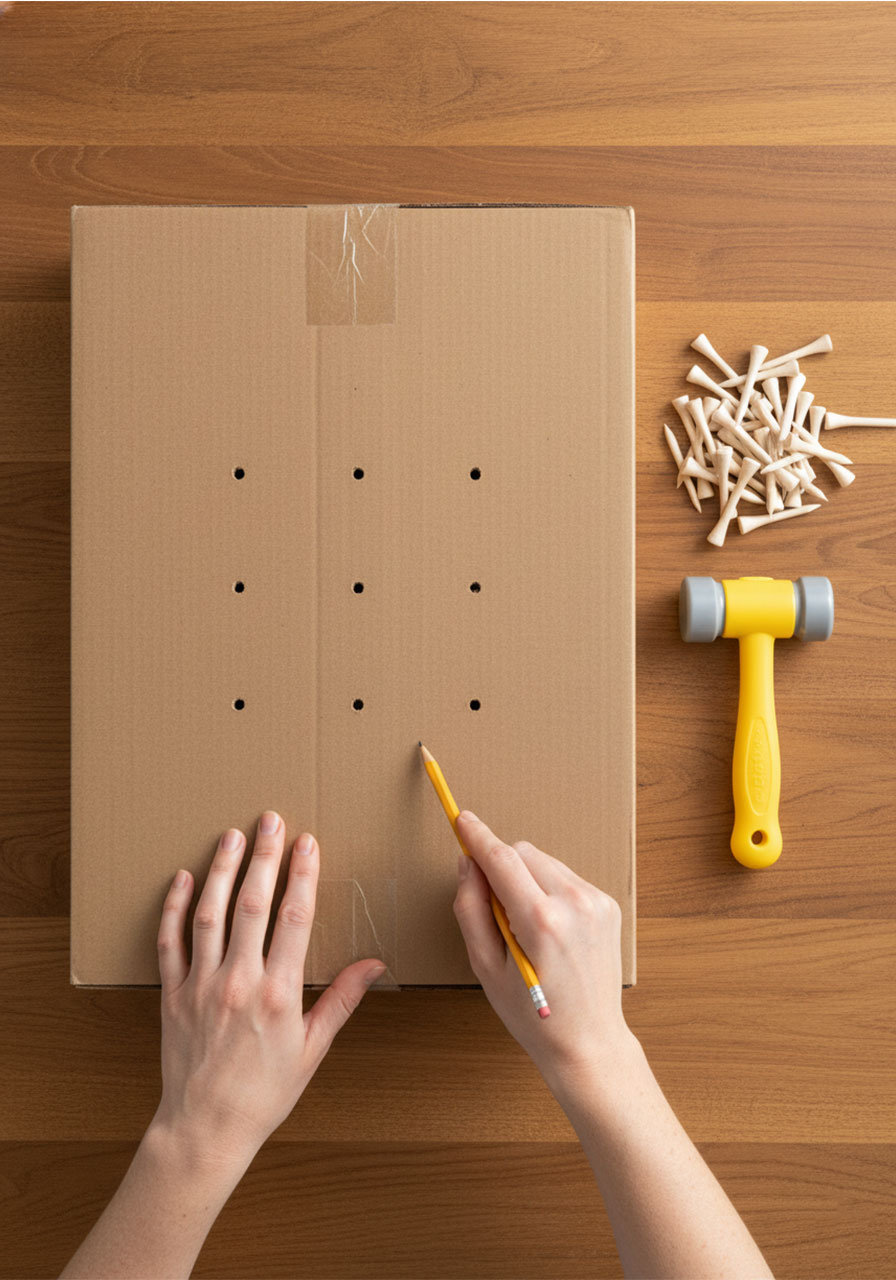
3. Set out the golf tees. Place a small pile of tees within easy reach of your child.
4. Hand over the hammer and step back. Show them once how to line up a tee over a hole and tap it in – then let them take over. They’ve got this.
How to Play (Two Ways to Level Up the Fun!)
Version 1: Hammer from the Top
Place the box flat on the floor or on a low table. Your toddler stands or kneels in front of it and hammers the tees down through the top surface. This is the easiest starting position for younger toddlers still working on their grip.
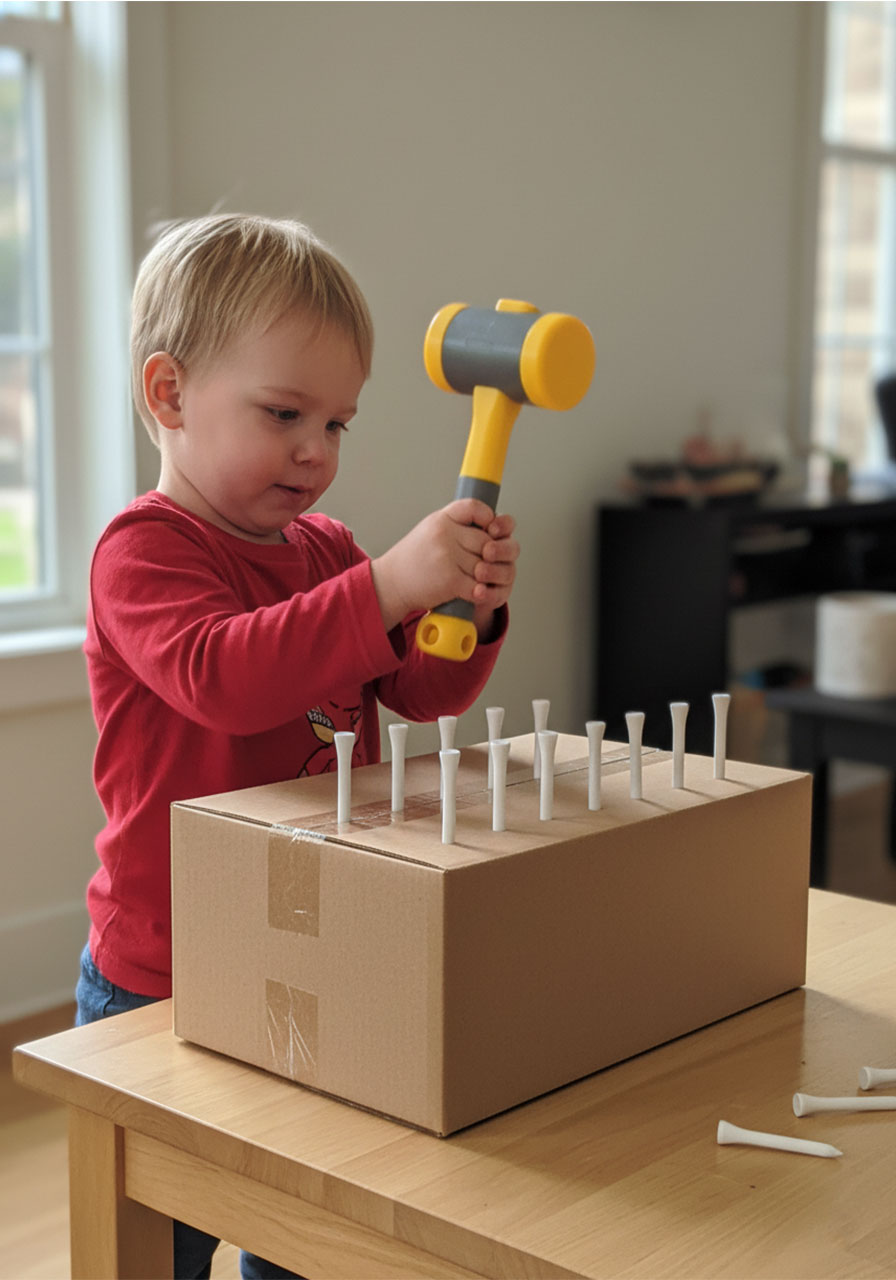
Here’s a fun surprise that might happen: once a row of tees is hammered in, pounding one down can cause another nearby tee to pop back up – because the inner flaps of the box push it out. It’s basically a homemade Whack-a-Mole! Expect giggles. Lots of them.
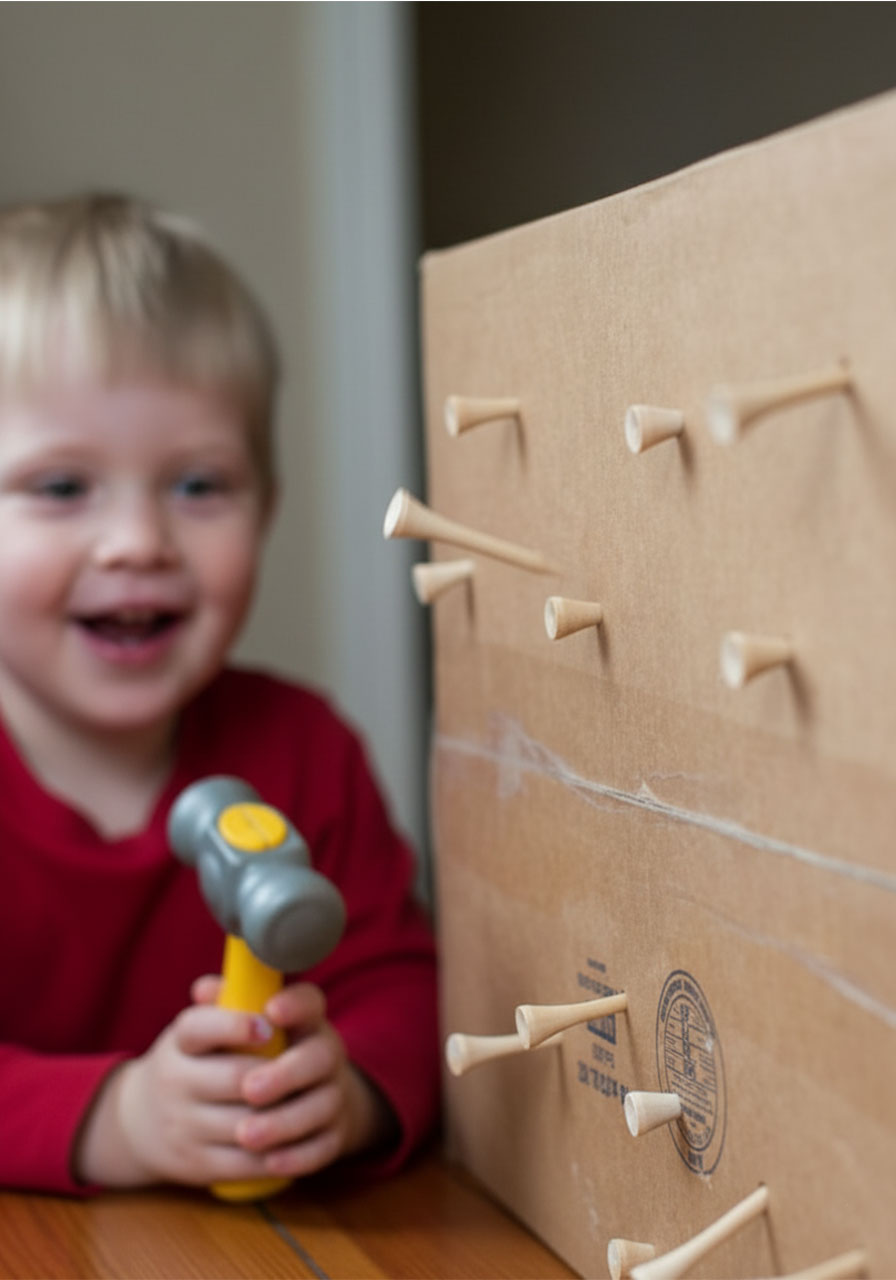
Version 2: Flip It on Its Side (Instant New Activity!)
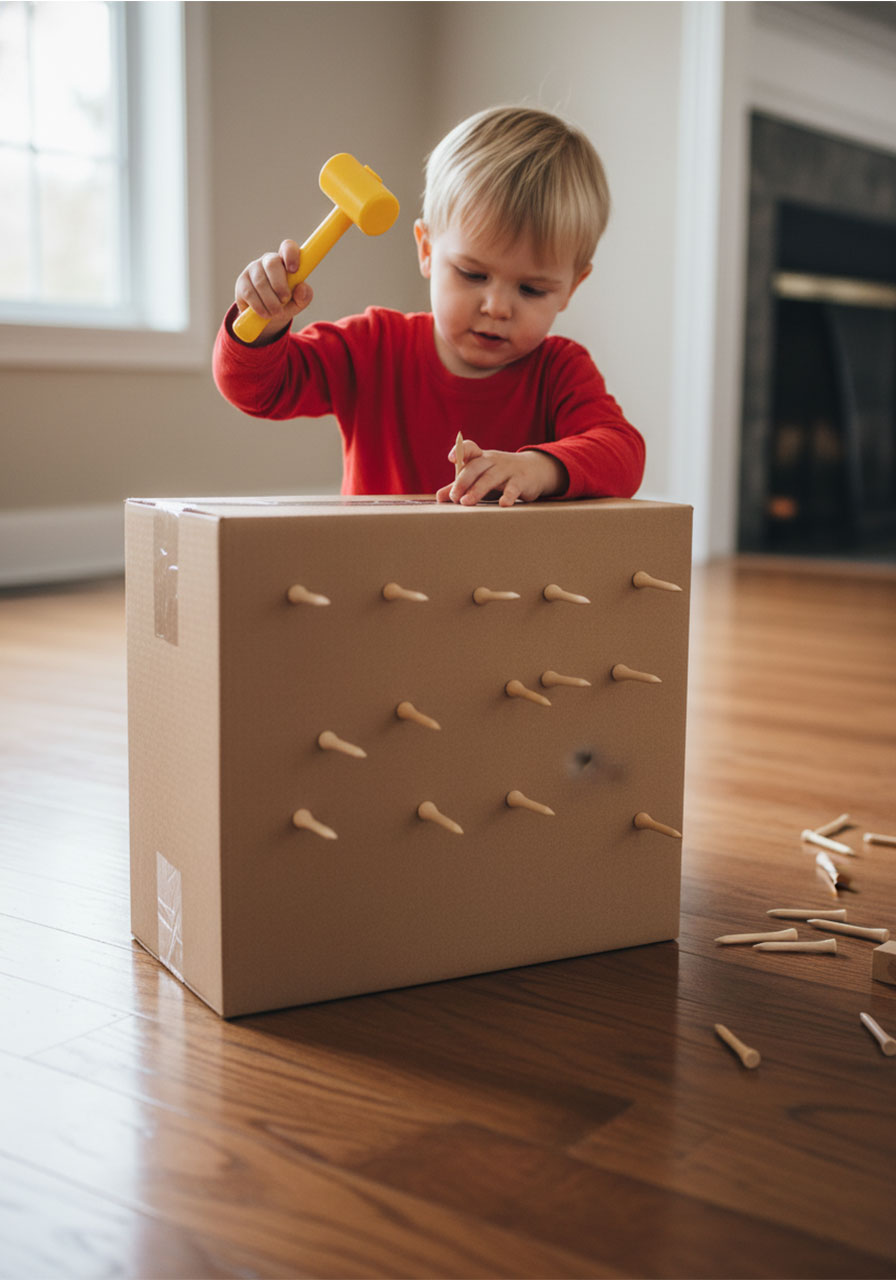
Once your child has worked the top surface, simply flip the box onto its side. That’s it. Same tees, same hammer – but now they’re hammering in from the side rather than from above, which changes the angle, the challenge, and the whole feel of the activity. It’s like getting two activities for the price of one box.
Kids who have done the top version already often get even more focused when the box is flipped. It’s a small change with a surprisingly big impact on engagement.
Switch It Up: Ditch the Hammer
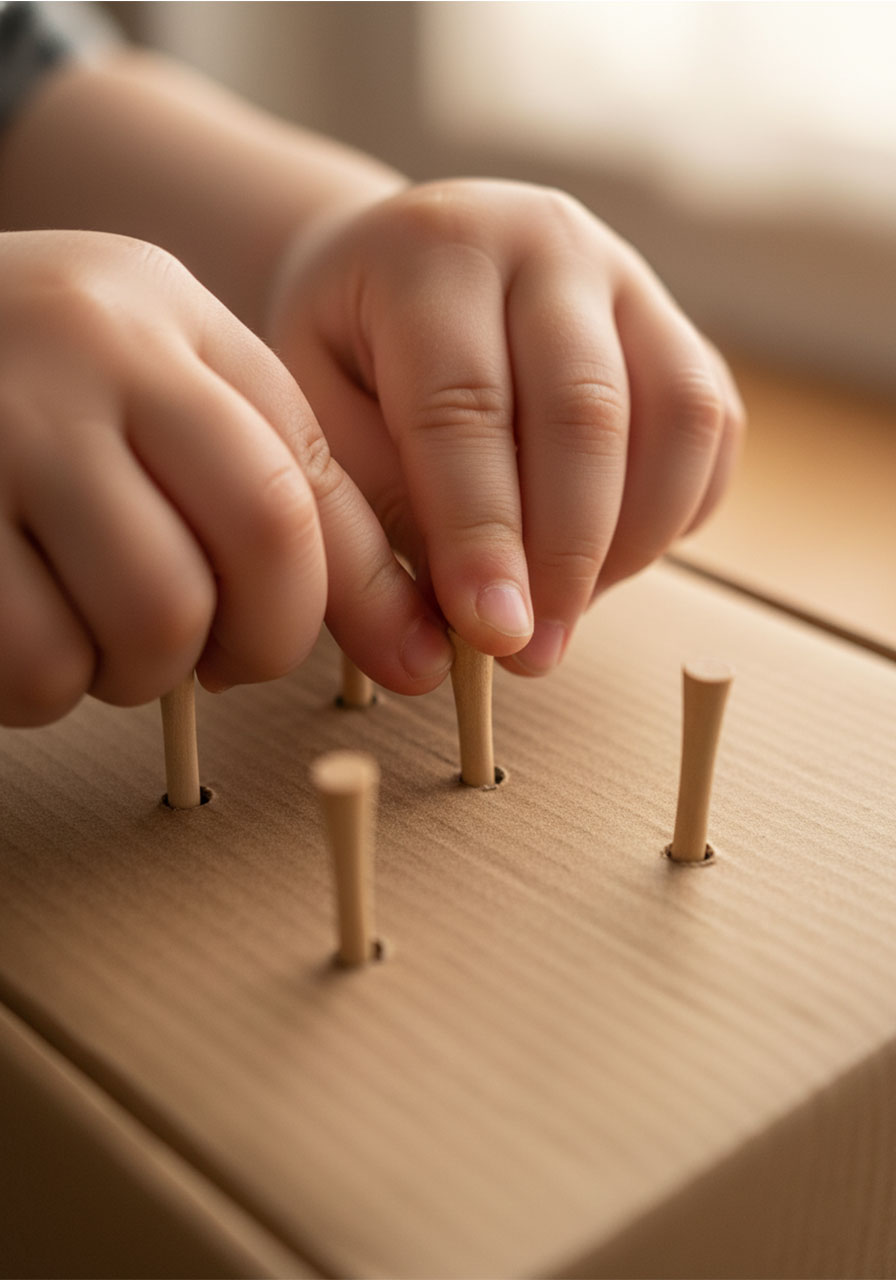
At some point, your toddler might set the hammer down entirely and start pressing or poking the tees in with their fingers. Let them! This shift actually puts even more emphasis on fine motor skills – the pinching, pressing, and guiding motion is fantastic for building finger strength and precision. It’s a totally valid (and quieter!) version of the same activity.
What Kids Are Actually Learning While They Play
This isn’t just a “keep them busy” activity (though it absolutely does that). Every swing of that little hammer is building something real:
Hand-eye coordination – lining up the hammer with the tee takes serious focus
Fine motor strength – the small muscles in the hands and fingers that are essential for writing later on
Concentration and persistence – especially when a tee won’t go in on the first try
Cause and effect understanding – hit the tee, it goes in. Flip the box, something new happens!
Spatial awareness – judging angles, distances, and where to place each tee
Gross motor development – the bigger arm and shoulder muscles get a workout too
Tips for Parents & Teachers
Don’t rush the setup help. Pre-punching those starter holes isn’t “cheating” – it’s setting your child up for success. A toddler who can’t break through the cardboard will get frustrated fast. A toddler who immediately gets that satisfying “pop” of a tee going in? They’re hooked for the next 30 minutes.
Rotate the box regularly. The moment the activity starts to slow down, flip the box or turn it to a fresh surface. Instant re-engagement.
Use this in a classroom center. For preschool teachers, this works beautifully as an independent fine motor center. Set it up in the morning and watch multiple kids cycle through it throughout the day.
Supervise young toddlers. The tees are small – keep an eye on little ones who are still putting things in their mouths, and always use a toy hammer rather than a real one.
Save the box! Once the session is over, pull all the tees out and save the box for next time. The pre-punched holes make the next round even easier to set up.
Why This Activity Is a Total Win
Between the zero-dollar setup cost, the upcycled materials, and the fact that it genuinely holds a toddler’s attention for a surprisingly long stretch of time – this one earns a permanent spot in your activity rotation. It’s low prep, high engagement, and packs a real developmental punch behind all that satisfying hammering.
Set it up once and you’ll understand why parents and teachers keep coming back to it again and again.
More Kid’s Party Ideas to Keep the Fun Rolling:
12 Fun Pen and Paper Games to Cure Boredom (No Screens Required!)
Paper Bag Fairy House: The Cutest Kids’ Craft You Can Make in Under an Hour
Frozen Dinosaur Eggs: The Coolest Summer Activity Kids Will Beg to Do Every Year
Floating Ball Activity: The Easy DIY Science Game Kids Can’t Stop Playing
Floating City STEM Challenge: Can Your Kid Build a City That Survives the Waves?
Dot Sticker Addition: The Hands-On Math Activity Kids Actually Want to Do Again and Again
Water Gun Painting: The Most Fun Kids Art Activity This Summer
How to Make a LEGO Sundial: A Hands-On Science Activity Kids Will Love
