
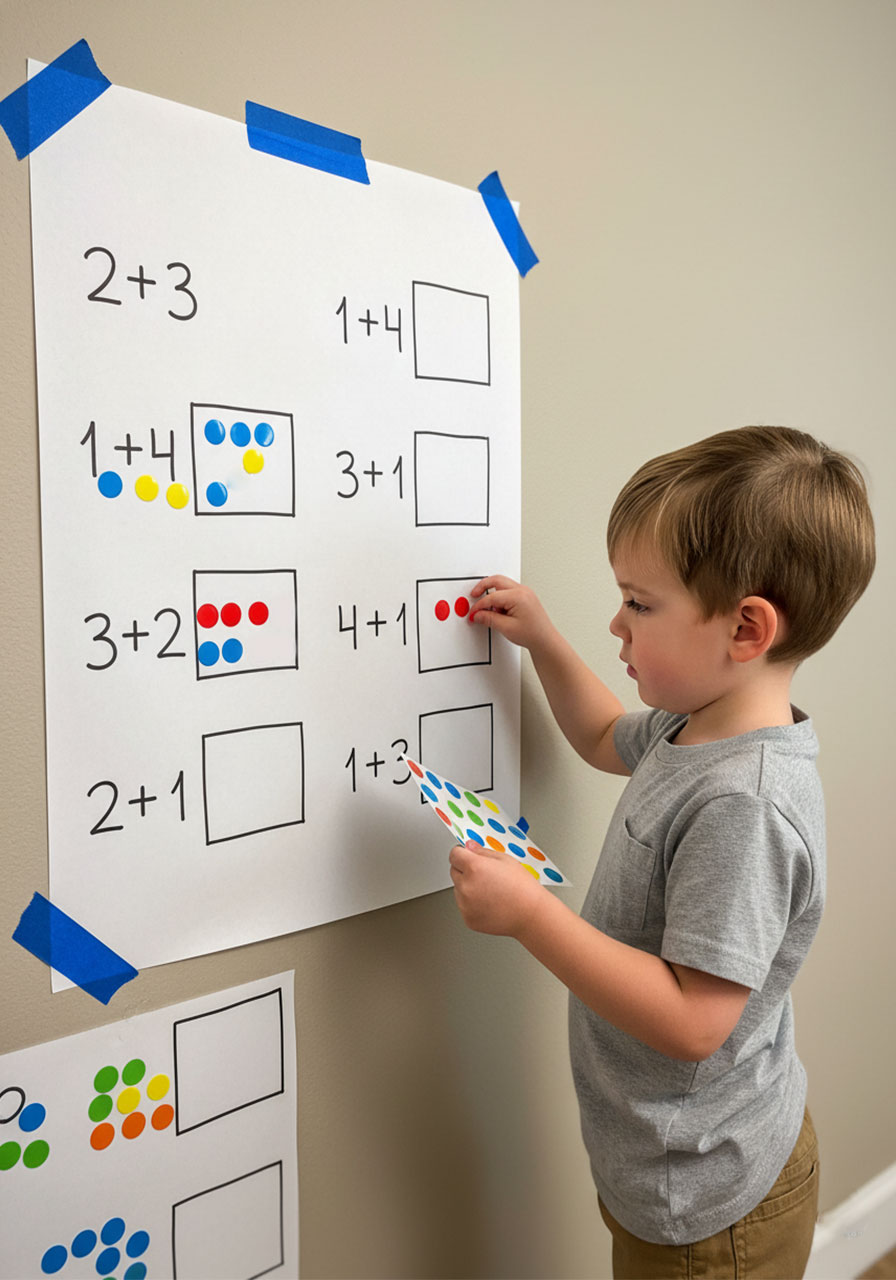
What if your child could practice addition without ever touching a worksheet? Better yet – what if they asked to do it again the next day? That’s exactly what happens with dot sticker addition, and once you try it, you’ll wonder why you didn’t start sooner.
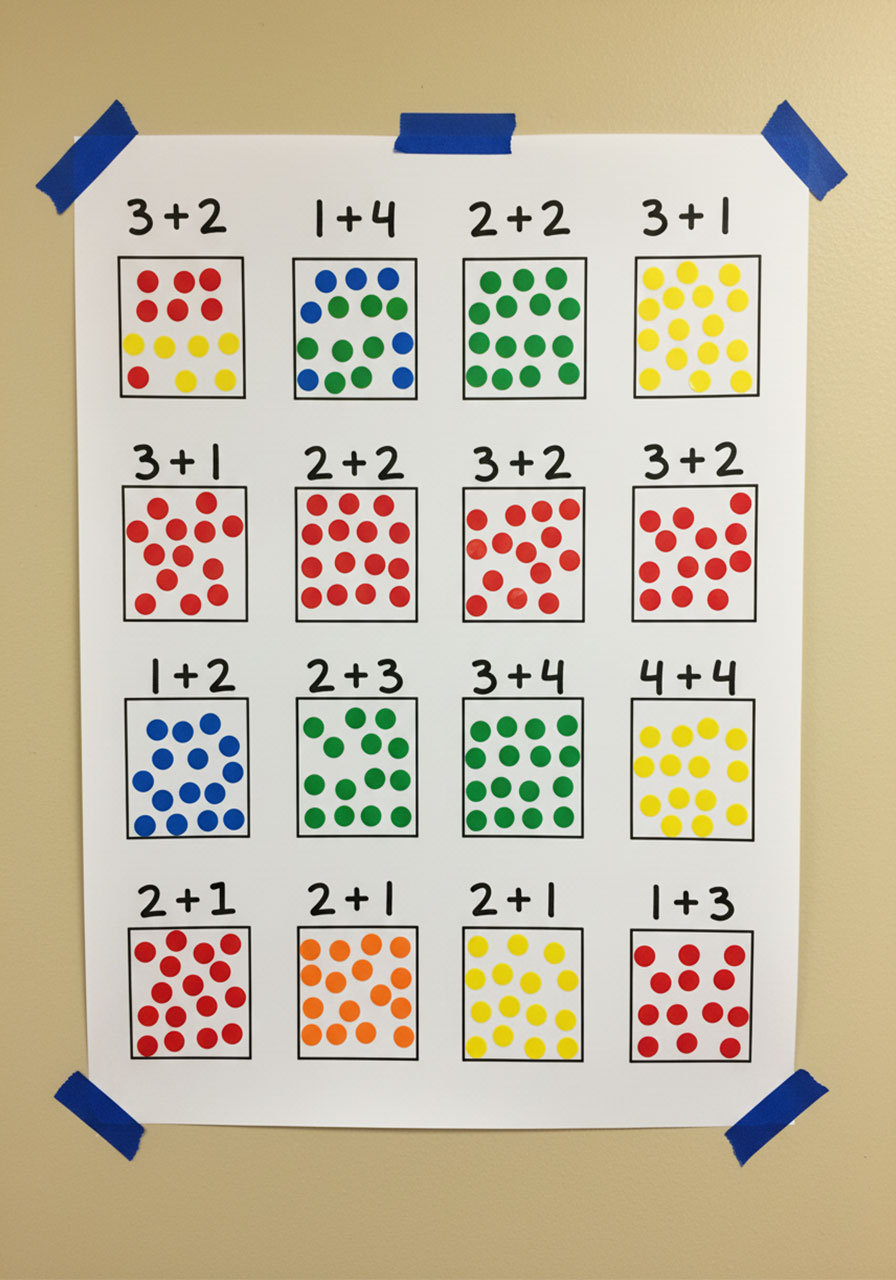
This low-prep activity uses colorful dot stickers to turn abstract math problems into something kids can see, touch, and truly understand. It takes about 5 minutes to set up, works on a wall or flat surface, and is perfect for kindergartners and early first graders working on basic addition skills.
Whether you’re a parent looking for a fun after-school activity or a teacher hunting for a hands-on math center idea, this one delivers. Let’s dive in.
Why Dot Sticker Addition Works (It’s Not Just a Cute Activity)
Here’s the thing about teaching addition: telling kids that 2 + 4 = 6 is the least effective way to help them actually understand it. When children just memorize answers, they’re building a house of cards – it works until it doesn’t.
What kids really need is conceptual understanding – the ability to see why 2 and 4 make 6, not just recite that they do. Dot stickers make that happen. Each sticker is a concrete, physical stand-in for an abstract number. Kids place 2 stickers, then 4 more stickers, and suddenly they can see 6 right there in front of them.
That’s the magic. The answer isn’t memorized – it’s discovered.
Bonus: this activity also builds fine motor skills (peeling stickers is harder than it looks for little hands!), encourages upright working on a vertical surface which is great for development, and keeps kids moving – all wins for parents and teachers alike.
What You’ll Need
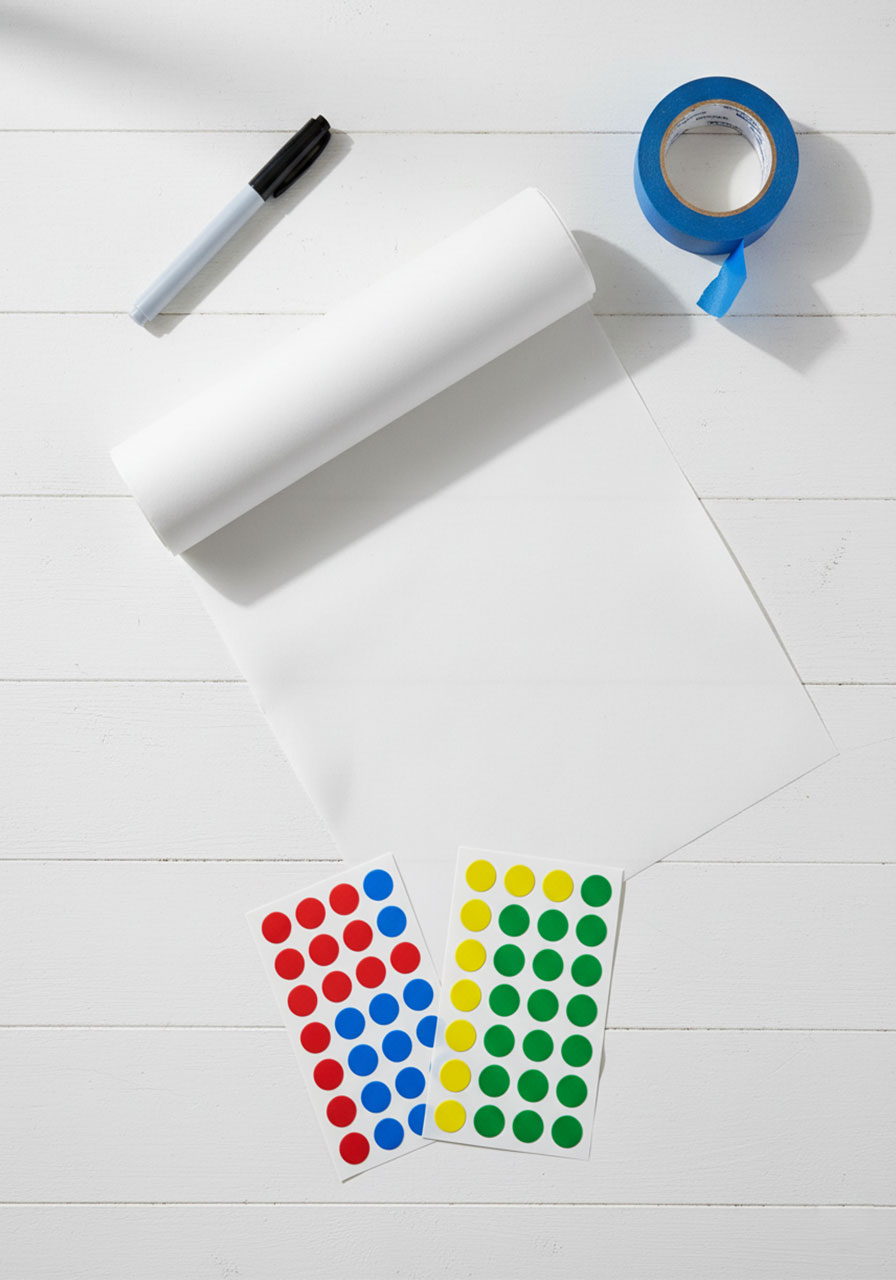
Colorful dot stickers (the round, colored label stickers work perfectly – grab a multi-color pack)
White butcher paper or a large sheet of paper
Painter’s tape (to hang it on the wall)
A thick marker (a giant Sharpie is ideal for easy readability)
That’s it. No printer, no fancy supplies, no prep kit required. Most of this is probably already in a drawer somewhere.
How to Set Up Dot Sticker Addition
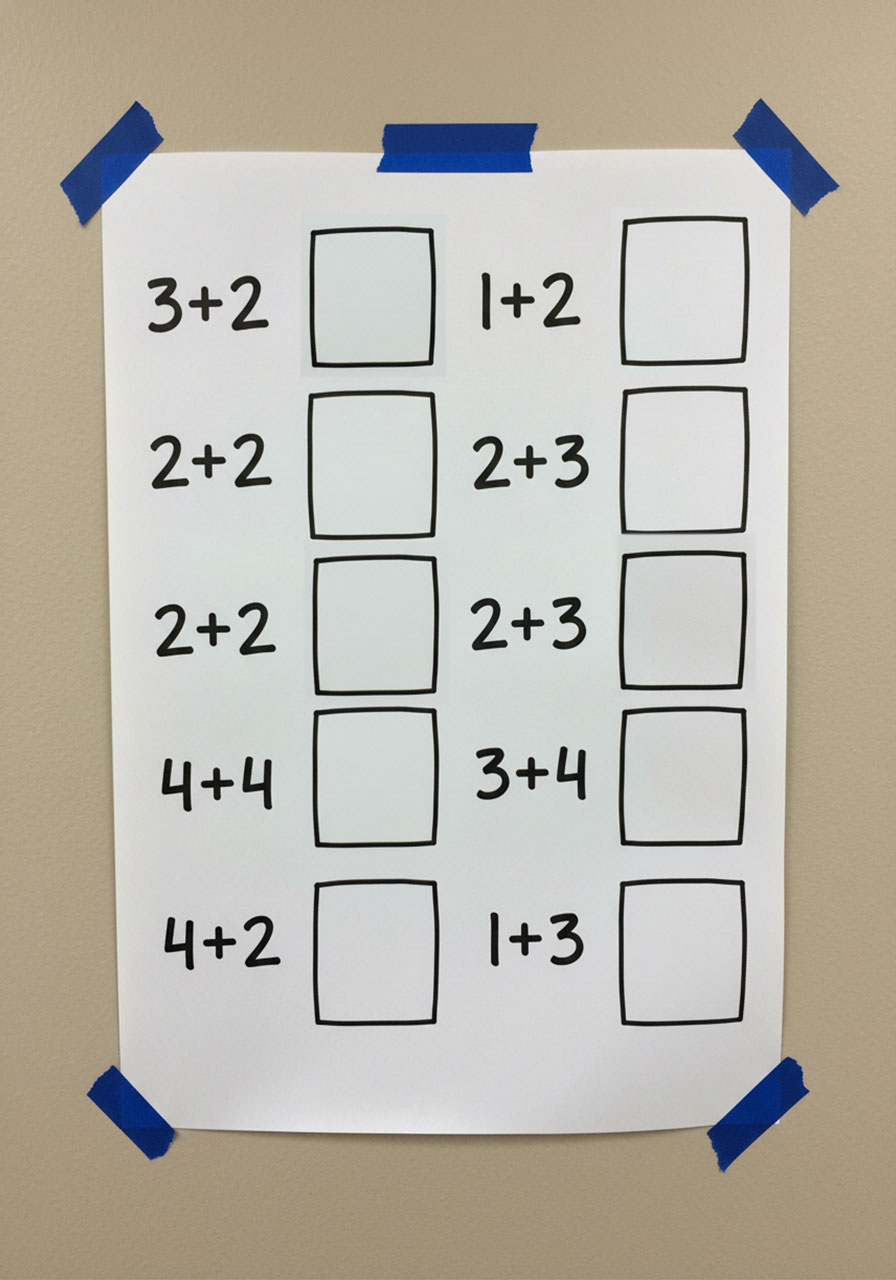
1. Tape your paper to the wall. Use painter’s tape so it stays put without damaging the surface. Hang it at your child’s eye level so they’re working upright – this is better for their posture and development than hunching over a table.
2. Write out the addition problems. Use your thick marker to write simple addition problems across the paper (think: 2+3, 1+4, 3+2). Space them out generously so there’s room to work.
3. Draw an answer box next to each problem. Draw a large empty rectangle beside each equation – this is where the child will place their dot stickers as their answer.
4. Grab the dot stickers. Hand your child a sheet of colorful dot stickers and let them get to work!
Pro Tip: Ask your child to use a different color for each number in the problem. For example, for 3+2, they’d place 3 red dots and 2 blue dots. This visual color-coding helps them literally see how the two groups combine to make the total – a game-changer for building that “why” understanding.
How the Activity Works (Step by Step)
1. Point to the first problem. Say it out loud together: “Three plus two.” Let your child repeat it back to you.
2. Place the first group of stickers. Your child peels and places the first number of stickers (3 stickers) in the answer box. Encourage them to count out loud as they go: “One… two… three.”
3. Add the second group. Now they peel and add the second number of stickers (2 more), using a different color. Count again: “One… two.” These go right next to the first group inside the box.
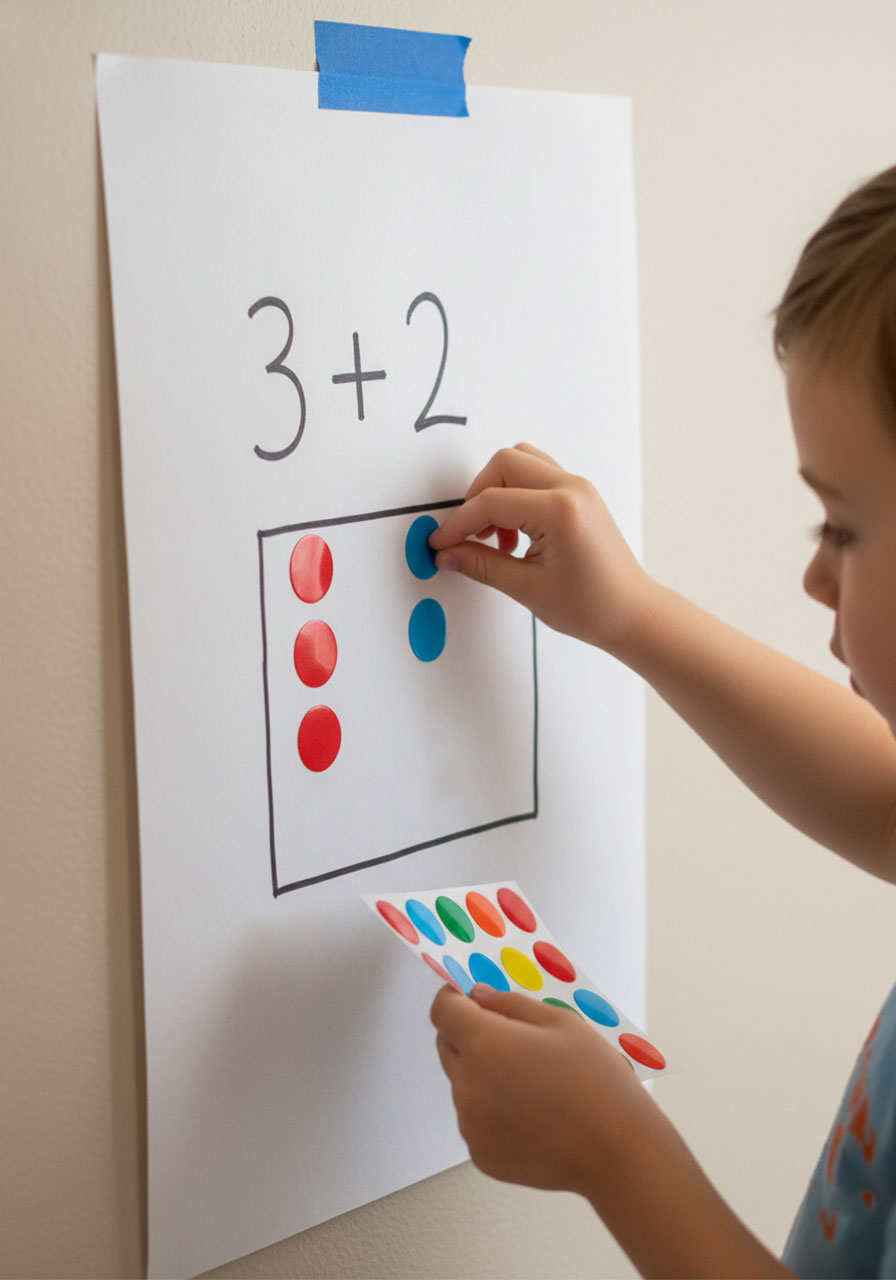
4. Count the total. Together, count all the stickers in the box: “One, two, three, four, five! Three plus two equals five!”
5. Move to the next problem. Repeat the process across the entire paper. Let them set the pace – some kids race through it, others love lingering on each one.
Watch how quickly they start to see patterns forming. That little lightbulb moment when they realize the stickers are doing the math for them? Priceless.
Tips for Parents and Teachers
Use math vocabulary naturally, even if they don’t know it yet. Say words like “addend,” “sum,” and “equation” as you work together. Kids absorb vocabulary from context long before they can define it. You’re planting seeds.
Don’t correct too fast. If a child places the wrong number of stickers, let them count their stickers and self-check. The discovery of their own mistake is far more powerful than being told the answer.
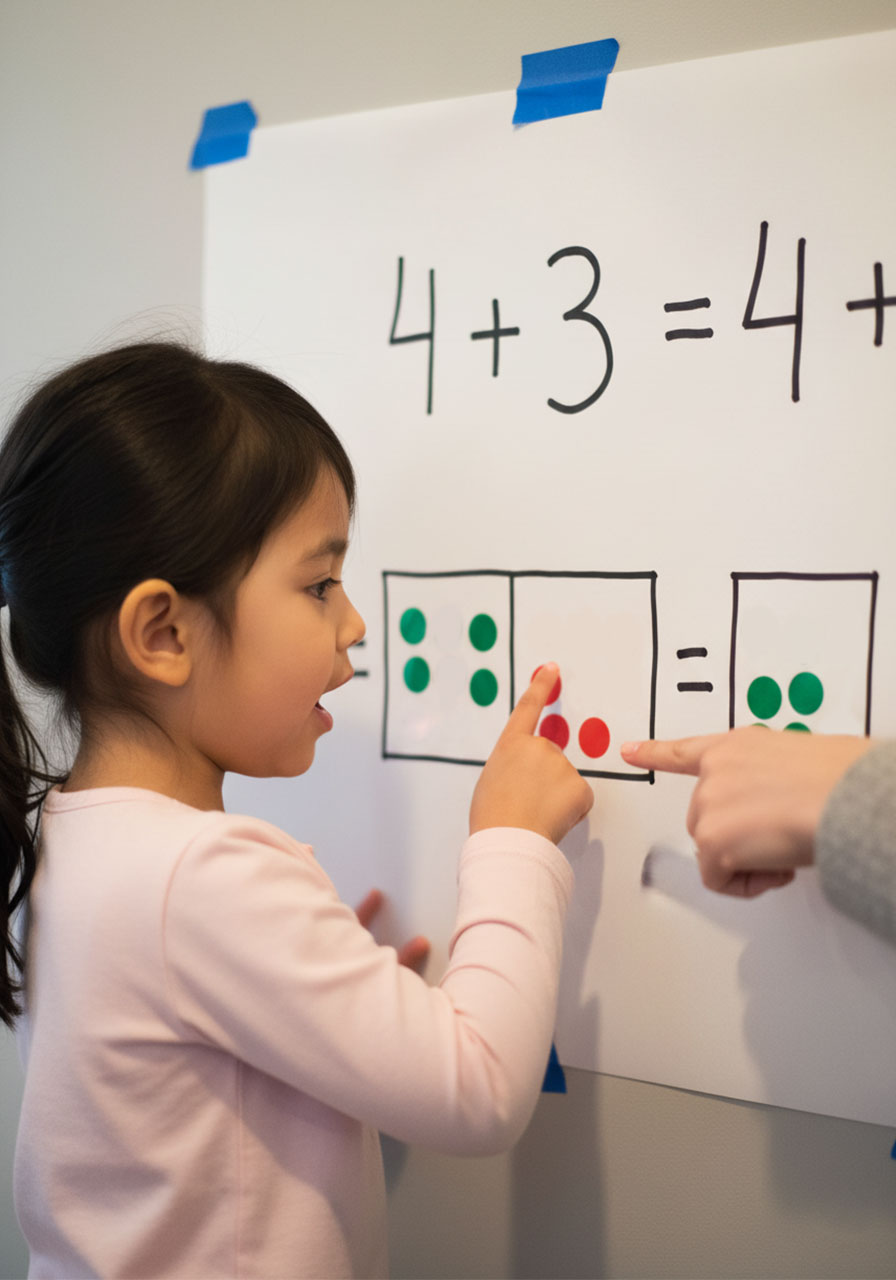
Start simple, then level up. Begin with problems where both numbers are 4 or under. As your child gets confident, introduce problems where the answer goes up to 10. You can also start timing them – “Can you do the whole paper before the song ends?” – to add a fun challenge.
For classrooms: This activity works beautifully as a math center rotation. Set up two or three sheets at different difficulty levels and let students work through them in small groups. The stickers peel off easily so you can reset and reuse the paper (or just make a fresh one – it takes 5 minutes).
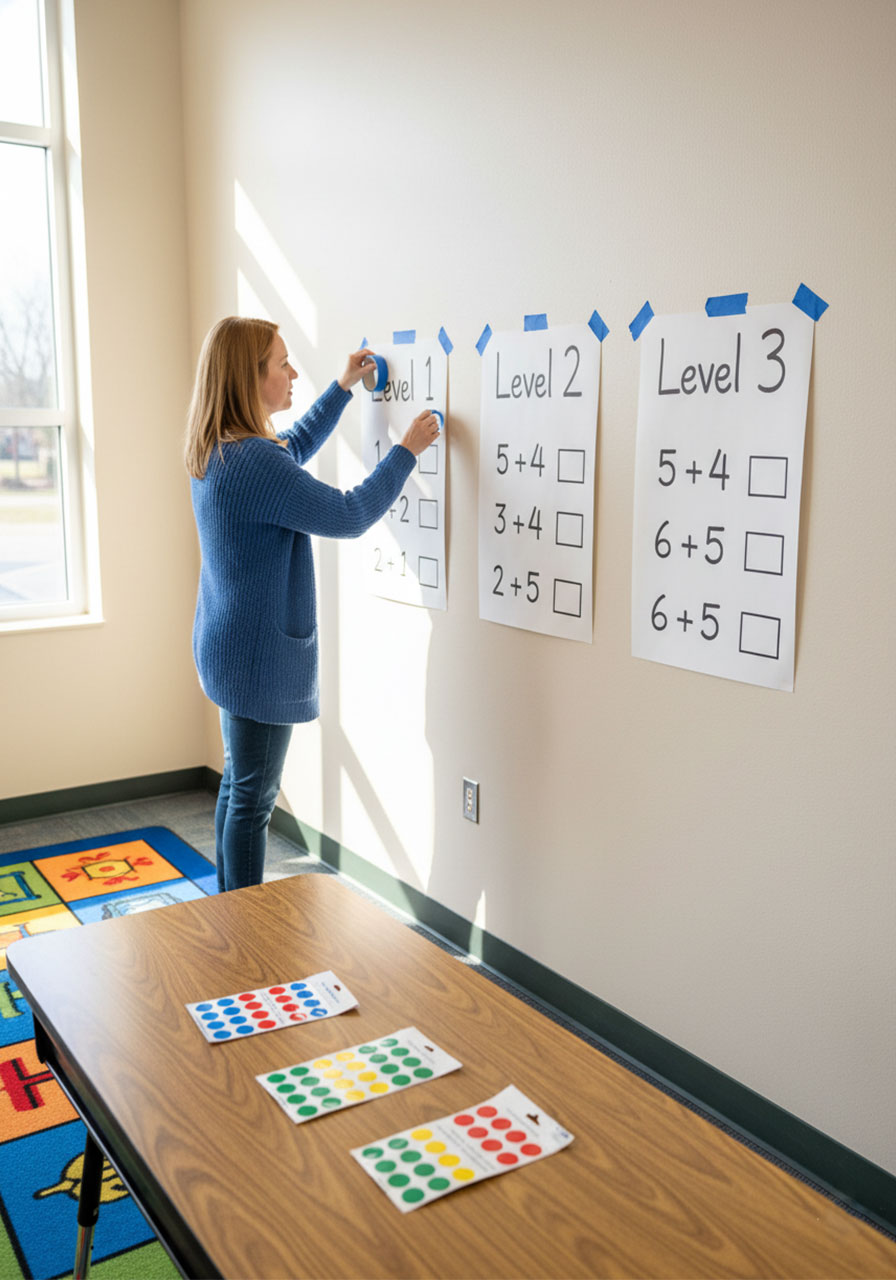
For home: Keep a roll of butcher paper and a pack of dot stickers on hand. On a slow afternoon or a “I’m bored” moment, this can be up on the wall in under 5 minutes. The novelty of using stickers instead of pencils makes it feel like a treat, not a lesson.
Fun Variations to Keep It Fresh
Subtraction Edition: Write the total number in the box first using stickers, then have your child cross out or peel away the number being subtracted. A great visual way to introduce the concept of “taking away.”
Race the Clock: Set a timer and see how many problems they can complete before it goes off. Kids who love a little competition go absolutely wild for this version.
Floor Version: No wall space? Lay the butcher paper flat on the floor. Kids can crawl, sit, and move around it – great for wiggly learners who need to get their whole body involved.
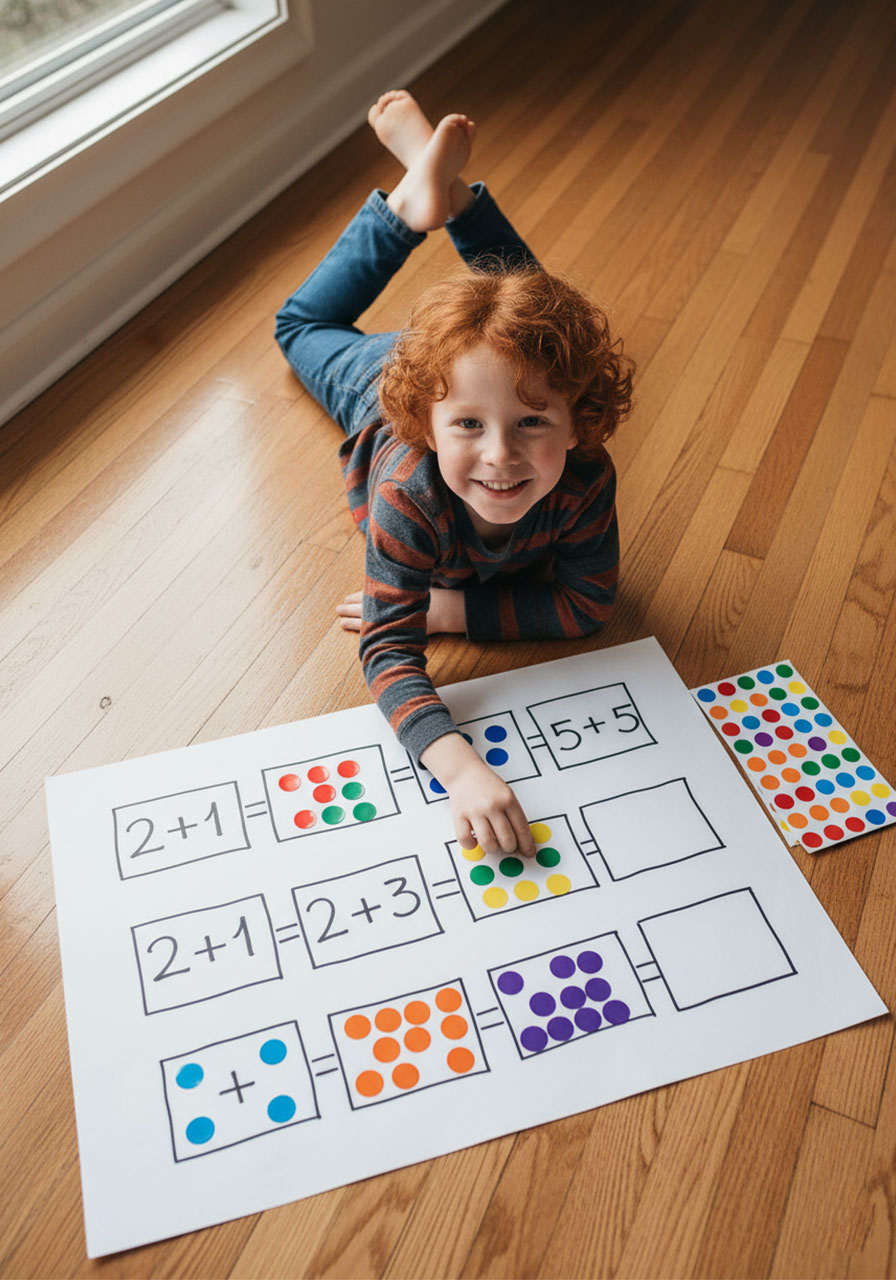
Partner Activity: Two kids, one paper. They take turns placing stickers for each problem and checking each other’s work. Perfect for siblings or classroom pairs.
Ready to Make Math Hands-On?
Dot sticker addition is one of those activities that looks simple on the surface but delivers big results underneath. It builds real mathematical understanding, develops fine motor skills, and – most importantly – makes kids excited to do math.
Set it up once and don’t be surprised when your child asks for it again tomorrow. And the day after that. Because that’s what happens when learning feels like playing.
With this activity in your back pocket, you’re one roll of butcher paper away from a math win your kid will actually remember.
Have you tried dot sticker addition? We’d love to hear how it went – drop a comment below!
More Kid’s Party Ideas to Keep the Fun Rolling:
Water Gun Painting: The Most Fun Kids Art Activity This Summer
How to Make a LEGO Sundial: A Hands-On Science Activity Kids Will Love
Rabbit Hole: The Hilarious Gross Motor Group Game Kids Will Beg to Play Again
How To Make a Tissue Box Toy Car Wash (The Easiest $0 Craft That Kids Go Absolutely Wild For)
Shaving Cream Sensory Play: The “Decorate the Cake” Activity Kids Go Absolutely Wild For
Q-Tip Push: The Crazy-Simple Baby Activity That Buys You 30 Minutes of Peace
The Muffin Tin Letter Sounds Activity That Makes Learning ABCs Actually Fun
How to Build a LEGO Marble Maze (Step-by-Step DIY for Kids of All Ages)
