

Got a kid who would rather snap bricks together than sit still for a board game? Same. But here’s the good news: you don’t have to choose between game night and LEGO time – because this game is both.
LEGO Charades (also called LEGO Pictionary or LEGO Creationary) is a brilliant mashup of classic guessing games and hands-on building. One player builds something out of LEGO bricks while everyone else races to guess what it is. It’s fast, funny, and wildly creative – and it works just as well at a LEGO birthday party as it does on a random Tuesday afternoon.
The best part? You don’t need to buy anything special. If you’ve got a pile of LEGO bricks and a group of kids (or adults who act like kids), you’re already halfway there.
Why This Game Is a Guaranteed Hit
Classic Charades asks you to act things out. Pictionary asks you to draw them. This game asks you to build them – and that one twist changes everything.
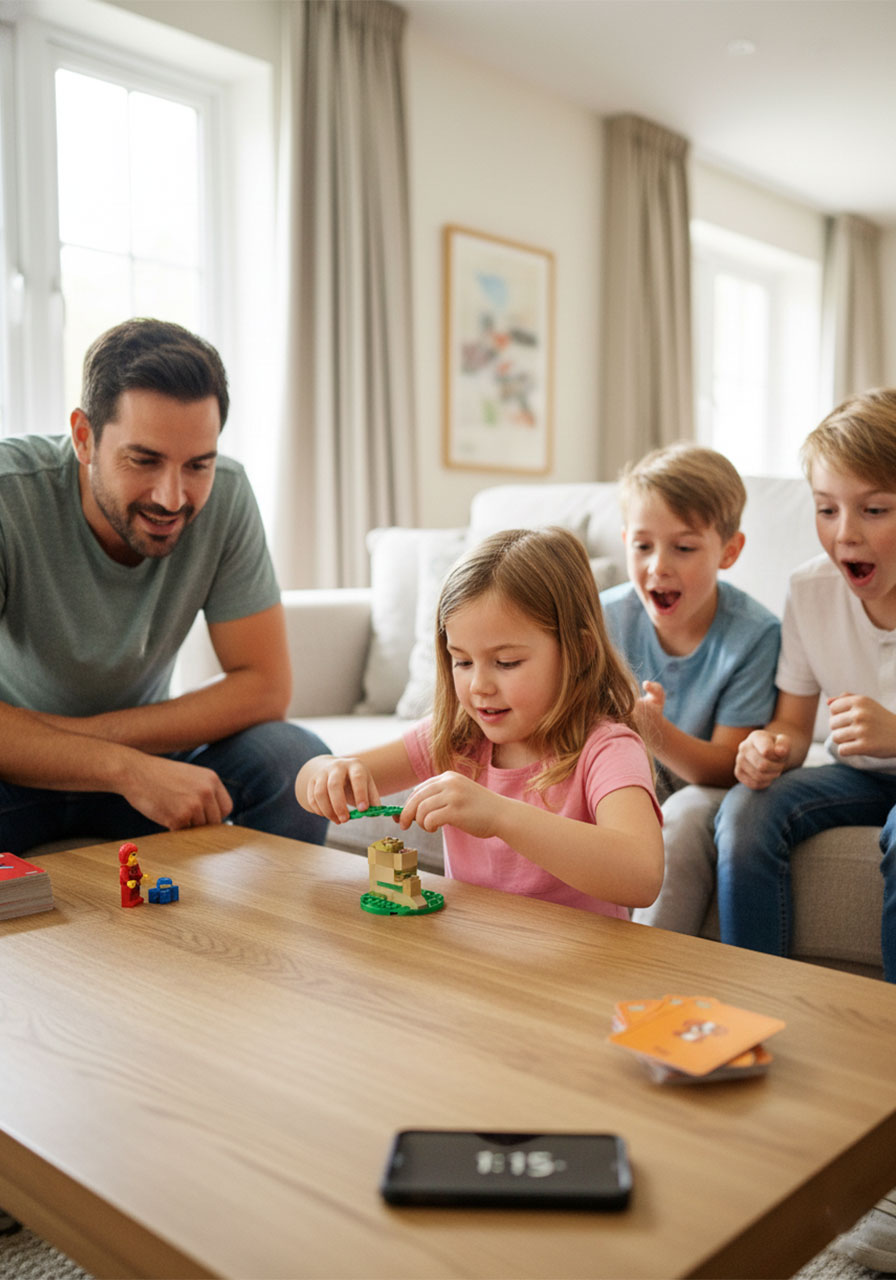
There’s something uniquely hilarious about watching someone frantically snap together a giraffe out of mismatched bricks while three kids shout increasingly wrong guesses. (“A lamp?” “A robot?” “A SNAKE?!”) The time pressure, the creativity, and the inevitable laughter make this one of those games that kids beg to play again.
It also sneaks in real benefits for kids: spatial thinking, creativity, vocabulary, and the very important life skill of not laughing so hard you knock the pieces off the table (results may vary on that last one).
Best for: Kids ages 5+, families, classrooms, LEGO birthday parties, rainy days
Players: 2–10+ (works great for large groups)
Time to Play: 20–45 minutes
Prep Time: 10–15 minutes

What You’ll Need
A good pile of LEGO bricks (a classic tub works perfectly – the more variety, the better)
A list of things to build – or slips of paper with words written on them (more on this below)
A timer (your phone works great)
A way to keep score – a notepad, a whiteboard, or a DIY LEGO scoreboard (see the Pro Tip below!)
A six-sided die (optional, for the category version)
One helpful prep tip: Before you play, pull out a small handful of wheels and eye pieces and set them aside. Wheels are a lifesaver when someone draws a vehicle category card, and eyes make animals way more recognizable. Future you will be very grateful.
How to Set Up the Game
Step 1: Choose Your Word List Format
You have two easy options here:
Option A – Simple Paper Slips:
Write the names of common objects, animals, vehicles, or buildings on small slips of paper. Fold them up and toss them into a bowl or hat. Done!
Option B – Category Cards:
Organize your words into five categories – Vehicles, Animals, Nature/Outdoors, Everyday Objects, and a Wildcard/Random category. Write or print each word on a small card and sort them into five piles by color or label. This version adds a fun strategy layer because knowing the category helps players guess faster.
Great word ideas by category:
Vehicles: car, airplane, boat, rocket, tractor, submarine, helicopter
Animals: dog, frog, octopus, giraffe, crab, butterfly, alligator
Nature/Outdoors: tree, mountain, cactus, mushroom, house, bridge, volcano
Everyday Objects: camera, hammer, chair, crown, hot dog, phone, guitar
Wildcard: robot, stoplight, wand, birthday cake, trophy, spaceship
For younger kids (ages 4–6), stick to very simple, visual words: dog, boat, chair, apple. For older kids and adults, go wild with trickier ones like “submarine” or “volcano.”

Step 2: Set Up the Score Tracker
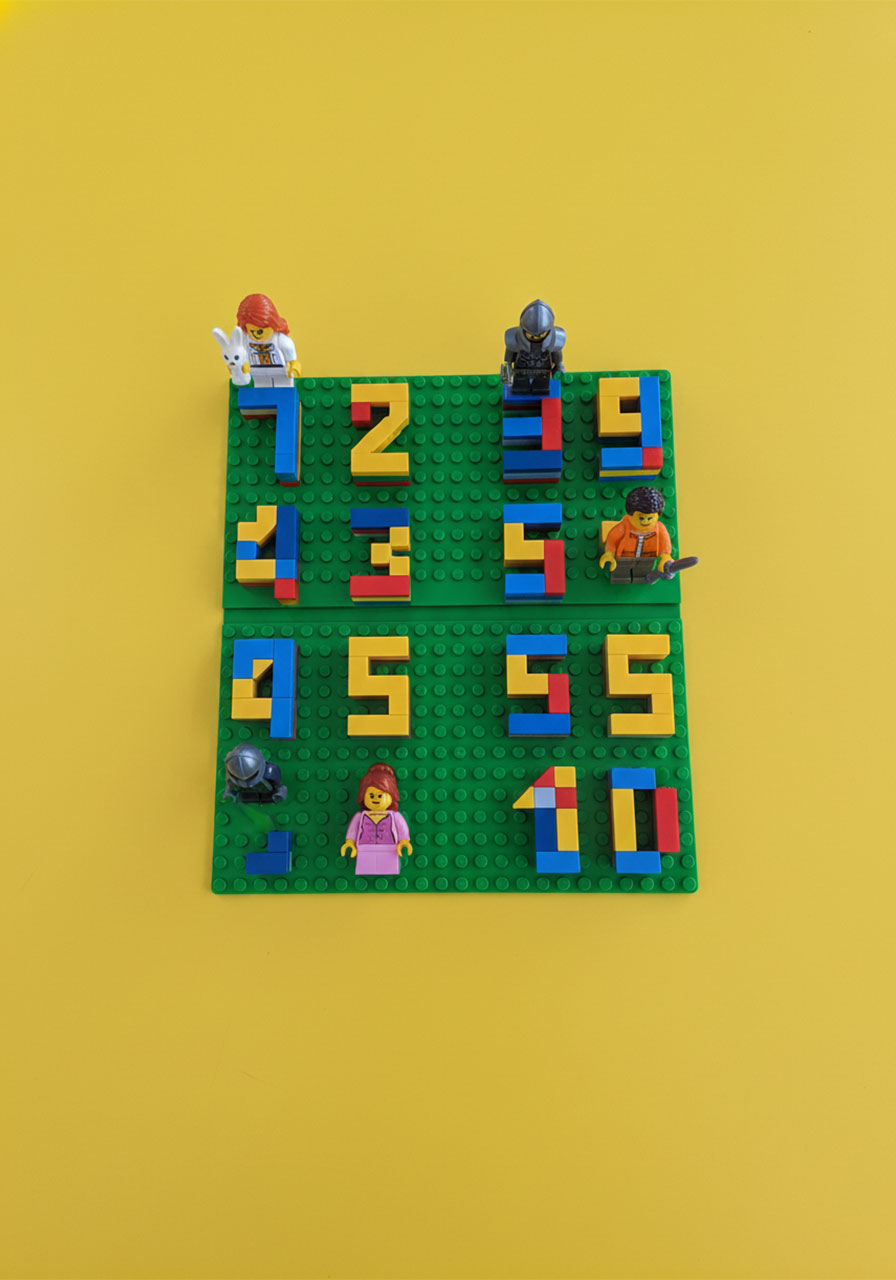
A simple notepad with player names works perfectly. But if you want to go full LEGO mode, let each player build their own mini scoreboard token – a small LEGO figure or a little tower they add a brick to each round. Kids absolutely love this part, and it doubles as a fun warm-up activity before the game even starts.
Step 3: Dump Out the Bricks
Place all the LEGO bricks in the center of the table so everyone can reach them. Make sure the set-aside wheels and eyes are nearby but kept separate so builders can grab them quickly.
How to Play: Step-by-Step
1. Pick the first builder. The youngest player, the birthday child, or whoever grabs a brick first – you decide!
2. Draw a word. The builder picks a slip of paper (or, if using categories, rolls the die to determine which category pile to draw from) and looks at their word secretly. No peeking from other players!
3. Set the timer. Give the builder 60–90 seconds to build their creation. For younger kids, 2 minutes works better. For a more intense challenge, try 45 seconds.
4. Build! The builder starts constructing their object out of LEGO bricks while everyone else watches and shouts out guesses in real time. Guessing out loud is part of the fun – no need for silent raised hands here.
5. Award points. When someone guesses correctly, both the builder AND the guesser earn a point. This is key – it keeps everyone invested even when it’s not their turn to build.
6. Rotate. The next player to the left becomes the new builder. Repeat until everyone has had 2–3 turns as builder (or as many rounds as you want to play).
7. Count up the points. The player with the most points at the end wins! In case of a tie, do a sudden-death lightning round with a 30-second build-off.
The Golden Rule of LEGO Creationary (Seriously, This Changes Everything)
Here’s the most important tip you’ll read today: don’t try to build a perfect version of the thing.
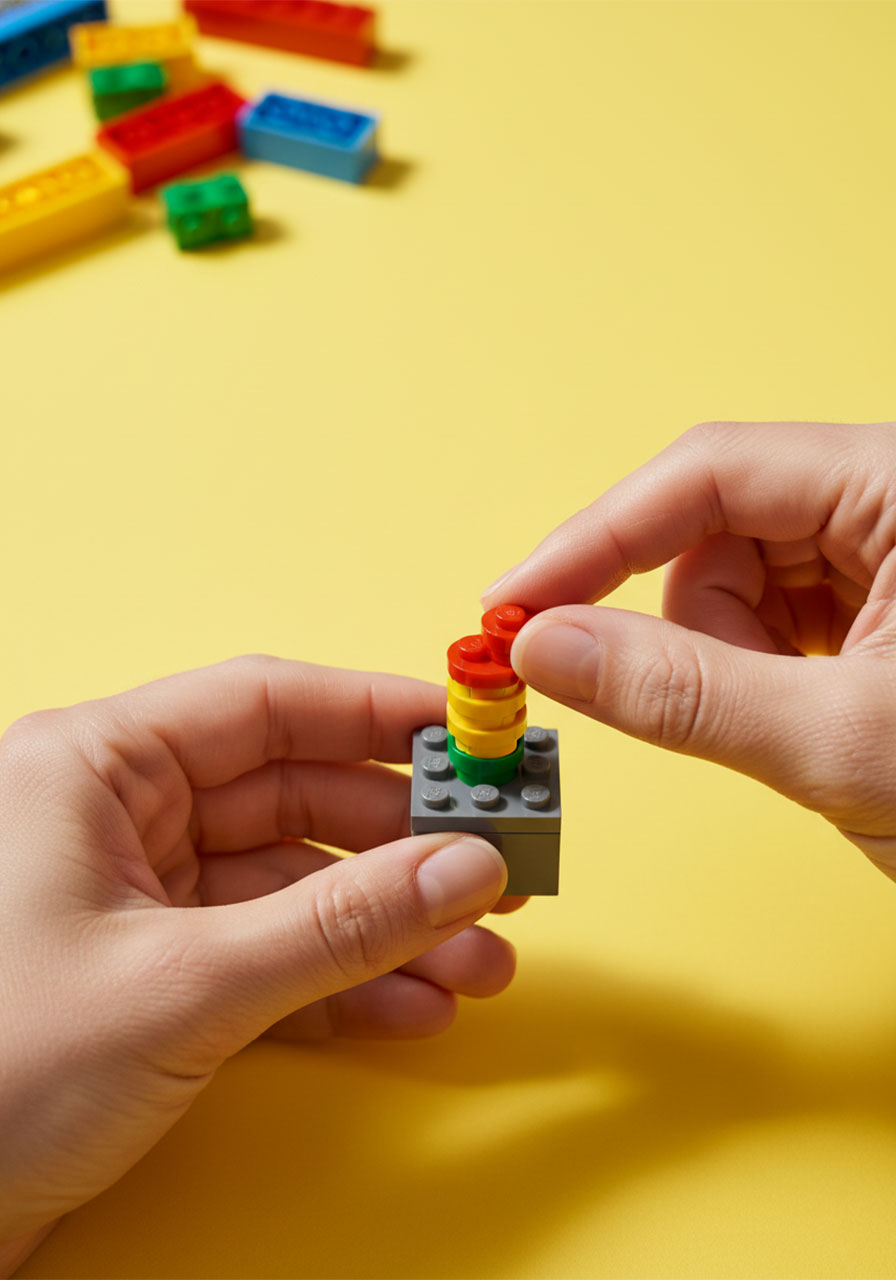
Trying to build an anatomically correct giraffe out of LEGO in 60 seconds will only end in frustration. Instead, focus on the key identifying feature. Building a giraffe? Make it tall and yellow. Building a camera? Find a round piece that looks like a lens and build a boxy shape around it. Building a stoplight? Stack red, yellow, and green bricks in a column.
The guessers don’t need perfection – they need enough of a clue to shout the right answer. The more you lean into creative shortcuts, the more fun (and funnier) the game gets.
Game Variations to Mix It Up
Version 1: Team Play (Great for Large Groups)
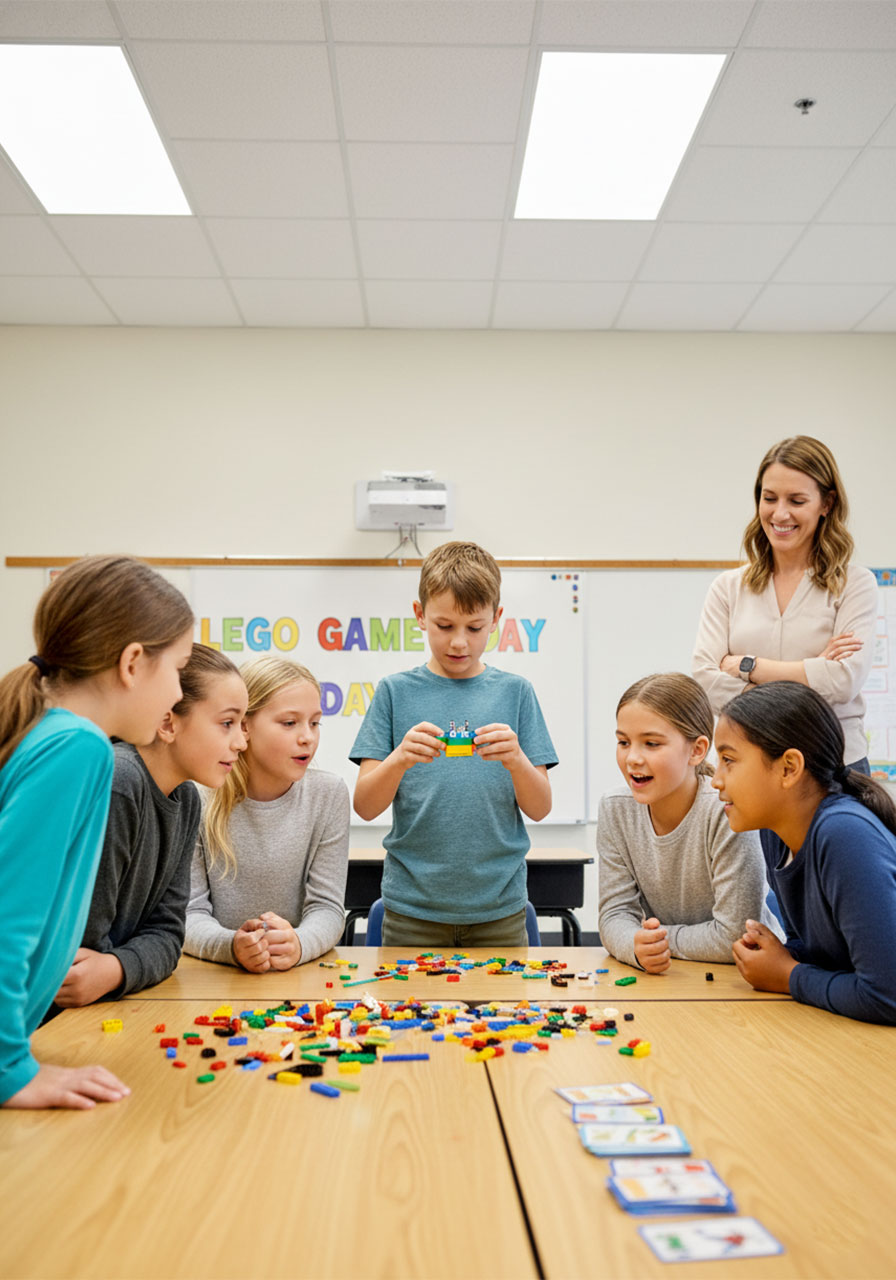
Split into two teams. One team’s builder constructs for their own team’s guessers only. Teams alternate turns. First team to reach 10 points wins. This version adds a fun competitive energy that’s perfect for birthday parties or classroom game days.
Version 2: No Categories, All Chaos (The Wild Card Version)
Throw all the word slips into one bowl regardless of category. Without the category hint, guessing gets much harder – and much funnier. Best for older kids and adults who want a bigger challenge.
Version 3: Speed Round
Set the timer to 30 seconds. Go. This version is pure, glorious chaos and is perfect for energetic groups who want to keep the pace moving fast.
Version 4: Classroom Edition
Use vocabulary words, spelling words, or curriculum topics as the build subjects. Kids are far more engaged when they’re building the water cycle or a historical landmark than when they’re filling out a worksheet. Just saying.
Tips for Playing with Different Age Groups
Ages 4–6
Keep the word list simple and very visual (dog, car, house, apple). Give them 2–3 minutes to build. Skip the scoring and just play for fun. The building itself is the reward at this age.
Ages 7–12
This is the sweet spot. Kids this age love the competition, get creative with their builds, and are quick guessers. Use all five categories and keep the timer at 90 seconds.
Teens & Adults
Crank up the difficulty with abstract or tricky words (democracy, Wi-Fi, photosynthesis – okay maybe not that last one). Cut the timer to 45 seconds. Add a rule that the builder cannot speak, point, or gesture – only the LEGO creation can communicate.
Mixed Ages
Pair younger kids with older ones as building partners. The older kid builds while the younger one tries to guess. It levels the playing field beautifully and turns it into a cooperative moment.
Pro Tips for Hosting This Game Like a Pro
Pro Tip #1: Set the bricks out before guests arrive so kids can start building casually while everyone gets settled. It’s a great way to keep early arrivals busy and gets everyone in a LEGO mindset.
Pro Tip #2: For birthday parties, let the birthday child always go first. It gives them a special moment and gets the game rolling with maximum hype.
Pro Tip #3: Keep a “showcase shelf” – a flat surface where finished creations can be displayed during the game. Kids love seeing all the builds lined up at the end, and it makes for a great photo moment.

Pro Tip #4: If you’re playing with very young children who can’t read, describe the word to them verbally before the timer starts. They get the same fun building challenge – they just need a little extra help getting started.
Pro Tip #5: Save the most challenging words for the last round when everyone is warmed up and in full creative mode. “Escalator” hits differently in round five than it does in round one.
Why Parents & Teachers Love This Game
Beyond the obvious fun factor, this game quietly does a lot of good things. It builds (pun absolutely intended) spatial reasoning, creative problem-solving, vocabulary, and communication skills. It gets kids off screens. It’s cooperative enough to feel inclusive but competitive enough to keep everyone engaged. And it scales beautifully – from a two-person rainy afternoon activity to a 20-kid birthday party game.
For teachers, it’s one of the most effective “sneaky learning” tools out there. Use it as a vocabulary review, a science concept reinforcement activity, or simply as a reward for a great week. The engagement level is through the roof.
For parents, it’s one of those rare games where you’ll actually find yourself having just as much fun as the kids. The builder trying to build “submarine” in 60 seconds while their seven-year-old shouts “IS IT A WORM?!” is the kind of memory you don’t forget.
With this game in your back pocket, you’re officially ready to host a LEGO party (or game night, or classroom session) that kids will be talking about long after the bricks are back in the bin. Because the best gatherings aren’t just fun – they’re the ones filled with laughter, creativity, and the occasional very ambitious attempt at a LEGO giraffe.
Now go dig out that brick tub. Game time.
More Kid’s Party Ideas to Keep the Fun Rolling:
DIY LEGO Pom Pom Maze: The Ultimate Rainy Day Activity Kids Will Beg to Do Again
16 Genius Colour Sorting Activities for Toddlers & Preschoolers
22 Pinterest Ideas Every Parent (and Teacher!) Will Actually Want to Try
The Easiest Math Activity for Preschoolers (All You Need Is a Cardboard Box!)
15 Cup Stacking STEM Challenges That Will Keep Preschoolers Busy for Hours
5 Domino Math Games Kids Actually Want to Play (No Worksheets Required!)
The Coolest Morse Code Activity for Kids (Using Lego!)
The Straw Maze Activity Kids Will Beg to Play Again and Again
