

Got a muffin tin, some cupcake liners, and a handful of small toys lying around? Then you have everything you need to set up one of the most satisfying early literacy activities out there – and your little one will be sorting, saying, and owning letter sounds before snack time is over.
This is the kind of hands-on activity that looks simple but does serious learning work. It’s perfect for preschoolers and kindergartners who already recognize most of their letters and are starting to connect those letters to the sounds they make. No worksheets. No fuss. Just a whole lot of “Ooh! That starts with F!” moments.
What Is the Muffin Tin Letter Sounds Activity?
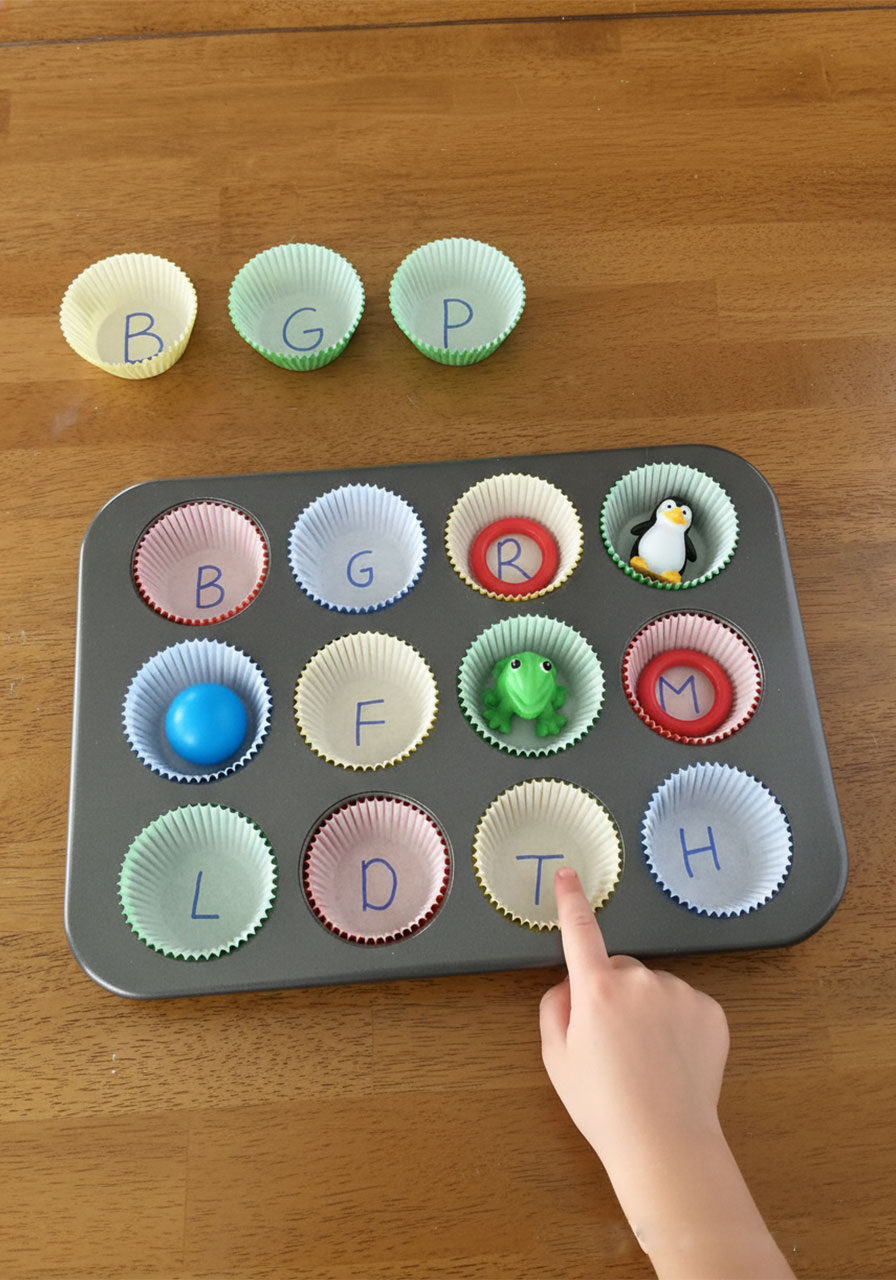
The idea is beautifully simple: write a letter on the bottom of each cupcake liner, drop them into a muffin tin, and challenge your child to dig through a bin of small objects and match each one to the cup that matches its beginning sound. A frog goes in the “F” cup. A ball lands in “B.” A spoon? That’s an “S!” It’s a hands-on phonics sort that kids absolutely love – especially because it feels like a game, not a lesson.
Who Is This Activity Best For?
Best for: Kids ages 4–6 who can identify most alphabet letters and are beginning to learn letter sounds (a typical kindergarten or early first-grade skill).
Time to Set Up: 5–10 minutes.
Time to Play: 15–30 minutes (longer if your child keeps wanting to reset and go again – which happens a lot!).
Every child develops at their own pace. Some kids are ready for letter sounds at 4, others click with it closer to 6. That’s completely normal. This activity is easy to adjust up or down depending on where your child is – more on that in the Pro Tips section below.
What You’ll Need
A standard 12-cup muffin tin
12 paper cupcake liners
A marker (dark blue or black works great)
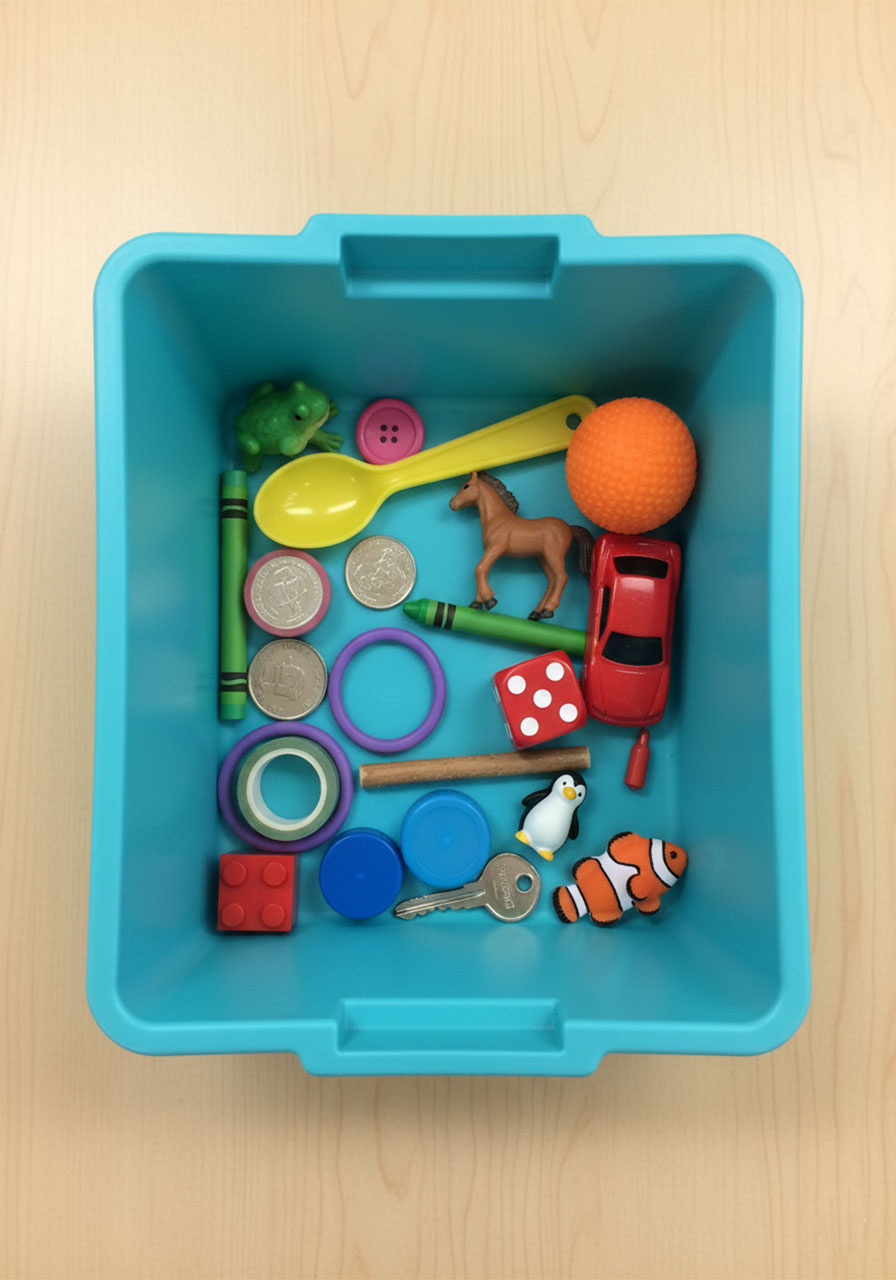
A bin or basket filled with 20–30 small objects from around the house
Good objects to collect: small toy animals (horse, frog, dog, cat, bear), everyday items (spoon, lid, button, crayon, key, ring, tape, coin), small toys (ball, car, dice, bracelet, Lego brick). The more variety, the better!
How to Set It Up
1. Choose your letters.
For a 12-cup tin, pick 12 consonants your child is currently working on. Great starter letters: B, C, D, F, G, H, L, M, P, R, S, T. Skip vowels for now – the beginning sounds of vowel words (like “egg” or “apple”) are much trickier for young learners to hear than consonant sounds like the “T” in turtle.
2. Write one letter per liner.
Use a marker to write a large, clear capital letter in the center of each cupcake liner. Capital letters are easier for young children to identify, so start there – lowercase can come later.

3. Set up the tin.
Drop one labeled liner into each cup of the muffin tin. Arrange it on a table where your child can easily reach all 12 cups.
4. Fill the bin.
Collect 20–30 small objects and toss them into a bin or basket next to the tin. Make sure you have at least one item per letter – ideally a few extras to make the sorting feel like a real challenge.
5. Introduce the activity.
Show your child one object – say, a frog – and say it out loud together: “Frog… fff… what sound does frog start with?” Let them find the “F” cup and place the frog inside. Then step back and let them take it from there!
How to Play
1. Your child picks up an object from the bin, says its name out loud, and listens for the beginning sound.
2. They find the matching letter cup in the muffin tin and place the object inside.
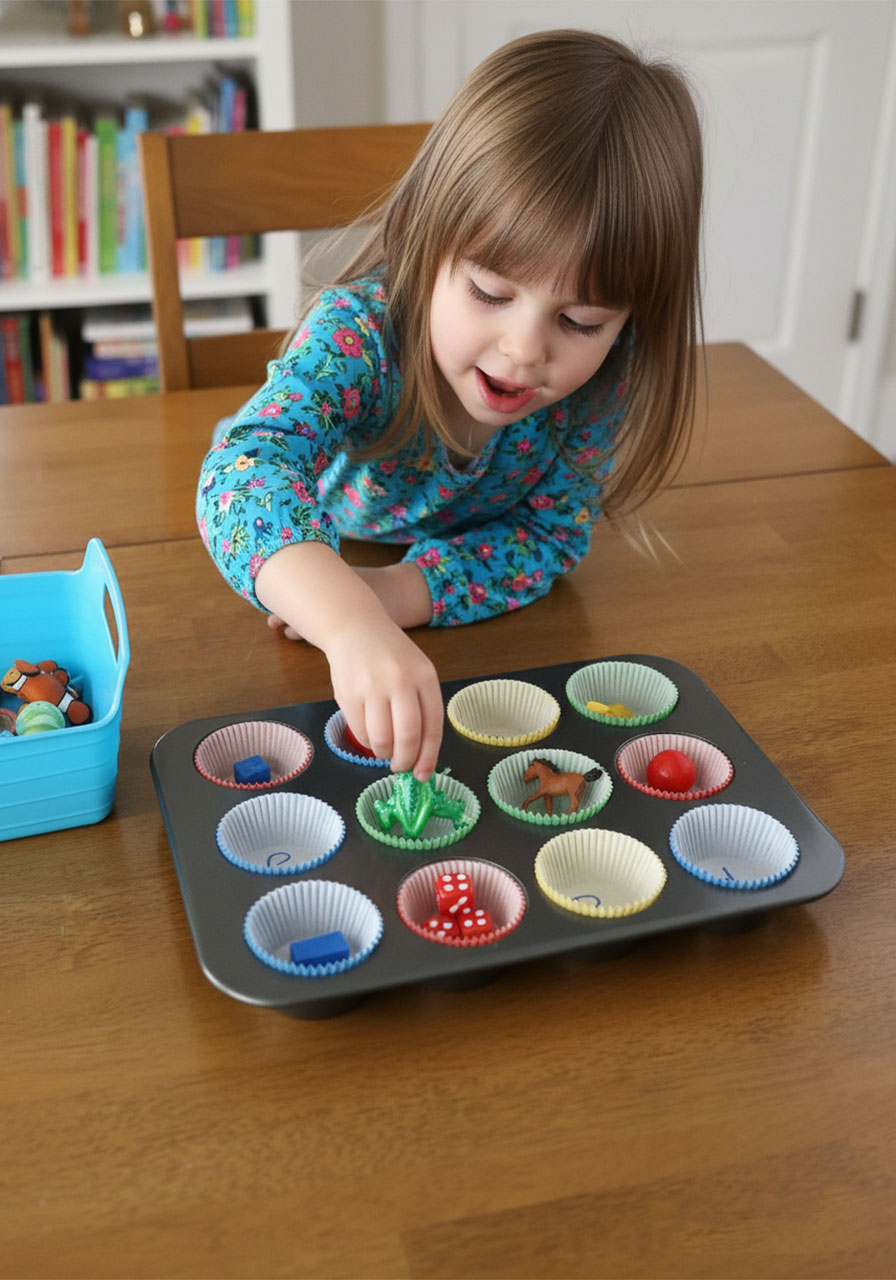
3. They keep going until all the objects have been sorted (or the muffin tin is wonderfully full!).
4. Once everything is sorted, go through each cup together. Pick up each object, say its name, and confirm the beginning sound. Celebrate every correct match – and gently correct any mix-ups together.

The beauty of this activity is that kids can do multiple objects per cup. A “B” cup might end up holding a ball, a button, and a bear – and that’s a win.
Pro Tips to Make It Even Better
Stick to consonants first. Vowel beginning sounds are genuinely tricky – even for kids who are doing great with consonants. Save B, G, R, P, S, F, C, M, L, D, T, and H for now, and introduce vowel sorting once consonants feel solid.
Avoid C and K at the same time. Both make the same “kuh” sound, which can cause real confusion. Use one or the other in a given session. You can swap them out next time!
Want a self-checking challenge? Limit the object pile to exactly 12 items – one per letter. If your child gets to the last object and it doesn’t match the last empty cup, they’ll know something went in the wrong spot. It’s a great built-in puzzle for kids who are ready for more independence.
Make it a guessing game. Hold up an object without telling your child what it is and say, “What is this called? What sound does it start with?” This builds both vocabulary and phonics skills at once.
Reset and repeat! Swap in different objects the next time you pull this out – new items keep it fresh and give kids practice with a wider range of beginning sounds.

Why This Activity Works So Well
There’s a reason phonics teachers love hands-on sorting: when kids physically handle an object, say its name, and make a decision about where it belongs, they’re engaging multiple senses at once – and that multi-sensory experience is one of the most effective ways to lock in early reading skills.
This isn’t just a fun way to kill 20 minutes (though it definitely is that too). It builds the exact phonemic awareness skills that are the foundation of reading – the ability to hear and identify individual sounds in words. Kids who have strong phonemic awareness go on to become stronger, more confident readers.
Plus, there’s something deeply satisfying about filling up those little cups. Ask any kid who’s done this activity – they will want to do it again.
Variations to Try
Ending sounds version: Instead of matching the beginning sound, have your child sort objects by their ending sound. A great next step once beginning sounds feel easy!
Lowercase letter version: Once your child is confident with capital letters, swap the liners for ones written in lowercase. Same game, new challenge.
Color-coded sorting: Use colored cupcake liners and have kids sort by both the color AND the letter sound – great for adding a visual layer to the activity.
Team play for siblings or classrooms: Give each child a bin of objects and see who can correctly fill their muffin tin first. Keeps things competitive and fun for older kids!
With this activity ready to go, you’re not just keeping your little one busy – you’re giving them a serious head start on one of the most important skills they’ll ever learn. And the best part? They’ll have no idea it’s educational. They’ll just think they’re playing.
Because the best learning always feels like a game.
More Kid’s Party Ideas to Keep the Fun Rolling:
How to Build a LEGO Marble Maze (Step-by-Step DIY for Kids of All Ages)
What Melts in the Sun? The Easiest Science Experiment Kids Will Beg to Do Again
How to Use LEGOs to Make Pictures in Playdough (It’s Easier Than You Think!)
LEGO Charades, Pictionary & Creationary: The Ultimate Hands-On Game for Kids & Families
DIY LEGO Pom Pom Maze: The Ultimate Rainy Day Activity Kids Will Beg to Do Again
16 Genius Colour Sorting Activities for Toddlers & Preschoolers
22 Pinterest Ideas Every Parent (and Teacher!) Will Actually Want to Try
The Easiest Math Activity for Preschoolers (All You Need Is a Cardboard Box!)
