
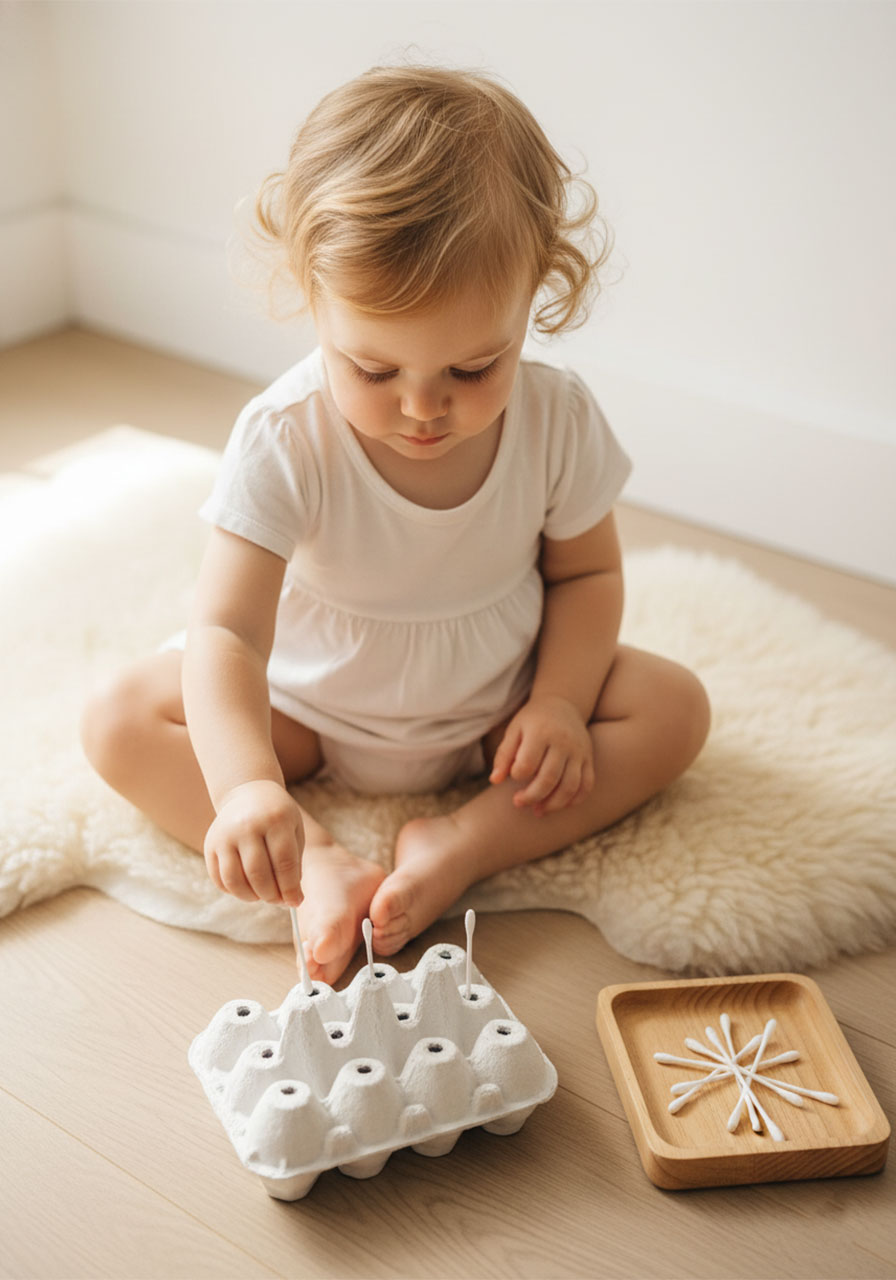
Yes, you read that right. An egg carton and a handful of q-tips. That’s it. That’s the whole activity.
I know what you’re thinking: “That’s not an activity – that’s my recycling bin.” Stick with me, because this ridiculously simple setup kept a 17-month-old fully focused and independent for over 30 minutes. No batteries. No screen. No fancy toys. Just a recycled egg carton and some cotton swabs.
Whether you’re a parent looking for a quick toddler win or a teacher in need of a low-prep sensory activity, this one is going straight to the top of your list.
Why This Activity Is Actually Brilliant (Not Just Cheap)
Before you go digging through your recycling bin, here’s the “why” – because this isn’t just about keeping your toddler busy. It’s about giving their developing brain exactly what it’s hungry for.
Babies and toddlers between 12 and 24 months are in a major phase of fine motor skill development. They are obsessed with fitting things into holes, dropping objects into containers, and repeating the same action over and over. It’s not boredom – it’s learning. Every single push of a q-tip through a hole is building:
Hand-eye coordination – lining up the q-tip with the hole takes real focus for little hands.
Fine motor control – gripping and guiding a thin q-tip uses the same pincer grip they’ll later use for writing.
Concentration and focus – the satisfying feeling of success keeps them coming back for more.
Independent play skills – this is an activity they can do solo, which is a huge confidence builder.
This is rooted in the RIE (Resources for Infant Educators) philosophy, which treats babies as capable, active learners. When we give toddlers tasks that are just the right level of challenging, they don’t need us to entertain them – they entertain themselves. That’s the goal.
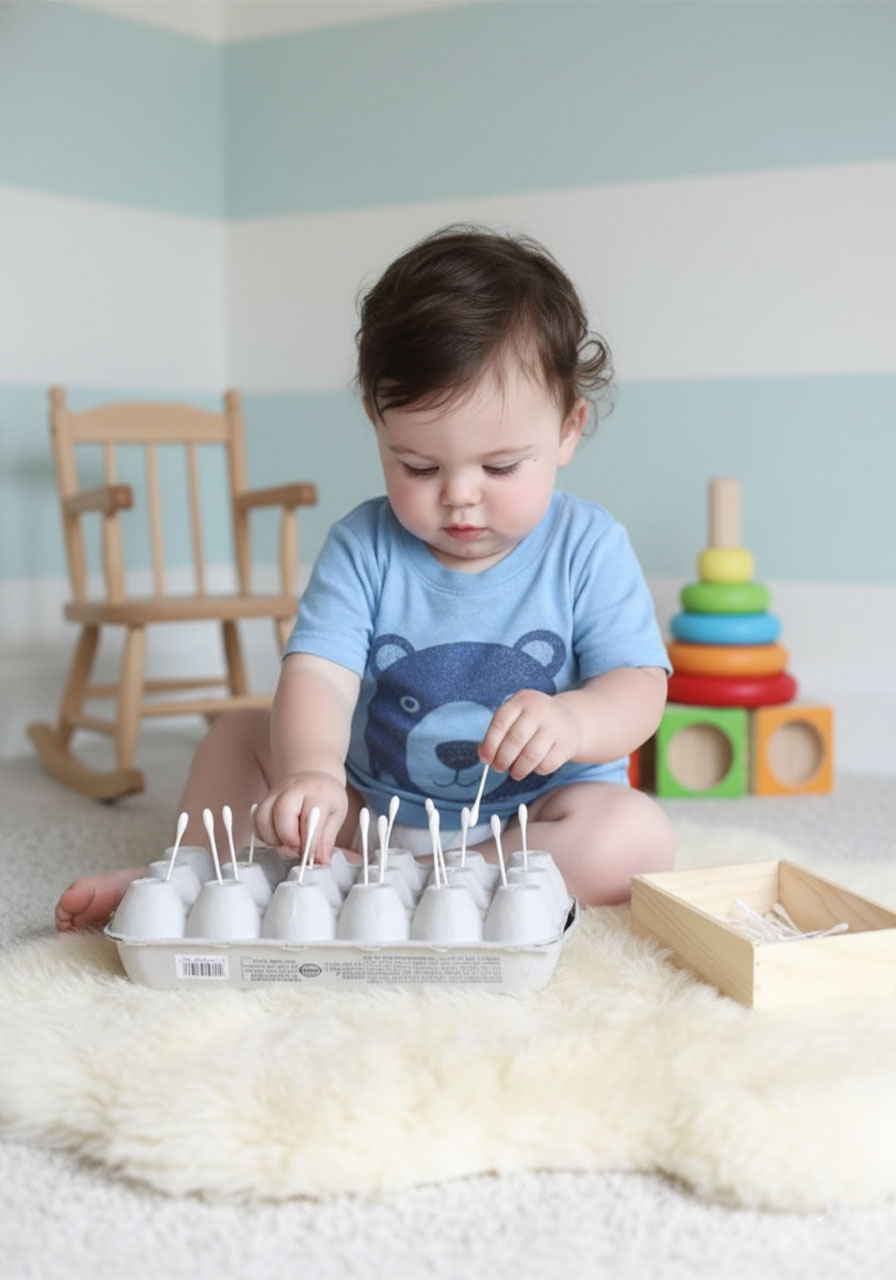
Who Is This Activity For?
Best for: Babies and toddlers aged 12–24 months
Also great for: Preschool classrooms as a fine motor center activity
Time to set up: 2 minutes or less
Activity duration: 15–30+ minutes (yes, really)
Supervision needed: Yes – always stay nearby with babies and toddlers (see safety note below)
What You’ll Need
1 empty egg carton (a 12-count or 18-count both work great)
10–15 q-tips
A pencil or pen
A pair of scissors
Optional: A small tray or wooden box to hold the q-tips (makes it feel like a “real” activity setup)
Total cost: $0. You almost definitely have all of this at home right now.

How to Make the Q-Tip Push Activity
This setup takes less than two minutes. Here’s exactly what to do:
1. Flip the egg carton upside down so the bumpy side is facing up. This is now your activity base.
2. Poke a hole into the top of each egg bump using the tip of your scissors. A simple puncture is enough to start.
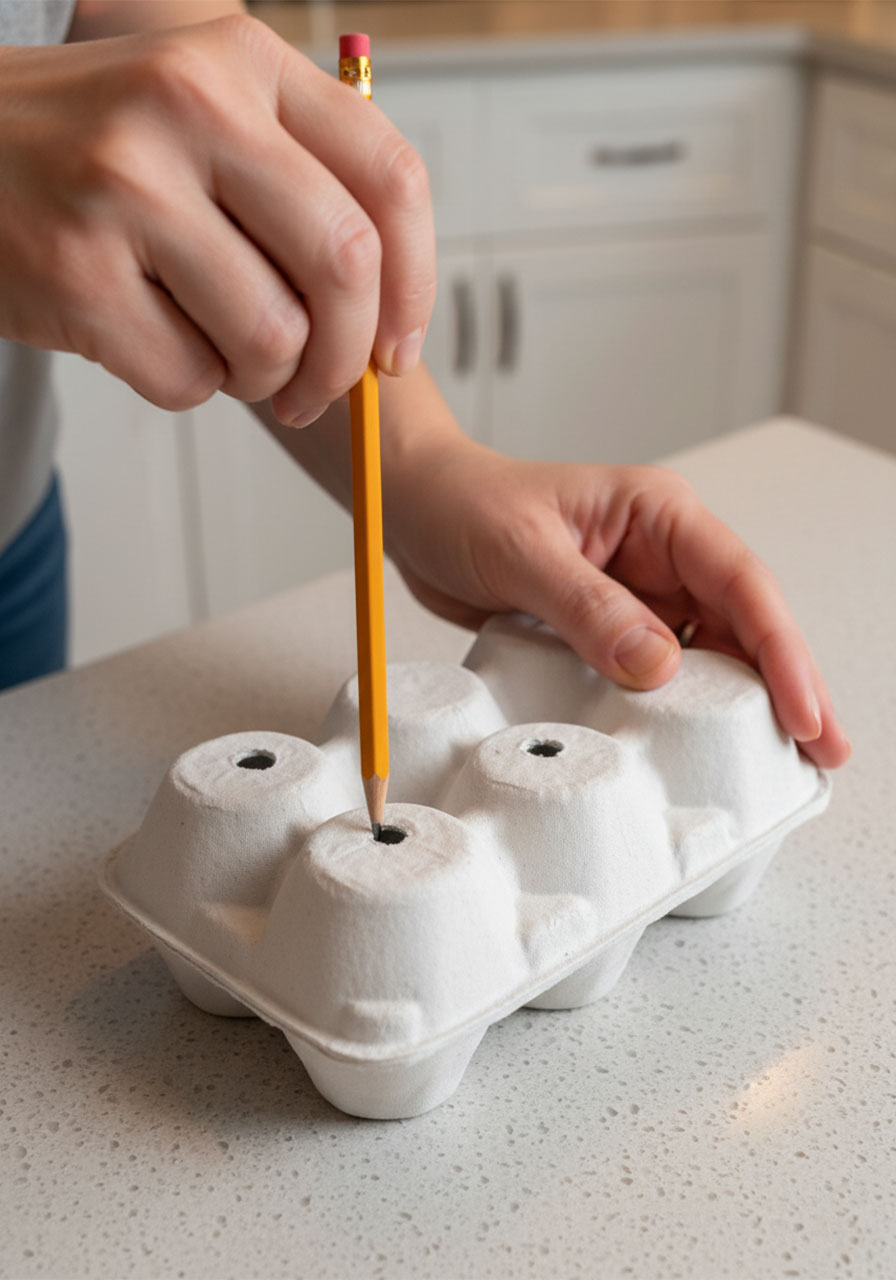
3. Widen each hole by pushing a pencil through until a q-tip can fit through with a little resistance. You want it to be a snug push – not too loose, not too tight. The slight resistance is what makes it satisfying and challenging for little hands.
4. Remove the pencil and repeat for as many holes as you’d like. You don’t have to do every single one – even 6 to 8 holes is plenty to start.
5. Place the q-tips in a small container or pile next to the egg carton so your toddler can grab them easily.
That’s genuinely it. You’re done. Go ahead and feel very accomplished.
How to Introduce It to Your Baby
Don’t just hand it over and walk away – a quick 30-second demo is the secret to making this activity click immediately.
1. Sit down with your baby and place the activity in front of both of you.
2. Pick up one q-tip and slowly, clearly push it through one of the holes while your baby watches.
3. Say something simple like: “Look – push it through!”
4. Hand your baby a q-tip and let them try. Resist the urge to guide their hand – let them figure it out.
5. Once they get it? Step back and let the magic happen.
Most toddlers catch on within 1–2 tries. Once they feel that satisfying “push-through,” they are hooked.

Safety Note (Please Read This)
Q-tips are small objects, and all small objects require supervision with babies and young toddlers. Here’s how to use this activity safely:
Always supervise. Stay in the room and keep an eye on your child throughout the activity.
Watch for mouthing. If your toddler puts the q-tips in their mouth repeatedly, put the activity away and try again in a few weeks. There’s no rush – timing matters.
Try popsicle sticks as an alternative. If you’re unsure about q-tips, popsicle sticks are a great swap – they’re a little larger and easier to grip, and you can widen the holes accordingly.
Age appropriateness. This activity works best once a baby is consistently sitting up independently and showing an interest in putting objects into containers – usually around 12 months.
Pro Tips to Make It Even Better
Pro Tip #1: Use a small wooden tray. Placing the q-tips in a little container next to the egg carton transforms this from a “random activity” into a proper, inviting setup. Toddlers are drawn to organized, beautiful presentations (it’s a Montessori thing). A small bowl or wooden box works perfectly.
Pro Tip #2: Let them pull the q-tips back out. Half the fun is pushing them through – the other half is pulling them back out and starting again. This two-step process doubles the engagement time and makes it a fully independent loop of play.
Pro Tip #3: Don’t intervene too quickly. If your toddler is struggling to line up the q-tip, resist the urge to help immediately. That moment of challenge is where the learning happens. Give them a full 30 seconds to try before gently stepping in.
Pro Tip #4: Rotate it away and bring it back. If your toddler loses interest after a few sessions, put it away for a week or two. When you bring it back out, it’ll feel brand new again. This trick works for almost any baby activity.
Fun Variations to Try
Color the q-tip tops: Use a marker to color some q-tip tips red, some blue, some yellow. Ask your toddler to “find the red one” before pushing it in. Instant color-matching activity.
Count together: As your older toddler (18–24 months) pushes each one in, count out loud together. “One… two… three!” Simple number exposure woven right into play.
Use straws instead: Cut plastic straws into 3-inch pieces and widen the holes slightly. The bright colors add a fun visual element, and they’re easy for little hands to grip.
Make it a classroom fine motor station: Teachers, set up three or four egg cartons at a table with a small cup of q-tips at each one. Perfect independent work station that requires zero cleanup drama.
The Bottom Line
The best baby activities don’t have to be expensive, elaborate, or Pinterest-perfect. Sometimes the most engaging thing you can put in front of a toddler is a two-minute DIY setup made from stuff you were about to throw away.
The Q-Tip Push activity works because it meets toddlers exactly where they are – in their obsessive, focused, “let me do this 47 times in a row” phase – and gives them something genuinely satisfying to master.
Try it once, and you’ll keep a spare egg carton around forever.
More Kid’s Party Ideas to Keep the Fun Rolling:
The Muffin Tin Letter Sounds Activity That Makes Learning ABCs Actually Fun
How to Build a LEGO Marble Maze (Step-by-Step DIY for Kids of All Ages)
What Melts in the Sun? The Easiest Science Experiment Kids Will Beg to Do Again
How to Use LEGOs to Make Pictures in Playdough (It’s Easier Than You Think!)
LEGO Charades, Pictionary & Creationary: The Ultimate Hands-On Game for Kids & Families
DIY LEGO Pom Pom Maze: The Ultimate Rainy Day Activity Kids Will Beg to Do Again
16 Genius Colour Sorting Activities for Toddlers & Preschoolers
22 Pinterest Ideas Every Parent (and Teacher!) Will Actually Want to Try
