
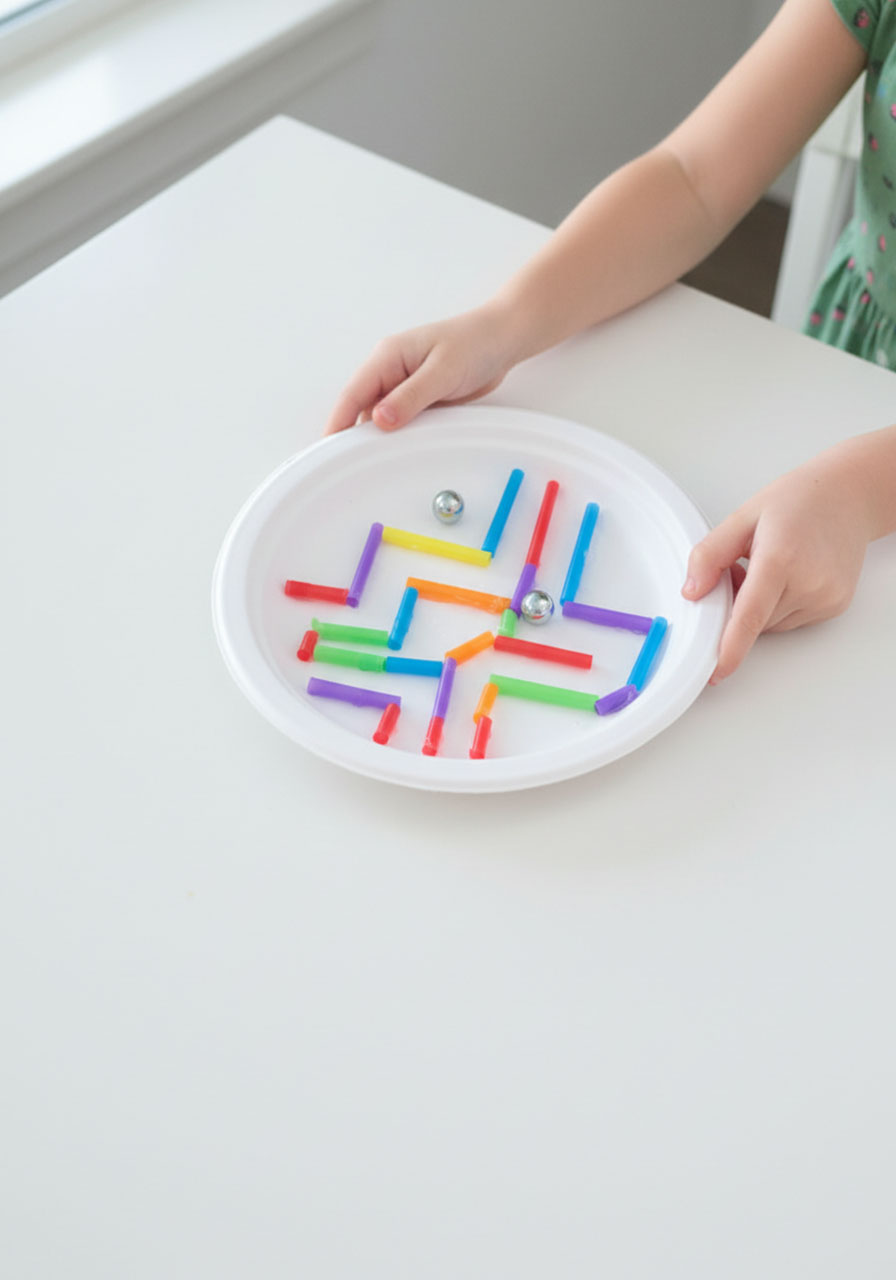
Here’s the thing about STEM activities: the best ones don’t just teach kids to follow instructions – they unleash their inner engineers and let them create something completely their own. This paper plate maze STEM challenge is exactly that kind of magic. Your kids will design, build, test, and totally geek out over their very own marble maze, all while learning what real engineers do every single day.
Get ready to see those creative wheels turning!
Why This Paper Plate Maze Challenge Is a Total Winner
This isn’t your average cut-and-paste craft. We’re talking about a full-on design challenge that walks kids through the entire engineering process – from wild brainstorming sessions to building prototypes, testing what works (and what spectacularly doesn’t), and tweaking their designs until they’ve got a marble maze masterpiece.
The best part? They’ll be having so much fun, they won’t even realize they’re learning critical thinking, problem-solving, and spatial reasoning skills.
Best for: Kids ages 6-12, STEM enthusiasts, rainy day activities, classroom challenges
Time to Complete: 45-60 minutes (plus drying time)
Players: 1+ (works great solo or as a friendly competition!)
What You’ll Need:
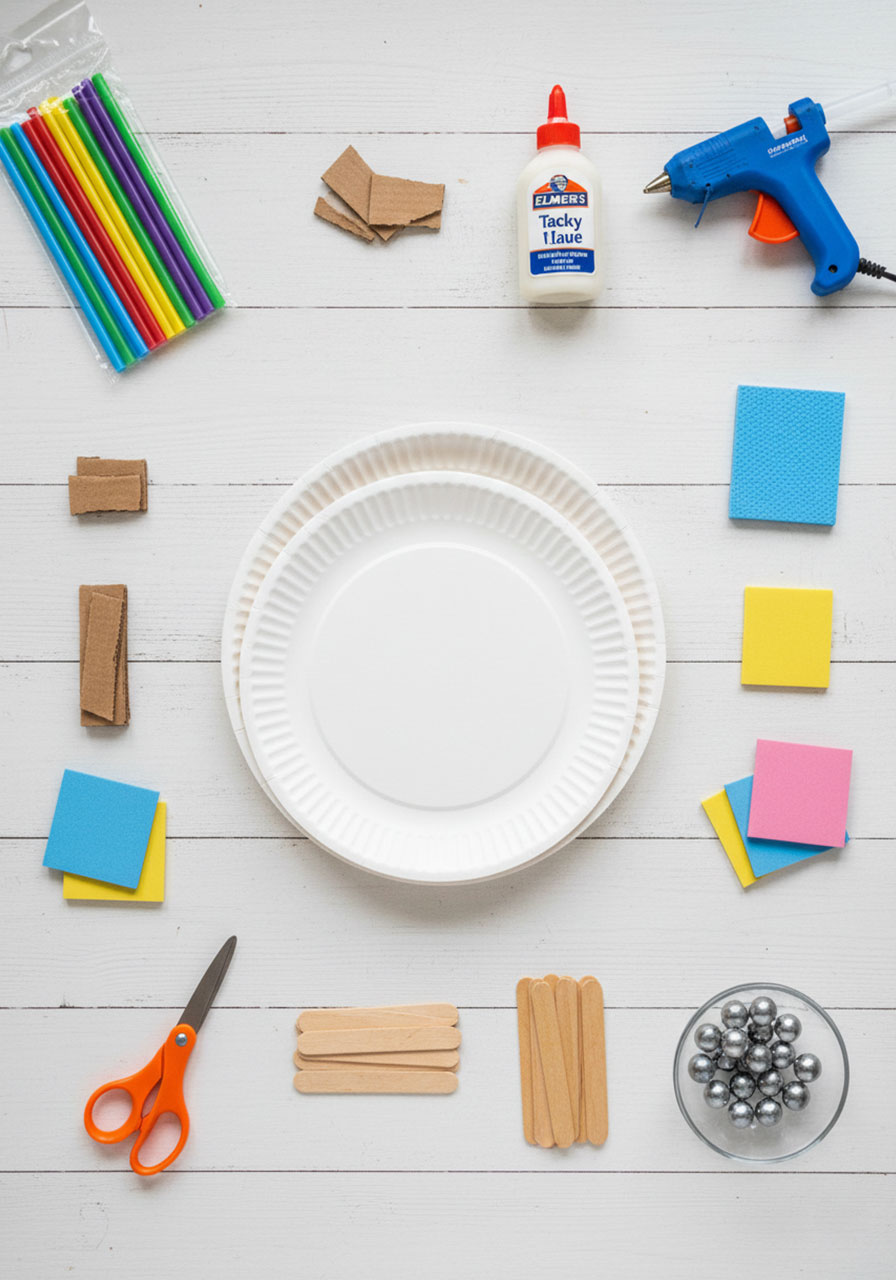
Paper plates (sturdy ones work best!)
Colorful straws (cut into different lengths)
Marbles or small metal balls
Tacky glue or hot glue gun (adult supervision required for hot glue)
Scissors
Cardboard pieces, popsicle sticks, or craft foam (optional)
String, cotton balls, or other household materials for creative touches
Pro Tip: Raid your recycling bin! Cereal boxes, toilet paper tubes, and old cardboard make fantastic maze-building materials.
How to Set Up Your Paper Plate Maze Challenge:
1. Issue the challenge to your young engineers.
Here’s the mission: Design and build a working marble maze inside a paper plate that can guide a marble from start to finish without the marble falling out or the maze falling apart. The maze needs to have at least three turns, and bonus points if it can handle two marbles racing at the same time!
2. Let the brainstorming begin.
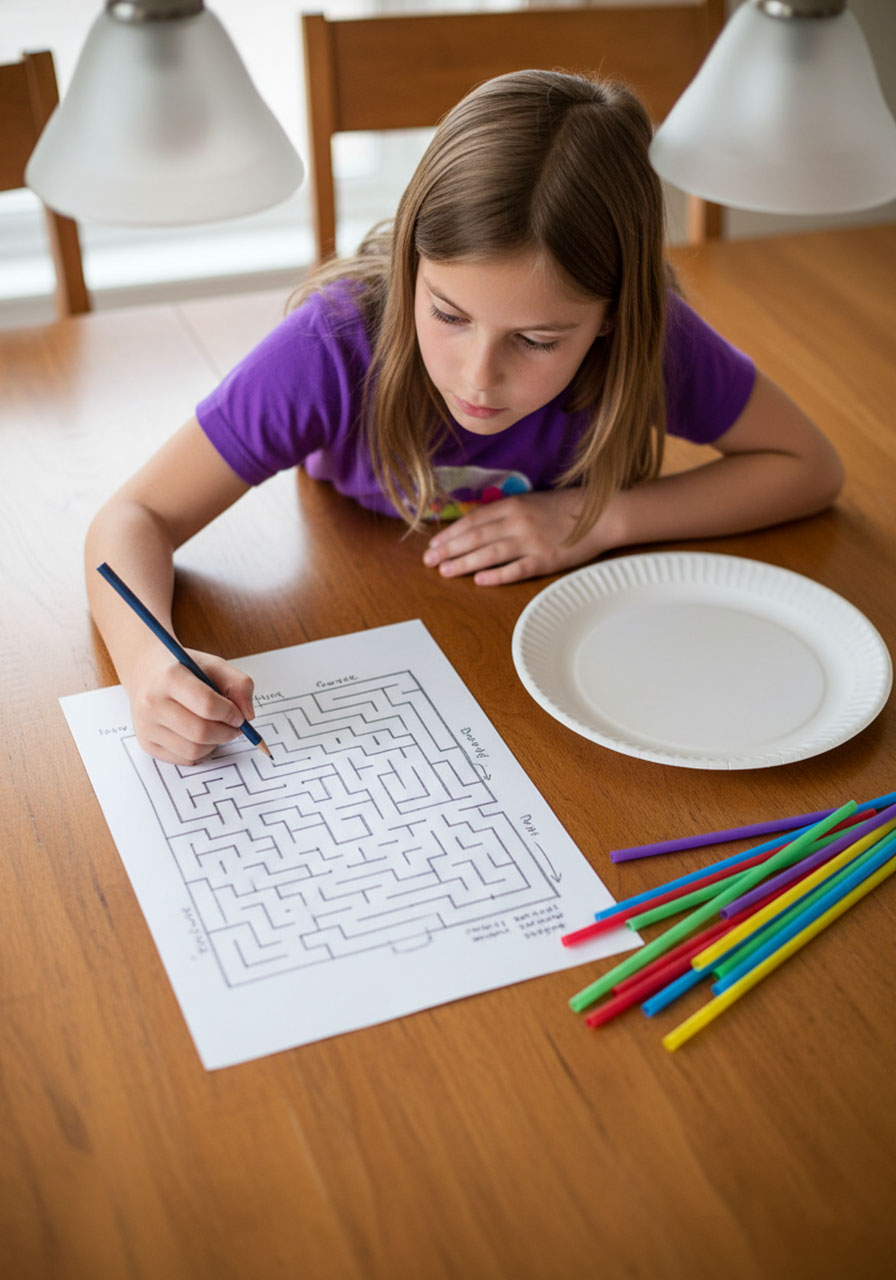
Before anyone touches glue, have kids sketch out their maze design on paper. Where will the starting point be? How will they create walls that actually keep the marble on track? What path will give the marble the most exciting journey? This blueprint stage is where the real engineering thinking happens.
3. Gather your materials and start building.
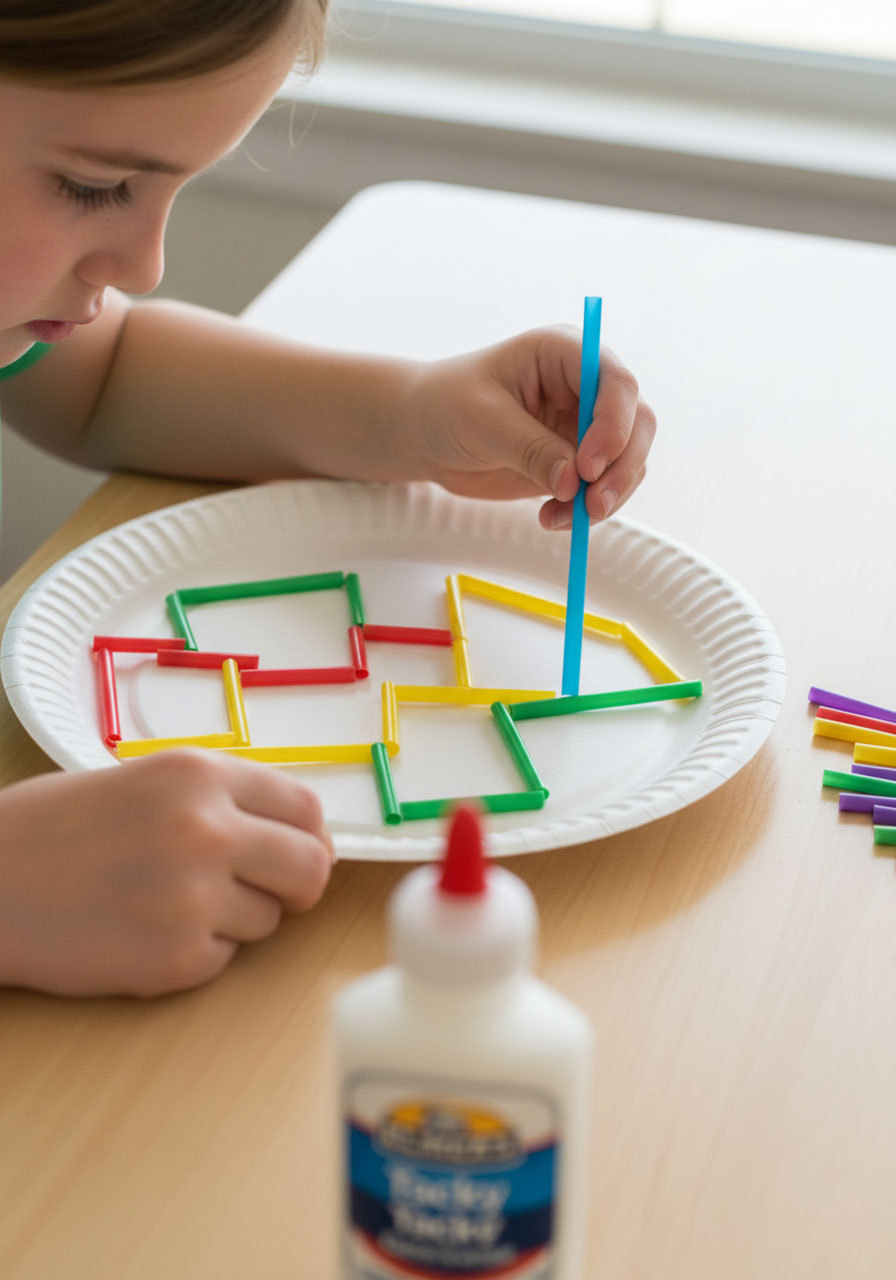
Give each kid a paper plate and access to your stash of building supplies. We found that cutting straws into smaller pieces and arranging them in zigzag patterns creates awesome maze walls. The trick is making sure the walls are tall enough to contain the marble but not so tall that you can’t see the marble zooming through.
4. Glue everything down and let it dry completely.
This is where patience becomes part of the challenge! Tacky glue gives kids more working time to adjust their design, while hot glue (with adult help) dries faster and creates stronger bonds. Make sure those straw walls are secured firmly – nothing’s more frustrating than a maze that falls apart mid-race.
5. Test, troubleshoot, and improve.
Once everything’s dry, it’s showtime! Drop that marble in and see what happens. Does it get stuck? Does it fly right off the plate? Does it zoom through like a champ? This is the moment where kids learn that failure is just feedback. If something doesn’t work, figure out why and fix it!
6. Race and compare designs.
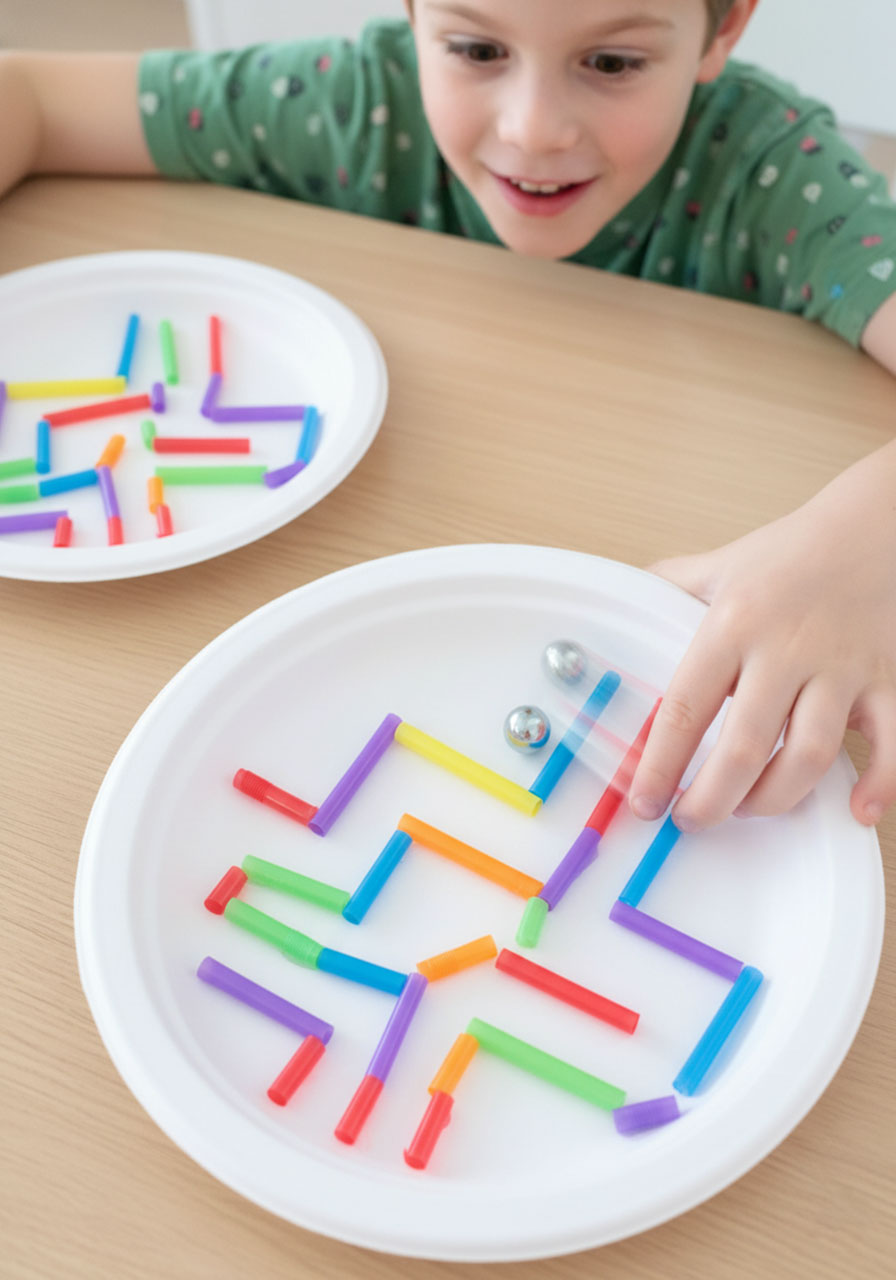
If you’ve got multiple kids building mazes, line them up and see whose design works best. Which maze is the fastest? Which one is the trickiest? What made one design work better than another?
Why This Challenge Is Educational Gold
Your kids are about to get a crash course in real engineering without even realizing it. They’ll learn to:
Select the right materials for the job. Not all supplies work the same way – straws are lightweight but sturdy, while cardboard is flat and stable. Kids will quickly figure out which materials solve which problems.
Think spatially and plan ahead. Designing a maze requires visualizing how a marble will move through space. Will this turn be too sharp? Is there enough room for the marble to roll smoothly?
Embrace trial and error. The first design rarely works perfectly, and that’s the whole point! Kids learn that tweaking, testing, and trying again is how real innovation happens.
Understand cause and effect. If the walls are too short, the marble escapes. If there’s too much glue, it creates bumps that stop the marble. Every choice has a consequence, and kids get to see it in action.
Fun Variations to Take It Up a Notch:
The Speed Demon Challenge: Use a timer to see whose maze gets the marble from start to finish the fastest.
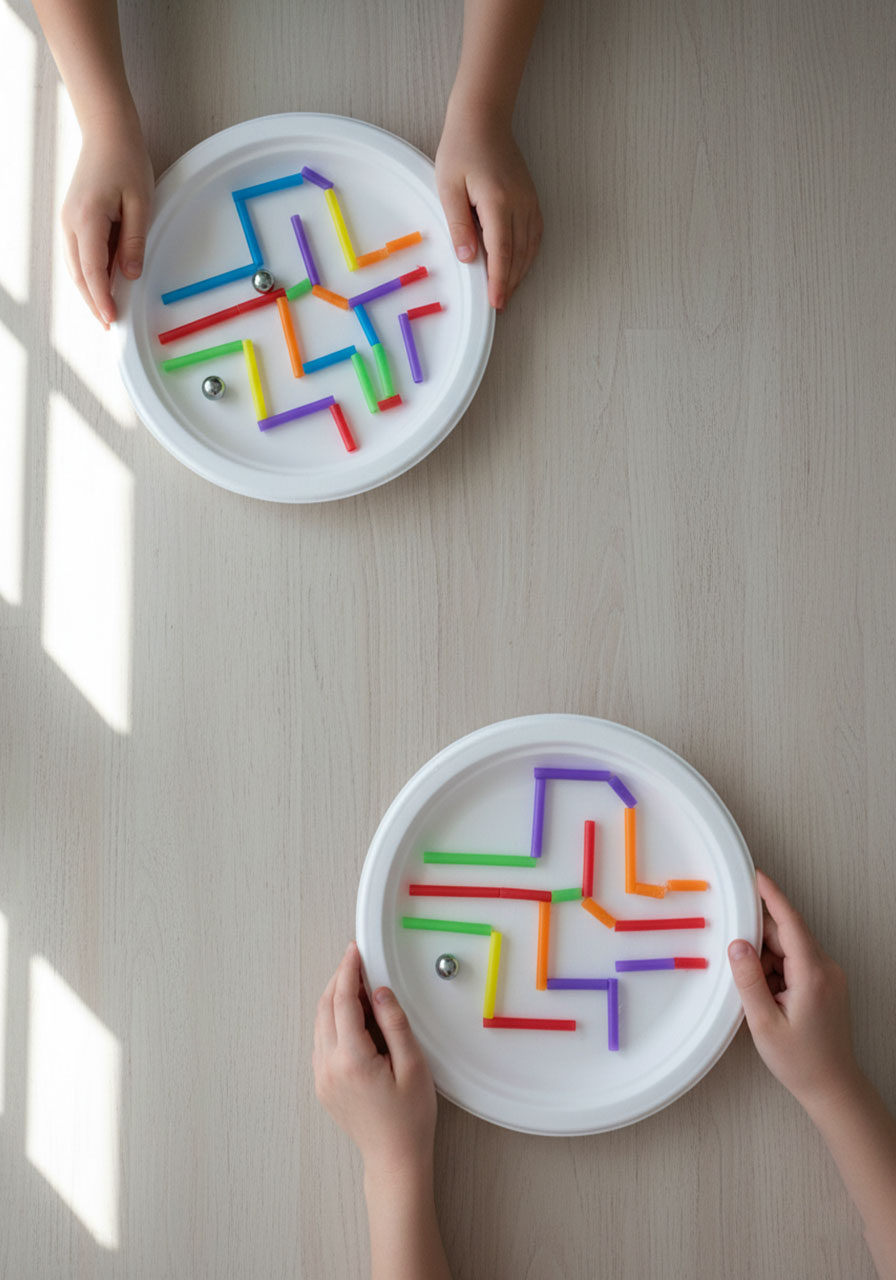
The Double Trouble Maze: Like we tried, challenge kids to create a design that can race two marbles simultaneously without them crashing into each other. It’s way trickier than it sounds!
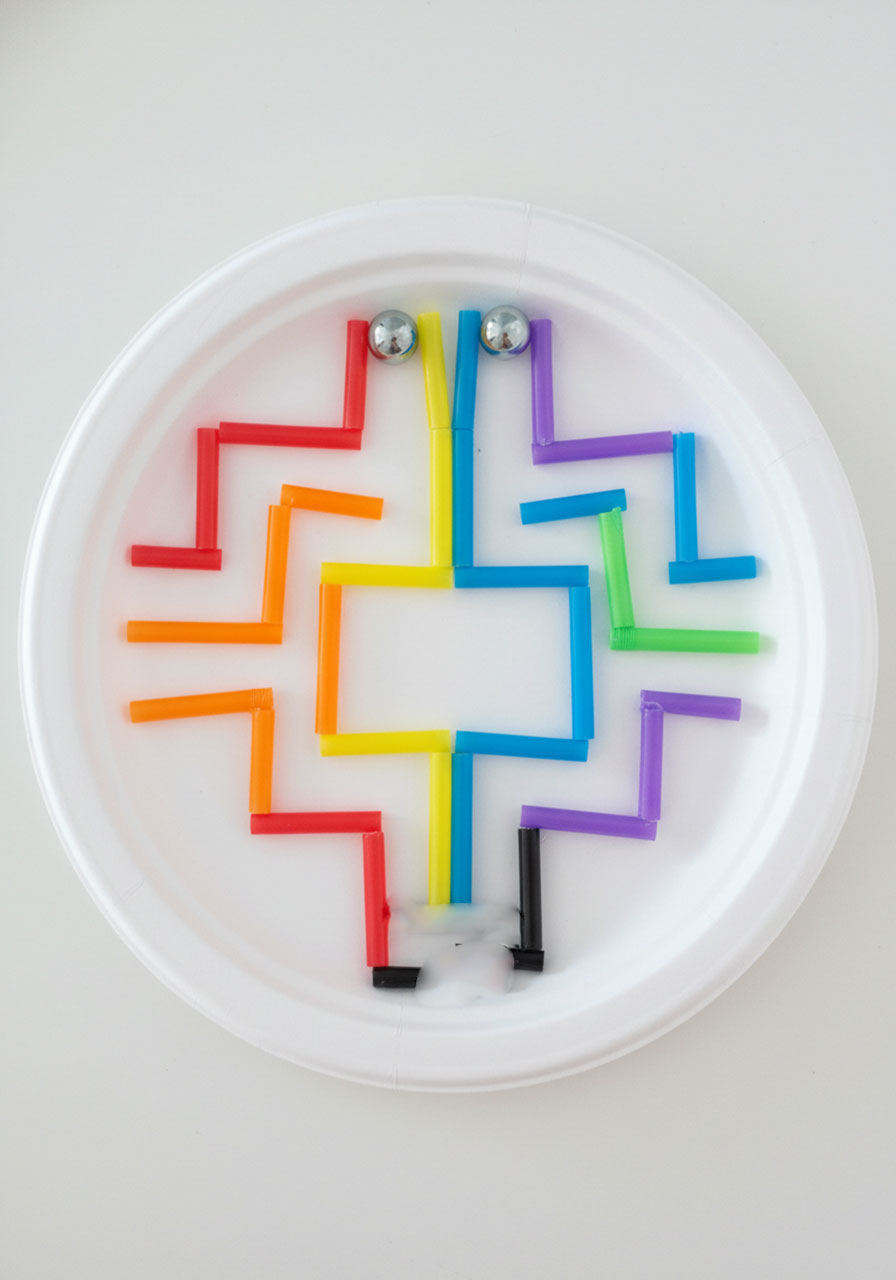
The Obstacle Course: Add “hazards” like ramps, tunnels made from straw pieces, or a “parking spot” where the marble has to stop briefly before continuing.
The Glow-in-the-Dark Maze: Use glow-in-the-dark paint on the straw pieces, charge them up under a light, then turn off the lights and race glow-in-the-dark marbles through the maze!
Pro Tip: Challenge older kids to create maze designs inspired by real-life structures – a racetrack, a pinball machine, or even a roller coaster layout. The only limit is their imagination!
Our Favorite Lesson from This Challenge
When we tested this with a group of kids, we decided to create mazes that could handle two marbles racing at once (just like a pinball machine). It seemed simple enough, right? Wrong! The kids quickly discovered that designing two successful paths that don’t interfere with each other requires serious planning. Some marbles crashed mid-maze, others got stuck at the same turn, and one genius kid figured out how to create a “merge lane” where both marbles finished at the same spot. The troubleshooting conversations were priceless, and the “aha!” moments when something finally worked? Pure magic.
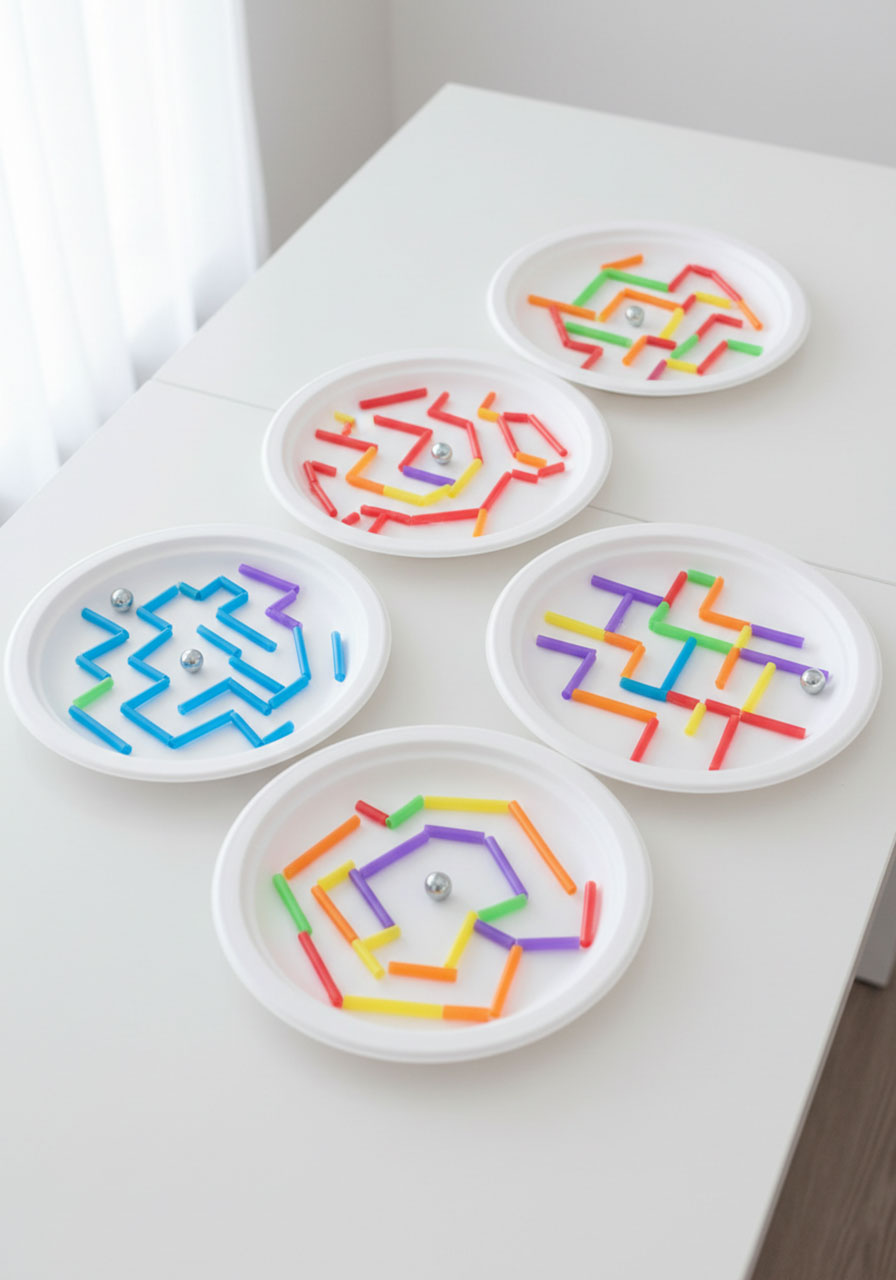
With just a paper plate, some colorful straws, and a whole lot of creativity, your kids are about to become marble maze architects. This challenge proves that the best learning doesn’t come from worksheets – it comes from building something with your own hands, watching it fail, fixing it, and trying again until you’ve created something awesome.
Now get out there and start building!
More Kid’s Party Ideas to Keep the Fun Rolling:
DIY Car Ramp: The 5-Minute STEM Activity That’ll Keep Your Kids Racing for Hours
45 Rainbow Craft Ideas for Kids That’ll Spark Epic Creativity!
How to Make Paper Claws: Turn Your Fingers Into Weapons in 5 Minutes
How to Play Help Your Neighbor: The Card Game That’ll Have Your Family Actually Wanting Game Night
28 Super Fun Dollar Store Crafts for Kids That Won’t Break the Bank
3 Easy Heart Painting Ideas That’ll Make You Look Like a Creative Genius
10 Easy Elementary School Indoor Party Games Kids and Room Moms Will Love
How to Make a Cardboard Loom Bracelet: Easy DIY Friendship Bracelets
